
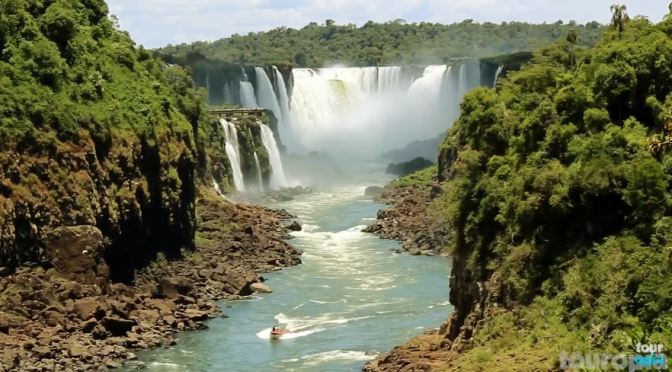
Located in the southern region of South America in a large, elongated shape, Argentina was sparsely inhabited by a few indigenous tribes before Spain’s colonized it in the 16th and 17th centuries. Today, the country is an independent republic featuring varied landscapes from rich plains to thick jungle, majestic mountains, pastoral steppes and impressive glaciers. Here’s a look at the best places to visit in Argentina.
Tag Archives: Argentina
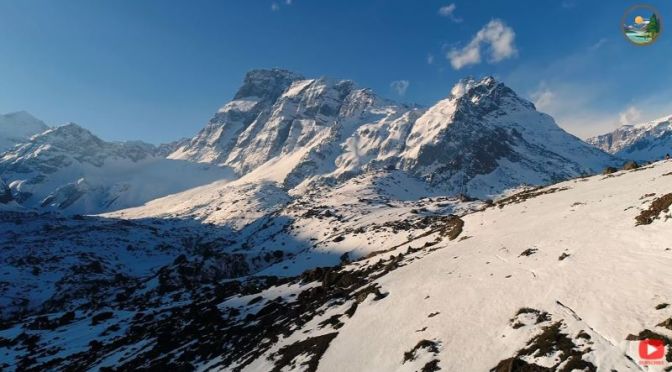
Views: ‘The Andes’ In Western South America
The Andes, running along South America’s western side, is among the world’s longest mountain ranges. Its varied terrain encompasses glaciers, volcanoes, grassland, desert, lakes and forest. The mountains shelter pre-Columbian archaeological sites and wildlife including chinchillas and condors. From Venezuela in the north, the range passes through Colombia, Ecuador, Peru, Bolivia, Argentina and Chile.
Video Highlights 00:55 – Vinicunca Rainbow Mountain 02:07 – Monte Fitz Roy 03:36 – Carunculated caracara bird 05:22 – Uyuni Salt Flat 06:05 – Lonquimay Volcano 07:49 – Maipo Canyon
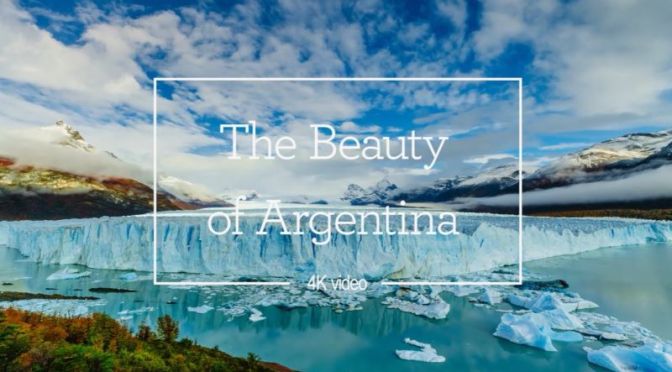
Views: ‘Argentina – Falls, Glaciers & Mountains’ (4K)
Argentina, officially the Argentine Republic, is a country located mostly in the southern half of South America.
Video timeline: 01:19 – Mount Fitz Roy 02:46 – Perito Moreno Glacier 05:04 – El Chaltén mountains 07:32 – Beagle Channel 08:17 – Iguazu Falls 09:41 – Argentino Lake
Sharing the bulk of the Southern Cone with Chile to the west, the country is also bordered by Bolivia and Paraguay to the north, Brazil to the northeast, Uruguay and the South Atlantic Ocean to the east, and the Drake Passage to the south. With a mainland area of 2,780,400 km2 (1,073,500 sq mi),[B] Argentina is the eighth-largest country in the world, the fourth largest in the Americas, the second largest in South America after Brazil, and the largest Spanish-speaking nation by area. The sovereign state is subdivided into twenty-three provinces (Spanish: provincias, singular provincia) and one autonomous city (ciudad autónoma), Buenos Aires, which is the federal capital of the nation (Spanish: Capital Federal) as decided by Congress.[18] The provinces and the capital have their own constitutions, but exist under a federal system. Argentina claims sovereignty over part of Antarctica, the Falkland Islands (Spanish: Islas Malvinas), and South Georgia and the South Sandwich Islands.

Timelapse Travel: ‘Lone Peaks’ Of South America
Filmed and Edited by: Florian Nick
From giant icecaps far south to bone-dry deserts further north – I traveled 20.000 km across Chile, Argentina, Bolivia and Peru for six months and was blown away by the variety of landscapes on this continent.
But one thing I found that all these climate zones have in common are those massive mountains rising high above their lands. May it be the majestic granite walls of Patagonia, perfectly shaped volcanos in the Atacama desert or some of the high alpine peaks of the Peruvian highlands.
Even though it only captures very few of them, this short timelapse film is a tribute to all those lone peaks in South America. There is still so many more to discover and photograph.
Walks: ‘Buenos Aires – Argentina’ (4K Video)
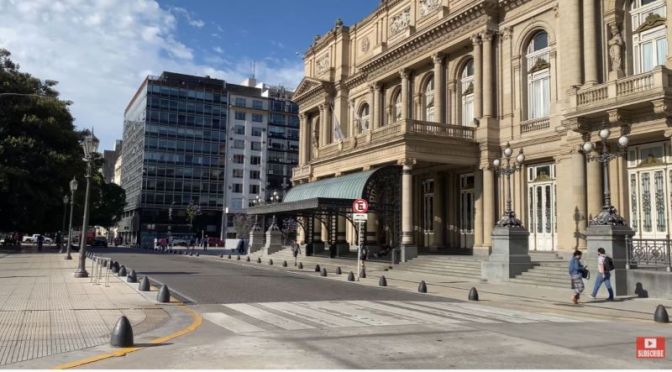
Buenos Aires is Argentina’s big, cosmopolitan capital city. Its center is the Plaza de Mayo, lined with stately 19th-century buildings including Casa Rosada, the iconic, balconied presidential palace. Other major attractions include Teatro Colón, a grand 1908 opera house with nearly 2,500 seats, and the modern MALBA museum, displaying Latin American art.

Walks: ‘Buenos Aires – Argentina’ (4K Video)
Buenos Aires is Argentina’s big, cosmopolitan capital city. Its center is the Plaza de Mayo, lined with stately 19th-century buildings including Casa Rosada, the iconic, balconied presidential palace. Other major attractions include Teatro Colón, a grand 1908 opera house with nearly 2,500 seats, and the modern MALBA museum, displaying Latin American art.
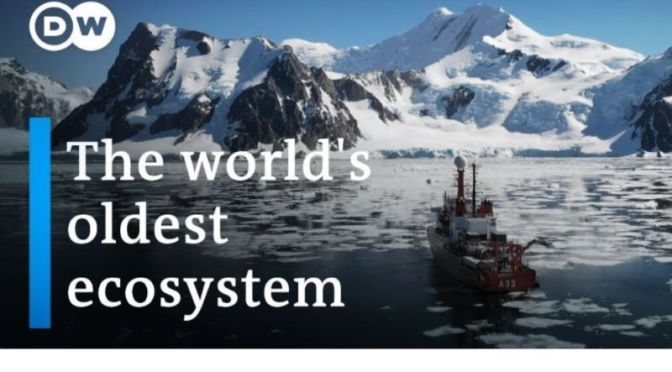
Documentary: ‘The Battle Over Antarctica’ (Video)
The world’s major powers agree: the resources of Antarctica should be exploited peacefully. They have promised to promote peace and scientific research in Antarctica, and to protect its environment. But is this spirit real, or just a lot of talk?
This documentary features interviews with researchers, activists, diplomats, and military personnel from Spain, Russia, Portugal, Chile, Argentina, and the United States. There’s been much debate over how to share control of resources in Antarctica, which is the world’s oldest ecosystem. Critics say that behind the scenes, a game of high-stakes poker is underway. Could this competition end in armed conflict? Or will Antarctica serve as a model for peaceful international cooperation? This film addresses these complicated issues with in-depth analysis, accompanied by magnificent images of the Antarctic landscape. The documentary’s soundtrack was composed by Javier Weyler, former drummer of the Welsh rock band, the Stereophonics.
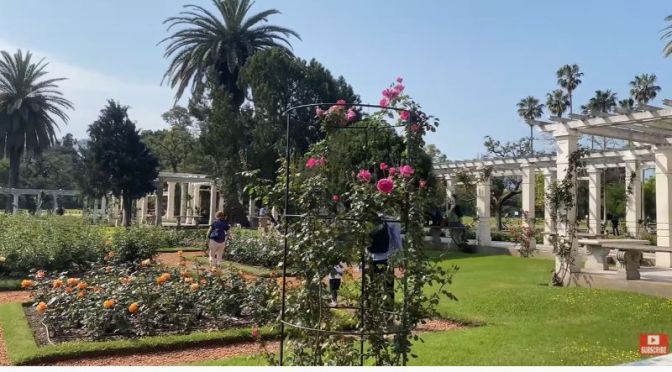
Walking Tours: ‘Rosedal Palermo’ In Buenos Aires, Argentina (4K Video)
Buenos Aires, Argentina – The rose garden is located in the heart of Bosques de Palermo (officially called Tres de Febrero Park), and was created by the famous landscaper Carlos Thays in 1914. It has several different parts to it, and most who have visited swear that you could wander the park forever without ever getting bored.
The paths are made of red gravel, and the meander casually through the different areas of the garden. Roses abound, of course, creating splashes of color all around, and a beautifully fragrant air. Nearly 1,200 different species of roses are featured, for a total of over 15,000 rose bushes. Park benches are scattered throughout, perfect for taking a break to sit and enjoy your surroundings.
In the center of the Rosedal you’ll find the Garden of Poets, which has busts of many of the greatest poets to ever live, including Shakespeare and Argentina’s famous Jorge Luis Borges. This is the perfect place for reading your favorite poetry book, surrounded by tranquility.
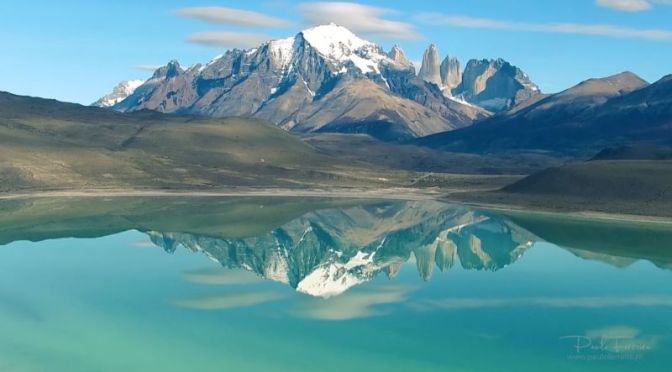
Landscape Travel Video: Norway, Chile, Argentina, New Zealand & Iceland
Filmed and Edited by: Paulo Ferreira
I made this video (with images from Norway, Chile, Argentina, New Zealand and Iceland), in order to motivate people to take care of our home, Planet Earth. Feel every wonder of our Planet and look for the necessary conscience so that in each gesture, you have to pay attention to the damage we have caused. Share.
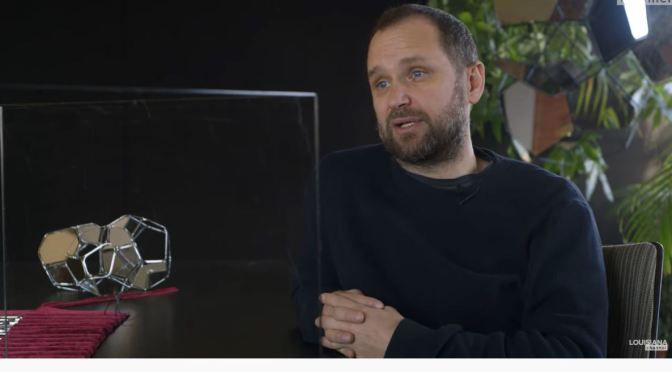
INTERVIEW: Argentinian Artist Tomás Saraceno – “The Art of Noticing”

Join us – if you dare – as we follow the acclaimed Argentinian artist Tomás Saraceno into his installations of intricate spider webs inhabited by solitary, social and semi-social spiders, bridging the architectures of each other’s webs.
In the video, Saraceno talks about how spiders mirror human beings and help us understand ourselves and the way we live. “Every day, I try to enter territories, or thoughts, or ways of working, which might challenge ourselves and might challenge how we see the world.”
Observing a spider in its web for more than twenty minutes, Saraceno argues, can completely change your life and way of noticing things, revealing an unseen world. In connection to this, he feels that art and science – as well as other forms of knowledge – combined, can help us “form new alliances between disciplines and lose our comfort zone of operating and seeing and perceiving and being in the world. To try to find new ways to work and to be.”
Tomás Saraceno (b. 1973) is an Argentinian artist. Saraceno is particularly known for his large-scale, interactive installations and floating sculptures, as well as his interdisciplinary approach to art. With his practice, he explores new sustainable ways of inhabiting the environment.
His work has been exhibited at prominent venues all over the world, including the 58th La Biennale di Venezia in Venice, Palais de Tokyo in Paris, and Museo de Arte Moderno in Buenos Aires. Saraceno’s work is also part of international collection such as Bauhaus Museum in Weimar, Walker Art Center in Minneapolis, and SFMoMA in San Francisco.
In 2015, he launched the Aerocene Foundation – an open-source community project for artistic and scientific exploration of environmental issues. Relating to arachnology research, Saraceno is the first person to have scanned, reconstructed and re-imagined spiders’ woven spatial habitats.
For more see: https://studiotomassaraceno.org/about/ Tomás Saraceno was interviewed by Helle Fagralid at his studio in Berlin in November 2019. Camera: Rasmus Quistgaard Edited by Klaus Elmer Produced by Helle Fagralid Cover photo: Tomás Saraceno. ‘Social… Quasi Social… Solitary… Spiders… On Hybrid Cosmic Webs’, 2013. Installation view. Detail. Courtesy of the artist and Esther Schipper Gallery, Berlin Copyright: Louisiana Channel, Louisiana Museum of Modern Art, 2020
 Boomers Daily