
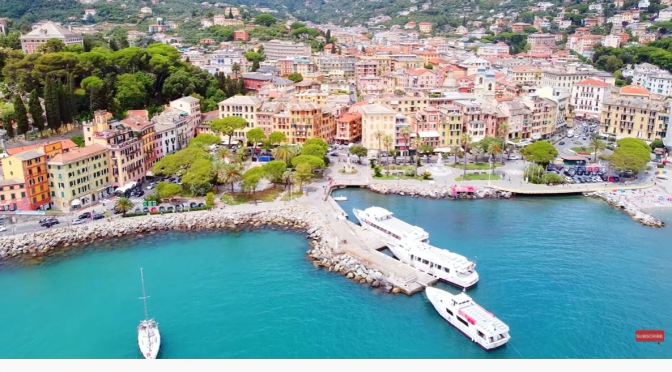
Santa Margherita Ligure is a comune in the Metropolitan City of Genoa in the Italian region Liguria, located about 35 kilometres southeast of Genoa, in the area traditionally known as Tigullio. It has a port, used for both tourism and fishing activities.
Tag Archives: 4K Videos
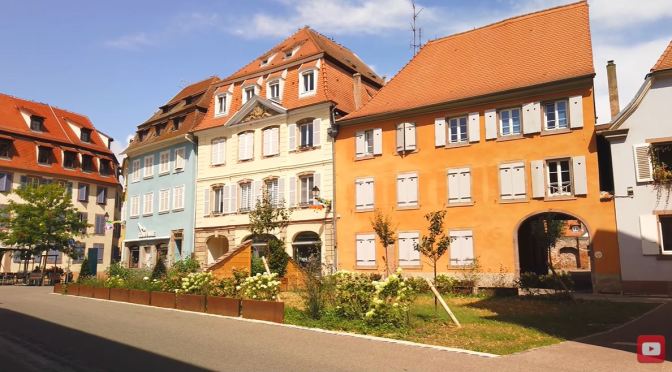
Walking Tour: Sélestat – Northeast France (4K)
Sélestat is a commune in the Bas-Rhin region of Alsace in north-eastern France. Sub-prefecture and seat of the community of communes of Sélestat, it had 19,360 inhabitants at the last census in 2018, which made it the fifth commune of Bas-Rhin and the eighth Alsatian commune in number of inhabitants. Its inhabitants are called Sélestadiens and Sélestadiennes. Located in the plain of Alsace, at the foot of the Vosges, the town is crossed by the Ill and its territory is largely covered by the wetlands of the Grand Ried.

Aerial Views: Chicago – Northeastern Illinois
Chicago, on Lake Michigan in Illinois, is among the largest cities in the U.S. Famed for its bold architecture, it has a skyline punctuated by skyscrapers such as the iconic John Hancock Center, 1,451-ft. Willis Tower (formerly the Sears Tower) and the neo-Gothic Tribune Tower. The city is also renowned for its museums, including the Art Institute of Chicago with its noted Impressionist and Post-Impressionist works.

Paris Walks: Île De La Cité, River Seine, France (4K)
The Île de la Cité is an island in the river Seine in the center of Paris. In the 4th century, it was the site of the fortress of the Roman governor. In 508 Clovis I, the first King of the Franks, established his palace on the island.

Village Walks: Villalago – Central Italy (4K Video)
Villalago, located 25 km south of Sulmona, in the Abruzzo region of L’Aquila, arose in the 11th century for Christian and Benedictine inspiration, finding in San Domenico Abate the founder of the monastery of San Pietro il Lago, in the upper Sagittario valley. At its foundation the monastery was endowed by the Lords of those lands, the counts of Valva, with goods and privileges and attracted settlers from all over, who settled, under the monks, in several villas in the Valle de Lacu, so called for the its five lakes. Over time, to ensure a valid defense, they perched on Mount Argoneta, where some Lombard towers already stood, and the new village took the name of Villalago. In 1479 the monastery was abandoned by the Benedictines and the Villalaghesi “no longer colonists, they became a body of the University, with independent possessions” (Antinori, chorography of Villalago). And under the motto of “Universitas contra omnes”, they fought victoriously against the Belprato Counts of Antwerp and against others who aimed to take over the entire Valle de Lacu.
Video timeline: 0:00 – [Drone intro] 2:00 – [Walking tour begins / Piazza Celestino Lupi] 3:28 – [St.Mary of Loreto church☀️] 5:09 – […walking in the old town…] 10:36 – [Via Buccini] 16:44 – [Church of St.Michael – closed☀️] 18:00 – [Brief history of the town☀️] 24:00 – [Via Iafolla] 33:25 – [Old Castle of Villalago] 38:42 – [Church of the Madonna Addolorata – tour inside☀️] 41:00 – […descending…] 48:00 – [Via Ernesto Grossi] 50:30 – [Piazza Celestino Lupi]
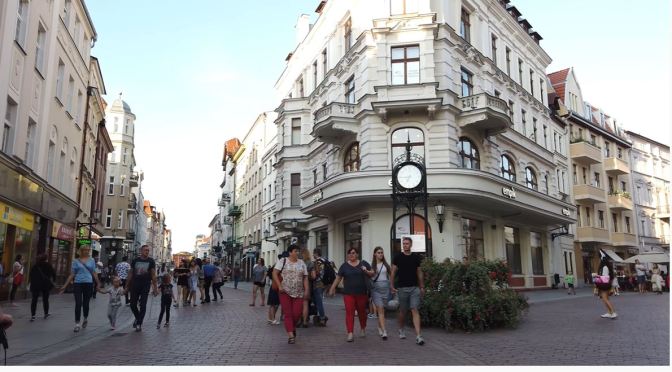
City Walking Tour: Toruń – Northern Poland (4K)
Toruń is a historical city on the Vistula River in north-central Poland and a UNESCO World Heritage Site. Its population was 201,447 as of December 2019. Previously, it was the capital of the Toruń Voivodeship and the Pomeranian Voivodeship.

Views: Conflicts In The Deep Ocean (4K Video)
The deep sea is rife with competition and conflict. Deep sea biodiversity relies on the scattered organisms interacting in order to survive, whether they’re working together in symbiosis, scavenging, being predated, or parasitising a host animal. But there is one ecological interaction that does more than any other to influence organisms to change and diversify, and thus plays an important role in the success of deep sea communities. The limited resources mean only a small number of niches can exist. Thus, there is greater competition between different species trying to fill the same niches. This explains why the deep sea has so much competition, for animals must share the ecosystem with other competing species all trying to consume the same limited resources.
Video timeline: 00:00 – An Introduction to Deep Sea Competition 01:31 – Chapter 1: A World of Quiet Conflict – The Reasons for Competition 02:22 – Chapter 1: A World of Quiet Conflict – The Trophic Levels 03:48 – Chapter 1: A World of Quiet Conflict – The Ecological Niches 05:21 – Chapter 2: Competition Between Species – Sea Floor Ecosystems 08:12 – Chapter 2: Competition Between Species – The Competitive Exclusion Principle 09:06 – Chapter 2: Competition Between Species – Resource Partitioning at Vents 11:48 – Chapter 3: Competition Within Species – Intraspecific Competition 12:63 – Chapter 3: Competition Within Species – Group Hunting Techniques 14:25 – Conclusion: The Importance of Ecological Competition
CHECK OUT OUR DEEP SEA WEBSITE: https://naturalworldfacts.com/deep-se…

Walking Tour: Bayeux – Northwestern France (4K)
Bayeux is a town on the Aure river in the Normandy region of northwestern France, 10 kilometers from the Channel coast. Its medieval center contains cobbled streets, half-timbered houses and the towering, Norman-Gothic Cathédrale Notre-Dame. The famed 68-meter Tapisserie de Bayeux, an 11th-century tapestry depicting the 1066 Norman invasion of England, is on display in an 18th-century seminary.

Walking Tour: Vernazza – Cinque Terre, Italy (4K)
Vernazza is one of the 5 centuries-old villages that make up the Cinque Terre, on northwest Italy’s rugged Ligurian coast. Colorful houses surround its small marina. The Santa Margherita di Antiochia Church has a bell tower topped by an elegant cupola. Clinging to the rocks, Doria Castle is a medieval defensive structure with a cylindrical tower. The Belforte bastion is just below it.
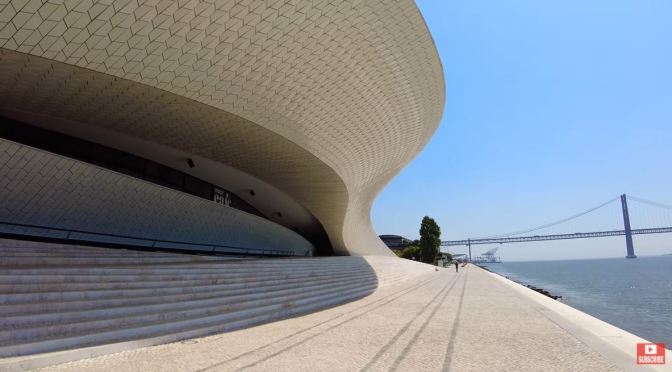
Architectural Views: MAAT Museum In Lisbon
MAAT – Museum of Art, Architecture and Technology is the new cultural centre for Lisbon. It’s a museum where these three areas intertwine within a space of debate, discovery, critical thinking and international dialogue.
It’s an innovative project which establishes a connection between the new building, designed by Amanda Levete Architects’ studio, and Central Tejo Power Station, one of Portugal’s most prominent examples of industrial architecture from the first half of the 20th century, and one of the most visited museums in the country.
MAAT’s ambition is to present national and international exhibitions by contemporary artists, architects and thinkers. The programme will also include various curatorial perspectives on EDP Foundation’s private Art Collection, reflecting current subject matters and trends.
 Boomers Daily