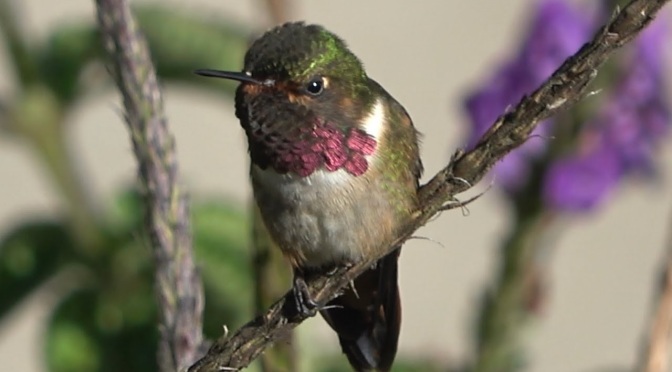
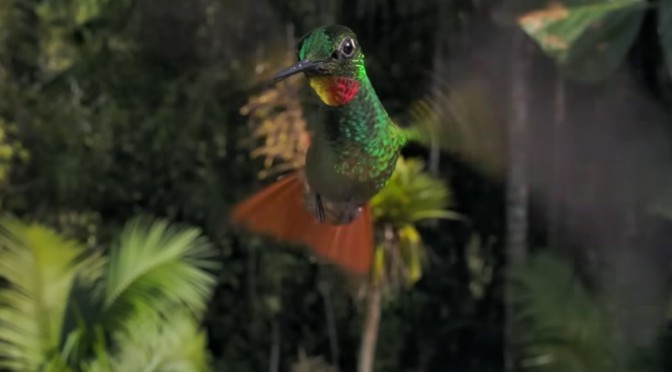
Nature on PBS (March 27, 2023) – No bigger than a human thumb, the volcano hummingbird exists only in the Talamancas.
The volcano hummingbird (Selasphorus flammula ) is a very small hummingbird, native to the Talamancan montane forests of Costa Rica and western Panama.
This tiny endemic bird inhabits open brushy areas, paramo, and edges of elfin forest at altitudes from 1850 m to the highest peaks. It is only 7.5 cm long. The male weighs 2.5 g and the female 2.8 g. The black bill is short and straight.
The adult male volcano hummingbird has bronze-green upperparts and rufous-edged black outer tail feathers. The throat is grey-purple in the Talamanca range, red in the Poas-Barva mountains and pink-purple in the Irazú-Turrialba area, the rest of the underparts being white. The female is similar, but her throat is white with dusky spots. Young birds resemble the female but have buff fringes to the upperpart plumage.
The female volcano hummingbird is entirely responsible for nest building and incubation. She lays two white eggs in her tiny plant-down cup nest 1–5 m high in a scrub or on a root below a south or east facing bank. Incubation takes 15–19 days, and fledging another 20–26.
BBC Earth (March 26, 2023) – Vienna’s Danube is known for its bustling nightlife and mighty skyscrapers, but one surprising resident has also found a home here. Animals are learning to survive and thrive in one very surprising habitat – cities. Join wildlife presenter Hannah Stitfall as she sets out on a mission to meet our new neighbours. #CoExistence
Eurasian Beaver (Castor fiber)
The beaver is the “master builder” of riverine landscapes. By felling trees, the beaver makes a significant contribution to biodiversity by providing habitats for many other species.
In Austria, in the Danube-March-Thaya wetlands; migrates to the Weinviertel (“Forest Quarter”) and the Vienna Woods, but also from the Inn and Salzach down the Danube to Linz.
Endangerment and Conservation Status In Austria, beavers had been extinguished by the middle of the 19th century. Starting in the 1970s, they were restored on the Salzach and Inn rivers as well as in the Danube wetlands east of Vienna. Protecting the riparian forests is essential to the conservation of the beaver.
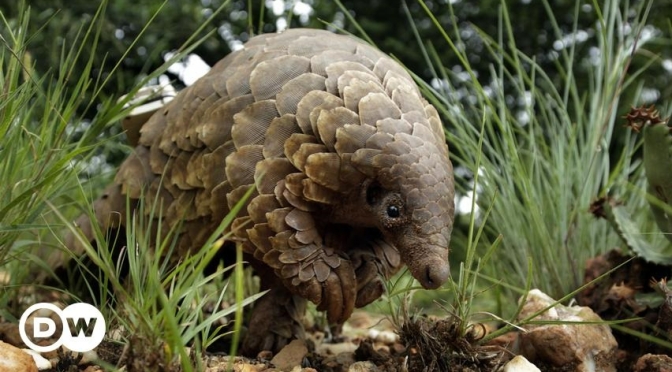
DW Documentary (March 25, 2023) – Pangolins, native to Asia and Africa, are threatened with extinction. Their meat is considered a delicacy in Africa and their scales are sold as a health remedy in Asia. The protected animals are poached and smuggled on a large scale.
Pangolins are the most smuggled animals in the world – and demand is growing. Asian pangolins recently made headlines when they were suspected of being carriers of the COVID-19 coronavirus. On the banks of the Congo River, the pangolin sells for just a few euros.
But in cities like Kinshasa, its meat sells for a hundred times that price and – although illegal – is eaten in the best restaurants. Even more profitable is the sale of pangolin scales, which are highly prized in Asia for their supposed medicinal properties. The native Asian pangolins are already nearly extinct.
The film shows how just a handful of these animals can be rescued during police raids, then reintroduced into the wild by dedicated conservationists. From hunters in the bush of the Democratic Republic of Congo to bushmeat markets to the backrooms of Vietnam, reporters follow pangolin smugglers as they ply their trade.
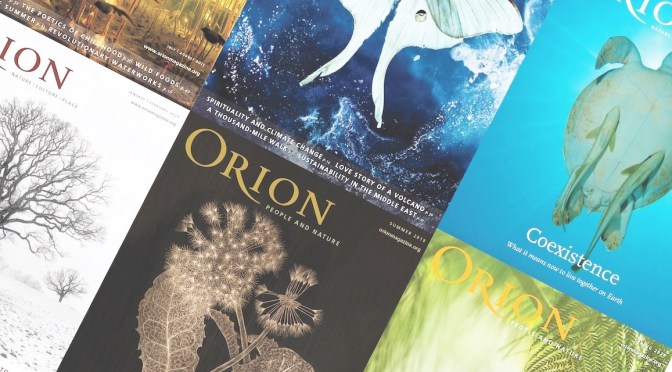
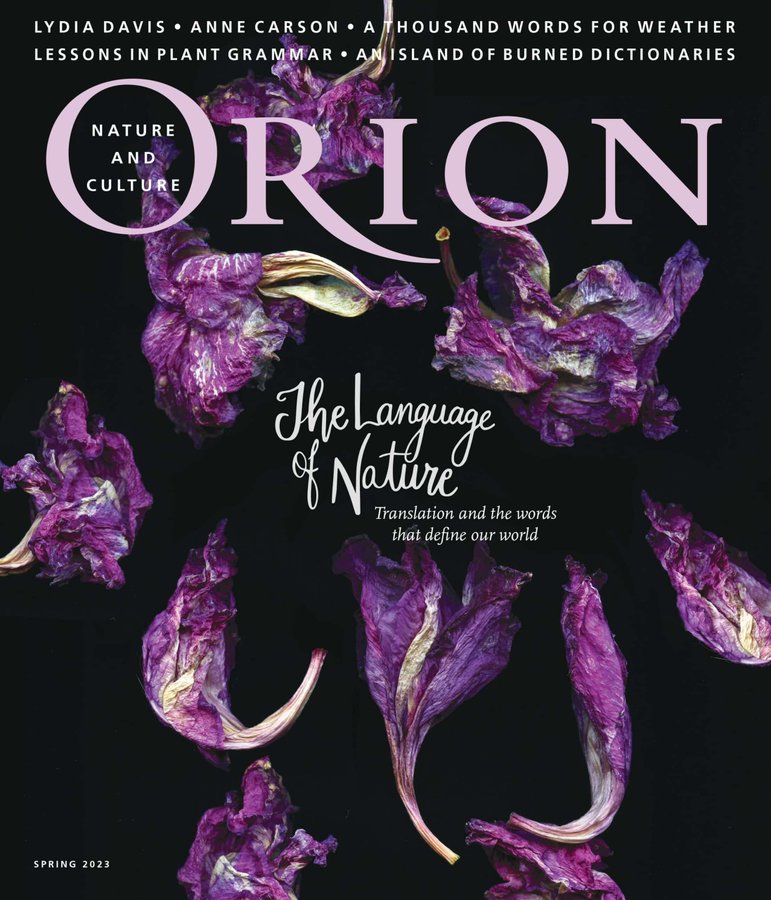
Orion Magazine (Spring 2023) – THIS ISSUE features exclusively works in or about translation, engaging with over twenty-five languages across six continents.
The Northern Mariana Islands lie in a crescent moon south-southeast of Japan. At the lower point is Guåhan, also known as Guam, an island that is geologically part of the same volcanic chain but that set itself apart by becoming an unincorporated U.S. territory instead of remaining part of the Commonwealth.
BANZEIRO—THIS IS WHAT THE PEOPLE of the Xingu call places where the river grows savage. Where, if you’re lucky, you can make it through; where, if you’re not, you can’t. It is a place of danger between where you’re coming from and where you want to go.
Our Spring 2023 issue speaks to the language of nature and features works in or about translation. Here, Orion staffers and friends pulled together a list of their favorite fiction and nonfiction books that in some way reflect this literature of etymology.
This slim fantastical novel reads like an incantation. Set in rural late-19th century Iceland, its braided, lyrical, fugue-like narrative is tender and electric. Here we find a cruel priest named after a monster, trapped in an ice cave, raving at a dead fox. But too, a kindly herbalist burying his friend with her feather collection—a young woman with Down syndrome who spoke a language of her own—who he rescued from an unthinkable fate. This was my first encounter reading Sjón, who is apparently so big in his home country he doesn’t need a last name, but the book’s otherworldliness made perfect sense when I learned he writes lyrics for Björk. This one will haunt me for a while.
In Lulu Miller’s Why Fish Don’t Exist, naming becomes an imposition, an attempt at order and, sometimes, hierarchy. In this book—part memoir, part biography—Miller is searching for a reason to keep living, a sense of order in a chaotic world, and she does so by looking to a taxonomist who spent his life naming the creatures under the sea: David Starr Jordan.
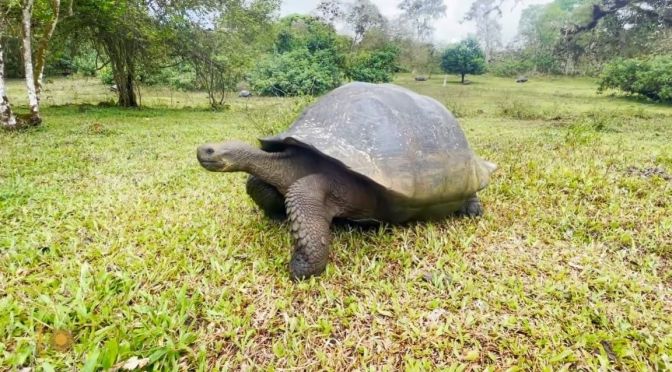
CBS Sunday Morning (March 19, 2023) – We leave you this Sunday with giant tortoises on Santa Cruz Island, in Ecuador’s Galápagos National Park. Videographer: Alan Golds.
There are 13 living species of Galápagos tortoises, which are also sometimes called giant tortoises. These reptiles are among the longest-lived of all land vertebrates, averaging more than a hundred years. The oldest on record lived to be 175. They are also the world’s largest tortoises, with some specimens exceeding five feet in length and reaching more than 500 pounds.
Giant tortoises were once so abundant on the Galápagos archipelago off Ecuador that the Spanish sailors who explored the region in 1535 named the string of islands for them. (The Spanish word for tortoise is galápago.) Although the islands were once thought to be home to at least 250,000 tortoises, only about 15,000 remain in the wild today.
BBC Earth (March 19, 2023) – Herons are known to be shy birds, but in Amsterdam they have made quite a name for themselves, taking full advantage of the waterways.
The grey heron (Ardea cinerea ) is a long-legged wading bird of the heron family, Ardeidae, native throughout temperate Europe and Asia and also parts of Africa. It is resident in much of its range, but some populations from the more northern parts migrate southwards in autumn. A bird of wetland areas, it can be seen around lakes, rivers, ponds, marshes and on the sea coast. It feeds mostly on aquatic creatures which it catches after standing stationary beside or in the water or stalking its prey through the shallows.
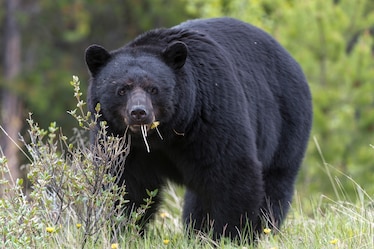
The new comedic horror film is based on the real-life drug overdose of an American black bear—and illustrates how human recklessness endangers wildlife.
Unlike the movie, the real-life cocaine bear didn’t go on a coke-fueled rampage, but it did consume a fatal amount of cocaine left in the woods by smugglers. Here, an American black bear, Ursus americanus, eats dandelions.
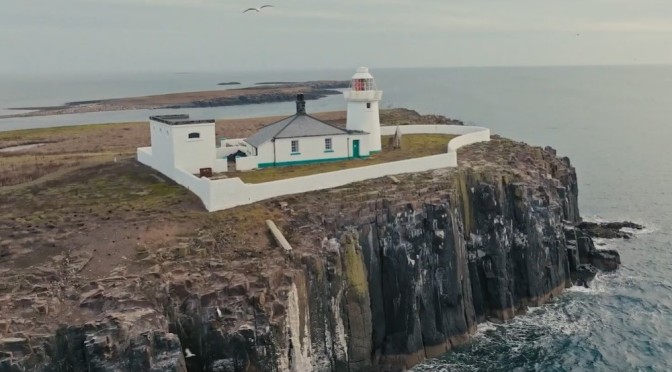
National Trust (March 13, 2023) – In the first episode of The Wild Life, a new series of nature films from the National Trust, presenter Levison Wood explores one of England’s most important seabird colonies. The Farne Islands, off the Northumberland coast, have been cared for by the National Trust since 1925 and are a breeding site for 23 species of seabird, including 43,000 puffin pairs.
The islands are also home to grey seals with around 2,000 pups born every autumn. With an introduction from presenter Julia Bradbury, this film explores the Inner Farne, where you’ll see dive-bombing terns, a medieval chapel and a Victorian lighthouse. Levison finds out what life is like for the rangers who had to deal with the devastating impact of bird flu. He also learns more about the work being done to maintain and protect the area’s fragile ecosystem, address the impact of climate change, protect bird nests and monitor species.
Parts of the Farne Islands may be closed to the public and landing on the islands may not be possible due to bird flu. If closures are in place, you can still experience the islands on a boat tour. Please check the website before you visit: Farne Islands | Northumberland | National Trust With your support we can continue to care for coastal places like The Farne Islands.















 Boomers Daily
