Category Archives: Society

The New York Times Magazine – March 31, 2024

THE NEW YORK TIMES MAGAZINE (March 30, 2024):

The Race to Reinvent CPR

A new, high-tech approach called ECPR can restart more hearts and save more lives. Why aren’t more hospitals embracing it?

By Helen Ouyang

Greg Hayes, an emergency first responder in Chanhassen, Minn., was picking up takeout sushi when a 911 call came in: A 61-year-old had stopped breathing at home. Hayes and his team jumped in their ambulance and were soon pulling up in front of a suburban two-story house, where paramedics and other first responders were also arriving. All of them grabbed their equipment and raced through the open garage to find a man, gray and still, on the living-room floor with his wife and stepdaughter nearby.

How Has Retirement Changed Your Relationship?

Maybe something like: A couple, photographed from behind, hold hands as they look out at a body of water with some buildings and trees around it.

We want to hear from you for a New York Times Magazine feature about how this transition can affect marriages and long-term relationships.

By Susan Dominus

When people think about stages of life that can strain relationships, they often reflect on the first sleepless years of child rearing or the phase of parenting that involves rebellious teens. Retirement, typically anticipated as a time of relaxation, might not come to mind, but this transition away from work can also be stressful, coinciding with reinventions and re-evaluations that can cause couples to suddenly experience new tensions. It can also be a time of renewed connection and relationship growth. Often, it’s both at once.

The New York Times Magazine – March 24, 2024

Image

THE NEW YORK TIMES MAGAZINE (March 22, 2024):

A New Train Is Opening Up the Yucatán, for Better or Worse

When it’s a quick trip from the schlocky pleasures of Cancún to the remote cities of the Maya, is something lost along the way?

El Tren Maya, which links five states in southern Mexico, is one of the country’s most-debated infrastructure projects. Carved through the Yucatán Peninsula at great expense, the 966-mile loop pits the megaproject ambitions of Mexico’s departing president, Andrés Manuel López Obrador, against the will of environmentalists and Indigenous leaders seeking to preserve a pristine environment of jaguars, ancient ruins and sacred underwater caves.

An Arsenal of Mysteries: The Terrifying Allure of a Remote Caribbean Island

Why had immigrants, seekers and pilgrims been drawn for centuries to the treacherous shores of Mona Island? I set off to find out.

By Carina del Valle Schorske

Every year, I spend a month or two in Puerto Rico, where my mother’s family is from. Often I go in winter, with the other snowbirds, finding solace among palm trees. But I’m not a tourist, not really. I track the developers that privatize the shoreline; I follow the environmental reports that give our beaches a failing grade. I’m disenchanted with the Island of Enchantment, suspicious of an image that obscures the unglamorous conditions of daily life: frequent blackouts, meager public services, a rental market ravaged by Airbnb. Maybe that’s why I turned away from the sunshine and started to explore caves with my friends Ramón and Javier, seeking out wonders not yet packaged for the visitor economy. I’ve been learning to love stalactites and squeaking bats, black snakes and cloistered waterfalls — even, slowly, the darkness itself.

The New York Times Magazine – March 17, 2024

Image

THE NEW YORK TIMES MAGAZINE (March 16, 2024):

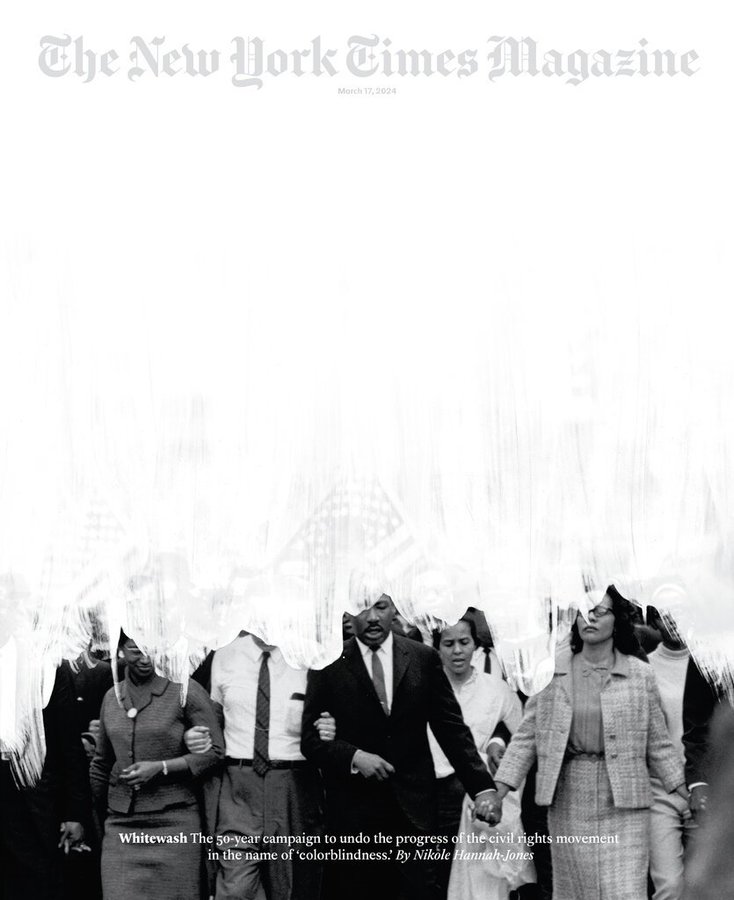
The ‘Colorblindness’ Trap: How a Civil Rights Ideal Got Hijacked

The fall of affirmative action is part of a 50-year campaign to roll back racial progress.

By Nikole Hannah

Anthony K. Wutoh, the provost of Howard University, was sitting at his desk last July when his phone rang. It was the new dean of the College of Medicine, and she was worried. She had received a letter from a conservative law group called the Liberty Justice Center. The letter warned that in the wake of the Supreme Court’s decision striking down affirmative action in college admissions, the school “must cease” any practices or policies that included a “racial component” and said it was notifying medical schools across the country that they must eliminate “racial discrimination” in their admissions. If Howard refused to comply, the letter threatened, the organization would sue.

What Deathbed Visions Teach Us About Living

A photo illustration of two peoples’ silhouettes.

Researchers are documenting a phenomenon that seems to help the dying, as well as those they leave behind.

By Phoebe Zerwick

Chris Kerr was 12 when he first observed a deathbed vision. His memory of that summer in 1974 is blurred, but not the sense of mystery he felt at the bedside of his dying father. Throughout Kerr’s childhood in Toronto, his father, a surgeon, was too busy to spend much time with his son, except for an annual fishing trip they took, just the two of them, to the Canadian wilderness. Gaunt and weakened by cancer at 42, his father reached for the buttons on Kerr’s shirt, fiddled with them and said something about getting ready to catch the plane to their cabin in the woods. “I knew intuitively, I knew wherever he was, must be a good place because we were going fishing,” Kerr told me.

The New York Times Magazine – March 10, 2024

Image

THE NEW YORK TIMES MAGAZINE (March 9, 2024):

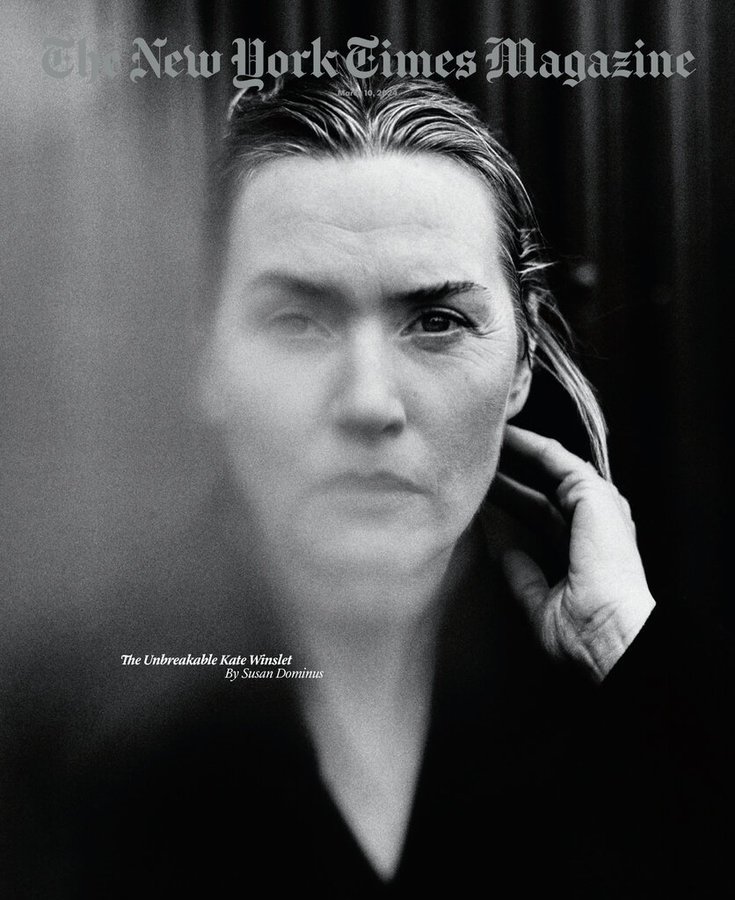
Kate Winslet Pushes Her Characters, and Herself, to the Edge

A black-and-white photograph of Kate Winslet.

As a young star, she endured Hollywood’s brutal treatment of women. Now she’s putting her resilience and grit on full display.

Kate Winslet was standing in front of a microphone, breathing hard. Sometimes she did it fast; sometimes she slowed it down. Sometimes the breathing sounded anxious; other times, it was clearly the gasping of someone who was winded. Before beginning a new take, Winslet stood stock still, hands opening and closing at her sides; she looked like a gymnast about to bound into a floor routine. Every breath seemed high-stakes, even though she was well into a long day of recording in a dim, windowless studio in London.

Why Power Eludes the French Left

A close-up photograph of Jean-Luc Mélenchon.

France has often been the vanguard of leftist politics — but support in the streets doesn’t always translate to votes at the ballot box.

By Elisabeth Zerofsky

The signs that a protest is happening in Paris are nearly always the same: the quiet of blocked-off streets; the neat rows of police vans containing the gendarmerie stretching down the boulevard; the sound of drumbeats and whistles and the neon red flares that spit smoke into the sky. For six months last year, those signs were constant and ubiquitous, as furious, sometimes violent marches and general strikes protesting President Emmanuel Macron’s pension reforms brought Paris to a standstill. Students and activists, public-transit operators, custodial staff, medics, mechanics, teachers, oil-rig workers, writers and celebrities all gathered to rail against Macron’s plan to raise the national retirement age by two years, to 64.

Politics: The Guardian Weekly – March 8, 2024

Image

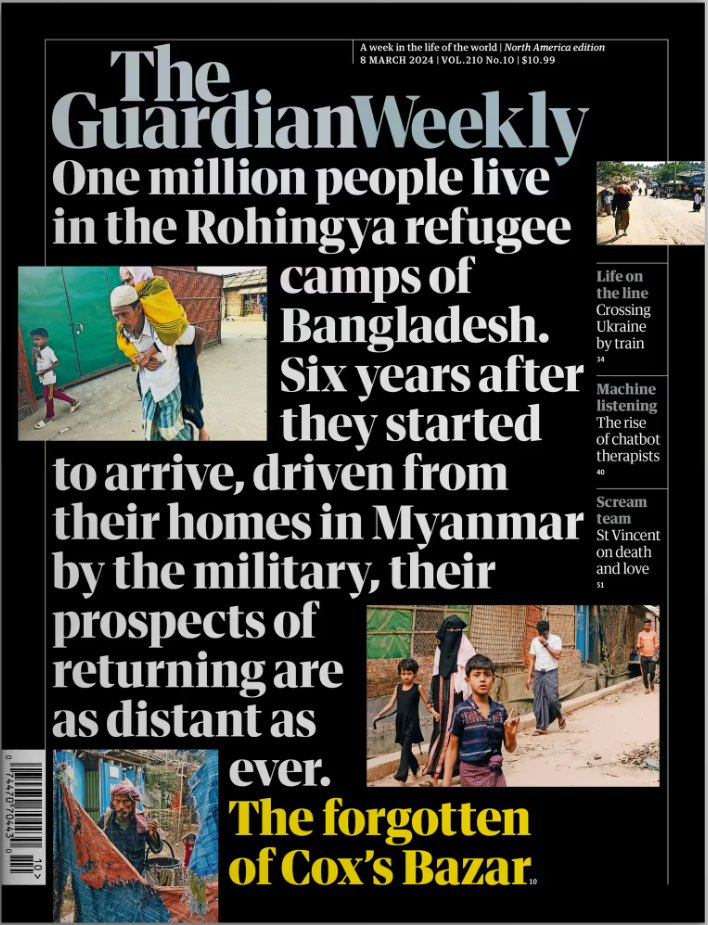
The Guardian Weekly (March 7, 2024) – The new issue features Faint hope of return for Rohingya people. Plus: a journey through Ukraine

It was August 2017 when the world really started to take note of Myanmar’s Rohingya people. Descendants of Arab Muslims who speak a different language to most other people in Myanmar, the Rohingya had up to that point lived mainly in the northern Rakhine state, coexisting uneasily alongside the majority Buddhist population.

But the Rohingya were reviled by many as illegal immigrants and treated by the then government as stateless people. In 2017, when violence broke out in the north of the state, security forces supported by Buddhist militia launched a “clearance operation” that forced more than 1 million Rohingya people to flee their homes and the country, actions that many onlookers saw as ethnic cleansing. Most Rohingya were driven into vast refugee camps in the Cox’s Bazar region of Bangladesh, where they have remained ever since.

The Guardian global development reporter Kaamil Ahmed has been covering the Rohingya crisis for almost a decade, making multiple trips to the region. For this week’s Big Story, Kaamil returned to Cox’s Bazar where, in two moving reports, he details how disease and illness are widespread in the ramshackle camps, and how the desperation to escape has resulted in rich business for people traffickers.

And, with Myanmar now controlled by a military junta and introducing a deeply unpopular conscription drive (as Rebecca Ratcliffe and Aung Naing Soe report), the prospect of any Rohingya people being able to return home to Rakhine state remains as distant as it did in 2017.

CULTURE: FRANCE-AMÉRIQUE MAGAZINE – MARCH 2024

Image

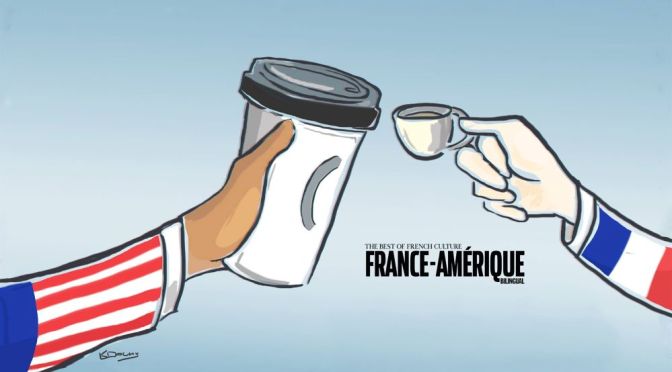
France-Amérique Magazine – March 1, 2024 –  The new issue features ‘Francophonie Month’ – The French-Speaking Cowboys of Louisiana.

 Meet Drake LeBlanc, the French- and Creole-speaking cowboy, filmmaker, and cofounder of Télé-Louisiane; read our interview with Harvard professor Claire-Marie Brisson on the North American Francosphere; and discover why “Molière may be dead, but his language is alive and well.”

CYRIL DEWAVRIN – The American Dream of a Serial Bookseller

Founding a French neighborhood bookstore in New York City was the madcap challenge undertaken by this avid reader and busy entrepreneur. The Frenchman has just opened La Joie de Vivre near Chelsea, a space offering books in French and English, coffee, and pastries.

By Benoît Georges

Also in this issue, Albert Camus travels to America; former ambassador Gérard Araud analyzes the White House race and its potential consequences for France and Europe; and French soccer star and LGBTQ+ advocate Marinette Pichon discusses her U.S. career and her fight for equality in women’s sports.

The New York Times Magazine – Feb 25, 2024

Image

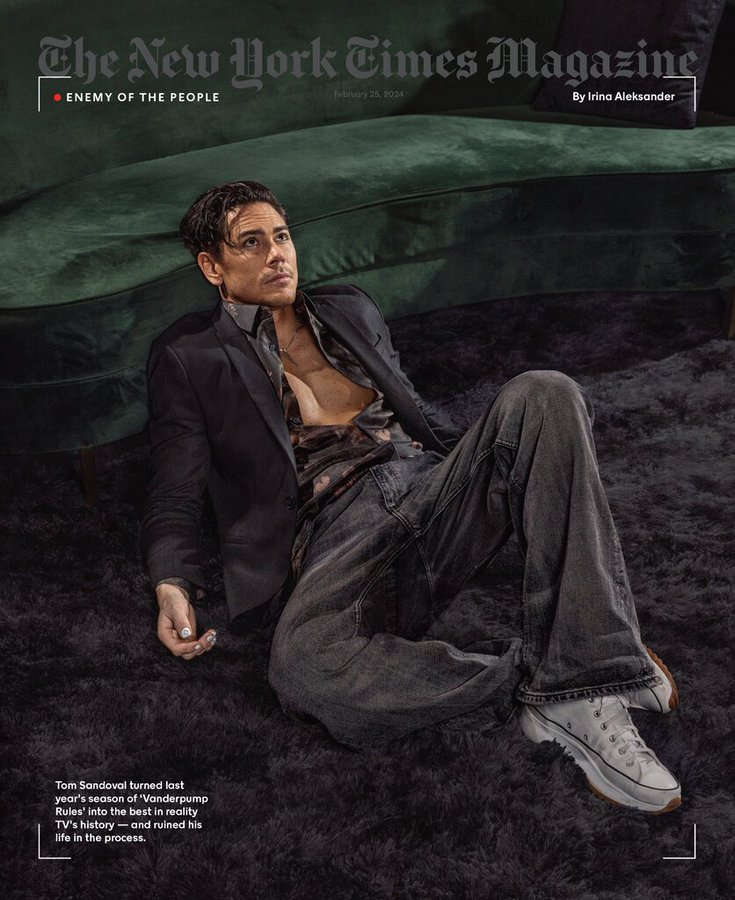
THE NEW YORK TIMES MAGAZINE (February 23, 2024): The new issue features ‘Enemy of the People’ – Tom Sandoval turned last year’s season of ‘Vanderpump Rules’ into the best in reality TV’s history – and ruined his life in the process..

How Tom Sandoval Became the Most Hated Man in America

Tom Sandoval looking into a mirror.
Credit…Holly Andres for The New York Times

He turned last year’s season of ‘Vanderpump Rules’ into the best in reality TV’s history — and ruined his life in the proces

Want a Better Society? Try Better Buildings.

The Egg in front of an ice rink with families skating together.

An obsession with luxury is transforming cities into bland, isolating landscapes. Architecture should be for creating community.

Politics: The Guardian Weekly – February 23, 2024

Image

The Guardian Weekly (February 22, 2024) – The new issue features ‘Ukraine’s Lonely Road’ – After two years, is there a way out of Putin’s war?…

Shaun Walker reports on this week’s big story, the fall of the strategic town of Avdiivka to Russian troops has come at a grim time for Ukraine’s president, Volodymyr Zelenskiy. While the army is struggling to hold ground, war fatigue is setting in among parts of the population and disagreements among the leadership have been spilling into the open.

At the same time, the death of the jailed Russian critic Alexei Navalny last week – widely seen as another political assassination – appears to emphasise the strengthening hand of Vladimir Putin, who is expected to secure another six-year term as Russia’s president in tightly controlled elections next month. Amid a familiar wave of international outrage, our Russia affairs reporter Pjotr Sauer asks what Putin might do next.

Coupled with the possibility of a Donald Trump victory in the US elections later this year, it all makes for a deeply worrying outlook for Ukraine, reflected in the Kyiv-based illustrator Sergiy Maidukov’s haunting cover artwork for the magazine this week.

“This war is the hardest test of my life, similar to an endless ultramarathon,” writes Sergiy. “It is good to try to not think about the finish when running long distance. This is important knowledge to endure.”

The New York Times Magazine – Feb 19, 2024

THE NEW YORK TIMES MAGAZINE (February 17, 2024): The new issue features ‘Actors in the Wild’ – The best performers of the year, when they’re not on film….

Actors in the Wild

The best performers of the year — when they’re not on film.

James Nachtwey, an eminent photojournalist known for his intimate depictions of the front lines in places like Iraq, Afghanistan and Ukraine, had never photographed a movie star before. So for this year’s Great Performers issue, we asked him to capture a dozen of the world’s best actors away from the red carpets and awards ceremonies that often define how we see them. “My work has focused almost exclusively on conflicts and critical social issues, the polar opposite of what might be thought of as celebrity photography,” Nachtwey says. But he was intrigued by the challenge: “Art takes talent, but it’s also hard work, and exploring what actors practice in their daily lives to strengthen their art would be fascinating.”

Tubi Is Reviving a Lost Joy: Watching Really, Really Bad Movies

A photo illustration of Tubi scenes.

Their films have gone viral for their awful production values. But their success says fascinating things about what comes after prestige TV.

By Niela Orr

There’s a 2008 movie that offers an odd preview of today’s entertainment. In Michel Gondry’s “Be Kind Rewind,” a bizarre accident demagnetizes the entire inventory of a video rental store, so a clerk and his eccentric friend decide to remake all the films themselves, from “The Lion King” to “Driving Miss Daisy” to “2001: A Space Odyssey.” Their versions are 20 minutes long (at most), shot on an old hand-held video camera and produced in a delightfully quirky, ad hoc way: handcrafted props and sets, buddies working as extras, costumes from the local dry cleaner.

Previews: New Humanist Magazine – Spring 2024

Image

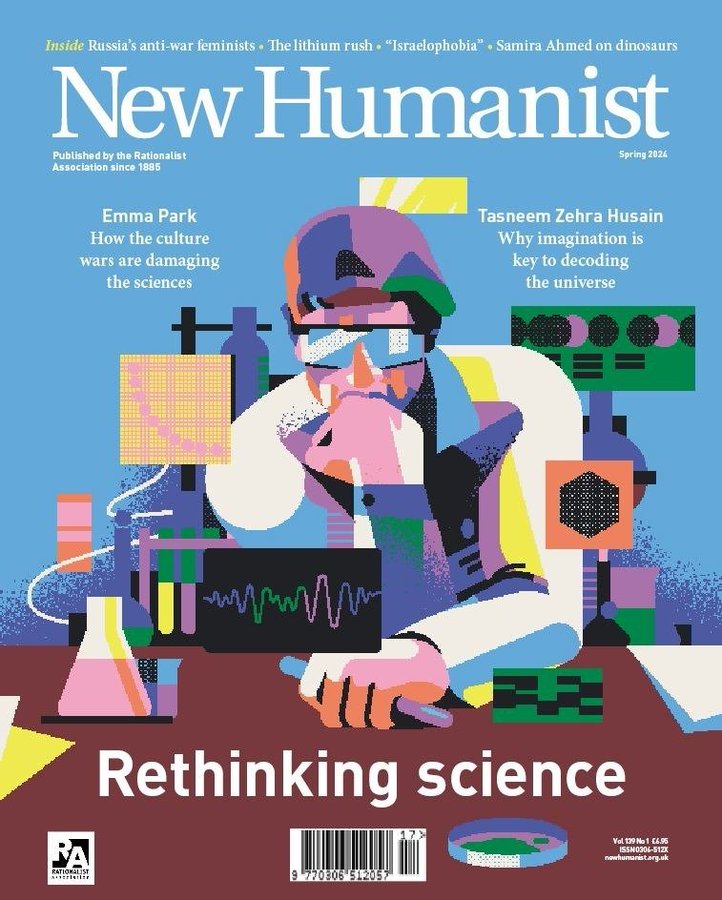
NEW HUMANIST MAGAZINE – SPRING 2024 ISSUE: The new issue features Emma Park on how the culture wars are damaging the sciences, theoretical physicist Tasneem Zehra Husain on why the imagination is key to decoding the universe, and Alom Shaha on what can be gained by thinking like a scientist

Beyond the two cultures

Amid a polarised debate, science and art seem further apart than ever. Emma Park, editor of The Freethinker, explores what humanism has to teach us about the apparent conflict between these ways of thinking and how to bridge the divide.

“While humanities scholars are often (not without justification) accused of being Luddites, those on the science and technology side could also benefit from the knowledge that the humanities have accumulated over the centuries … [And] no intellectual activity worth the name can flourish in a politically repressive environment: freedom of expression and enquiry should be an issue to unite artists, scholars and scientists.”

The poetry of science

Metaphors are key to unlocking the secrets of the universe – scientists should do more to harness their power, writes acclaimed physicist Tasneem Zehra Husain.

“Metaphors aren’t only a means of description, they can also lead to revelations. Centuries ago, Newton was able to calculate the gravitational attraction between two objects … [but] would ‘feign no hypothesis’ as to why it was so. He had the equation, but he did not understand gravitation … With Einstein, we finally have a metaphor. When we picture space-time as a dynamic ‘fabric’ … we begin to understand what gravity means.”