

In 1972, Frank Wilczek and his thesis adviser, David Gross, discovered the basic theory of the strong force — the final pillar of the Standard Model of particle physics. Their work revealed the strange alchemy at work inside the nucleus of an atom. It also turned out to underpin almost all subsequent research into the early universe. Wilczek and Gross went on to share the 2004 Nobel Prize in Physics for the work. At the time it was done, Wilczek was just 21 years old. His influence in the decades since has been profound. He predicted the existence of a hypothetical particle called the axion, which today is a leading candidate for dark matter. He published groundbreaking papers on the nature of the early universe. And just last year, his prediction of the “anyon” — a strange type of particle that only shows up in two-dimensional systems — was experimentally confirmed.
Category Archives: Science
Covid-19: What Are The New Variants & How Are They Monitored (Podcast)
Over the course of the pandemic, scientists have been monitoring emerging genetic changes to Sars-Cov-2. Mutations occur naturally as the virus replicates but if they confer an advantage – like being more transmissible – that variant of the virus may go on to proliferate.
This was the case with the ‘UK’ or B117 variant, which is about 50% more contagious and is rapidly spreading around the country. So how does genetic surveillance of the virus work? And what do we know about the new variants? Ian Sample speaks to Dr Jeffrey Barrett, the director of the Covid-19 genomics initiative at the Wellcome Sanger Institute, to find out Coronavirus – latest updates See all our coronavirus coverage.
The Brain: ‘Learning & Memory’ – Neuroscience & Disease Research (Video)
Neuroscience Professor Seth Tomchik, PhD, focuses on two major research areas, the neuroscience of learning and memory, and diseases that affect learning and memory, including neurofibromatosis type one. Neuroscience is now the largest department on the Florida campus of Scripps Research.
The department’s faculty and staff, together with graduate students enrolled in the institute’s Skaggs Graduate School, push the boundaries of scientific knowledge to benefit humanity. Watch all 11 videos in this series to see their work in more detail. Scripps Research is an independent, nonprofit biomedical research institute ranked the most influential in the world for its impact on innovation. With campuses in La Jolla, California, and Jupiter, Florida, the institute advances human health through profound discoveries that address pressing medical concerns around the globe. Scripps Research also trains the next generation of leading scientists at the Skaggs Graduate School, consistently named among the top 10 U.S. programs for chemistry and biological sciences. Learn more at http://www.scripps.edu.
Science Podcast: Ash Trees At Risk, Organizing Active Matter And Robot Swarms
Freelance journalist Gabriel Popkin and host Sarah Crespi discuss what will happen to ash trees in the United States as federal regulators announce dropping quarantine measures meant to control the emerald ash borer—a devastating pest that has killed tens of millions of trees since 2002.
Instead of quarantines, the government will use tiny wasps known to kill the invasive beetles in hopes of saving the ash. Sarah also talks with Pavel Chvykov, a postdoctoral researcher at the Massachusetts Institute of Technology, about the principles for organizing active matter—things like ant bridges, bird flocks, or little swarms of robots.

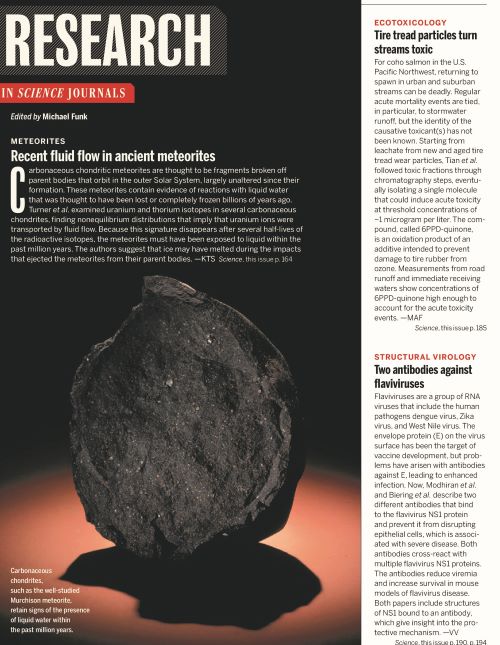
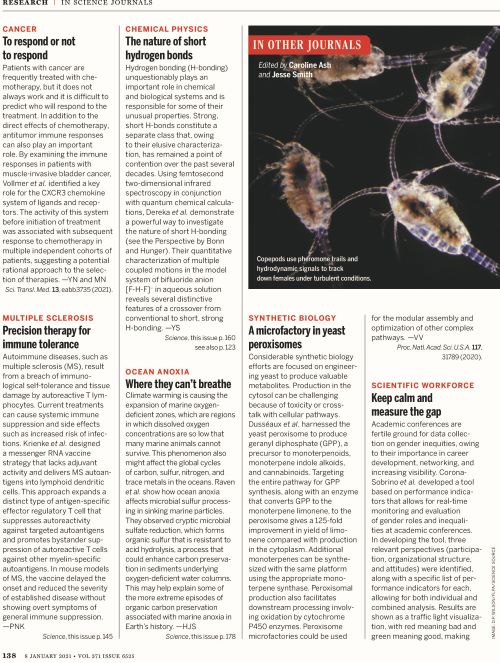
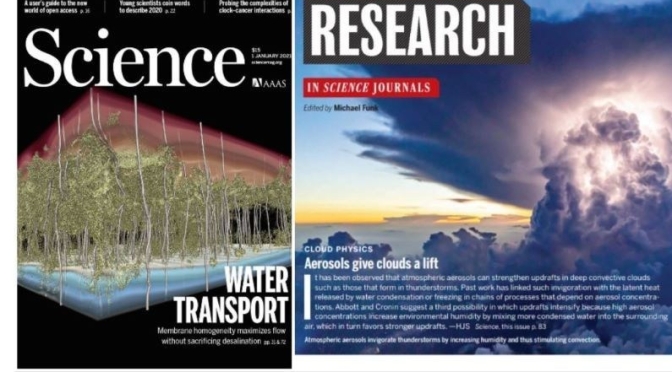
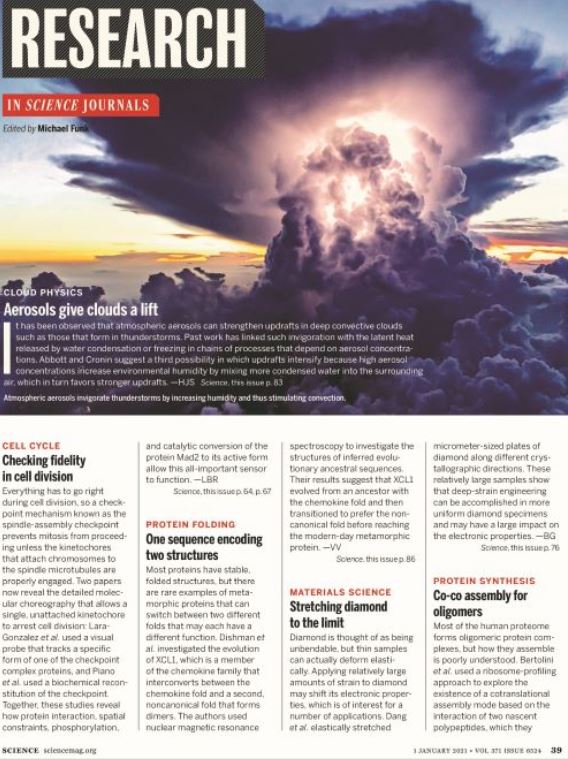
TOP JOURNALS: RESEARCH HIGHLIGHTS FROM SCIENCE MAGAZINE (JAN 8, 2021)
Covid-19: ‘How Vaccines Work’ (Yale Medicine)
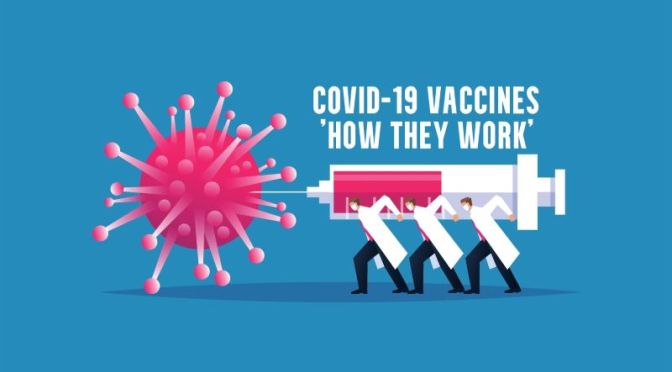
Vaccines are one of the most effective tools we have in preventing and reducing the burden of infectious diseases. In the midst of the COVID-19 pandemic, vaccines are once again poised to change the tide in our favor in the fight against a deadly virus. But how exactly do vaccines work? And are they safe? “You can think of your body’s immune system like an orchestra,” says Yale immunobiologist Akiko Iwasaki, PhD. “The different functions of the immune response are like different instruments. And vaccines work like sheet music for the orchestra, telling the immune system what to do and how to do it.” Different viruses require different types of immune responses in order to confer protection, and some of them can be complex. But with SARS-CoV-2, the virus that causes COVID-19, a simple type of response is all that’s needed to prevent infection. “You just need to trigger an antibody response where the antibodies bind to the surface of the virus and prevent it from entering our cells,” says Ruslan Medzhitov, PhD, professor of immunobiology. “And these types of vaccines tend to be extremely safe.” In addition to the inherent safety of this kind of “training” for the immune system, experts emphasize that the expedited timeline of COVID-19 vaccine development is not a reflection of lax safety standards. “Before a vaccine is approved, it goes through a rigorous amount of testing for safety and efficacy,” says Iwasaki. “So, once a vaccine is made to be publicly available, we should be lining up.” Watch this video to learn more about the fundamentals of how vaccines work, how they are developed, and the importance of vaccination for public health.
Climate Change: What Are Covid-19’s Impacts? (Video)
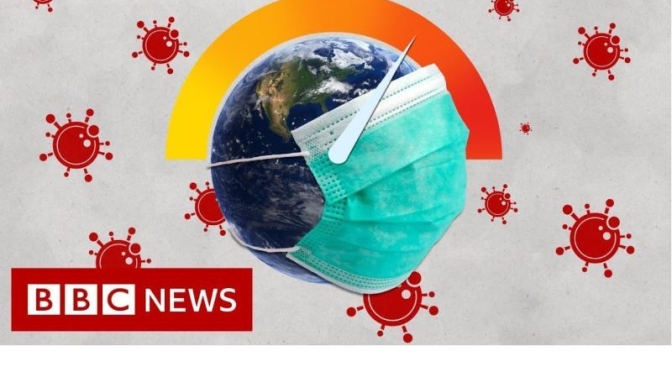
When Covid-19 sparked lockdowns around the world, emissions of one of the greenhouse gases responsible for climate change, atmospheric carbon dioxide, plummeted. But is this record drop a short-term effect of the 2020 pandemic or a ‘new normal’? BBC Weather’s Ben Rich explores the impact of coronavirus on the global climate.
Motion graphics by Jacqueline Galvin
Produced by Soraya Auer
Covid-19: ‘Reducing Risk Now & Preparing For The Next Pandemic’ (Podcast)
Virologist Angela Rasmussen talks about her battle against misinformation in the media, the virus, vaccines, disinfecting surfaces, home testing, and the next pandemic.
Eric J. Topol, MD: Hello, I’m Eric Topol for Medscape, and this is Medicine and the Machine. I’m so glad to have my colleague and partner in this podcast, Abraham Verghese, with me from Stanford. Today, we have the rarefied privilege to discuss the whole pandemic story, the virus and vaccines, with one of the country’s leading virologists, Dr Angela Rasmussen. Welcome, Angie.
Angela L. Rasmussen, MA, MPhil, PhD: Thank you so much for having me, Eric. It’s wonderful to be here.
Covid-19 In 2021: End Is In Sight, Challenges Remain
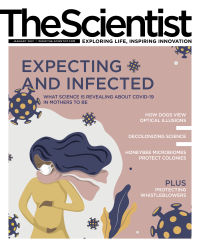
We enter 2021 surrounded by these rays of hope that the end of the pandemic might be in sight. But monumental challenges remain. Vaccine manufacture, distribution, and uptake are substantial pieces of a complex puzzle that must be completed to reach the 75–90 percent vaccination rate that global health experts say is key to stopping the spread.
And the virus itself is almost sure to change as it infects more people, possibly becoming more transmissible or dangerous. For instance, as I write this in late December 2020, public health officials in the UK are reporting the rapid spread of a new strain of SARS-CoV-2 that seems to be highly infectious.
This is a perfect example of the continued surprises this pandemic may yet throw at us. But virologists, epidemiologists, drug developers, and other scientists will continue to band together to study this virus and share information that can help humanity address this and future issues appropriately. In addition to careful monitoring of the virus as it mutates and spreads, I fully expect there to be regular monitoring of vaccinated individuals, further refinement of vaccine, and continued development of new COVID-19 therapies. And I can promise that The Scientist will continue to track these developments closely and provide up to date and accurate information about the COVID-19 pandemic and other scientific issues in 2021 and beyond.

 Boomers Daily