Category Archives: Science

Science Podcast: Inside A Proton, Cold Genes & Growing Small Intestines

The surprising structure of protons, and a method for growing small intestines for transplantation.

In this episode:

00:45 Probing the proton’s interior

Although studied for decades, the internal structure of the proton is still throwing up surprises for physicists. This week, a team of researchers report an unexpected imbalance in the antimatter particles that make up the proton.

Research Article: Dove et al.

News and Views: Antimatter in the proton is more down than up

07:08 Research Highlights

How an inactive gene may help keep off the chill, and Cuba’s isolation may have prevented invasive species taking root on the island.

Research Highlight: Impervious to cold? A gene helps people to ward off the chills

Research Highlight: Marauding plants steer clear of a communist-ruled island

09:48 A new way to grow a small intestine

Short Bowel Syndrome is an often fatal condition that results from the removal of the small intestine. Treatment options are limited to transplantation, but donor intestines are hard to come by and can be rejected by the body. Now researchers may have developed a method to grow a replacement small intestine using stem cells and a small section of colon.

Research Article: Sugimoto et al.

15:50 Briefing Chat

We discuss some highlights from the Nature Briefing. This time, the landing of Perseverance on Mars, and the researchers speaking with lucid dreamers.

Nature News: Mars video reveals Perseverance rover’s daring touchdown

Nature News: Touch down! NASA’s Mars landing sparks new era of exploration

Covid-19: ‘Why Variants Are Spreading Faster’

As highly transmissible coronavirus variants sweep across the world, scientists are racing to understand why these new versions of the virus are spreading faster, and what this could mean for vaccine efforts. New research says the key may be the spike protein, which gives the coronavirus its unmistakable shape. Illustration: Nick Collingwood/WSJ

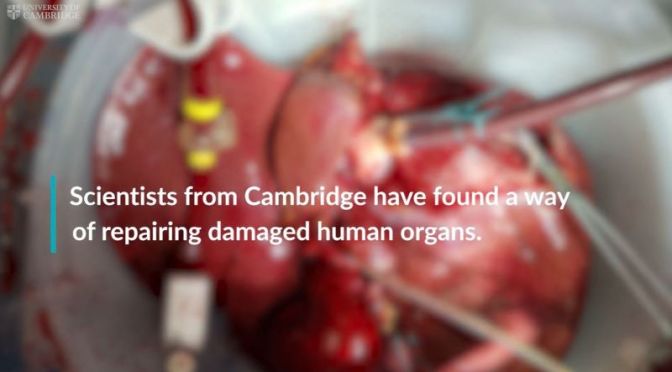
Medicine: Scientists Grow ‘Mini-Organs’ To Repair Damaged Human Livers

Scientists have used a technique to grow bile duct organoids – often referred to as ‘mini-organs’ – in the lab and shown that these can be used to repair damaged human livers. This is the first time that the technique has been used on human organs. Funding provided by European Research Council, the National Institute for Health Research and the Academy of Medical Sciences

Science Podcast: Covid Questions Answered, Rocky Planet Formation

Science Staff Writer Jon Cohen joins host Sarah Crespi to take on some of big questions about the COVID-19 vaccines, such as: Do they stop transmission? Will we need boosters? When will life get back to “normal.” 

Sarah also talks with Anders Johansen, professor of planetary sciences and planet formation at the University of Copenhagen, about his Science Advances paper on a new theory for the formation of rocky planets in our Solar System. Instead of emerging out of ever-larger collisions of protoplanets, the new idea is that terrestrial planets like Earth and Mars formed from the buildup of many small pebbles.

Science Podcast: Million-Year-Old Mammoth DNA, Art In Science & Jupiter

Researchers sequence the oldest DNA ever recovered, and the people bringing art and science together.

In this episode:

00:46 Million-year-old mammoth DNA

This week, researchers have smashed a long-standing record by sequencing a genome that’s over a million years old. They achieved this feat by extracting DNA from permafrost-preserved mammoth teeth, using it to build-up a more detailed family tree for these ancient animals.

Research Article: van der Valk et al.

News: Million-year-old mammoth genomes shatter record for oldest ancient DNA

News and Views: Million-year-old DNA provides a glimpse of mammoth evolution

10:00 Research Highlights

A spacecraft catches a rare glimpse of a rock smashing into Jupiter, and the perilous state of sawfish populations.

Research Highlight: Robotic eyes spy the flash of a meteor on Jupiter

Research Highlight: Humans push a hulking fish with a chainsaw nose towards oblivion

12:18 Putting art into science (and science into art)

Art and science are sometimes considered disparate, but when brought together the results can be greater than the sum of their parts. This week we hear from an artist and a scientist on the benefits they found when crossing the divide.

Career Feature: How to shape a productive scientist–artist collaboration

Career Feature: How the arts can help you to craft a successful research career

Where I work: ‘All my art is curiosity-driven’: the garden studio where art and physics collide

21:43 Briefing Chat

We discuss some highlights from the Nature Briefing. This time, a neanderthal gene makes brain-like organoids bumpy, and uncovering the original location of Stonehenge’s stone circle.

Covid-19: Penn Medicine Explains mRNA Vaccines

Vaccines are about to change the world…again. mRNA Vaccines are currently being used to battle COVID-19, and have the potential to eradicate diseases like HIV, herpes, sickle cell anemia, and even cancer. Learn how the vaccines work and where the technology could be headed in this explainer video.

Currently, the Pfizer-BioNTech and Moderna vaccines for COVID-19 use the mRNA technology developed at Penn by infectious disease expert Drew Weissman, MD, PhD, along with longtime research collaborator Katalin Karikó, PhD, an adjunct associate professor. Dr. Weissman has been studying mRNA vaccines for decades. This technology could change the way future vaccines are made to prevent countless other diseases.