

Category Archives: Science
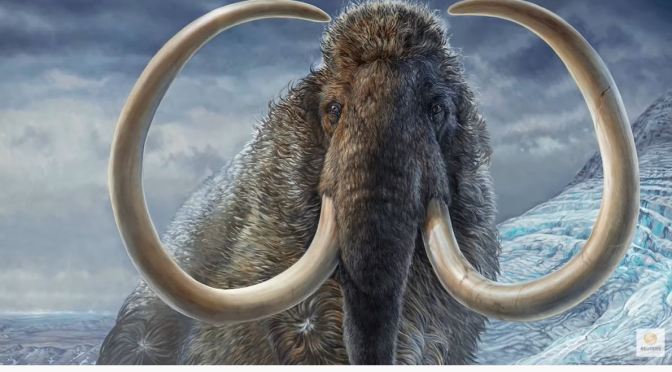
Science: Wooly Mammoth Tusks & Ice Age Extinction
A woolly mammoth that roamed Alaska 17,000 years ago covered enough ground in its 28-year lifetime to nearly circle the globe twice, an analysis of one of its tusks suggests.

Science: Vitamin D Trial In Asthmatic Children, Risks to Machine Learning
Charles Piller, an investigative journalist for Science, talks with host Sarah Crespi about a risky trial of vitamin D in asthmatic children that has caused a lot of concern among ethicists.
They also discuss how the vitamin D trial connects with a possibly dangerous push to compare new treatments with placebos instead of standard-of-care treatments in clinical trials.
Next, Birhanu Eshete, professor of computer and information science at the University of Michigan, Dearborn, talks with producer Joel Goldberg about the risks of exposing machine learning algorithms online—risks such as the reverse engineering of training data to access proprietary information or even patient data.
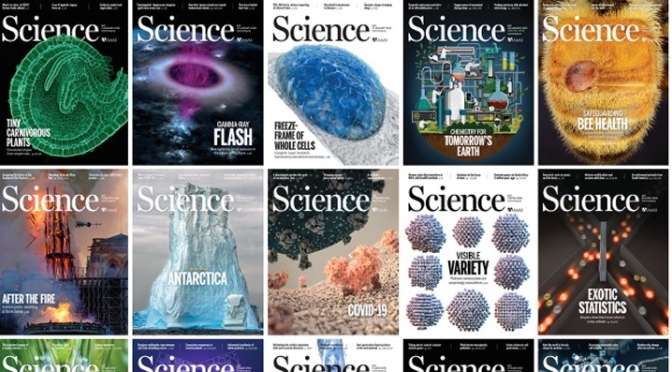
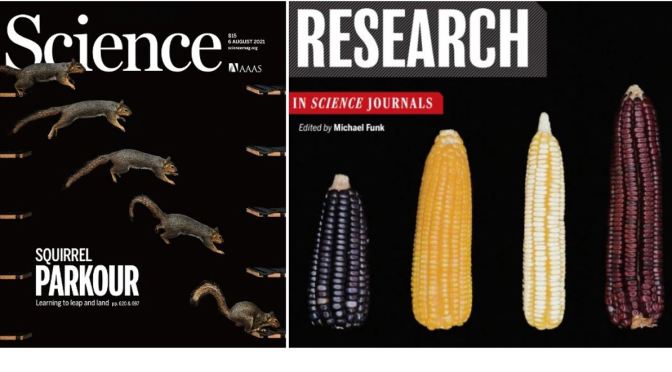
Front Covers: Science Magazine – August 13
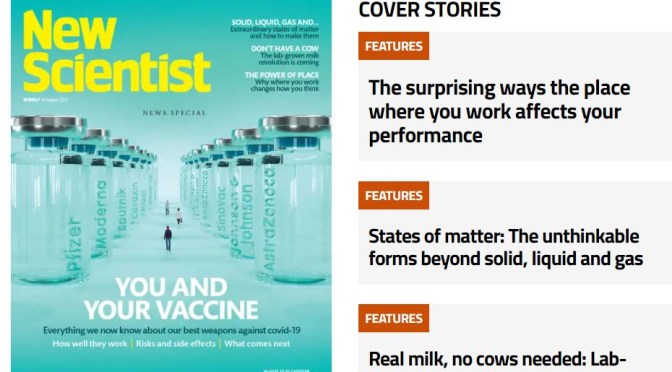
Previews: New Scientist Magazine – August 14

Science: Mapping A Bat’s Navigation Neurons In 3D, Poison Dart Frogs, Fabrics
Researchers uncover how grid cells fire in a 3D space to help bats navigate, and a fabric that switches between being stiff and flexible.
In this episode:
00:47 Mapping a bat’s navigation neurons in 3D
Grid cells are neurons that regularly fire as an animal moves through space, creating a pattern of activity that aids navigation. But much of our understanding of how grid cells work has involved rats moving in a 2D plane. To figure out how the system works in a 3D space, researchers have mapped the brain activity of bats flying freely around a room.
Research Article: Ginosar et al.
07:44 Research Highlights
How a ‘toxin sponge’ may protect poison dart frogs from themselves, and the world’s oldest known coin foundry has been found.
Research Highlight: An absorbing tale: poison dart frogs might have a ‘toxin sponge’
Research Highlight: Found: the world’s oldest known mint and its jumbo product
09:59 A flexible fabric that transforms from soft to rigid (and back again)
Researchers have created a ‘tunable’ fabric, inspired by medieval chainmail, that when compressed changes from flexible to rigid. The stiffened structure can hold 30 times its own weight, and the team behind it suggest this material could be used to build temporary shelters or have medical applications.
Research article: Wang et al.
16:33 Stark warning from the IPCC’s latest report
This week the UN’s Intergovernmental Panel on Climate Change released its long awaited report detailing compiling the latest climate science data. Nature’s Jeff Tollefson joins us to discuss the report and the warnings it contains for our warming world.
News: IPCC climate report: Earth is warmer than it’s been in 125,000 years

Homes & History: ‘Down House’ – Charles Darwin’s Home In Kent, England
Down House (confusingly, next to Downe village) was Darwin’s family home for nearly 40 years. In its rooms, gardens and grounds, he researched and refined the ideas for which he became famous.
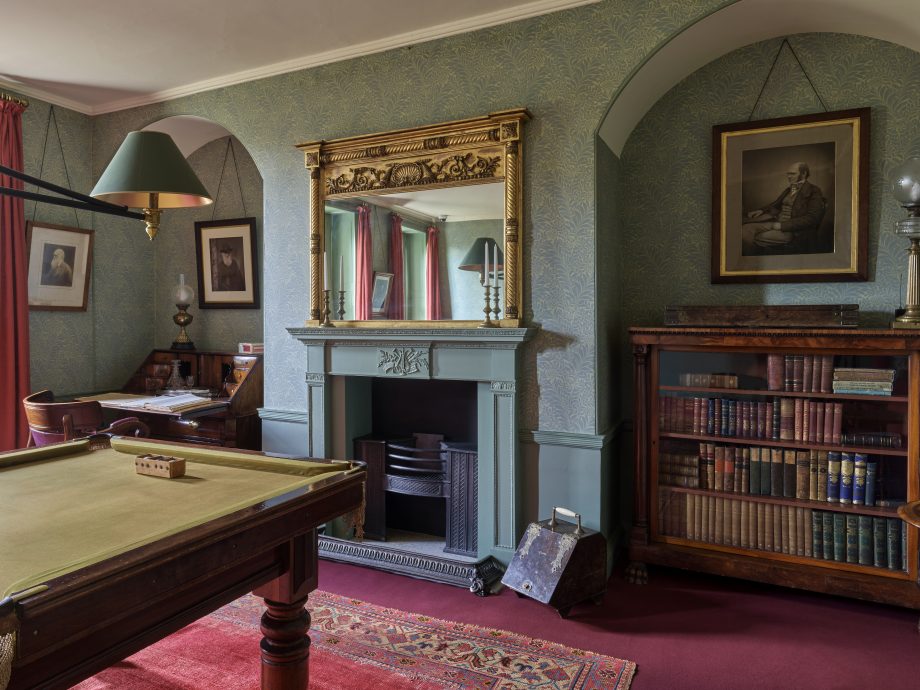

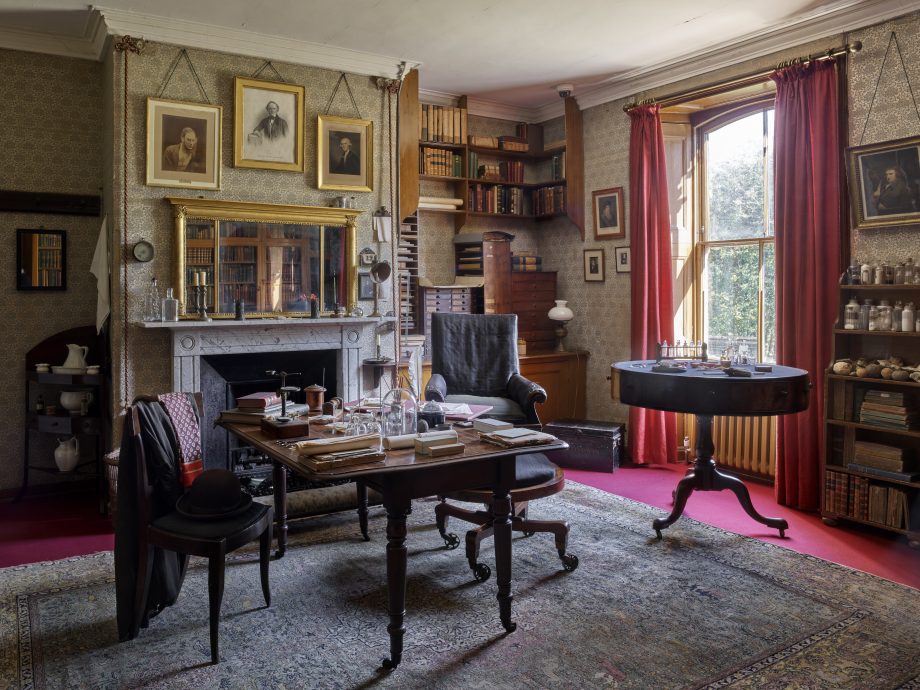


In origin, Down House was a plain Georgian property, a brick box with a main front five window bays wide built in about 1730. It was internally reconfigured and extended with a kitchen block by a wealthy businessman and landowner, George Butler, after he purchased the house in 1778.
At the same time, the main entrance was moved from the front to the side of the building. The house was then leased and sold again before coming into the possession of the Revd J. Drummond, vicar of Downe, in 1837. He employed the London-based architect Edward Cresy to make various improvements and also to render the house in conformity with the taste of the moment.
It was this house, with its 18 acres of land, that the Darwins occupied on September 24, 1842. Charles quickly settled into his new home, establishing a regular routine that distinguished his domestic arrangements. ‘My life goes on as clockwork,’ he wrote in 1843, ‘I am fixed in the place where I shall end it.’
Read more
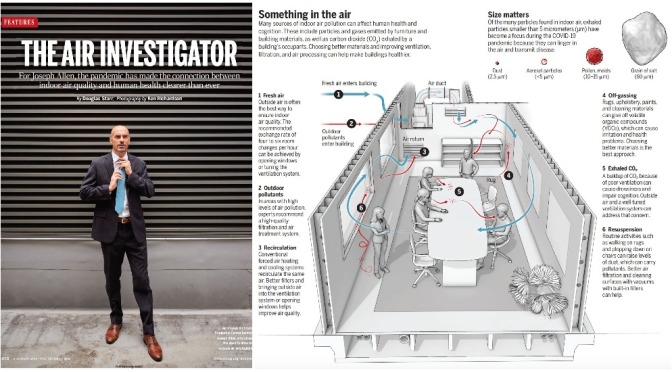
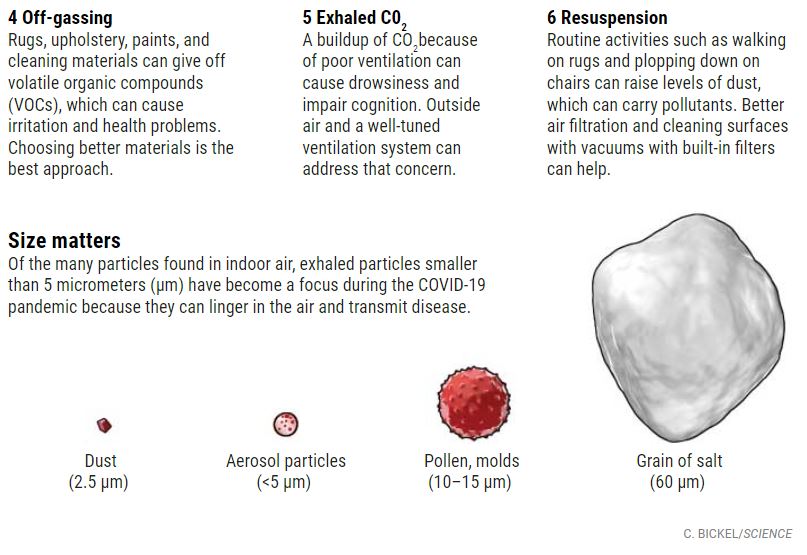
Science: Cleaning Indoor Air Will Improve Human Health And Cognition




Science: Prion Research Halted, Reducing Carbon Footprint Of Cement
International News Editor Martin Enserink talks with host Sarah Crespi about a moratorium on prion research after the fatal brain disease infected two lab workers in France, killing one.
Next, Abhay Goyal, a postdoctoral fellow at Georgetown University, talks with intern Claire Hogan about his Science Advances paper on figuring out how to reduce the massive carbon footprint of cement by looking at its molecular structure.
Finally, in a sponsored segment from the Science/AAAS Custom Publishing Office, Sean Sanders interviews Ansuman Satpathy, assistant professor in the department of pathology at Stanford University School of Medicine and 2018 winner of the Michelson Prize for Human Immunology and Vaccine Research, about the importance of supporting early-career research and diversity in science, technology, engineering, and math. This segment is sponsored by Michelson Philanthropies.
 Boomers Daily