Category Archives: Research

Preview: MIT Technology Review – January/Feb 2023

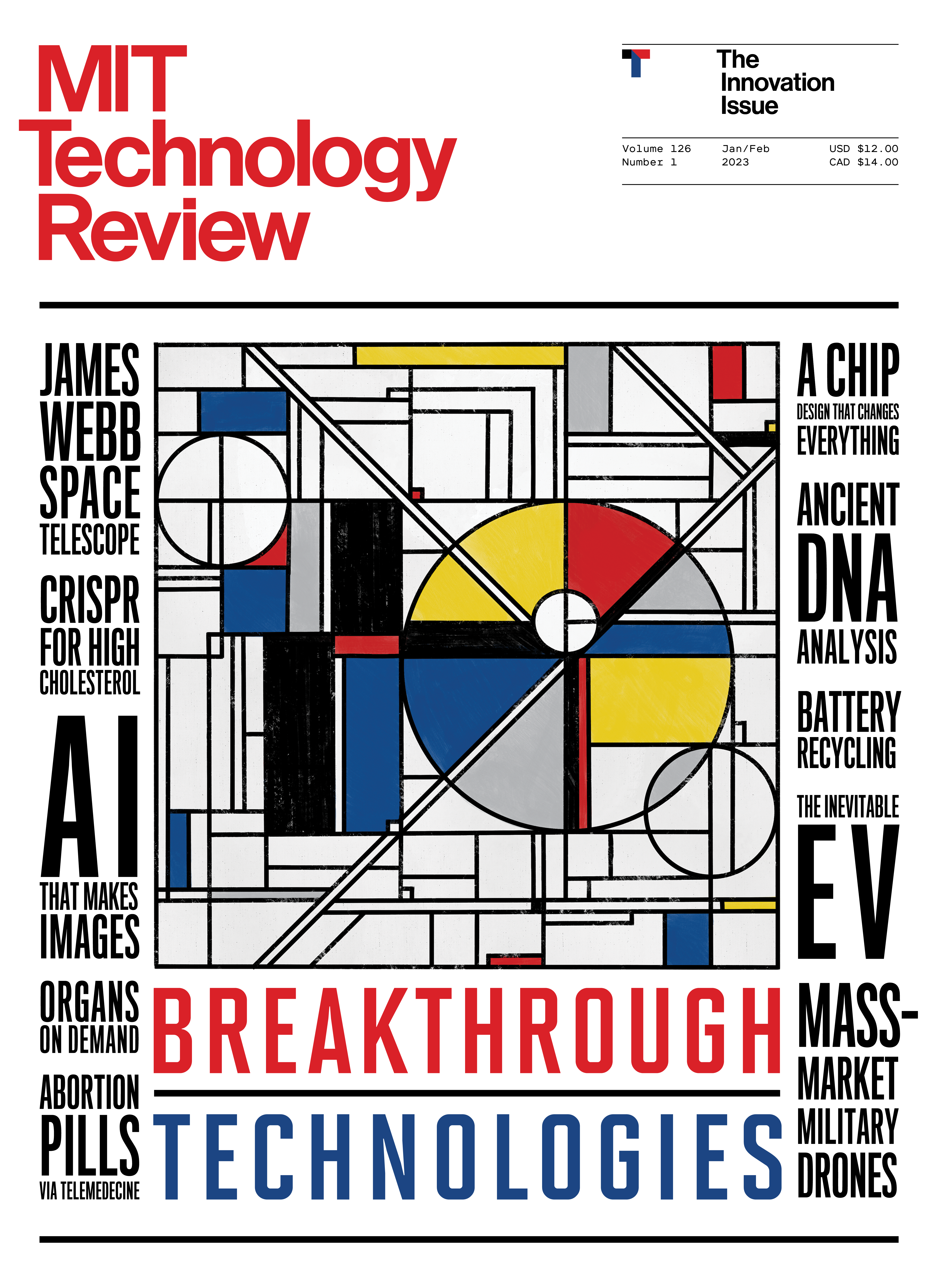
JF23 cover

MIT Technology Review – January/February 2023:

10 Breakthrough Technologies 2023

Our annual look at 10 Breakthrough Technologies—including CRISPR for high cholesterol, battery recycling, AI that makes images, and the James Webb Space Telescope—that will have a profound effect on our lives. Plus care robots, 3-D printing pioneers, and chasing bugs on the blockchain.

Generative AI is changing everything. But what’s left when the hype is gone?

No one knew how popular OpenAI’s DALL-E would be in 2022, and no one knows where its rise will leave us.

AI is bringing the internet to submerged Roman ruins

The technology is making it easier to monitor underwater archaeological sites.

Research Preview: Science Magazine – January 6, 2023

Science | AAAS

Science Magazine – January 6, 2023 Issue:

China is flying blind as the pandemic rages

Official death tolls are impossibly low, and some worry new variants may escape detection

Did ancient tentacled microbes kick-start complex life?

New studies suggest early Asgards evolved into eukaryotes

Once banned, spending earmarks see resurgence

Lawmakers can’t resist steering cash to universities and research projects back home

Ancient points suggest Asian roots for early American tools

Finds may support coastal route hypothesis for first settlers

Virus hunters test new surveillance tools

Ropes, drones, insects, and dust cloths could make monitoring faster, safer, and cheaper

Research Preview: Nature Magazine – January 5, 2023

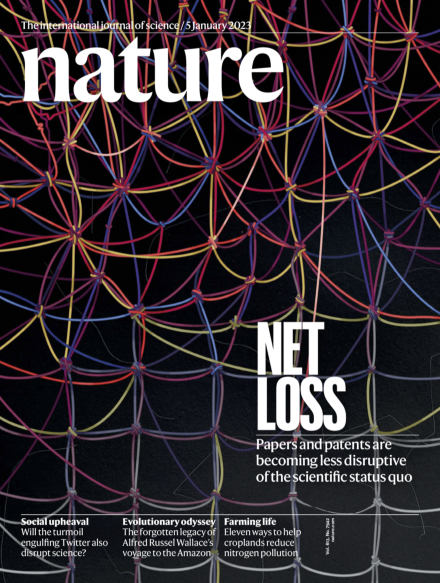
Volume 613 Issue 7942

nature Magazine – January 5, 2023 issue:

The science events to watch for in 2023

Moon landings, mRNA vaccines and climate finance are among the developments set to shape research in the coming year.

Are we in the Anthropocene? Geologists could define new epoch for Earth

Researchers have zeroed in on nine sites that could describe a new geological time, marked by pollution and other signs of human activity.

The ‘breakthrough’ obesity drugs that have stunned researchers

A class of drugs that quash hunger have shown striking results in trials and in practice. But can they help all people with obesity — and conquer weight stigma?

Research: New Scientist Magazine – January 7, 2023

ISSUE 3420 | MAGAZINE COVER DATE: 7 January 2023 | New Scientist

New Scientist Magazine – January 7, 2023 issue:

The 12 innovations we need to save humanity and the planet

Which inventions should we prioritize to safeguard the environment and human health and happiness? From better batteries and photovoltaic paint to a universal vaccine precursor

The crystal growers behind the graphene revolution

Takashi Taniguchi and Kenji Watanabe create high-quality crystals that offer the perfect substrate on which to tailor-make two-dimensional materials with amazing electronic properties. They tell New Scientist how they grow their world-renowned crystals

Mysterious symbols in cave paintings may be earliest form of writing

Stone Age people in Europe appear to have recorded the reproductive habits of animals with markings on cave paintings, hinting at the early origins of writing

Previews: New Scientist Magazine – Dec 31, 2022

ISSUE 3419 | MAGAZINE COVER DATE: 28 December 2022 | New Scientist

New Scientist Magazine – December 31, 2022:

Largest ever animal may have been Triassic ichthyosaur super-predator

New fossil discoveries show predatory marine reptiles from 200 million years ago may have been bigger than today’s blue whales – and that they evolved astonishingly rapidly

In 2023, we have many opportunities to build a better future

The coming year will be a turning point for the Amazon rainforest, artificial intelligence and even our diets. Let’s choose a more hopeful direction for humanity

Achieving nuclear fusion would be building on the shoulders of giants

It took generations of work by engineers and scientists to reach this month’s nuclear fusion milestone, but there are big challenges ahead

Research Preview: Science Magazine – Dec 23, 2022

Science Magazine – December 23, 2022 issue:

Mars’s magnetic field was long-lived, reversible

Study of famed meteorite by quantum microscope hints at planet’s prolonged habitability

Lessons on transparency from the glassfrog

Transparency in glassfrogs has potential implications for human blood clotting

Making modern medicines

The business side of drug development comes to the fore in a tale of two blockbuster blood cancer therapeutics

Research Preview: Nature Magazine – Dec 22, 2022

Volume 612 Issue 7941

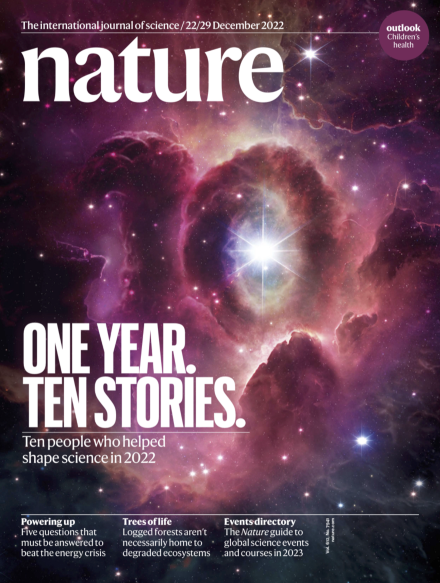
nature – December 22, 2022 issue:

One year. Ten stories.

As 2022 enters its final weeks, we look back on the past 12 months through the lens of Nature’s 10 — ten people who helped to shape science during the year. The cover takes its inspiration from the stunning images that have so far emerged from the James Webb Space Telescope. Launched on Christmas Day 2021, the telescope sent its first image back to Earth this summer and has since provided astronomers with views of the Universe in unprecedented detail.

Why does fat return after dieting? The microbiome might have a hand

Experiments on mice suggest that gut bacteria contribute to the post-diet rebound of fat tissue.

Blue diamonds from the deep Earth are all wet

Chemical analysis of rare gems suggests that seawater played a part in their creation.

Previews: Science News Magazine – Dec 17, 2022

Science News | The latest news from all areas of science

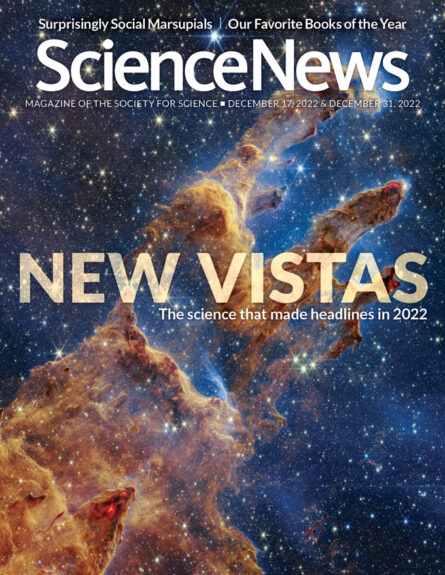
Science News (December 17, 2022) Issue:

In 2022, the James Webb Space Telescope brought us new views of the cosmos

Science News looks back at some of the most stunning images from the James Webb telescope’s first year in space.

Long considered loners, many marsupials may have complex social lives

Viruses other than the coronavirus made headlines in 2022

Research Preview: Science Magazine – Dec 16, 2022

Image

Science Magazine – December 16, 2022 issue:

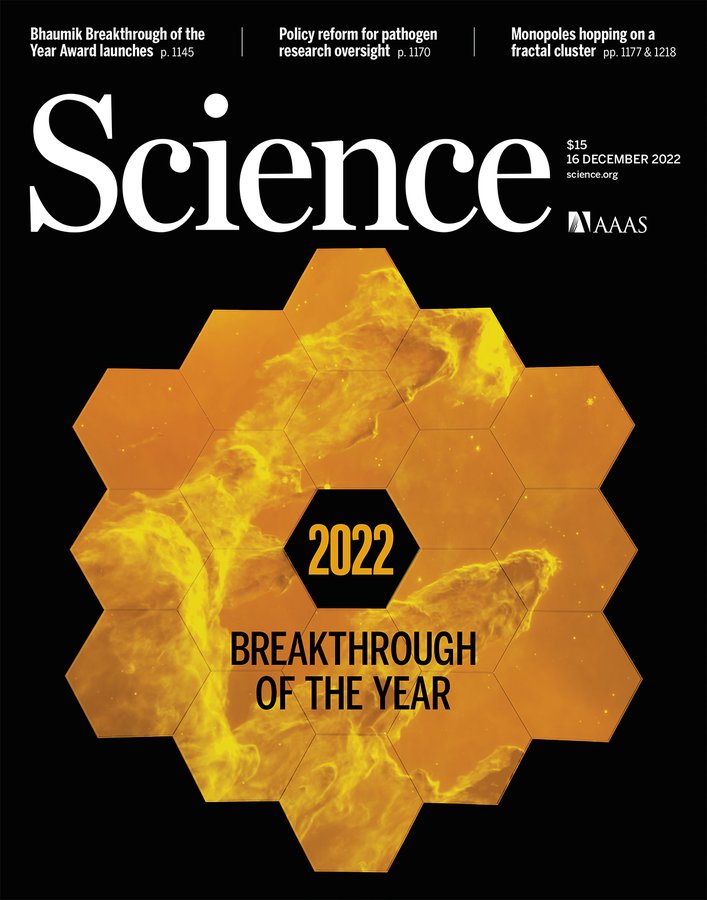
2022 BREAKTHROUGH OF THE YEAR

Golden eye

A new space telescope makes a spectacular debut after a troubled gestation

Tarantula Nebula captured by JWST’s Mid-Infrared Instrument. In this light, the young hot stars of the cluster fade in brilliance, and glowing gas and dust come forward.

Seen with JWST’s midinfrared instrument, the newborn stars of the Tarantula nebula fade into the background while clouds of dust and gas take center stage, including hydrocarbons that will later form planets.NASA; ESA; CSA; STSCI; WEBB ERO PRODUCTION TEAM

RUNNERS-UP

Perennial rice promises easier farming

AI gets creative

Preview: New Scientist Magazine – Dec 17, 2022

ISSUE 3417 | MAGAZINE COVER DATE: 17 December 2022 | New Scientist

New Scientist (December 17, 2022) issue:

How reindeer eyes change colour in winter to help them see in the dark

It turns out reindeers’ amazing night vision is thanks to a strange ‘mirror’ in their eyes called the tapetum lucidum that is extra sensitive to UV light

How a US civil war shipwreck became a template for marine conservation

The USS Monitor, an iconic piece of military history, sank 160 years ago. Now a marine sanctuary, the wreck has become an unlikely testbed for ocean conservation

NASA’s asteroid redirection spacecraft was a smashing success in 2022

The Double Asteroid Redirection Test aimed to change the orbit of the space rock Dimorphos, and it did so perfectly