Category Archives: Online

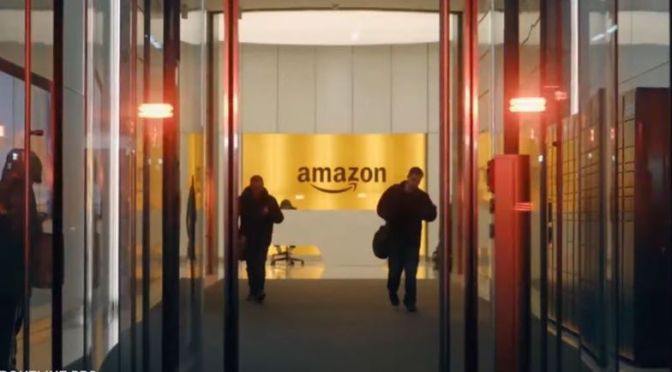
Online: ‘Inside Amazon’s Smart Warehouse’ (Video)

Amazon is the world’s biggest retailer, and its CEO Jeff Bezos the world’s richest man, for one very good reason. His company is better than anyone else, ever, at giving people what they want, quickly. Amazon acquired its undisputed status as heavyweight champion of the retail universe thanks largely to its lightning-fast delivery times.

The astonishing feat of ferrying hundreds of millions of items, from guitar strings to saucepans to car parts, directly to your door, inside 24 hours, is nothing short of a modern logistical miracle. So how does Amazon do it? A super-smart army of slave robots, for one. Ingenious, if occasionally unscrupulous, management practices are part of the answer too.

And the modern-day voodoo of deep-learning AI – all of which are made flesh in the most advanced stockrooms the world has ever seen. So join us today, as we button up our hi-vis jacket and journey inside Amazon’s smart warehouses.
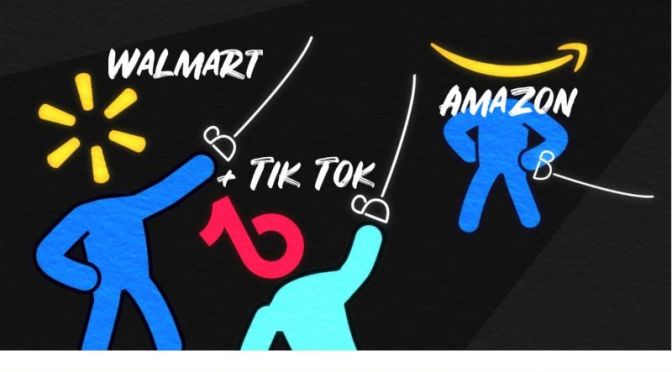

How A Walmart-Tik Tok Deal Could Transform Online Shopping (Video)

Walmart’s potential deal with TikTok may not only change the retail giant, it could reshape how Americans shop online. Video commerce, which allows users to shop while they watch viral videos, is already wildly popular in other countries.

Illo: Mike Cheslik for the Wall Street Journal

Online Payments: What Is The Chinese App “Alipay” From “Ant”? (WSJ Video)

The Chinese fintech titan Ant Group—co-founded by Alibaba billionaire Jack Ma—is set to go public in what could be one of the largest listings ever. WSJ explains how Ant’s backbone service, Alipay, has revolutionized payments and investing in the world’s most populous country.

Photo Composite: Crystal Tai

Online Collection Video: Cornell To “Digitize” 7 Million Insect Specimens

The Cornell University Insect Collection has begun to digitize all seven million of its specimens, including a collection of butterflies from author Vladimir Nabokov. CUIC’s director and curator Corrie Moreau says that she expects that due to the enormity of the project, it may not be finished in her lifetime.

Website

Online Streaming: “How Spotify Came To Dominate Digital Music” (CNBC)

Streaming has become this decade’s preferred way of listening to music. It’s an $11 billion dollar industry, making up 47% of global music industry revenues, and Spotify has become the clear winner globally in terms of paid subscribers. Taking on behemoths like Apple, Amazon and Google, Spotify has dominated the global streaming music industry with about 130 million premium subscribers world-wide. Recently, Spotify secured distribution deals with Joe Rogan and Kim Kardashian West to produce podcasts for the platform. Watch CNBC’s deep-dive into how Spotify started, how it became the audio leader, and where what’s to come next.

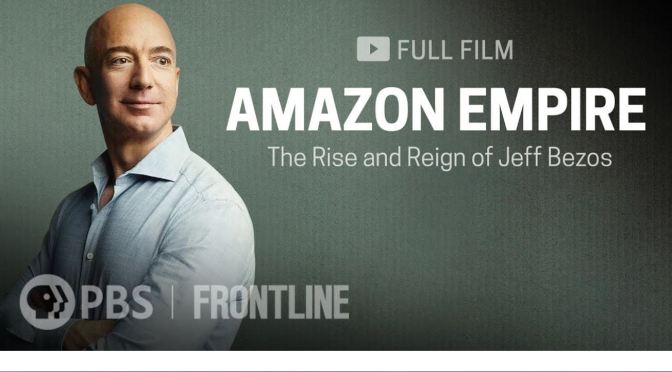
Technology: “Amazon Empire” (Frontline Video)

An inside look at how Amazon CEO Jeff Bezos built one of the largest and most influential economic forces in the world — and the cost of Amazon’s convenience.

Jeff Bezos is not only the richest man in the world, he has built a business that is without precedent in the history of American capitalism. His power to shape everything from the future of work to the future of commerce to the future of technology is unrivaled. As politicians and regulators around the world start to consider the global impact of Amazon — and how to rein in Bezos’ power — FRONTLINE investigates how he executed a plan to build one of the most influential economic and cultural forces in the world.

Media: 41% Of Americans Believe News Has Become Less Reliable, 44% No Change (Rand Corp, 2019)

From a Rand.org online release:

Rand Corporation LogoMany people (41 percent) indicated that they believed that news has become less reliable than in the past; a similar number (44 percent) said they believed there has been no change; and 15 percent said they thought news is more reliable now.
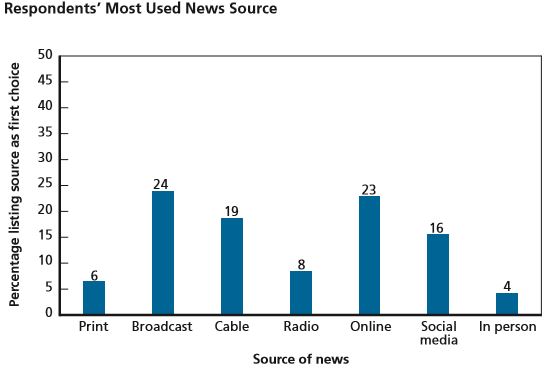
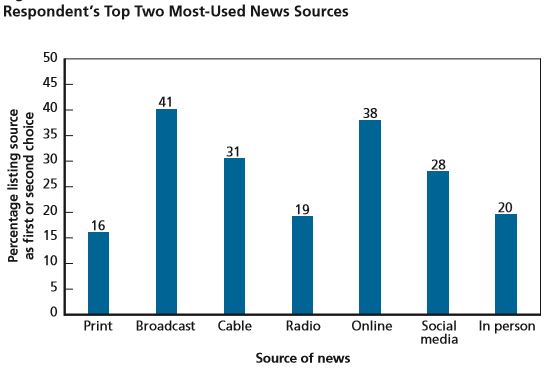
Different demographic groups get their news in different ways

  • People whose primary news sources are social media and in-person contacts are generally younger and female, and they tend to have less education than a college degree and lower household incomes.
  • People whose primary news sources are print publications and broadcast television tend to be be significantly older, and they are less likely to be married.
  • People whose primary news source is radio are significantly more likely to be male, less likely to be retired, and more likely to have a college degree.
  • People whose primary news sources are online platforms are significantly younger, more likely to be male and have a college degree and higher income, and less likely to be black.

Attitudes toward the reliability of news are mixed

  • Overall, 44 percent reported that they believed “the news is as reliable now as in the past.”
  • Nearly the same amount — 41 percent — reported a belief that the news has become less reliable.
  • A minority (15 percent) said that they believed that the news is more reliable now.
  • There was an association between news consumption profiles and perceptions of reliability — people who relied more heavily on online, radio, and social media/in-person platforms to obtain news were less likely to say that news is more reliable now than in the past.

Rand News Study Respondents' Most Used News Source

Rand News Study Respondents' Top Two Most-Used News Source


To view full Rand Study: https://www.rand.org/pubs/research_reports/RR4212.html?utm_source=WhatCountsEmail&utm_medium=RAND%20Policy%20Currents+AEM:%20%20Email%20Address%20NOT%20LIKE%20DOTMIL&utm_campaign=AEM:631600804