The website is about the work of the designer, writer and illustrator Peter Campbell (1937‑2011). The intention is to present an archive of Peter’s illustration, design and editorial work, as well as occasional selections from his writing.
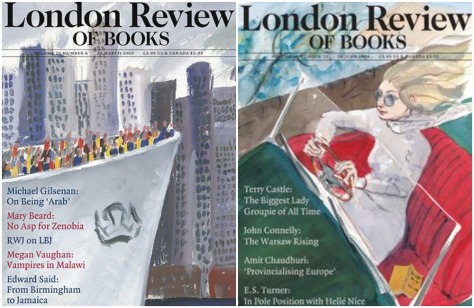
When asked what he did for a living, Peter would usually say he was a designer, or, a typographer. Designing for print – books, exhibition catalogues, magazines, posters – 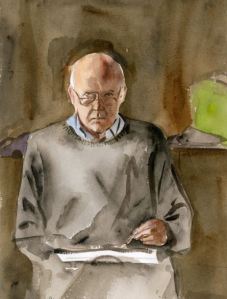 took up the most substantial part of his time, at the BBC in the 1960s and 1970s and thereafter as a freelance. He was also an illustrator, a journalist, an author of children’s books, an editor and a publisher. The great range of his professional work, and his encompassing interest in the work of others, made him a collaborator sought out by writers, publishers and artists.
Diana Souhami, who worked with Peter often, wrote in the Guardian after his death: “He had the ability to conceptualise what each publishing project needed and to get it right. He was hugely and diversely productive, but seldom hit a wrong note.”
Discussing his journalism in her appreciation in the London Review, Mary‑Kay Wilmers wrote: “There are people whom getting a grip doesn’t suit, who don’t want to be confined. One can honour the world in depth or across a wide range and there were few aspects of the world that Peter didn’t wish to honour.”
He probably would have been delighted by – and certainly modestly sceptical of – Alan Bennett’s appraisal, in the posthumous publication of a catalogue of his pictures in Artwork, that he was “an heir to Ardizzone, Bawden and Ravilious.”
Peter Campbell was born in Wellington, New Zealand in 1937. In 1960 he emigrated to London where he lived for the rest of his life. He died in 2011.
Website


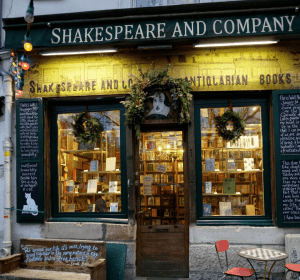 Gertrude Stein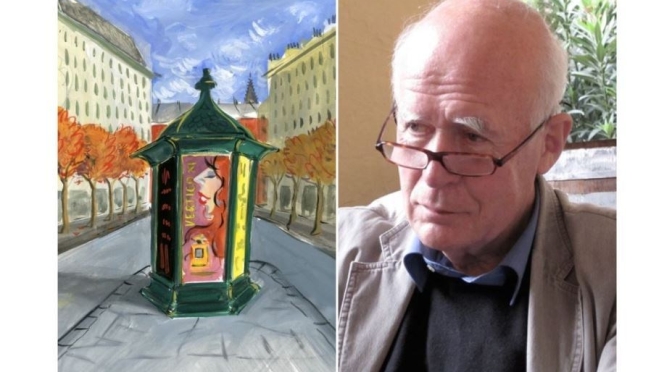

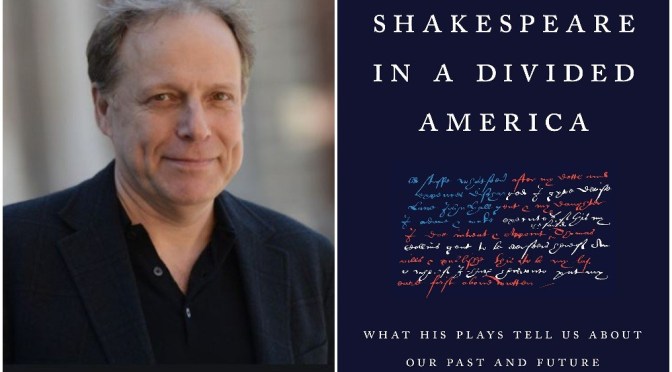
 In a year of plagues, power struggles and star-crossed lovers divided by lockdown, Anne McElvoy asks James Shapiro, author of “Shakespeare in a Divided America”, what the bard would make of it all. Shakespeare is claimed by Americans of all political stripes.
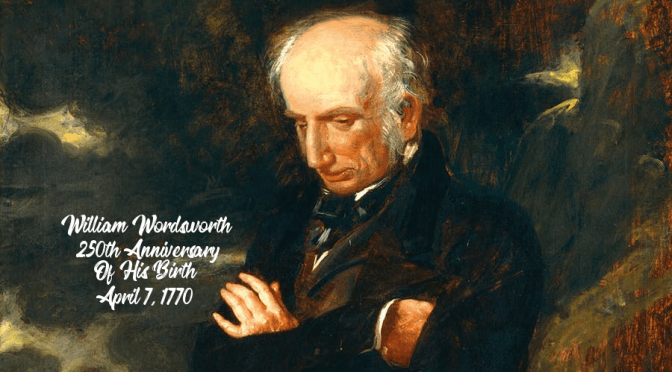
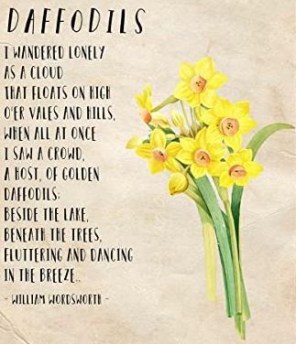 ‘We are fond of tracing the resemblance between Poetry and Painting,’ wrote William Wordsworth
 When, in 1840 or so, a well-meaning houseguest called Margaret Gillies made a drawing of the 70-year old Mrs Wordsworth, everyone agreed that it was an excellent likeness; but her kind act was rewarded with a testy and somewhat ungracious sonnet from the sitter’s husband. He preferred to visualise Mary in her salad days: ‘’tis a fruitless task to paint for me, / Who, yielding not to changes Time has made, / By the habitual light of memory see / Eyes unbedimmed, see bloom that cannot fade, / And smiles that from their birth-place ne’er shall flee / Into the land where ghosts and phantoms be’.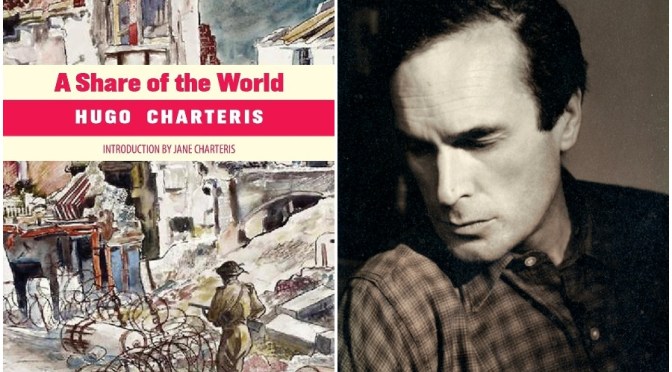
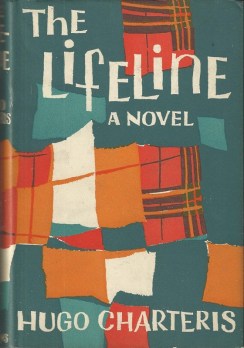 Alan Ross, for forty years
  almost five decades since his death of cancer in 1970, aged only forty-seven.
 The New York Public Library is marking its 125th birthday this year—in part with this list of their favorite books written for adults from the past 125 years, which they hope will “inspire a lifelong love of reading.”
 Boomers Daily