
We’re in Mercury retrograde. Here’s what that really means.
The planet’s apparent backward motion occurs for a few weeks about every four months. Here’s what’s really happening—and how astrology became a modern phenomenon.

The planet’s apparent backward motion occurs for a few weeks about every four months. Here’s what’s really happening—and how astrology became a modern phenomenon.
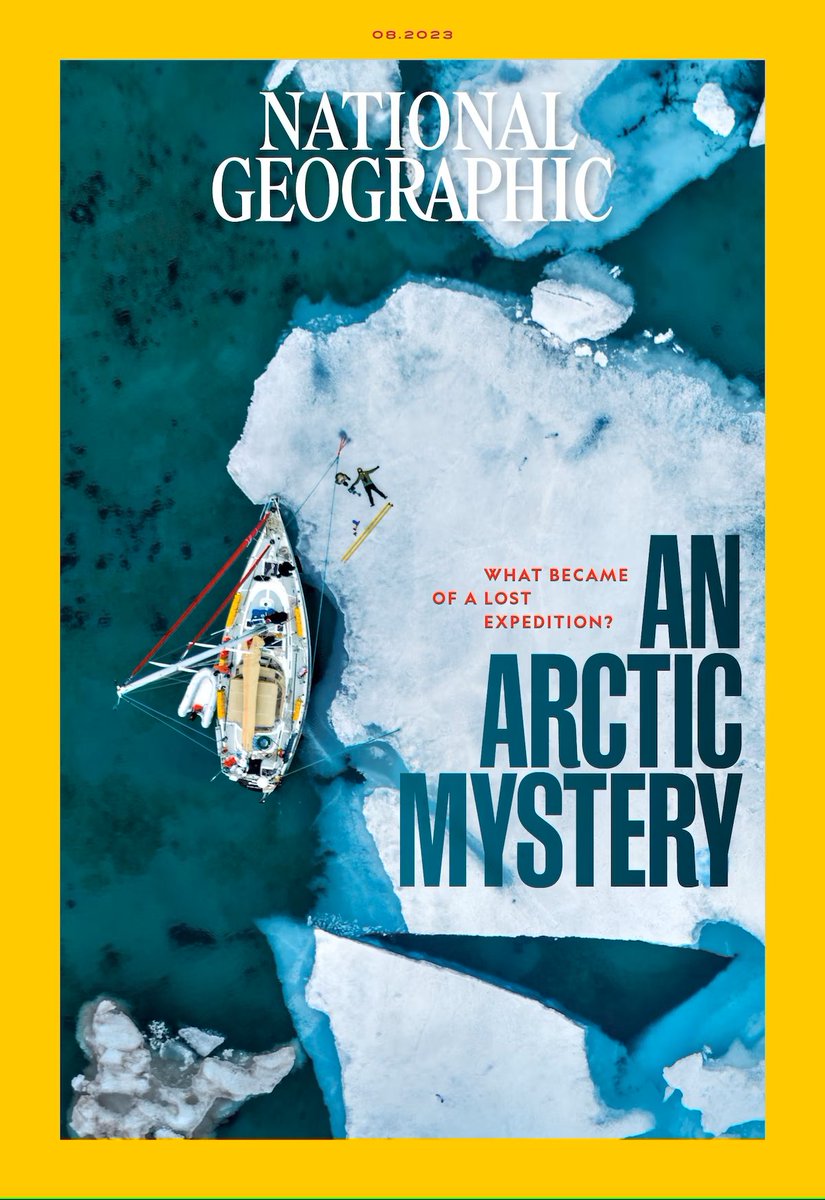

In 1847, Sir John Franklin and a crew of 128 men disappeared while searching for the fabled Northwest Passage. A National Geographic team sought to find evidence of their fate—but the Arctic doesn’t give up its secrets easily.
BY MARK SYNNOTT
Jacob Keanik scanned his binoculars over the field of ice surrounding our sailboat. He was looking for the polar bear that had been stalking us for the past 24 hours, but all he could see was an undulating carpet of blue-green pack ice that stretched to the horizon. “Winter is coming,” he murmured. Jacob had never seen Game of Thrones and was unaware of the phrase’s reference to the show’s menacing hordes of ice zombies, but to us, the threat posed by this frozen horde was equally dire. Here in remote Pasley Bay, deep in the Canadian Arctic, winter would bring a relentless tide of boat-crushing ice. If we didn’t find a way out soon, it could trap us and destroy our vessel—and perhaps us too.
BY SOREN WALLJASPER,
In 1845, British explorer Sir John Franklin and his crew of 128 men set out in search of the Northwest Passage—a fabled sea route from the Atlantic to the Pacific that would hasten trade between Europe and Asia. None of Franklin’s crew survived. The Norwegian ship Gjøa in 1903-06 made the first successful passage. In 2022, a National Geographic team attempted to retrace Franklin’s expedition to find fresh evidence of its undoing.
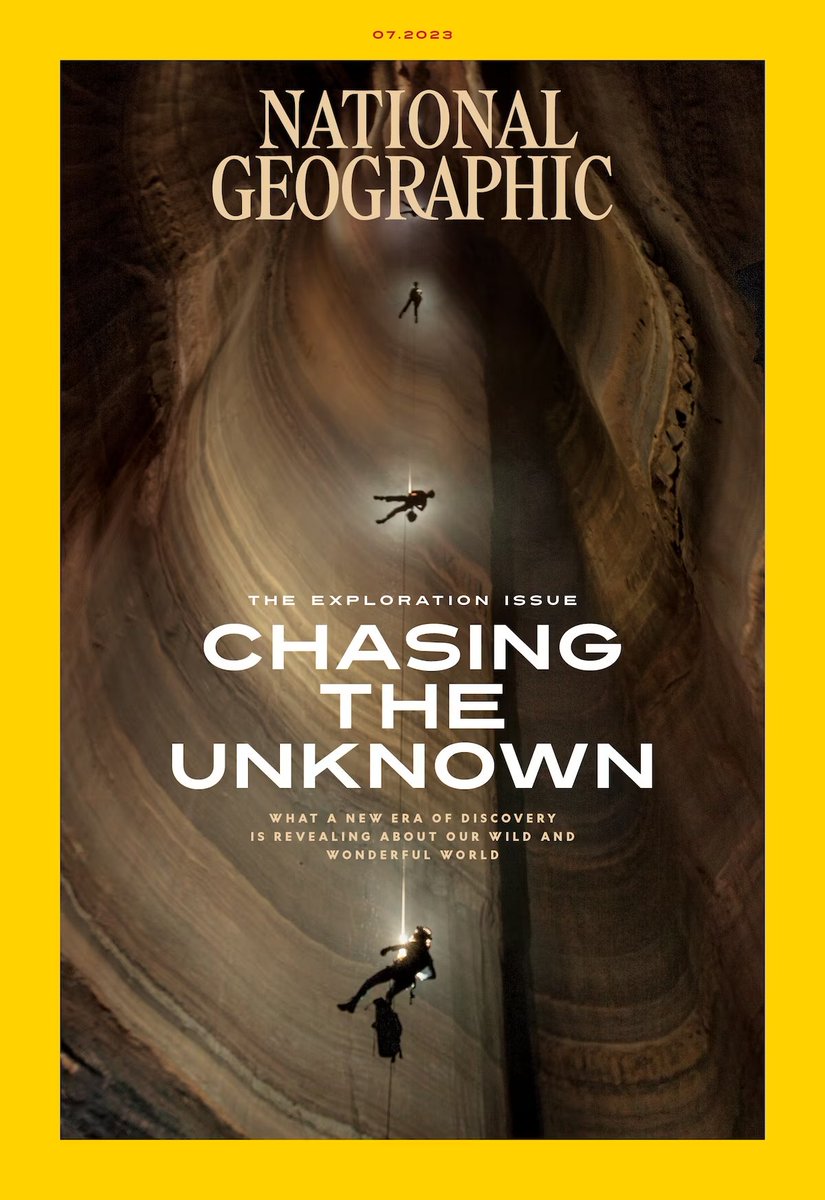

Why do we explore? It’s just what humans do. But how we define it is changing.
BY NINA STROCHLIC
There is only one museum along the old Oregon Trail that tells the story of America’s westward expansion through the eyes of those being expanded into. In a corner of Oregon bordered by Washington and Idaho, this wood-paneled warren of galleries and interactive exhibits celebrates the heritage of Native people and mourns what was destroyed when the pioneers arrived. Walking down a long ramp, visitors enter the brick facade of a replica “Indian training school,” where Native children were forcibly converted and assimilated. A life-size photo of the students stares back from over a century ago; their matching uniforms make them look like tiny soldiers.

In a two-year expedition, a National Geographic photographer is documenting the mighty river and the greater ecosystem from the Andes to the Atlantic.
STORY AND PHOTOGRAPHS BY THOMAS PESCHAK
Two jaguars leap into the river, lunging at pacas. These oversize rodents, with blotched and striped coats, are agile swimmers. Piranhas, attracted by the commotion, hover nearby.
I’m photographing this riveting scene, but I’m not underwater as I usually am when I’m on assignment. Instead of diving to see this aquatic life, I’ve climbed to a rocky ledge far above a rainforest. The jaguars, pacas, and piranhas are not flesh and blood; they are prehistoric artworks painted with hematite, a blood-red iron oxide, in exquisite detail. I am in awe, as if seeing the ceiling of the Sistine Chapel for the first time.
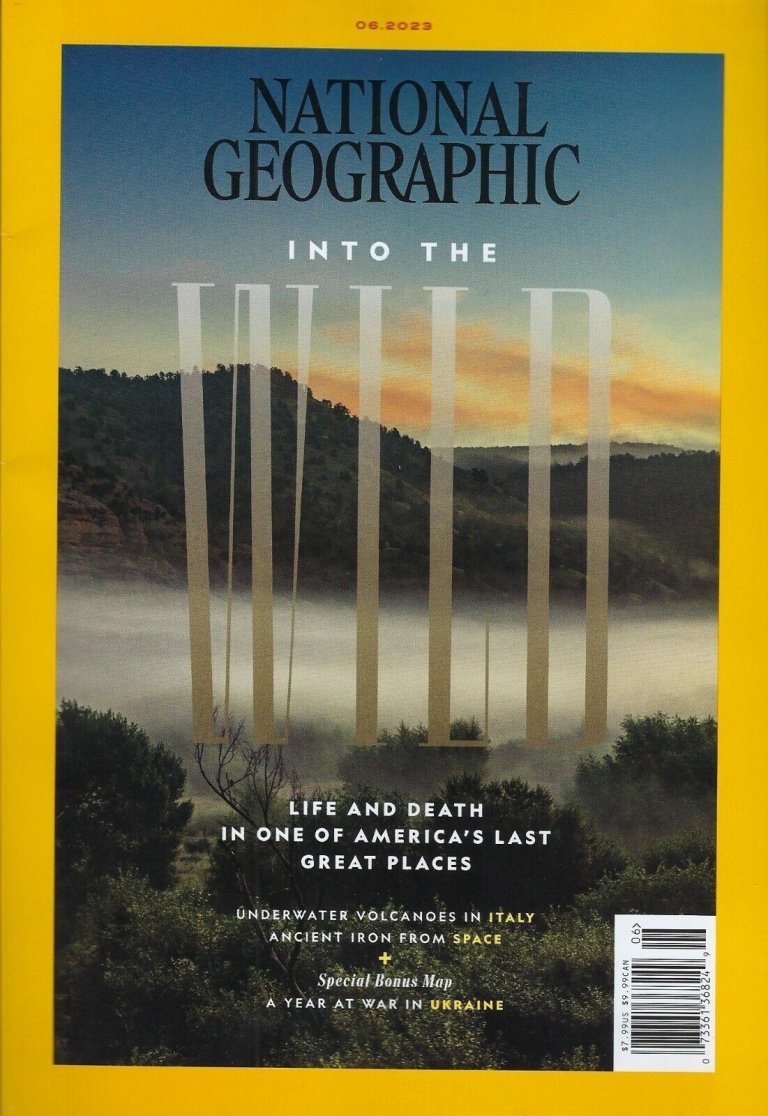
Off the coast of Italy, the Mediterranean’s most active volcano system is extremely volatile—yet our photographer found that marine life clings on all the same.
Early cultures used meteorites to craft weapons and jewelry long before anyone knew how to extract iron from ore.
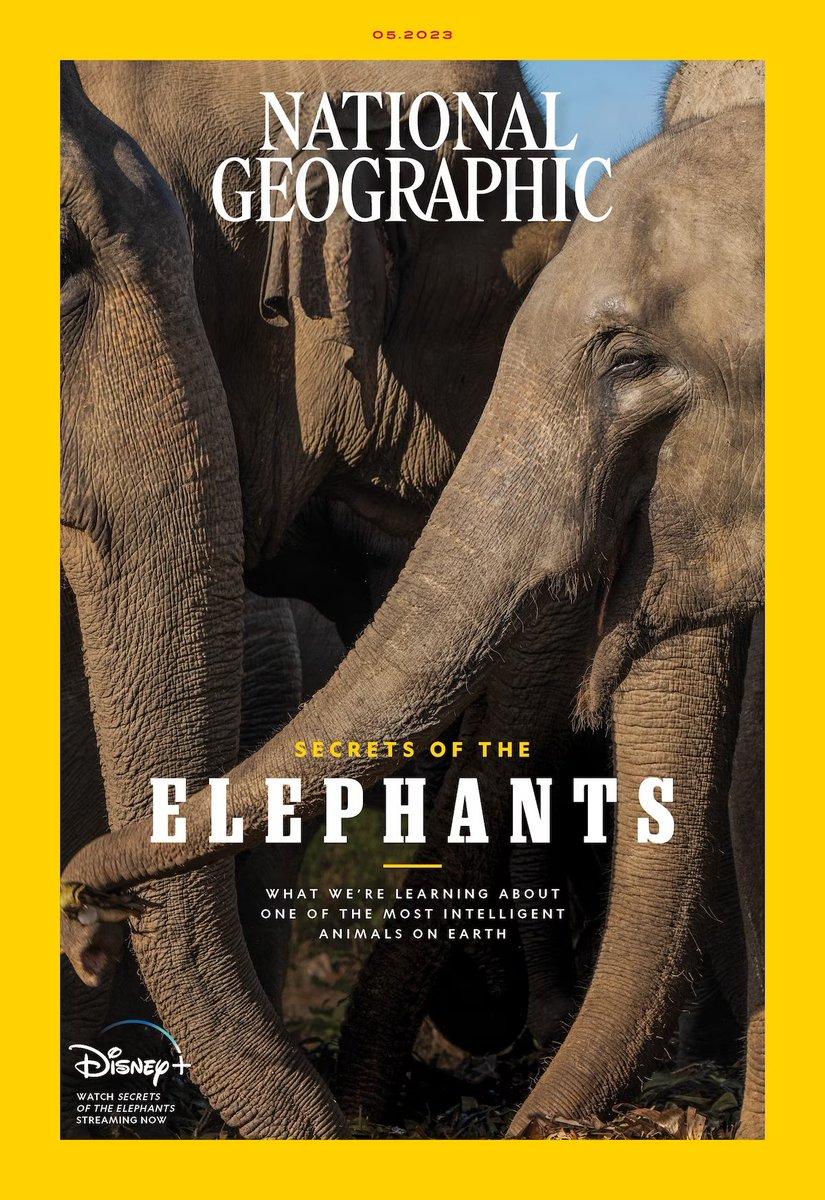
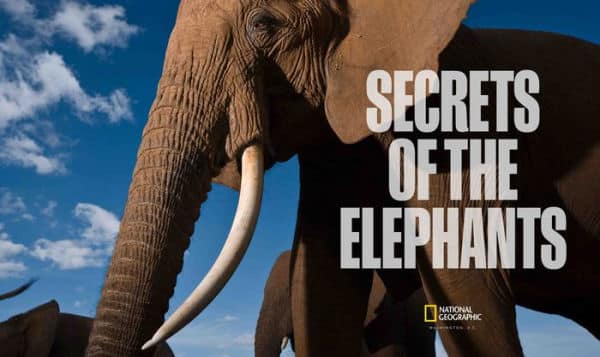
ASIAN ELEPHANTS ARE LEARNING TO LIVE WITH US. BUT WILL WE LEARN TO LIVE WITH THEM?
This small Balkan country won its independence from Serbia 15 years ago, but still waits for justice for wartime victims and global recognition as a new nation.

The new comedic horror film is based on the real-life drug overdose of an American black bear—and illustrates how human recklessness endangers wildlife.
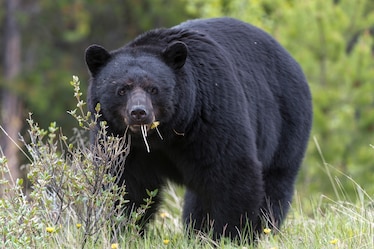
Unlike the movie, the real-life cocaine bear didn’t go on a coke-fueled rampage, but it did consume a fatal amount of cocaine left in the woods by smugglers. Here, an American black bear, Ursus americanus, eats dandelions.


is curious, outgoing, affectionate, and highly responsive to human emotion. He’s also talkative: Say his name, he purrs. In this portrait, his forward-tilted ears show he’s alert and his narrowed pupils that he’s relaxed.
PHOTOGRAPH BY VINCENT LAGRANGE

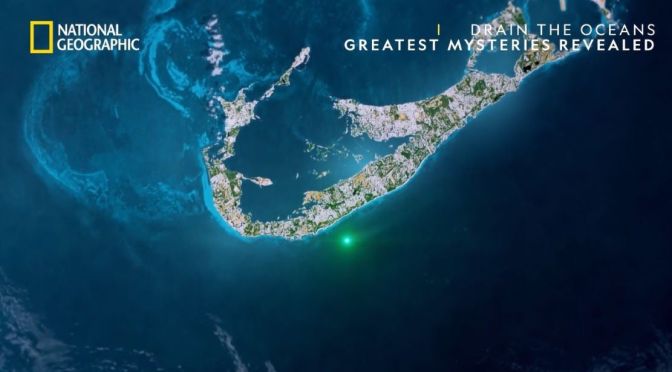
The Bermuda Triangle, also known as the Devil’s Triangle, is an urban legend focused on a loosely-defined region in the western part of the North Atlantic Ocean where a number of aircraft and ships are said to have disappeared under mysterious circumstances.
For centuries, scientists have struggled to explain why hundreds of ships disappear when they reach the Bermuda Triangle. This area in the Atlantic Ocean is home to approximately 300 vessels, with several of these ships capsizing under mysterious circumstances. Today, experts are diving into these crystal clear waters to visit some of the abandoned shipwrecks and determine why they never made it to dry land.
 Boomers Daily