Category Archives: Business

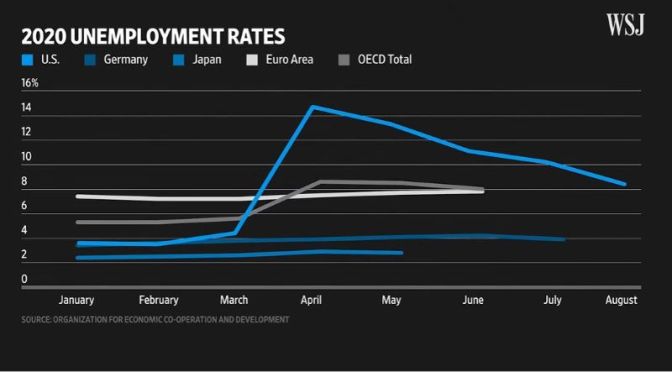
Economy: Why U.S. Job Recovery Is Different From Other Countries

The U.S. unemployment rate shot up faster than in any other developed country during the pandemic. WSJ explains how differences in government aid and labor-market structures can help predict how and where jobs might recover.

Video/Illustration: Jaden Urbi/WSJ

Future Of Work: The New ‘Flexible’ Workplace

AZURE MAGAZINE (SEPT 7, 2020): The future of work. In a year where the rhythms of daily life have been upended by the COVID-19 pandemic, the workplace has migrated from the office to the living room, kitchen table and – if the Zoom camera is off – even our beds.

But as Canada and countries around the world cautiously move towards re-opening their economies, a gradual, socially distanced return to the office beckons. So how should it all look?

When it comes to the office evolution, Teknion is ahead of the curve. Harnessing decades of innovation, the design-driven manufacturer’s flexible portfolio of workplace solutions is optimally positioned to create spaces that ensure employee safety while fostering learning, community and wellness.

Website

World Business: “The U.S. And China Battle Over Technology” (WSJ Video)

The tech battle between the U.S. and China has battered TikTok and Huawei and startled American companies that produce and sell in China. WSJ explains how Beijing is pouring money into high-tech chips as it wants to become self-sufficient.

Video/Illustration: George Downs/The Wall Street Journal

Public Investigations: “The Financial Crisis At The U.S. Postal Service” (WSJ Video)

More than a decade of losses have put the U.S. Postal Service in a dire financial situation. To understand how this happened, WSJ takes a look back at how the modern postal service became an entity balancing public service and the need for profit.

Photo Illustration: Jacob Reynolds/WSJ

Home Furnishings: “The Rise And Fall Of Pier 1”

Once known for its “treasure hunt” atmosphere, colorful home furnishings, and distinctive holiday decorations, Pier 1 filed for bankruptcy in February 2020.

Pier 1 later announced it was winding down its entire business, in part, due to the coronavirus pandemic. And while Pier 1 had a smaller share of the home furnishing industry than some of its rivals, those store closings could mean good news for a few retailers.

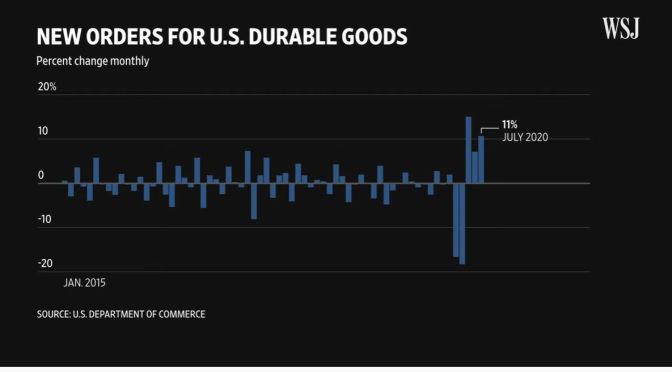
Economy: “Durable Goods Explained” (WSJ Videos)

The survey of new orders for long-lasting goods contains one of the most closely watched U.S. economic indicators. WSJ explains durable goods, and why investors look beyond the headline number for a better read on business activity.

Photo: Josie Norris/The San Antonio Express-News

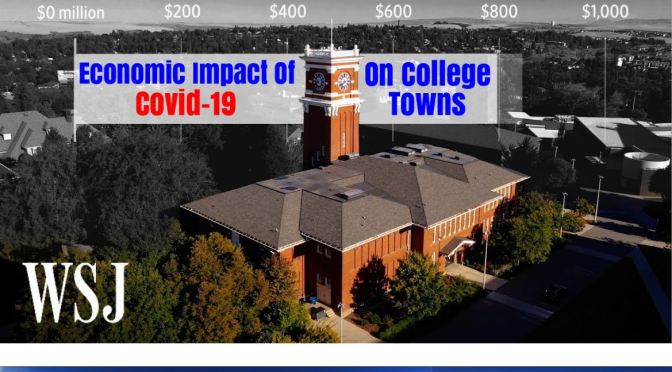
Videos: “College-Town Economies Brace for Covid-19 Blow” (WSJ)

The coronavirus has pushed nearly half of U.S. colleges and universities into some degree of remote learning, a change that’s sending shock waves through small college town economies. WSJ’s Carlos Waters explains.

Online Payments: What Is The Chinese App “Alipay” From “Ant”? (WSJ Video)

The Chinese fintech titan Ant Group—co-founded by Alibaba billionaire Jack Ma—is set to go public in what could be one of the largest listings ever. WSJ explains how Ant’s backbone service, Alipay, has revolutionized payments and investing in the world’s most populous country.

Photo Composite: Crystal Tai

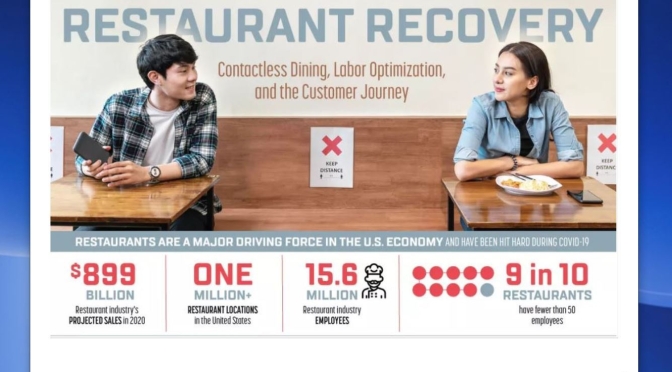
Infographics: The Major Challenges Restaurants Face Post Covid-19 (2020)

Restaurants must function at 75% capacity in order to achieve profitability. With many restaurants operating at 50% capacity or less, how do they make up the remaining 25%? The three main contributing factors are contactless dining, labor optimization and changing the customer journey. Learn more about how restaurants are recovering during the COVID-19 pandemic in this infographic by OneDine.

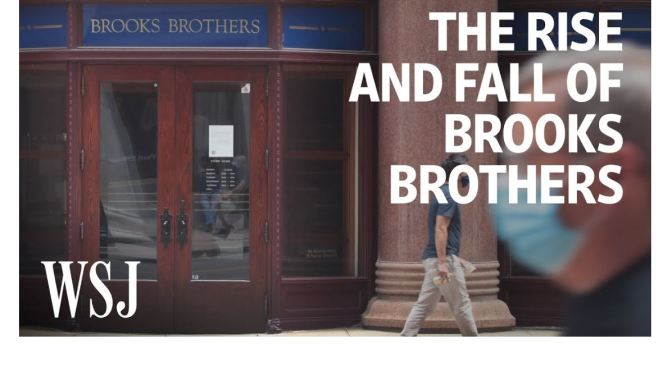
Clothing & Fashion: “The Rise And Fall Of Brooks Brothers” (WSJ Video)

Brooks Brothers — the self-proclaimed oldest clothier in the U.S. — filed for bankruptcy in July. Analysts say the suit dealer wasn’t able to keep up with modern men who often wanted styles that were cheaper and more functional.