
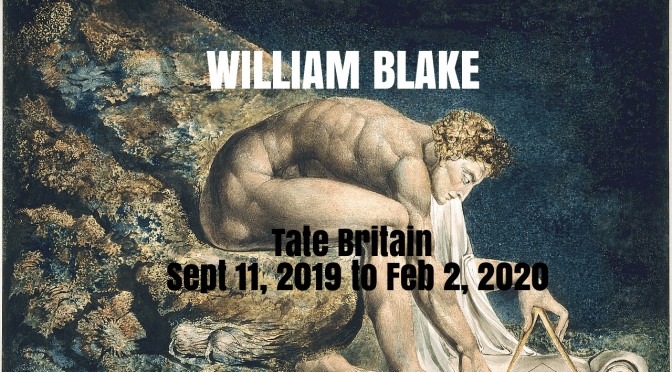
From a Tate Britain online description:
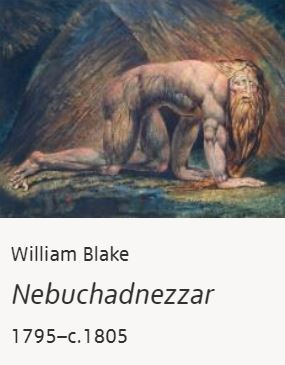 Although Blake was considered mad by contemporaries for his idiosyncratic views, he is held in high regard by later critics for his expressiveness and creativity, and for the philosophical and mystical undercurrents within his work. His paintings and poetry have been characterised as part of the Romantic movement and as “Pre-Romantic”. A committed Christian who was hostile to the Church of England (indeed, to almost all forms of organised religion), Blake was influenced by the ideals and ambitions of the French and American Revolutions.
William Blake (28 November 1757 – 12 August 1827) was an English poet, painter, and printmaker. Largely unrecognised during his lifetime, Blake is now considered a seminal figure in the history of the poetry and visual arts of the Romantic Age. What he called his prophetic works were said by 20th-century critic Northrop Frye to form “what is in proportion to its merits the least read body of poetry in the English language”. His visual artistry led 21st-century critic Jonathan Jones to proclaim him “far and away the greatest artist Britain has ever produced”. In 2002, Blake was placed at number 38 in the BBC’s poll of the 100 Greatest Britons.
To read more: https://www.tate.org.uk/art/artists/william-blake-39

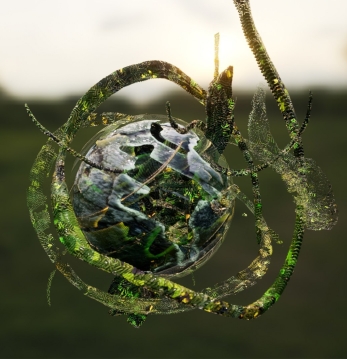 Designed as an augmented reality and spatial audio work downloadable as an app for mobile devices, it is both a site specific public artwork and a digital archive of these species, using tools and platforms from a range of fields including video games, computer generated images and film. Inspired by ecological science-fiction and scientific research, Kudsk Steensen creates a form of ‘slow media’ that uses the technological to foster attention rather than distraction.
 At first glance, Stephen Wilkes’ photographs look like a single moment in time. It is only upon closer inspection that viewers discover that each of his works is actually the result of shooting thousands of photographs from a stationary position over the course of a day and stitching them together digitally to create one cohesive panorama. The painstaking task of editing all of this information and whittling it down into one image can take months to complete, but the results capture a sense of place that can’t be expressed by a single frame alone.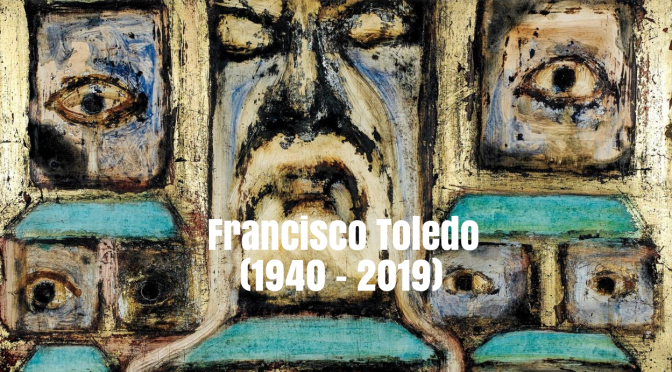
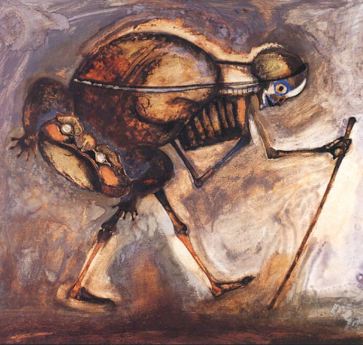 Though his paintings and sculptures sell all over the world for fabulous prices, he has not enriched himself. He lives simply, with his wife, Trine Ellitsgaard Lopez, an accomplished weaver, in a traditional house in the middle of Oaxaca, and has used his considerable profits to found art centers and museums, an ethnobotanical garden and at least three libraries.
 Toledo, whose origins were obscure and inauspicious, was the son of a leatherworker—shoemaker and tanner. He was born in Mexico City, but the family soon after moved to their ancestral village near Juchitán de Zaragoza in the Isthmus of Tehuantepec, nearer to Guatemala than to Mexico City—and being ethnically Zapotec, nearer culturally to the ancient pieties of the hinterland too.
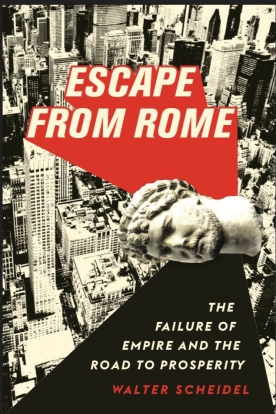 The fall of the Roman Empire has long been considered one of the greatest disasters in history. But in this groundbreaking book, Walter Scheidel argues that Rome’s dramatic collapse was actually the best thing that ever happened, clearing the path for Europe’s economic rise and the creation of the modern age. Ranging across the entire premodern world, Escape from Rome offers new answers to some of the biggest questions in history: Why did the Roman Empire appear? Why did nothing like it ever return to Europe? And, above all, why did Europeans come to dominate the world?
 Established in 1831, the Gorham Manufacturing Company adeptly coupled art and industry, rising to become an industry leader of stylistic and technological achievement in America and around the world. It produced public presentation pieces and one-of-a-kind showstoppers for important occasions, as well as tableware for everyday use. Its works trace a narrative arc not only of great design but also of American ambitions. In this volume, insightful essays are accompanied by gorgeous new photography of splendid silver pieces along with a wealth of archival images, design drawings, casting patterns, and company records that reveal a rich heritage of a giant in decorative arts and silver manufacturing.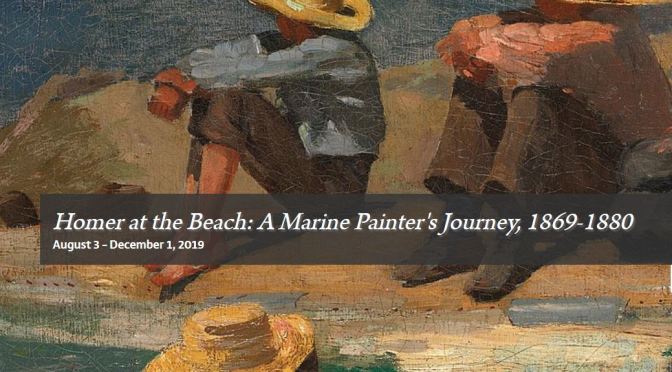
 That’s how I felt while visiting “Homer at the Beach: A Marine Painter’s Journey, 1869-1880,” an intimate exhibition at the Cape Ann Museum. The show is handsome, historically rich and perfectly positioned here at this harbor venue, which devotes galleries to regional maritime and fishing artifacts, local decorative arts, Gloucester sea captain Elias Davis ’s house and the works of the renowned illustrator and marine painter Fitz Henry Lane (1804-1865), a Gloucester native with whom Boston-born Winslow Homer (1836-1910) had much in common.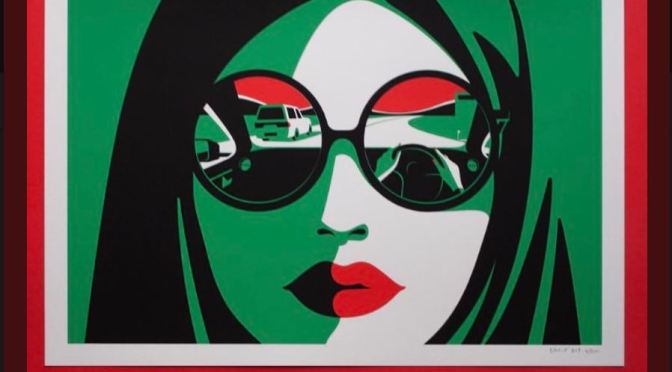
 From the top floor of a 1920s building in Hackney, in the East End of London, Favre’s confidence is at a peak. The bold, graphic style she has developed over the last fifteen years attracts prestigious projects. When she was invited to design the poster for this year’s Montreux Jazz Festival, held every summer in Switzerland since 1967, she became part of a group that includes Milton Glaser, Andy Warhol and Keith Haring. Her poster is full of female silhouettes dancing, the negative spaces between them forming instruments.
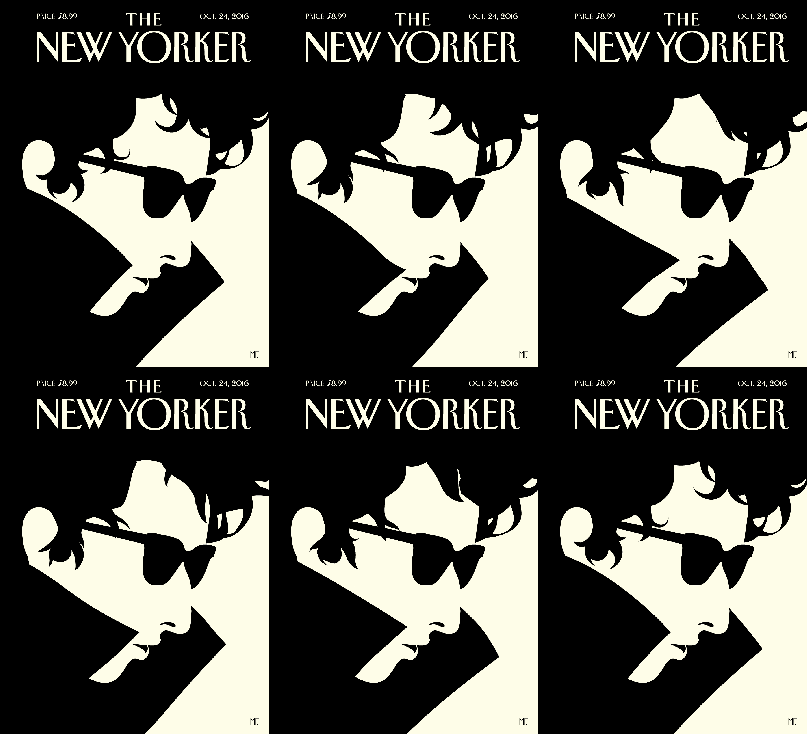 Favre is a French artist based in London.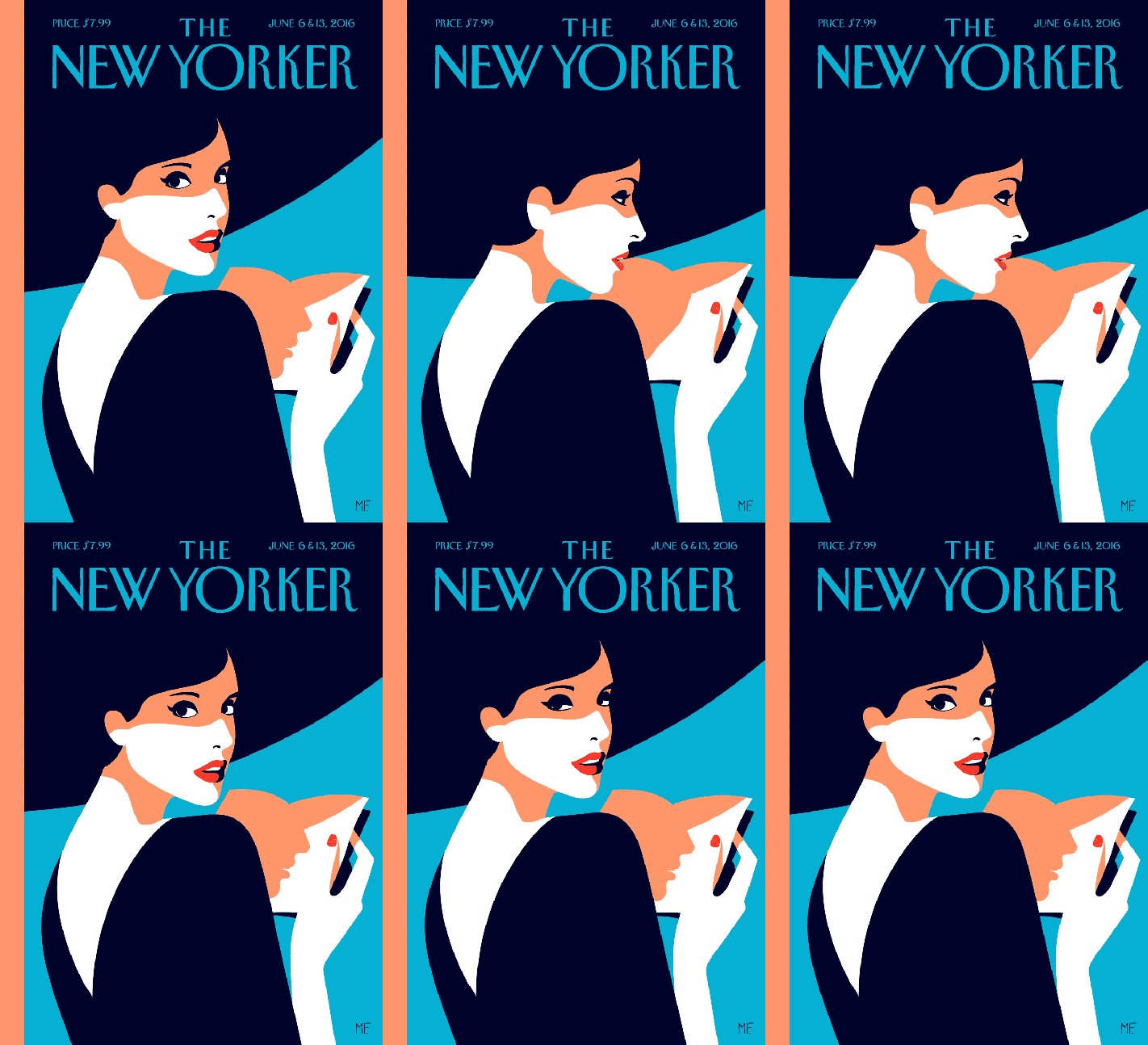
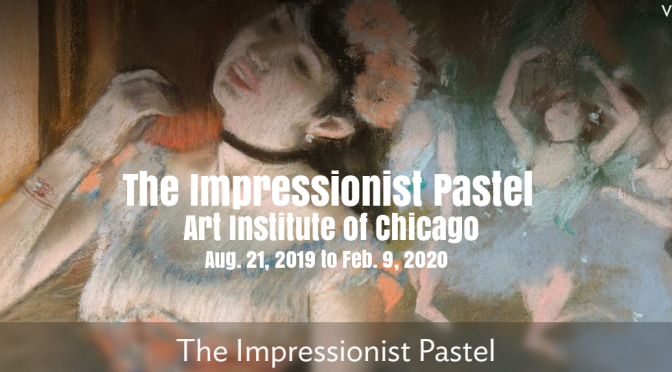
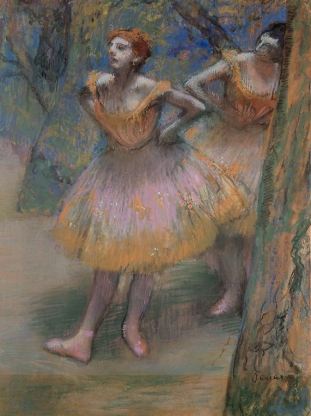 This focused installation features pastels by four artists whose work was shown in the Impressionist exhibitions: Mary Cassatt, Edgar Degas, Eva Gonzalès, and Berthe Morisot. Their subjects range from scenes of modern life, such as ballet performers and a woman working in a hat shop, to depictions of intimate moments of bathing and women with children.
 Pastel, a medium used to draw on paper or, less often, on canvas, is made by combining dry pigment with a sticky binder. Once artists have applied the pastel to the surface, they can either blend it, leave their markings visible, or layer different colors to create texture and tone. Pastel portraits had previously gained popularity in France and England in the 18th century, but fell out of fashion with critics when pastel was deemed too feminine; not only was it used by women artists, but it had a powdery consistency similar to women’s makeup. The Impressionists rejected this bias and instead embraced the medium’s ability to impart immediacy, boldness, and radiance.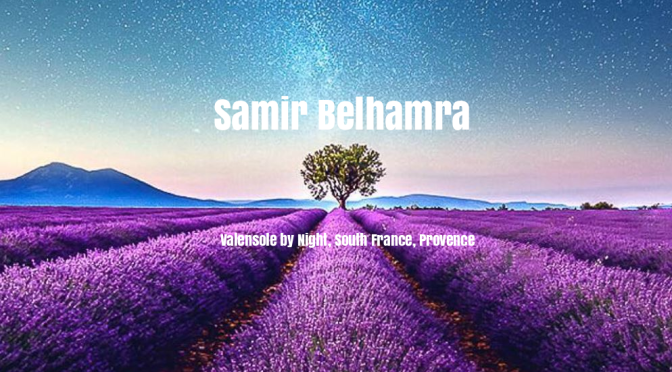
 To many nature photographers, no muse is quite as magical as a field of flowers. This tried and true subject is particularly popular with aerial photographers, whose atmospheric shots allow us to explore the mesmerizing meadows from soaring perspectives. One photographer taking this trend to new heights is
  Boomers Daily