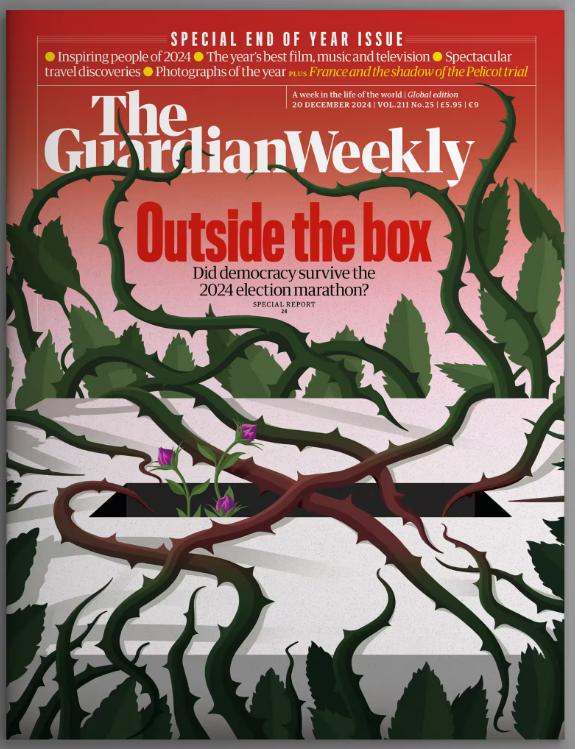
This was a year in which billions of people living in more than 80 countries had the right to cast their democratic votes in elections. But with democracy around the world under ever-greater threats – from attacks on freedom of speech, equality of participation and plurality of media to name a few – how did the election process bear up? Jonathan Yerushalmy and Oliver Holmes find reasons for hope amid the pressure.
1
The big story | France and the shadow of the Pelicot trial The mass rape case, in which verdicts and sentencing are expected this week, has horrified the world. But this is not French society’s first attempt to confront a sexually abusive culture, writes Kim Willsher, who has witnessed the harrowing proceedings in Avignon
2
Spotlight | How Ukrainian power plant workers keep the country running As winter closes in, Shaun Walker visits a Soviet-era coal-fired thermal installation to explore how it has held up to Russian attacks
3
Opinion | After the fall of Assad, the least Syrians deserve is our optimism With the tyrannical dynasty gone, it’s important not to impose a negative script on what comes next. Syrians deserve support and hope, argues Nesrine Malik
4
The shamelessness of Fifa’s process in awarding the 2034 tournament to Riyadh was a display of contempt for governance, democracy and good sense, writes Barney Ronay
What else we’ve been reading
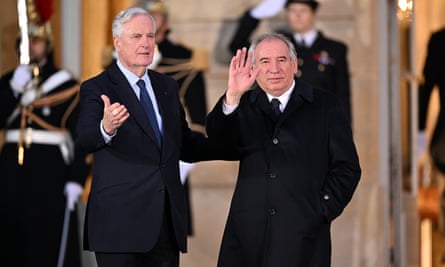
With France on its fourth prime minister in a year and Germany facing a snap election in February, Paris and Berlin correspondents Jon Henley and Deborah Cole explain why the driving forces of the European Union are in the doldrums. An excellent primer to understand what will be a shaky start to next year for European politics. Isobel Montgomery, deputy editor
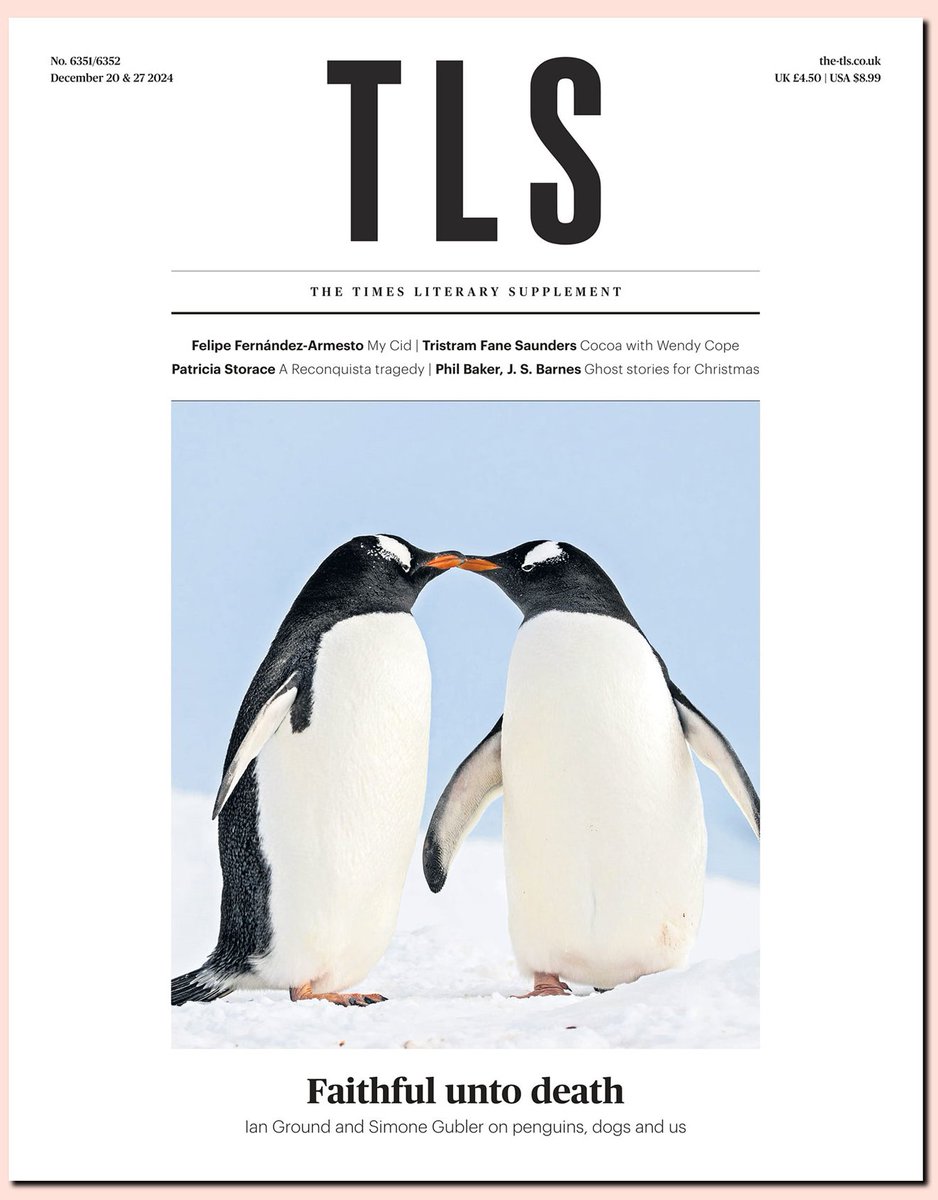
The last @TheTLS of 2024, featuring Ian Ground and Simone Gubler on animals and us; @TATFS on Wendy Cope; Marie Darrieussecq on arrondissement XVIII; @TobyLichtig on festive theatre; @JamesCahill on Caillebotte; Patricia Storace on Radwa Ashour; @bjkingape on turkeys – and more pic.twitter.com/cfqQgBNPER
Monocle Radio (December 18, 2024): The European Union is reopening its delegation in Syria while France is sending envoys to Damascus. How can diplomacy help rebuild the country?
Then: we look at what Moscow describes as “inevitable retribution” towards Ukraine following the killing of a top general. Plus: Ecowas approves three-nation exit from the bloc, Taiwan gets new US-made tanks to boost its defences and ‘Le Monde’ newspaper turns 80.
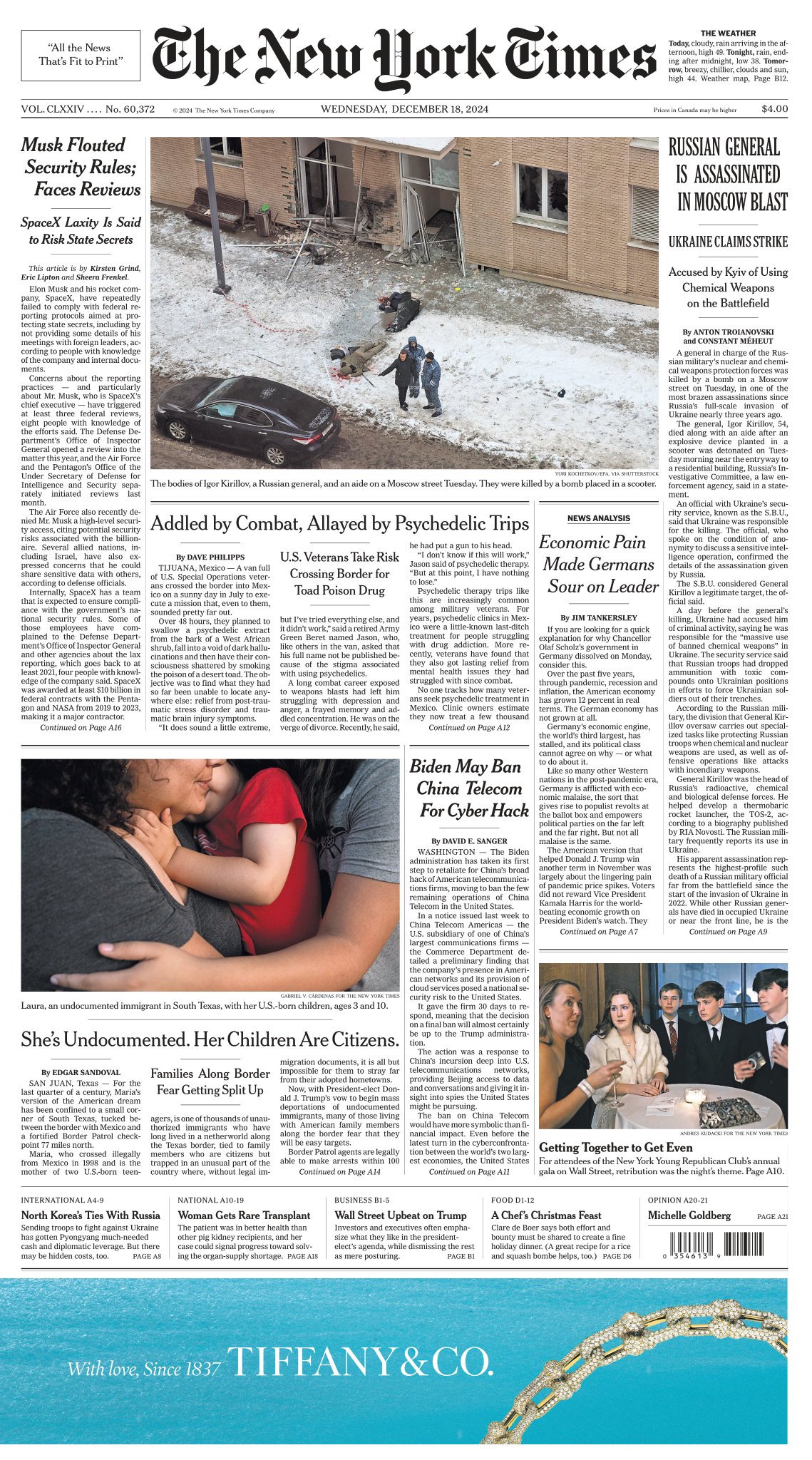
A Ukrainian official said Kyiv was responsible for the assassination in Moscow of Gen. Igor Kirillov, the chief of Russia’s radioactive, chemical and biological defense forces.
One of Europe’s powerhouses is losing its competitive edge, and the political class can’t agree on why — or what to do about it.
Elon Musk and SpaceX Face Federal Reviews After Violations of Security Reporting Rules
Federal agencies have opened at least three reviews into whether the company and its leader complied with disclosure protocols intended to protect state secrets, people with knowledge of the matter said.
Unable to find effective treatments at home, veterans with brain-injury symptoms are going abroad for psychedelics like ibogaine that are illegal in the U.S.
News, Views and Reviews For The Intellectually Curious






 Boomers Daily