
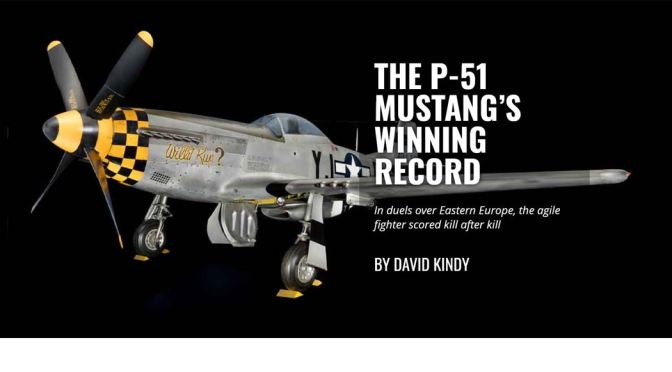
The P-51 was the darling of the Army Air Forces. Aerodynamically agile and acrobatic, the Mustang was fast and furious in its effectiveness in downing enemy aircraft. A latecomer to World War II, it first saw combat over Europe near the end of 1943. The long-range fighter proved to be just what the Allies needed to escort bombers to and from Germany as they hammered enemy targets.

“In terms of the air war over Europe with the strategic bombing campaign, the P-51 was a war-winning weapon,” says Jeremy Kinney, associate director of research and curatorial affairs at the Smithsonian’s National Air and Space Museum. “As a fighter escort, it enabled the successful bombing of targets deep in Nazi Germany from bases in England and Italy. That was a crucial component in the destruction of strategic sites such as factories and munition plants.”
 Boomers Daily