

 Syndicated columnist Mark Shields and New York Times columnist David Brooks join Judy Woodruff to discuss the week’s political news, including the House Judiciary Committee’s passage of articles of impeachment along party lines, Republicans’ defense of President Trump, how impeachment affects Trump politically, what the Horowitz report says about the FBI and a bombshell report on the Afghan war.
Audio

Top Political Podcasts: In-Depth Interview With Sen. Elizabeth Warren (NYT)
 In Part 3 of our series on pivotal moments in the lives of the 2020 Democratic presidential contenders, we spoke with Elizabeth Warren about how she came to be known as the blow-it-up candidate. The Massachusetts senator describes her transformation from Republican law professor to progressive candidate for the Democratic presidential nomination.
 With help from Andrew Ross Sorkin, a financial columnist at The Times and founder of DealBook; Harry Reid, a former Senate majority leader; and David Axelrod, a former Obama adviser, we explore Ms. Warren’s rise to prominence as an advocate for overhauling the financial system — and why those beliefs can help us understand her run for president now.

Top New Podcasts: “The History Of Coffee” And Its Social Impact (BBC Radio)
 Melvyn Bragg and guests discuss the history and social impact of coffee. From its origins in Ethiopia, coffea arabica spread through the Ottoman Empire before reaching Western Europe where, in the 17th century, coffee houses were becoming established.
There, caffeinated customers stayed awake for longer and were more animated, and this helped to spread ideas and influence culture. Coffee became a colonial product, grown by slaves or indentured labour, with coffea robusta replacing arabica where disease had struck, and was traded extensively by the Dutch and French empires; by the 19th century, Brazil had developed into a major coffee producer, meeting demand in the USA that had grown on the waggon trails.
With
Judith Hawley
Professor of 18th Century Literature at Royal Holloway, University of London
Markman Ellis
Professor of 18th Century Studies at Queen Mary University of London
And
Jonathan Morris
Professor in Modern History at the University of Hertfordshire
Producer: Simon Tillotson

Top Science Podcasts: New Epilepsy Drug Research & Anatomy Of Lightning From Space (ScienceMag)
 About one-third of people with epilepsy are treatment resistant. Up until now, epilepsy treatments have focused on taming seizures rather than the source of the disease and for good reason—so many roads lead to epilepsy: traumatic brain injury, extreme fever and infection, and genetic disorders, to name a few. Staff Writer Jennifer Couzin-Frankel talks with host Sarah Crespi about researchers that are turning back the pages on epilepsy, trying to get to the beginning of the story where new treatments might work.
And Sarah also talks with Torsten Neurbert at the Technical University of Denmark’s National Space Institute in Kongens Lyngby about capturing high-altitude “transient luminous events” from the International Space Station (ISS). These lightning-induced bursts of light, color, and occasionally gamma rays were first reported in the 1990s but had only been recorded from the ground or aircraft. With new measurements from the ISS come new insights into the anatomy of lightning.
Website: https://www.sciencemag.org/podcast/hunting-new-epilepsy-drugs-and-capturing-lightning-space

Top New Science Podcasts: Social Priming, Killer Whale Grandmothers And Accoustics (Nature)
 Listen to the latest from the world of science, brought to you by Benjamin Thompson and Nick Howe. This week, the embattled field of social priming, and the latest sounds from a big acoustic meeting.
In this episode:
00:45 What’s next for social priming?
How might a branch of psychological research move forward in the face of replication failures? News Feature: What’s next for psychology’s embattled field of social priming
08:55 Research Highlights
Killer-whale grandmothers help their grandchildren survive, and the failed voyage of a reproduced ancient raft. Research Highlight: Why female orcas make killer grandmas; Research Highlight: On a model ancient raft, seafarers are up the current without a paddle
11:12 The sounds of science
We hear the latest updates from the Acoustical Society of America’s recent conference.
18:44 News Chat
Reassessing when civilisations moved to modernity, and understanding exoplanets. News: When did societies become modern? ‘Big history’ dashes popular idea of Axial Age; News: European space telescope to launch new era of exoplanet science

Top Podcasts: Tamara Keith And Amy Walter Talk “Politics Monday” (PBS)
 NPR’s Tamara Keith and Amy Walter of the Cook Political Report join Amna Nawaz to discuss the latest political news, including campaign sparring between Sen. Elizabeth Warren and Pete Buttigieg and which candidates might leverage it, how much transparency matters to Democratic voters, lack of racial diversity in the next debate and reaction to the inspector general’s report on the Russia probe.

2020 Election: Political Advertising Abuse To Continue As Federal Election Commission (FEC) Lacks Quorum (Podcast)
 Political advertising is flourishing online, but federal guidelines regulating those ads are virtually absent. WSJ’s Emily Glazer explains why Facebook, Twitter and Google are making their own rules.

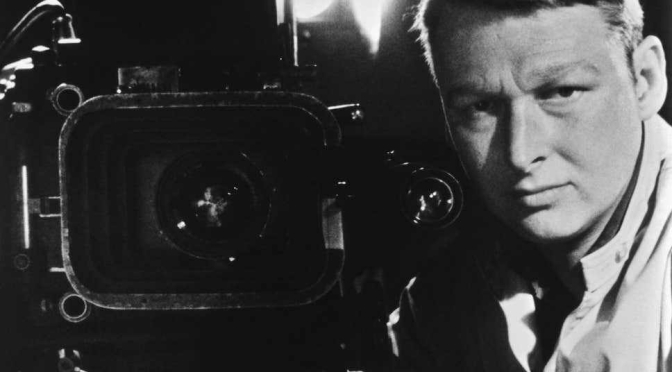
Artist Profiles: Film Director Mike Nichols (1931-2014) Profiled In New Book (NY Times Podcast)
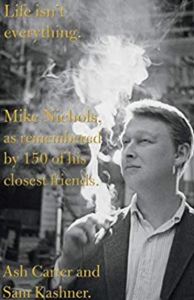 Mike Nichols, who died in 2014, was a film and stage director of genius, and he wasted no time in showing it. The first two films he directed were “Who’s Afraid of Virginia Woolf?” and “The Graduate.” In the new oral history “Life Isn’t Everything,” Ash Carter and Sam Kashner draw on 150 respondents to tell the story of his incredible career.


Top Interview Podcasts: Actress Jamie Lee Curtis Talks About Her Films And Career (New Yorker)
 Jamie Lee Curtis comes from Hollywood royalty as the daughter of Janet Leigh and Tony Curtis. She credits her mother’s role in “Psycho” for helping her land her first feature role, as the lead in “Halloween,” in 1978. “I’m never going to pretend I got that all on my own,” she tells The New Yorker’s Rachel Syme. But Curtis says she never intended to act, and never saw herself as a star: “I was not pretty,” she explains; “I was ‘cute.’ ”
Eventually, the pressure she felt to conform in order to keep working led to a surgical procedure, which led to an opiate addiction. Curtis talks with Syme about recovery, second chances, and more than forty years of films between “Halloween” and Rian Johnson’s “Knives Out.” Plus, the chef at one of Los Angeles’s best restaurants on how to build a woman-friendly kitchen.
To read more: https://www.wnycstudios.org/podcasts/tnyradiohour/articles/jamie-lee-curtis-original-scream-queen-podcast
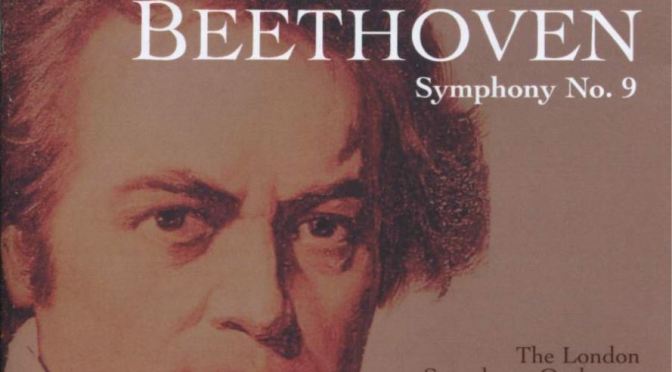
Music Criticism Podcasts: “The Music And Morality Of Beethoven’s Mighty Ninth” (Marin Alsop, NPR)
 Ever since Beethoven‘s iconic Ninth Symphony premiered May 7, 1824 at the Theater am Kärntnertor in Vienna, it has remained arguably the most popular composition in the classical music canon, thanks largely to its final movement, the “Ode to Joy,” with a text by poet Friedrich Schiller.
But Beethoven’s music has become something much more than popular. With its expansive length, mold-busting design, and the inclusion of solo singers and chorus, he was proposing nothing less than a philosophy for humanity.
Beethoven, the composer-philosopher, was a man who suffered more than we can imagine and yet he retained optimism and a sense of hope that we can admire and even envy. He believed wholeheartedly in the goodness of humanity, the power of love, joy, unity, tolerance and peace to overcome and endure.
 Boomers Daily