Europe’s parliament has overwhelmingly voted to extend a stopgap trade agreement. But the rancour behind the vote, and the deal’s thin measures, say much about future relations.
Female soldiers are entering armed forces in big numbers, but they still face barriers both in getting the job and in doing it. And China’s homegrown Oscar-winning director is scrubbed from its internet.
A.M. Edition for April 27. WSJ’s Nicole Friedman discusses the new WSJ/Realtor.com housing list. Major tech companies are set to release earnings this week.
The U.S. and other nations offer assistance as Covid-19 surges in India. A clash over coffee in Italy. Marc Stewart hosts.
A.M. Edition for April 26. WSJ’s Chip Cutter on vaccine requirements among some employers. The U.S. offers aid to India as its Covid-19 cases skyrocket.
WSJ’s Quentin Webb looks at which nations will lead the economic recovery from the pandemic. This year’s Oscar winners. Marc Stewart hosts.
Monocle’s editorial director, Tyler Brûlé, talks to film producer Solène Léger, Rob Cox from Reuters and Christoph Amend from ‘Zeit Magazin’. Plus, contributions from Monocle’s team around the world.
Stefanie Bolzen of ‘Die Welt’ on Germany’s federal elections; Lance Price on the papers; Andrew Mueller’s weekly news roundup; and the London Library celebrates a big birthday.
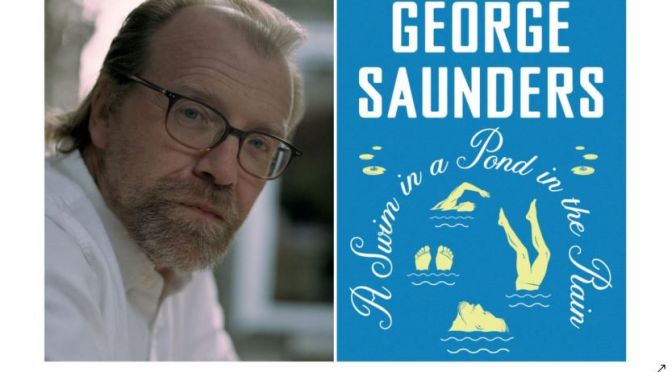
On a special LARB Book Club episode of the Radio Hour, Boris Dralyuk and Medaya Ocher are joined by George Saunders, author of four collections of virtuosic short stories and of the novel Lincoln in the Bardo, which won the 2017 Man Booker Prize.
His latest work is A Swim in a Pond in the Rain: In Which Four Russians Give a Master Class on Writing, Reading, and Life. Examining individual works by Leo Tolstoy, Anton Chekhov, Ivan Turgenev, and Nikolai Gogol from a variety of angles, Saunders teases out lessons for writers and readers alike. During the conversation, he discusses what fiction can teach us about ourselves and each other, shares his experiences teaching these stories over the past two decades, and reflects on the role of humor in his work.
President Joe Biden laid out ambitious emissions targets yesterday, but in order to be taken seriously on climate change, America has some reputation rebuilding to do.
Researchers are starting to understand why online meetings are so exhausting—and are pinpointing the up sides of work lives lived increasingly online. And the waning influence of awards shows such as this Sunday’s Oscars.
Mass gatherings and in-person voting continue, even as new case numbers smash records and fatalities spiral in public view. We ask how a seeming pandemic success has turned so suddenly tragic.
Chad’s president of three decades has been killed; that has implications for regional violence far beyond the country’s borders. And a deep dive on the international sea-cucumber trade.
The self-supporting structures that snap into place, and how a ban on fossil-fuel funding could entrench poverty in sub-Saharan Africa.
In this episode:
00:45 Self-supporting, foldable structures
Drawing inspiration from the art of origami, a team of researchers have demonstrated a way to design self-supporting structures that lock into place after being inflated. The team hope that this technique could be used to create arches and emergency shelters that can be quickly unfolded from flat with minimal input.
Nocturnal fluctuations cause scientists to underestimate rivers’ carbon emissions, and the ‘island rule’ of animal size-change is seen around the world.
09:55 Banning fossil-fuel funding will not alleviate poverty
A ban by wealthy nations on the funding of overseas fossil-fuel projects would do little to reduce the world’s climate emissions and much to entrench poverty in sub-Saharan Africa, argues economist Vijaya Ramachandran.
We discuss some highlights from the Nature Briefing. This time, the first powered flight on another world, and estimating how many Tyrannosaurus rex ever lived.




 Boomers Daily