
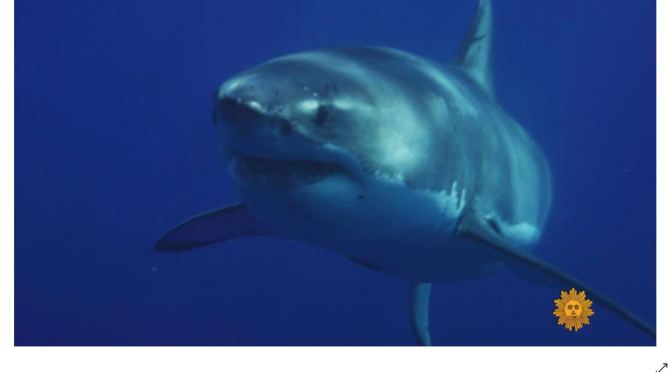
“Sunday Morning” takes us to a sighting of sharks – great whites near Guadalupe Island off the Pacific Coast of Mexico. Videographer: Mauricio Handler.
Tag Archives: Wildlife Videos

Wildlife Views: An Arctic Wolf Hunts Caribou On The Canadian Tundra
A lone Arctic fox runs at the large caribou herd, to try and flush out the young or weak.

Wildlife: Top ‘Hornet Moments’ (BBC Earth)
From overthrowing an empire to battling with bees, here are some of our most memorable hornet moments.
The Asian giant hornet, including the color form referred to as the Japanese giant hornet, is the world’s largest hornet. It is native to temperate and tropical East Asia, South Asia, Mainland Southeast Asia, and parts of the Russian Far East.

Views: Ecuador’s ‘Sword-Billed Hummingbirds’
The sword-billed hummingbird has exclusive access to food that other birds simply cannot reach, but having such a long bill does have its drawbacks.
The sword-billed hummingbird is a neotropical species of hummingbird from the Andean regions of South America. It is the sole member of the genus Ensifera and is characterized by its unusually long bill; it is the only bird to have a beak longer than the rest of its body.

Views: Red-Tailed Hawk On The U.S.- Canada Border
A vole has made a fatal mistake and wandered into ‘The Slash’–the narrow cleared pathway that serves as a border to Canada. Out in the open, she’s easy to spot and a predator would need no second invitation.
The red-tailed hawk is a bird of prey that breeds throughout most of North America, from the interior of Alaska and northern Canada to as far south as Panama and the West Indies. It is one of the most common members within the genus of Buteo in North America or worldwide.
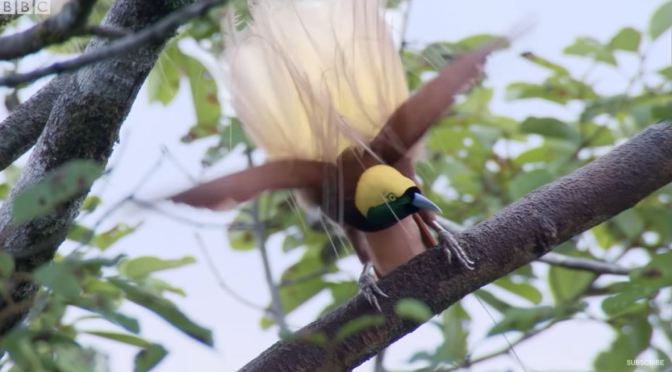
Views: Dancing Birds In The Wild (BBC Earth Video)
Filming birds that dance and pose isn’t easy, but cameraman/producer Paul Stuart reveals how this iconic sequence was captured.

Wildlife Views: A Bobcat Hunting In Yellowstone National Park, Wyoming
Throughout winter, the rivers are full of food for those who know how to hunt it, and this tenacious bobcat is trying to catch his next meal.
Bobcats are small wild cats with reddish-brown or yellowish-brown coats, streaked with black or dark brown. They have prominent, pointed ears with a tuft of black hair at the tip. Females average 20 pounds and males weigh from 16 to 30 pounds. They breed in late winter or early spring and have a gestation period of about two months. A female may have one to six kittens each year. Although adapted to a variety of habitats across the country, they do not tolerate the deep snows found in much of Yellowstone, and thus they are usually reported in the northern portion of the park. Bobcats move about their home ranges most actively in the hours near dawn and dusk, hunting small mammals such as mice, rabbits, hares, and deer. They seek cover in conifer stands and on rocky ledges.
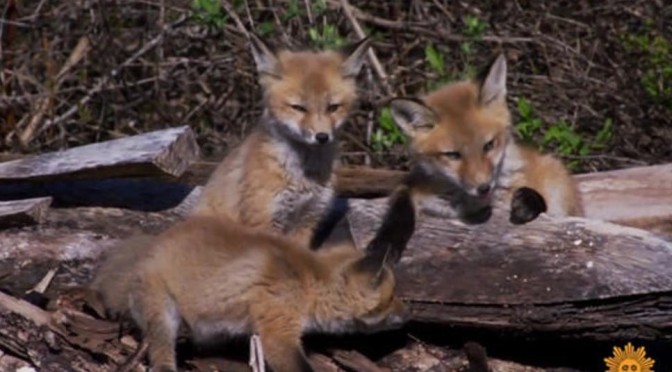
Nature Views: Red Fox Kits In Durham, Maine (Video)
“Sunday Morning” takes us on a visit to a spring litter of red foxes, at home in Durham, Maine. Videographer: Mauricio Handler.
The red fox is the largest of the true foxes and one of the most widely distributed members of the order Carnivora, being present across the entire Northern Hemisphere including most of North America, Europe and Asia, plus parts of North Africa. It is listed as least concern by the IUCN.
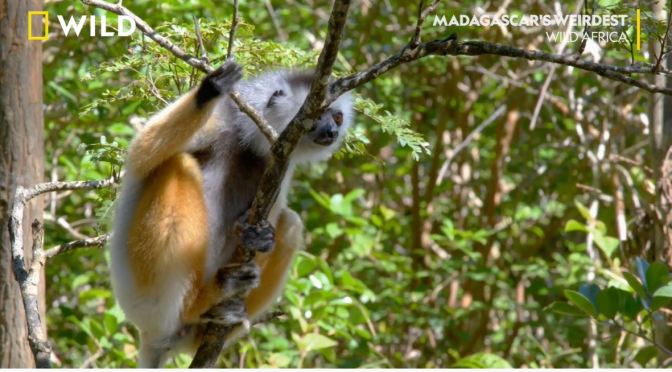
Wildlife: ‘Leaping’ Lemurs In Madagascar (HD Video)
As one of the largest species of Lemur, the Diademed Sifaka is an endangered species that is endemic to Madagascan rainforests. With their long legs and short arms, they are marvellous at leaping through the trees of the rainforest, with each leap being as long as 10m. However, take this adapt leaper out of the trees and onto the forest floor, and things become a bit more bouncy!
Madagascar, officially the Republic of Madagascar, and previously known as the Malagasy Republic, is an island country in the Indian Ocean, approximately 400 kilometres off the coast of East Africa across the Mozambique Channel. At 592,800 square kilometres Madagascar is the world’s second-largest island country.
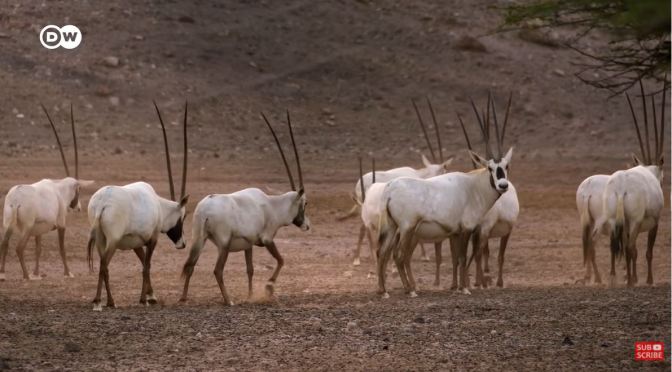
Views: The Endangered Species Refuge Of ‘Sir Bani Yas Island’ – Abu Dhabi, UAE
The Arabian oryx is a beautiful, almost luminously white antelope. But, after being over-hunted by humans in the 20th century, it only narrowly escaped extinction. Today, on the desert island of Sir Bani Yas, the endangered animals find refuge. Part of an archipelago west of Abu Dhabi, Sir Bani Yas is home to a large wildlife reserve, where animals from Arabia, Asia and Africa roam freely. You can watch cheetahs hunting, and imagine how the Bedouins once lived, under open desert skies. Established in the 1970s, extensive ecological measures turned Sir Bani Yas into a man-made “paradise for wild animals.” Now, the reserve stands for the region’s desire for a sustainable future. It’s also a great place to see the magnificent Arabian oryx running free, once more.
Sir Bani Yas Island is part of the Al Gharbia region of the United Arab Emirates. It’s dominated by the Arabian Wildlife Park, with its roaming giraffes, cheetahs and gazelles. Multiple archaeological sites across the island include the ruins of an ancient Christian monastery. Salt dome hills define the island’s desert interior. The coast features beaches, sea kayak routes and a shipwreck.
 Boomers Daily