Artificial intelligence holds huge promise in health care. But it also faces massive barriers
Better diagnoses. Personalised support for patients. Faster drug discovery. Greater efficiency. Artificial intelligence (ai) is generating excitement and hyperbole everywhere, but in the field of health care it has the potential to be transformational. In Europe analysts predict that deploying ai could save hundreds of thousands of lives each year; in America, they say, it could also save money, shaving $200bn-360bn from overall annual medical spending, now $4.5trn a year (or 17% of gdp). From smart stethoscopes and robot surgeons to the analysis of large data sets or the ability to chat to a medical ai with a human face, opportunities abound.
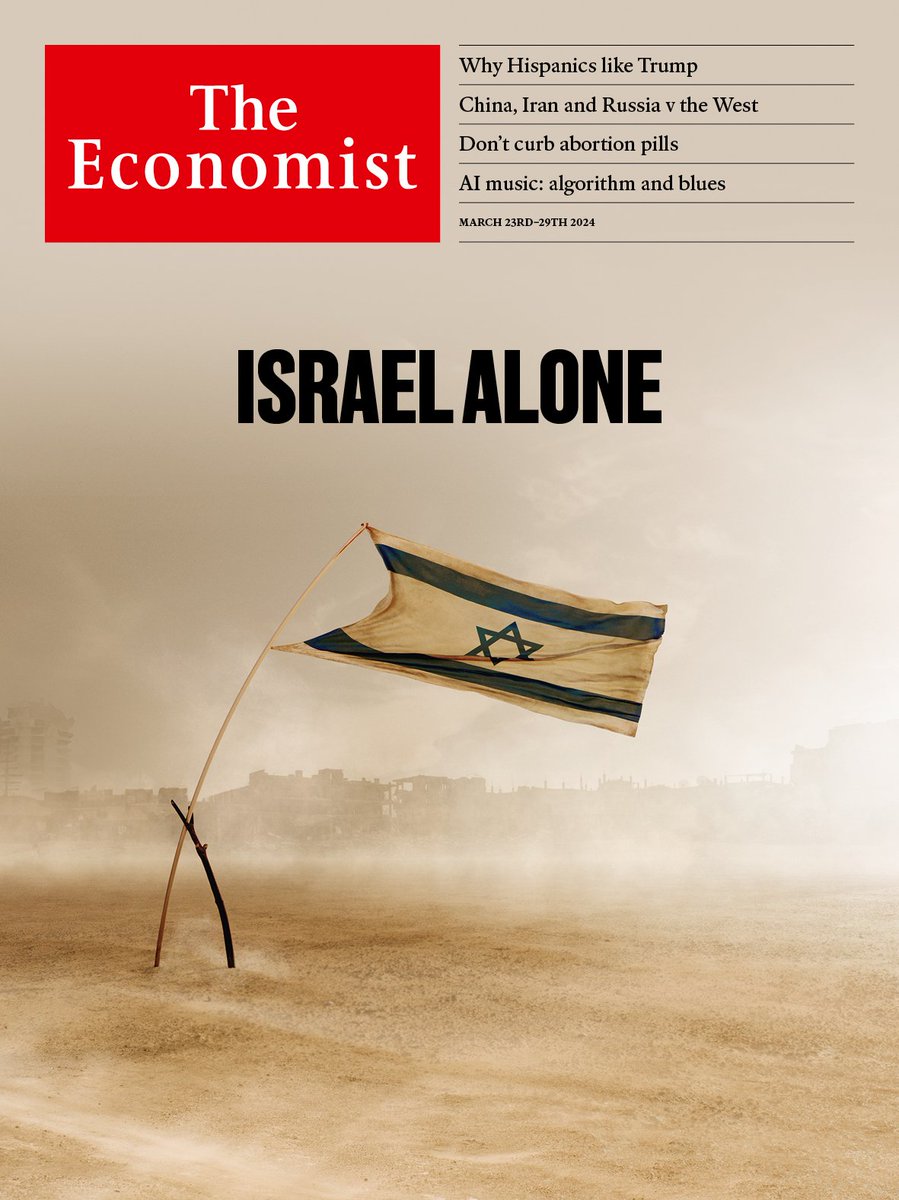
The Economist Magazine (March 21, 2024): The latest issue features ‘Israel Alone’ – At a moment of military might, Israel looks deeply; ‘How To Trade An Election’ – It is getting harder for investors to ignore politics; China, Iran and Russia versus The West – Assessing the economic threat posed by the anti-Western axis…
There is still a narrow path out of the hellscape of Gaza. A temporary ceasefire and hostage release could cause a change of Israel’s government; the rump of Hamas fighters in south Gaza could be contained or fade away; and from the rubble, talks on a two-state solution could begin, underwritten by America and its Gulf allies. It is just as likely, however, that ceasefire talks will fail. That could leave Israel locked in the bleakest trajectory of its 75-year existence, featuring endless occupation, hard-right politics and isolation. Today many Israelis are in denial about this, but a political reckoning will come eventually. It will determine not only the fate of Palestinians, but also whether Israel thrives in the next 75 years.
It is becoming harder for investors to ignore politics
Investors differ in their approach to elections. Some see politics as an edge to exploit; others as noise to block out. Even for those without a financial interest, markets offer a brutally frank perspective on the economic stakes. As elections approach in America and Britain, as well as plenty of other countries, that is especially valuable.
The Economist Magazine (March 7, 2024): The latest issue features Three big risks that might tip America’s presidential election – Third parties, the Trump trials and the candidates’ age introduce a high degree of uncertainty; Xi Jinping’s hunger for power is hurting China’s economy; How to fix the Ivy League – Its supremacy is being undermined by bad leadership…
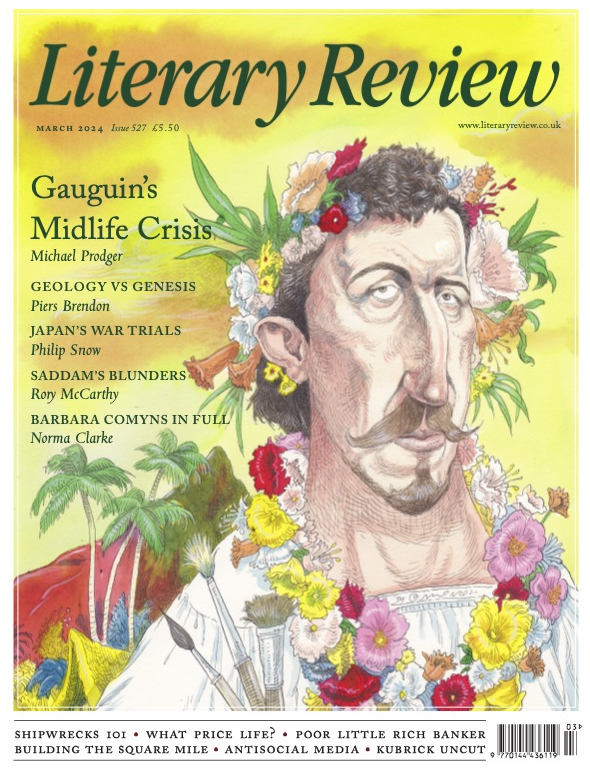
Literary Review – March 1, 2024: The latest issue features ‘Gaughin’s Midlife Crisis’; Geology vs Genesis; Japan’s War Trials; Saddam’s Blunderers and Barbara Comyns in Full…
“The Showman: The Inside Story of the Invasion That Shook the World and Made a Leader of Volodymyr Zelensky” By Simon Shuster
As someone who has to consume quite a lot of Russian media, I can tell you that if there is one common denominator, it’s that whether we’re talking about a shouty TV news programme (less Newsnight, more a kind of geopolitical Jeremy Kyle Show), a stodgy government newspaper of record or a racy tabloid, no one has a good word for Volodymyr Zelensky.
There are, I have long suspected, two types of cinephiles: those who think Stanley Kubrick’s 2001: A Space Odyssey (1968) is a masterpiece and those who think it’s a relentless bore. Early in their new biography of the film director, Kubrick: An Odyssey, Robert P Kolker and Nathan Abrams make clear which camp they belong to, describing the scene in which the astronaut Frank Poole jogs around (and around and around and around) the spaceship Discovery as ‘one of the most lyrical passages in film history’.
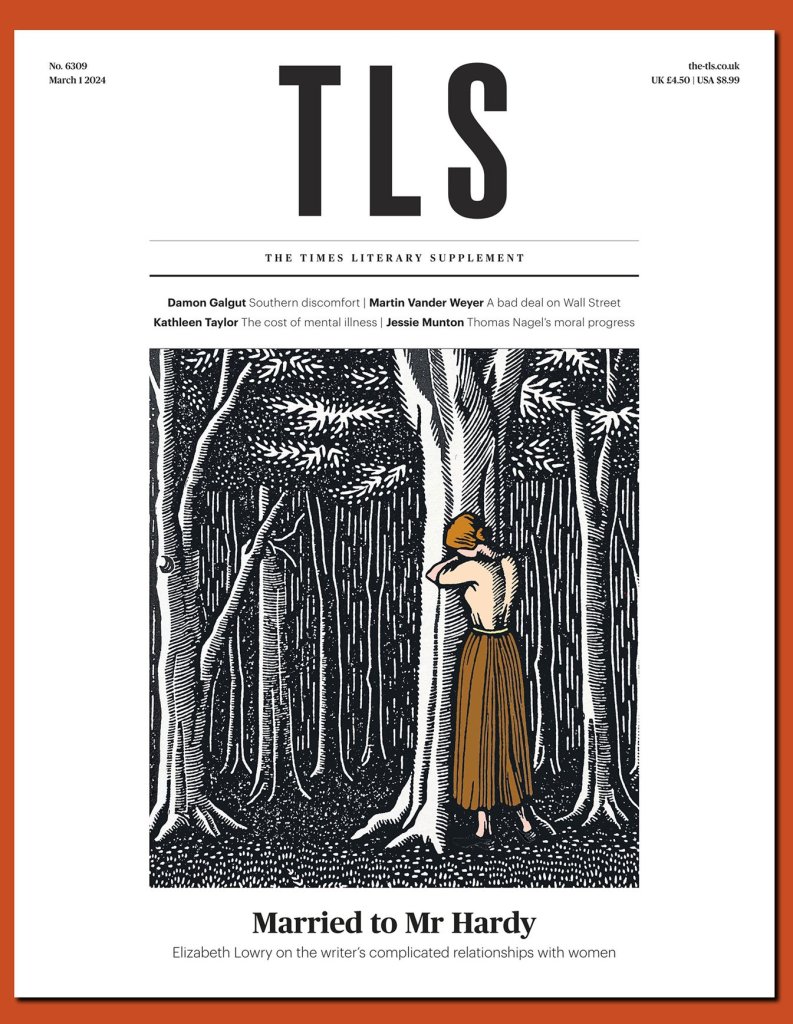
Times Literary Supplement (February 28, 2024): The latest issue features ‘Married to Mr. Hardy’ – The writer’s complicated relationships with women; Southern discomfort; a bad deal on Wall Street…
Russian aggression and American wavering reveal just how ill-equipped the continent is
Russia is becoming more dangerous, America is less reliable and Europe remains unprepared. The problem is simply put, but the scale of its solution is hard to comprehend. The security arrangements based on nato that emerged from the second world war—and have prevented a third—are so much part of Europe’s fabric that remaking them will be an immense task. European leaders urgently need to jettison their post-Soviet complacency. That means raising defence spending to a level not seen in decades, restoring Europe’s neglected military traditions, restructuring its arms industries and preparing for a possible war. The work has barely begun.
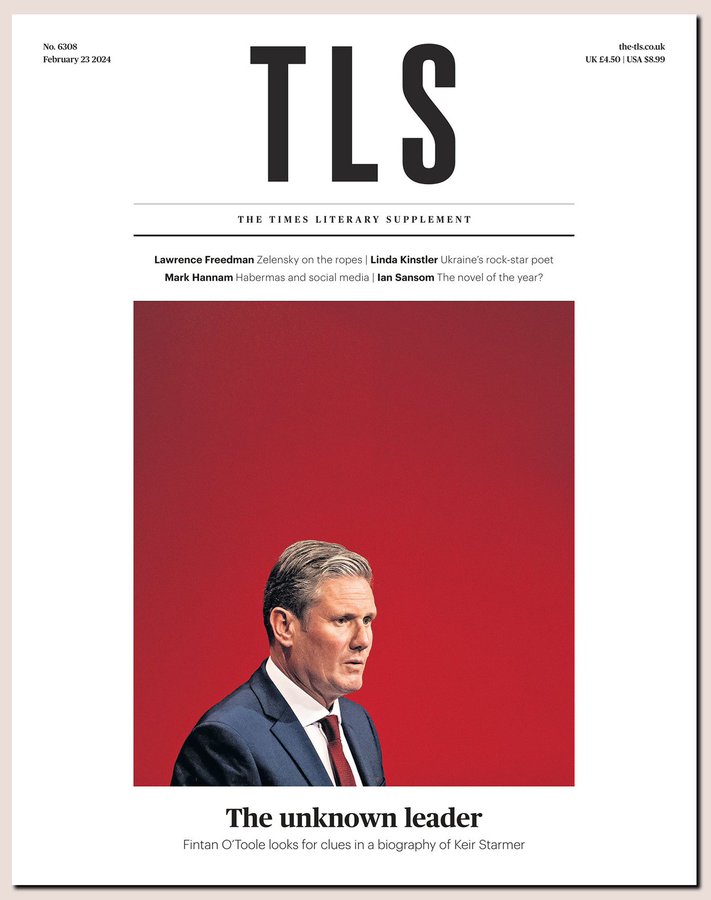
Times Literary Supplement (February 21, 2024): The latest issue features ‘The Unknown Leader’ – Fintan O’Toole looks for clues in a biography of Keir Starmer; Zelensky on the ropes; Ukraine’s rock star poet; Habermas and social media and The novel of the Year?….













 Boomers Daily