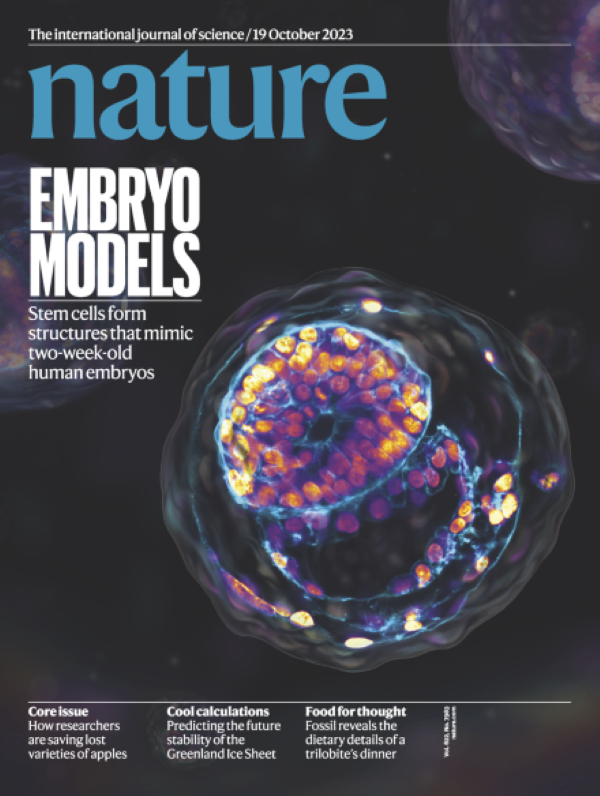
nature Magazine – October 19, 2023: The latest issue features how humans develop in the very early stages when a newly formed embryo is implanted in the wall of the uterus, largely because of the physical and ethical challenges that are presented by studying early human embryos.
The test 30 years ago of what remote sensing could tell us about our own planet shows the value of looking with unbiased eyes at what we think we already know.
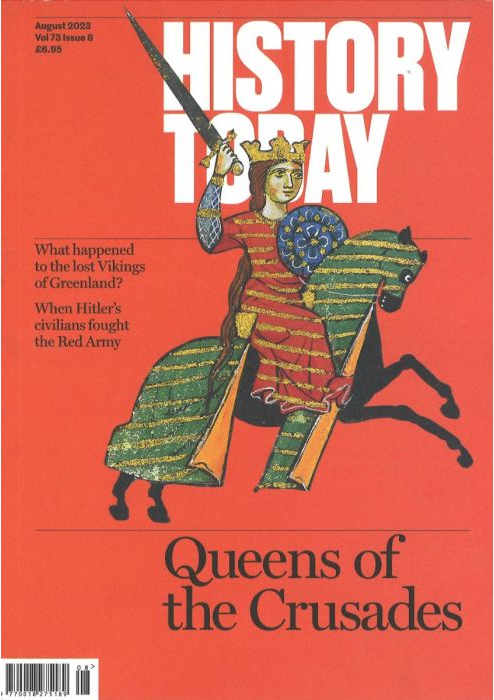
HISTORY TODAY MAGAZINE (AUGUST 2023) – Queens of the Crusades, What happened to the Lost Vikings of Greenland, When Hitler’s civilians fought the Red Army, and more…
An ancient solar storm helps pinpoint when Vikings lived in the Americas, and using magnets to deftly move non-magnetic metals.
In this episode:
00:53 Pinpointing Viking presence in North America
It’s well-understood that Vikings went to North America around a thousand years ago. However, working out a precise date has proven difficult. Now, thanks to an ancient solar storm, researchers have been able to identify an individual year when Vikings were definitely living on the continent.
Scientists have created an array of magnets capable of moving non-metallic objects in 6 dimensions. They hope their new approach could one day be used to clean up debris in space.
27:06 What Francis Collin’s retirement means for the US NIH
After 12 years, Francis Collins announced plans to retire from his role as Director of the United States National Institutes of Health. We discuss his legacy and what this means for the world’s biggest public funder of biomedical research.
Norway is a Scandinavian country encompassing mountains, glaciers and deep coastal fjords. Oslo, the capital, is a city of green spaces and museums. Preserved 9th-century Viking ships are displayed at Oslo’s Viking Ship Museum. Bergen, with colorful wooden houses, is the starting point for cruises to the dramatic Sognefjord. Norway is also known for fishing, hiking and skiing, notably at Lillehammer’s Olympic resort.
Kattegat is the name given to the large sea area situated between Denmark, Norway, and Sweden. Thanks to Vikings, many people assume Kattegat is a village in Norway but this is not the case. Sweden borders the Kattegat to the East, Denmark to the southwest, and Norway to the northwest. The bottom of the Kattegat leads to the baltic sea to the Skagerrak, which connects to the North Sea. There are several large cities and major ports in the Kattegat area, including Gothenburg, Aarhus, Aalborg, Halmstad and Frederikshavn. The main islands of the Kattegat are Samsø, Læsø, and Anholt – Samsø has a population of approximately 4,000 people each whereas Læsø and Anholt remain uninhabited. The name Kattegat comes from the old Dutch term for the words “Cat”, “hole” or ‘throat.”
Nature podcast discusses: Mapping the migration of the Vikings, a leading Covid-19 vaccine trial was abruptly halted and the world’s smallest ultrasound device.
In this episode:
00:45 Following the Viking footprint across Europe
To better understand who the Vikings were, and where they went, researchers have mapped genomes from hundreds of archaeological artifacts. Research Article: Margaryan et al.
Scientists have developed an ultrasound detector which is smaller than the wavelength of sound it detects, providing highly detailed imaging at a cellular level; Research Article: ; Research Article: Shnaiderman et al.
23 April 2020: Denisovan DNA in modern Europeans, and the birth of an unusual celestial object. This week, evidence of ancient hominin DNA in modern human genomes, and the origin of a snowman-shaped object at the edge of the solar system.
In this episode:
00:45 Intermixing of ancient hominins
By combing through the DNA of over 27,000 modern day Icelanders, researchers have uncovered new insights about the ancient hominin species who interbred with Homo sapiens. Research Article: Skov et al.
In 2019, the New Horizon Spacecraft took images of Arrokoth – an unusual, bi-lobal object found in the Kuiper belt. Now, researchers believe they’ve figured out how it formed. Research Article: Grishin et al.
17:29 Pick of the Briefing
We pick some highlights from the Nature Briefing. This week we discuss why the Universe may be lopsided, and why water could actually be two different liquid states. Scientific American: Do We Live in a Lopsided Universe?; Chemistry World: The weirdness of water
Hear the latest science news, brought to you by Shamini Bundell and Nick Howe. This week, a newly discovered bird species from the time of the dinosaurs, and microbes hundreds of metres below the ocean floor.
Dental hygiene in the time of the Vikings, and wildebeest bones feed an African ecosystem. Research Article: Bertilsson et al; Research Article: Subalusky et al.
10:21 Deep sea life
Scientists have uncovered traces of life 750m below the ocean’s surface. Research article: Li et al.







 23 April 2020: Denisovan DNA in modern Europeans, and the birth of an unusual celestial object.
  Boomers Daily