The Lawrence Lab? The Berkeley Lab? Lawrence Livermore Berkeley Lab? Luther Burbank Laboratory? Berkeley Countrywide Laboratory? Nope. Not quite. We’re Lawrence Berkeley National Laboratory, or Berkeley Lab for short. But we do understand the confusion — it’s hard to remember names, especially when so many sound alike! So we jammed 90 years of history into less than 3 minutes to help you get it right.
The Lawrence Berkeley National Laboratory, commonly referred to as Berkeley Lab, is a United States national laboratory that conducts scientific research on behalf of the Department of Energy. Located in the hills of Berkeley, California, the lab overlooks the campus of the University of California, Berkeley.
“We’ve discovered that fragmented sleep is associated with a unique pathway — chronic circulating inflammation throughout the blood stream — which, in turn, is linked to higher amounts of plaques in coronary arteries,” said study senior author Matthew Walker, a UC Berkeley professor of psychology and neuroscience.
Disrupted nightly sleep and clogged arteries tend to sneak up on us as we age. And while both disorders may seem unrelated, a new UC Berkeley study helps explain why they are, in fact, pathologically intertwined.
Some tips to improve sleep quality
Maintain a regular sleep routine, going to bed and waking up at the same time each day.
As part of a nightly wind-down routine, avoid viewing computer, smartphone and TV screens in the last hour before bedtime, and keep phones and other digital devices out of the bedroom.
Engage in some form of physical exercise during the day.
Get exposure to natural daylight, especially in the first half of the day.
Avoid stimulants, like caffeine, and sedatives, like alcohol, later in the day.
UC Berkeley sleep scientists have begun to reveal what it is about fragmented nightly sleep that leads to the fatty arterial plaque buildup known as atherosclerosis that can result in fatal heart disease.
In this much-anticipated book, a leading economist argues that many key problems of the American economy are due not to the flaws of capitalism or the inevitabilities of globalization but to the concentration of corporate power. By lobbying against competition, the biggest firms drive profits higher while depressing wages and limiting opportunities for investment, innovation, and growth.
Why are cell-phone plans so much more expensive in the United States than in Europe? It seems a simple question. But the search for an answer took Thomas Philippon on an unexpected journey through some of the most complex and hotly debated issues in modern economics. Ultimately he reached his surprising conclusion: American markets, once a model for the world, are giving up on healthy competition. Sector after economic sector is more concentrated than it was twenty years ago, dominated by fewer and bigger players who lobby politicians aggressively to protect and expand their profit margins. Across the country, this drives up prices while driving down investment, productivity, growth, and wages, resulting in more inequality. Meanwhile, Europe―long dismissed for competitive sclerosis and weak antitrust―is beating America at its own game.
Philippon, one of the world’s leading economists, did not expect these conclusions in the age of Silicon Valley start-ups and millennial millionaires. But the data from his cutting-edge research proved undeniable. In this compelling tale of economic detective work, we follow him as he works out the basic facts and consequences of industry concentration in the U.S. and Europe, shows how lobbying and campaign contributions have defanged antitrust regulators, and considers what all this means for free trade, technology, and innovation. For the sake of ordinary Americans, he concludes, government needs to return to what it once did best: keeping the playing field level for competition. It’s time to make American markets great―and free―again.
“A healthy diet and lifestyle are generally recognized as good for health, but this study is the first large randomized controlled trial to look at whether lifestyle changes actually influence Alzheimer’s disease-related brain changes,” said Susan Landau, a research neuroscientist at Berkeley’s Helen Wills Neuroscience Institute, and principal investigator of the add-on study.
UC Berkeley was awarded a five-year grant expected to total $47 million from the U.S. National Institute on Aging (NIA) to incorporate advanced brain imaging into an Alzheimer’s Association-led study to explore whether lifestyle changes can protect memory in those at risk of developing dementia.
The expanded study will be the first large-scale investigation of how lifestyle interventions, which include exercise, diet, cognitive stimulation and health coaching, affect well-known biological markers of Alzheimer’s and dementia in the brain.



 “We’ve discovered that fragmented sleep is associated with a unique pathway — chronic circulating inflammation throughout the blood stream — which, in turn, is linked to higher amounts of plaques in coronary arteries,” said study senior author Matthew Walker, a UC Berkeley professor of psychology and neuroscience.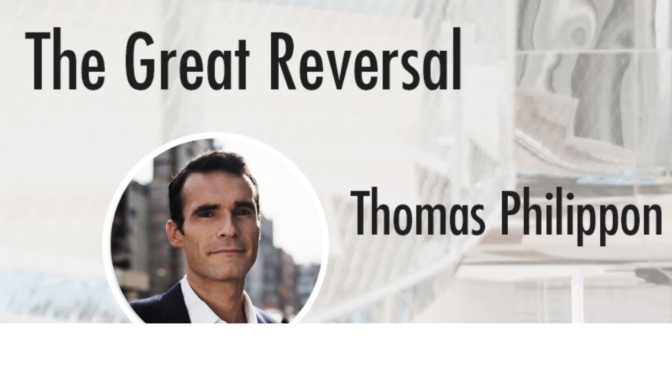
 inevitabilities of globalization but to the concentration of corporate power. By lobbying against competition, the biggest firms drive profits higher while depressing wages and limiting opportunities for investment, innovation, and growth.
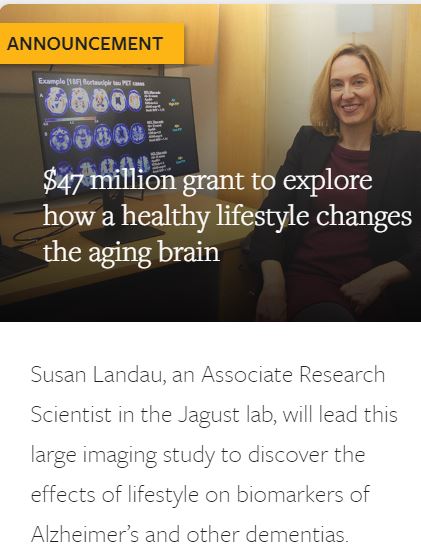 “A healthy diet and lifestyle are generally recognized as good for health, but this study is the first large randomized controlled trial to look at whether lifestyle changes actually influence Alzheimer’s disease-related brain changes,” said Susan Landau, a research neuroscientist at Berkeley’s Helen Wills Neuroscience Institute, and principal investigator of the add-on study.
 Boomers Daily