
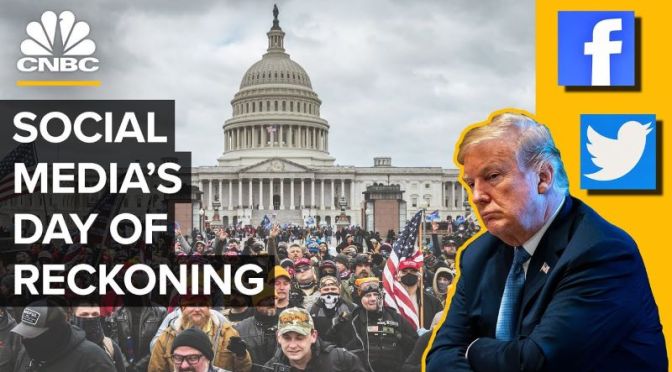
On January 6th, Rioters stormed the U.S. capitol building to overturn the results of the 2020 presidential election. These events were inspired by President Trump and organized and promoted on the platforms of publicly traded companies, most notably Facebook and Twitter. To avoid further violence, those companies, and then many more thereafter including YouTube, banned or blocked President Trump’s access to the megaphone they provide. This exposed a major flaw in the business model of many social media platforms: share first, think later. Tech experts Chamath Palihapitiya, Roger McNamee, Chris Kelly and Dick Costolo all predict major changes coming in the social media landscape and Section 230. Watch the video to find out how big tech may be forced to change.
Tag Archives: Social Media News

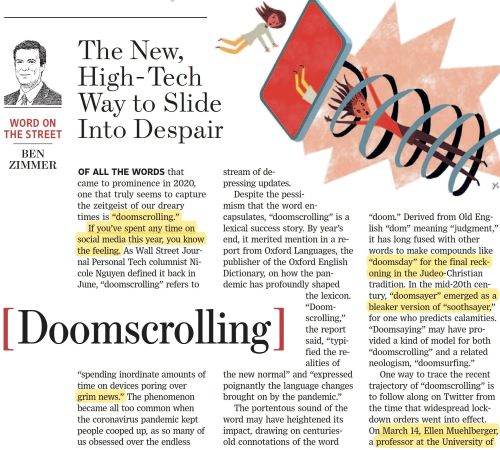
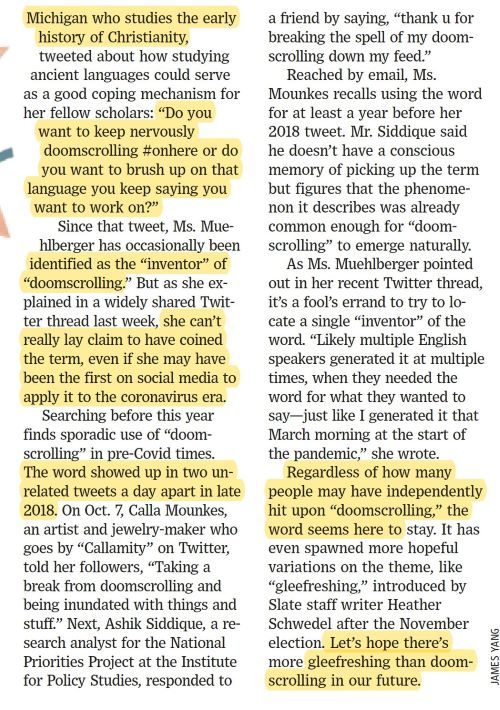
Social Media & Health: ‘Doomscrolling’ Your Way To Despair & Depression

Social Media: ‘Tik Tok As A Platform For Business’
TikTok is becoming a popular forum for Gen-Z and Millennials to learn about entrepreneurship and making money. To find out more, WSJ spoke with three TikTokers who are attracting large audiences that support their thriving online businesses.

Media: 41% Of Americans Believe News Has Become Less Reliable, 44% No Change (Rand Corp, 2019)
From a Rand.org online release:
 Many people (41 percent) indicated that they believed that news has become less reliable than in the past; a similar number (44 percent) said they believed there has been no change; and 15 percent said they thought news is more reliable now.
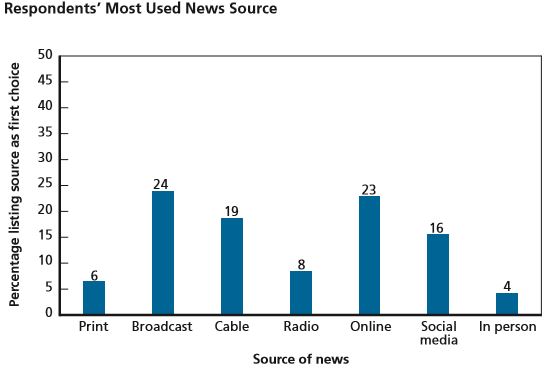
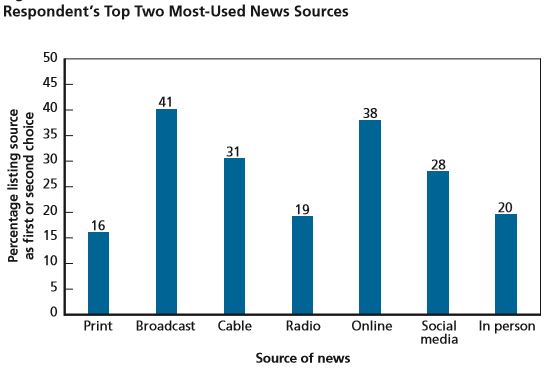
Different demographic groups get their news in different ways
- People whose primary news sources are social media and in-person contacts are generally younger and female, and they tend to have less education than a college degree and lower household incomes.
- People whose primary news sources are print publications and broadcast television tend to be be significantly older, and they are less likely to be married.
- People whose primary news source is radio are significantly more likely to be male, less likely to be retired, and more likely to have a college degree.
- People whose primary news sources are online platforms are significantly younger, more likely to be male and have a college degree and higher income, and less likely to be black.
Attitudes toward the reliability of news are mixed
- Overall, 44 percent reported that they believed “the news is as reliable now as in the past.”
- Nearly the same amount — 41 percent — reported a belief that the news has become less reliable.
- A minority (15 percent) said that they believed that the news is more reliable now.
- There was an association between news consumption profiles and perceptions of reliability — people who relied more heavily on online, radio, and social media/in-person platforms to obtain news were less likely to say that news is more reliable now than in the past.
To view full Rand Study: https://www.rand.org/pubs/research_reports/RR4212.html?utm_source=WhatCountsEmail&utm_medium=RAND%20Policy%20Currents+AEM:%20%20Email%20Address%20NOT%20LIKE%20DOTMIL&utm_campaign=AEM:631600804
 Boomers Daily