
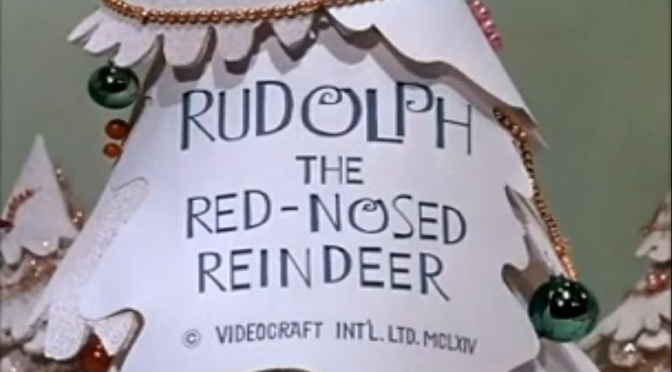
From a Smithsonian Magazine online article:
When the special finally aired in 1964, it became such a hit that it has been rebroadcast every year since, making it the longest-running Christmas special in history. Even today, the special still punches above its weight; when Rudolph the Red-Nosed Reindeer aired on CBS in 2016, it beat every show except This Is Us. In 2017, more viewers tuned in to watch Rudolph than A Charlie Brown Christmas, which ran on ABC in the same time slot.
https://www.dailymotion.com/video/x19l9n1
Reindeer and dentists, puppets and LED light bulbs, Gene Autry and General Electric—these odd pairings might not seem to have much in common. But each played an important role in the making of Rudolph the Red-Nosed Reindeer, a classic Christmas special currently celebrating its 55th straight year of annual reruns. Before Rudolph lit up the small screen, a series of tragedies, twists of fortune and lucky coincidences allowed his tale to endure through decades—eventually ensuring a place in holiday tradition.

 In its heyday, dynamite was a transformative tool; it could blast rock quarries, excavate tunnels, and demolish buildings with power and reliability never before seen. But it also proved to be useful in some surprising ways. In this special episode of Sidedoor, we team up with the history podcast Backstory to explore two less-typical applications of the explosive: the artistic blasting at Mount Rushmore, and how anarchists used dynamite to advance their political agenda in 1886.
 At first glance, Stephen Wilkes’ photographs look like a single moment in time. It is only upon closer inspection that viewers discover that each of his works is actually the result of shooting thousands of photographs from a stationary position over the course of a day and stitching them together digitally to create one cohesive panorama. The painstaking task of editing all of this information and whittling it down into one image can take months to complete, but the results capture a sense of place that can’t be expressed by a single frame alone.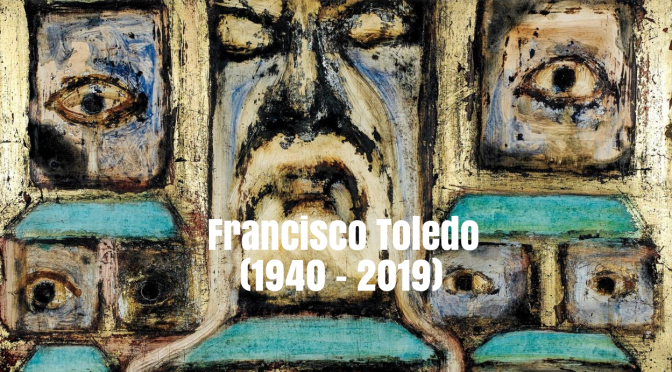
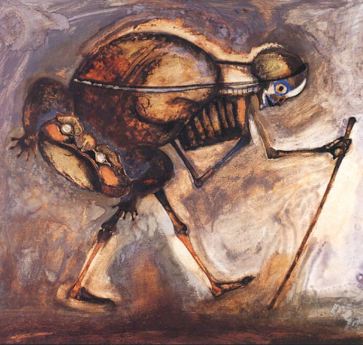 Though his paintings and sculptures sell all over the world for fabulous prices, he has not enriched himself. He lives simply, with his wife, Trine Ellitsgaard Lopez, an accomplished weaver, in a traditional house in the middle of Oaxaca, and has used his considerable profits to found art centers and museums, an ethnobotanical garden and at least three libraries.
 Toledo, whose origins were obscure and inauspicious, was the son of a leatherworker—shoemaker and tanner. He was born in Mexico City, but the family soon after moved to their ancestral village near Juchitán de Zaragoza in the Isthmus of Tehuantepec, nearer to Guatemala than to Mexico City—and being ethnically Zapotec, nearer culturally to the ancient pieties of the hinterland too.

 More than 1,600 museums nationwide will be opening their doors for free on Sept. 21 in honor of Museum Day.
 Boomers Daily