Contributing correspondent Kai Kupferschmidt talks with host Sarah Crespi about the success of a fast moving megatrial for coronavirus treatments. The United Kingdom’s Recovery (Randomized Evaluation of COVID-19 Therapy) trial has enrolled more than 12,000 hospitalized coronavirus patients since early March and has released important recommendations that were quickly taken up by doctors and scientists around the world.
Kupferschmidt discusses why such a large study is necessary and why other large drug trials like the World Health Organization’s Solidarity trial are lagging behind. Also this week, producer Meagan Cantwell talks with Saul Villeda, a professor in the Department of Anatomy at the University of California, San Francisco, about transferring the beneficial effects of exercise on the brain from an active mouse to a sedentary mouse by transferring their blood.
Public health organizations track the spread of coronavirus and use graphs and charts to visualize the data. WSJ’s Brianna Abbott explains what to look for in the data to understand how the virus is impacting your community.
BBC Radio 4 ‘Inside Science’ talks about satellite navigation in the UK; the science of the World Wide Web and Neolithic genomics.
Is the UK losing its way when it comes to satellite navigation? There’s GPS from the US, but other countries and regions, including Russia, China, India and Japan, either have, or are building, satellite navigation systems of their own. The EU has Galileo, but with Brexit, Britain is no longer involved. The Government has announced that it’s just acquired a satellite technology company called OneWeb. It’s primary role is enhanced broadband, but there’s talk of adding in a navigation function to the constellation of satellites. But how feasible will that be?
In an era of cyber-crime, misinformation, disinformation, state-sponsored attacks on rival countries’ infrastructure, government-imposed internet shutdowns in places like Eritrea and Kashmir, the World Wide Web is an increasingly dark and troubled place. Making sense of how the internet has changed from the democratic, sharing, open platform it was designed to be, and predicting what’s next, are the web scientists. Professor Dame Wendy Hall, Regius Professor of Computer Science at the University of Southampton, and a co-founder of the whole field of web science, is hosting an online, annual conference this week. The theme this year is ‘Making the web human-centric’.
Communal burial sites tend to suggest an egalitarian society, where everyone is considered equal. And this is what we expected the Neolithic societies that spread across Europe with the birth of agriculture around 6000 years ago would be. But DNA evidence from a single human, NG10, buried in 3200 B.C.E in the vast tomb of Newgrange, 25 miles north of Dublin, in Ireland, shows very strong inbreeding. Couple this with the fact the body was buried and not cremated and placed in a highly adorned chamber. Does this indicate an elite ruling class where marrying one’s close kin was the order of the day? Dr. Lara Cassidy, palaeogeneticist at Trinity College Dublin, decoded NG10’s DNA and she tells Adam Rutherford the story.
Presenter – Gareth Mitchell
Producers – Fiona Roberts and Beth Eastwood
Researchers have assessed whether Enhanced Weathering – a technique to pull carbon dioxide out of the air – has the potential to help battle climate change. Research Article: Beerling et al.
With investigations into everything from black holes to exoplanets, the Hubble Telescope has changed not only the face of astronomy but also our very sense of being in the universe. On the 30th anniversary of its launch into low-earth orbit, this updated edition of Expanding Universe presents 30 brand new images, unveiling more hidden gems from the Hubble’s archives.
Ultra-high resolution and taken with almost no background light, these pictures have answered some of the most compelling questions of time and space while also revealing new mysteries, like the strange “dark energy” that sees the universe expanding at an ever-accelerating rate.
The collection is accompanied by an essay from photography critic Owen Edwards and an interview with Zoltan Levay, who explains how the pictures are composed. Veteran Hubble astronauts Charles F. Bolden, Jr. and John Mace Grunsfeld also offer their insights on Hubble’s legacy and future space exploration.
The contributors
Charles F. Bolden, Jr., Major General, USMC (Ret.), is a former Administrator of NASA, where he oversaw the completion of the International Space Station. He spent 14 years as a member of NASA’s Astronaut Corps, and commanded and piloted the Space Shuttle Discovery on STS-31, which launched the Hubble Space Telescope into orbit.
Owen Edwards has written about photography for more than 30 years for numerous publications including American Photographer, New York Times Magazine, and Smithsonian.
John Mace Grunsfeld, PhD, is an astrophysicist and a NASA astronaut. He has flown five times on the Space Shuttle, including three Hubble servicing missions. He has served as the Associate Administrator for the Science Mission Directorate, the NASA Chief Scientist, and as the Deputy Director of the Space Telescope Science Institute.
Zoltan Levay is a retired principle science visuals developer at the Space Telescope Science Institute, where he worked with astronomers and communicators worldwide to publicize science results from NASA’s Hubble Space Telescope.
First up this week, News Intern Rodrigo Pérez-Ortega talks with host Meagan Cantwell about an oasis of biodiversity in the striking blue pools of Cuatro Ciénegas, a basin in northern Mexico. Researchers have published dozens of papers exploring the unique microorganisms that thrive in this area, while at the same time fighting large agricultural industries draining the precious water from the pools.
David Tatnell, a postgraduate researcher at the University of Exeter, talks with host Sarah Crespi about using heat to make sound, a phenomenon known as thermoacoustics. Just like the sound of fire or thunder, sudden changes in temperature can create sound waves. In his team’s paper in Science Advances, Tatnell and colleagues describe a thermoacoustic speaker that uses thin, heated films to make sound. This approach cuts out the crosstalk seen in mechanical speakers and allows for extreme miniaturization of sound production. In the ultrasound range, arrays of thermoacoustic speakers could improve acoustic levitation and ultrasound imaging. In the hearing range, the speakers could be made extremely small, flexible, and even transparent.
On this week’s podcast, how the molecular structure of tooth enamel may impact decay, adhesive patches to heal heart attacks, and a mysterious planetary core from a half-formed gas giant.
In this episode:
00:46 Unravelling tooth enamel
Researchers have been looking into the structure and composition of enamel in an effort to better understand tooth decay. Research Article: DeRocher et al.
In the region close to stars known as the ‘hot Neptune desert’ planets of Neptune’s size are rarely found, but this week scientists have uncovered one and are trying to untangle its mysteries. Research Article: Armstrong et al.
We take a look back over the past six months of the pandemic, and discuss how far the world has come. It’s been a period of turmoil and science has faced an unprecedented challenge. What lessons can be learned from the epidemic so far to continue the fight in the months to come?
Also in this episode:
12:55 Unanswered questions
After months of intensive research, much is known about the new coronavirus – but many important questions remain unanswered. We look at the knowledge gaps researchers are trying to fill.
The inability to travel during lockdown has seriously hampered many researchers’ ability to gather fieldwork data. We hear from three whose work has been affected, and what this means for their projects.
News, Views and Reviews For The Intellectually Curious

 Contributing correspondent Kai Kupferschmidt talks with host Sarah Crespi about the success of a fast moving megatrial for coronavirus treatments. The United Kingdom’s Recovery (Randomized Evaluation of COVID-19 Therapy) trial has enrolled more than 12,000 hospitalized coronavirus patients since early March and has released important recommendations that were quickly taken up by doctors and scientists around the world.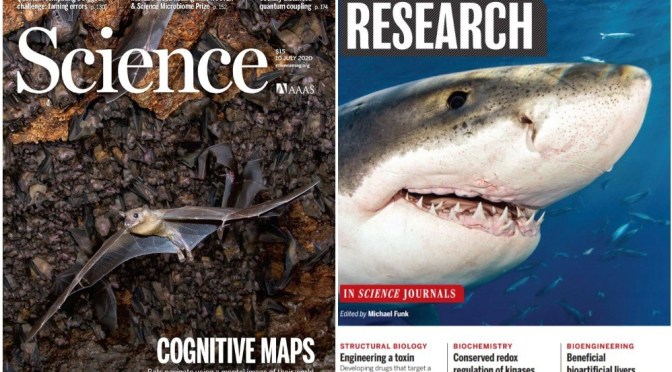
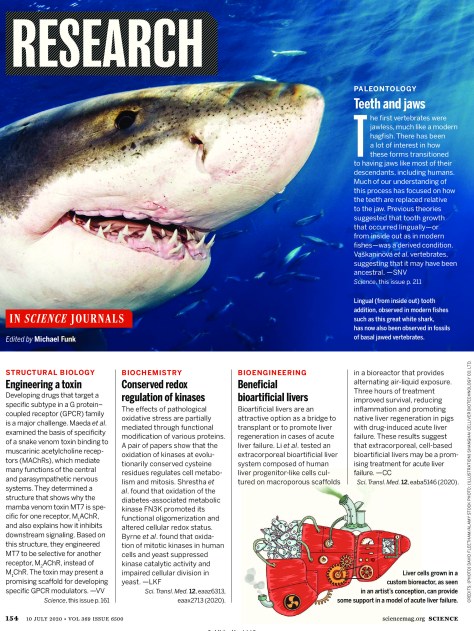


 BBC Radio 4 ‘Inside Science’ talks about satellite navigation in the UK; the science of the World Wide Web and Neolithic genomics.
 On this week’s podcast, an ambitious Mars mission from a young space agency, and how crumbling up rocks could help fight climate change.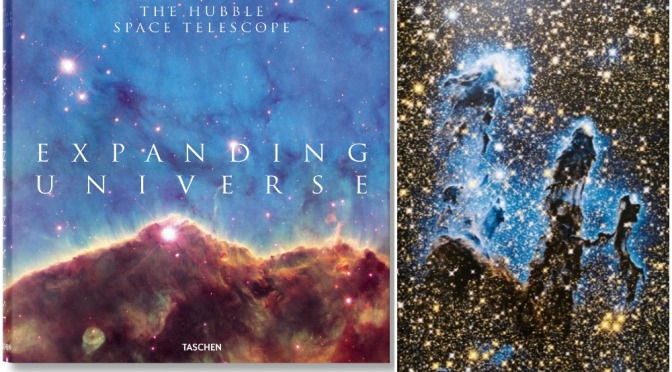

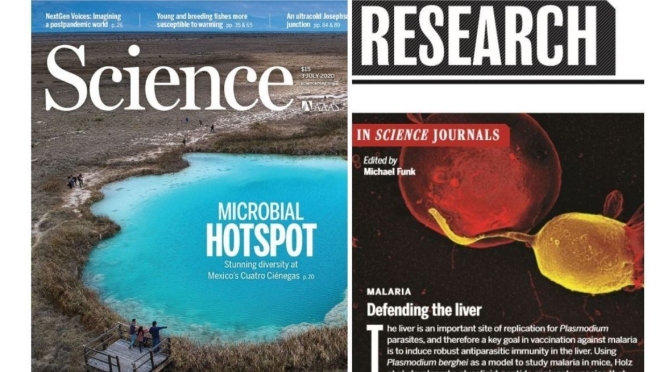
 On this week’s podcast, how the molecular structure of tooth enamel may impact decay, adhesive patches to heal heart attacks, and a mysterious planetary core from a half-formed gas giant.
 We take a look back over the past six months of the pandemic, and discuss how far the world has come. It’s been a period of turmoil and science has faced an unprecedented challenge. What lessons can be learned from the epidemic so far to continue the fight in the months to come?
 Boomers Daily