




Imagine a robot trained to think, respond, and behave using you as a model. Now imagine it assuming one of your roles in life, at home or perhaps at work. Would you trust it to do the right thing in a morally fraught situation?
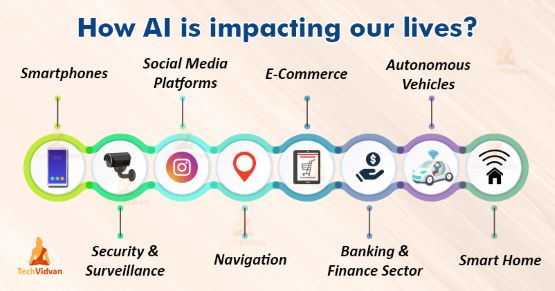
That’s a question worth pondering as artificial intelligence increasingly becomes part of our everyday lives, from helping us navigate city streets to selecting a movie or song we might enjoy — services that have gotten more use in this era of social distancing. It’s playing an even larger cultural role with its use in systems for elections, policing, and health care.

Staff Writer Meredith Wadman and host Sarah Crespi discuss what to expect from the two messenger RNA–based vaccines against COVID-19 that have recently released encouraging results from their phase III trials and the short-term side effects some recipients might see on the day of injection.
Sarah also talks with researcher Xing Chen, a project co-leader and postdoctoral scientist at the Netherlands Institute for Neuroscience, about using brain stimulation to restore vision. Researchers have known for about 70 years that electrical stimulation at certain points in the brain can lead to the appearance of a phosphene—a spot of light that appears not because there’s light there, but because of some other stimulation, like pressing on the eyeball. If electrical stimulation can make a little light appear, how about many lights? Can we think about phosphenes as pixels and draw a picture for the brain? How about a moving picture?

This week, world leaders are announcing a series of pledges to protect and sustainably use the world’s oceans. The pledges form the crowning achievement of the ‘High Level Panel for a Sustainable Ocean Economy’ a multinational group formed back in 2018.
The panel has sought to bring together research, published in a number of so-called ‘blue papers’ and special reports by scientists, policy- and legal-experts from around the world – all with the ear of 14 participating world leaders.
Erna Solberg, the prime minister of Norway, co-led the Panel. In this podcast, she speaks with Springer Nature’s editor-in-chief Philip Campbell about the panel’s work.
The ocean in humanity’s future: read all of Nature‘s content on the Ocean Panel
World View: Science can boost ocean health and human prosperity
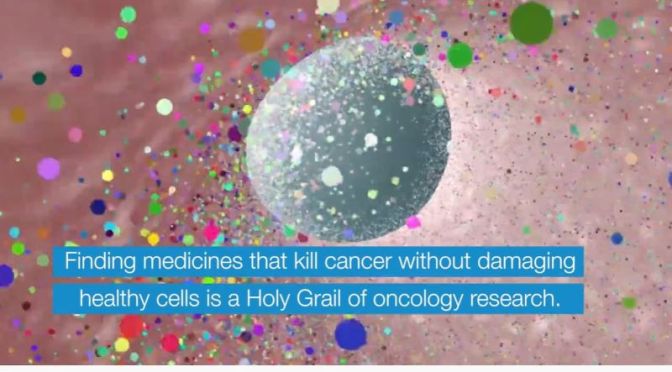
Finding medicines that can kill cancer cells while leaving normal tissue unscathed is a Holy Grail of oncology research. In two new papers, scientists at UC San Francisco and Princeton University present complementary strategies to crack this problem with “smart” cell therapies—living medicines that remain inert unless triggered by combinations of proteins that only ever appear together in cancer cells.
Biological aspects of this general approach have been explored for several years in the laboratory of Wendell Lim, PhD, and colleagues in the UCSF Cell Design Initiative and National Cancer Institute– sponsored Center for Synthetic Immunology. But the new work adds a powerful new dimension to this work by combining cutting-edge therapeutic cell engineering with advanced computational methods.
For one paper, published September 23, 2020 in Cell Systems, members of Lim’s lab joined forces with the research group of computer scientist Olga G. Troyanskaya, PhD, of Princeton’s Lewis-Sigler Institute for Integrative Genomics and the Simons Foundation’s Flatiron Institute.
Using a machine learning approach, the team analyzed massive databases of thousands of proteins found in both cancer and normal cells. They then combed through millions of possible protein combinations to assemble a catalog of combinations that could be used to precisely target only cancer cells while leaving normal ones alone. In another paper, published in Science on November 27, 2020, Lim and colleagues then showed how this computationally derived protein data could be put to use to drive the design of effective and highly selective cell therapies for cancer.
“Currently, most cancer treatments, including CAR T cells, are told ‘block this,’ or ‘kill this,’” said Lim, also professor and chair of cellular and molecular pharmacology and a member of the UCSF Helen Diller Family Comprehensive Cancer Center. “We want to increase the nuance and sophistication of the decisions that a therapeutic cell makes.”
Over the past decade, chimeric antigen receptor (CAR) T cells have been in the spotlight as a powerful way to treat cancer. In CAR T cell therapy, immune system cells are taken from a patient’s blood, and manipulated in the laboratory to express a specific receptor that will recognize a very particular marker, or antigen, on cancer cells. While scientists have shown that CAR T cells can be quite effective, and sometimes curative, in blood cancers such as leukemia and lymphoma, so far the method hasn’t worked well in solid tumors, such as cancers of the breast, lung, or liver.
Cells in these solid cancers often share antigens with normal cells found in other tissues, which poses the risk that CAR T cells could have off-target effects by targeting healthy organs. Also, solid tumors also often create suppressive microenvironments that limit the efficacy of CAR T cells. For Lim, cells are akin to molecular computers that can sense their environment and then integrate that information to make decisions. Since solid tumors are more complex than blood cancers, “you have to make a more complex product” to fight them, he said.
Many schools closed in the spring, during the first wave of the coronavirus pandemic. Many opened in the fall. Staff Writer Jennifer Couzin-Frankel joins host Sarah Crespi to talk about what was learned in spring about how coronavirus spreads in schools that might help keep children safe as cases surge once again.
Also this week: What makes leaves fall off deciduous trees when they do—is it the short, cold nights? Or is the timing of so-called “leaf senescence” linked to when spring happens? Sarah talked to Constantin Zohner, a lead scientist at the Institute of Integrative Biology at ETH Zurich, about his tree leaf timing study. Sarah also spoke with commentary author Christy Rollinson, a forest ecologist at the Morton Arboretum, about how important these trees and the timing of their leaf drop is for climate change. In the books segment, host Kiki Sanford talks with Ruth DeFries about her book, What Would Nature Do? A Guide for Our Uncertain Times.
Scientists have finally confirmed the existence of a CNO cycle fusion reaction in the Sun, and why women’s contraception research needs a reboot.
In this episode:
Since the 1930s it has been theorised that stars have a specific fusion reaction known as the CNO cycle, but proof has been elusive. Now, a collaboration in Italy report detection of neutrinos that show that the CNO cycle exists.
Research article: The Borexino Collaboration
News and Views: Neutrino detection gets to the core of the Sun
We discuss the search for the animal origin of SARS-CoV-2, with researchers raiding their freezer draws to see if any animals carry similar viruses, and the latest vaccine results.
News: Coronaviruses closely related to the pandemic virus discovered in Japan and Cambodia
News: Why Oxford’s positive COVID vaccine results are puzzling scientists
How sleep patterns relate to ageing, and a solar-powered steam sterilizer.
Research Highlight: For better health, don’t sleep your age
Research Highlight: Technology for sterilizing medical instruments goes solar
Since the 1960s there has been little progress on research into women’s contraceptives. This week in Nature, researchers argue that this needs to change.
Comment: Reboot contraceptives research — it has been stuck for decades
We discuss a highlight from the Nature Briefing. This time, a tool to summarise papers.
Nature News: tl;dr: this AI sums up research papers in a sentence








 Boomers Daily