
Another triumph for deep reinforcement learning #AI
— Eric Topol (@EricTopol) February 9, 2022
Neural network drivers outperform best human players in Gran Turismo gamehttps://t.co/KBhGfvDN5j@Nature pic.twitter.com/OCTkUVdHNf
Tag Archives: Science
Science: RNA Test Detects Pre-Eclampsia, Machine Vision, Recycling Urine
RNA in blood reveals signs of pre-eclampsia before symptoms occur, and the issue of urine in our sewage and what can be done about it.
In this episode:
00:46 Predicting pre-eclampsia
Cell-free RNA circulates in the blood and can give clues as to what is going on in the body. This can be used to detect disease before symptoms occur. Now researchers have analysed cell-free RNA in pregnant people and have found it can give early warning signs of a serious, and sometimes fatal, disorder of pregnancy — pre-eclampsia.
Research Article: Moufarrej et al.
07:19 Research Highlights
Upgrading machine vision by modelling it on human eyes, and stacked skeletons which could show attempts at repair after European tomb raiders.
Research Highlight: Retina-like sensors give machines better vision
Research Highlight: ‘Spines on posts’ hint at ancient devotion to the dead
09:55 The problems of pee
Sewage and the way it is managed can cause serious problems, for example contaminants in waste can lead to harmful algal blooms. One of the major causes of this is urine, and so some researchers have been promoting a deceptively simple solution — separate out the urine.
News Feature: The urine revolution: how recycling pee could help to save the world
Book Review: Toilets – what will it take to fix them?
16:40 Briefing Chat
We discuss some highlights from the Nature Briefing. This time, how China has planned to make this year’s Winter Olympics carbon neutral, and how a new radio telescope in Namibia will help us understand black holes.
Nature News: China’s Winter Olympics are carbon-neutral — how?
Nature News:
Science: Extreme Old Age Gene Quest, Gravitational ‘Glint’ Waves, Early Springs
The team explores a theory that suggests gravitational waves may be the thing that finally helps us detect dark matter – we just need to look for the ‘gravitational glint’.
Spring is rolling around earlier and earlier. The team examines a new study which shows that since the 1980s, the warming climate has brought the season forward by a month – which could have major ecological implications. They also discuss a study which looks at the impact of marine heatwaves on things like coral and fish populations.
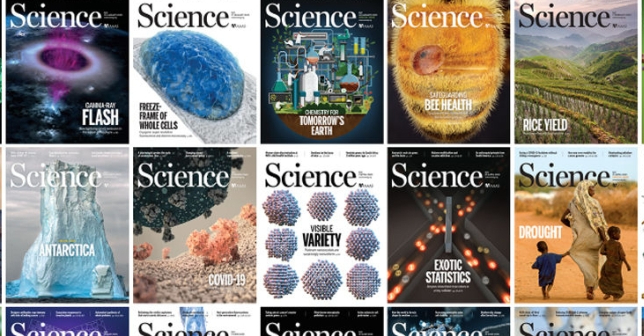
Cover Previews: Science Magazine – February 4
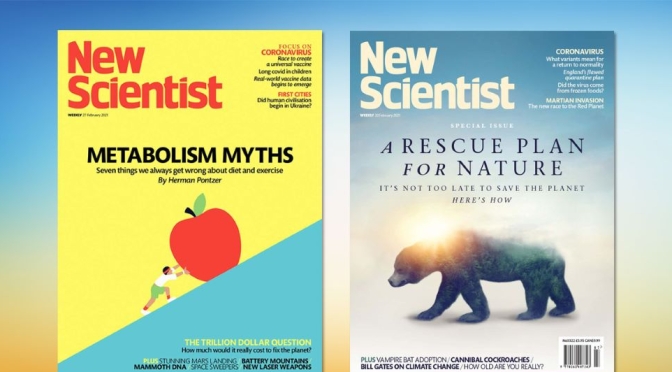
Previews: New Scientist Magazine – February 5

COVER STORIES
- CULTUREClimate fiction has come of age – and these fabulous books show why
- FEATURESDo we create space-time? A new perspective on the fabric of reality
- FEATURESChristopher Jackson interview: How geologists can fight climate change
- FEATURESInteroception: This ‘sixth sense’ could be key to better mental health
- NEWS160,000-year-old fossil may be the first Denisovan skull we’ve found
- NEWSSome bee colonies have to kill thousands of ‘selfish’ wannabe queens
- NEWS
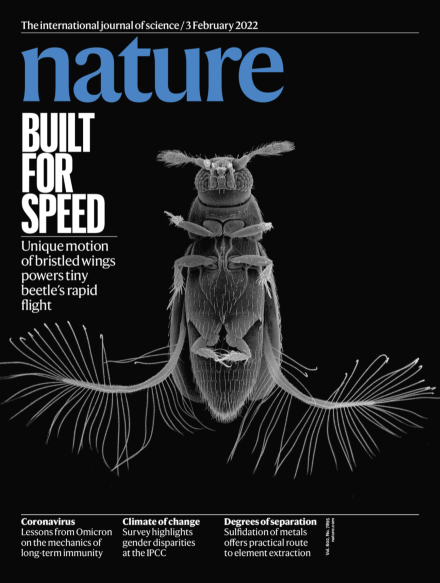
Cover Preview: Nature Magazine – February 3
Science: Water Flow And Quantum Friction, Super Soap Bubbles, Hippos
How quantum friction explains water’s strange flows in carbon nanotubes, and the latest from the Nature Briefing.
In this episode:
00:53 A theory for water’s baffling behaviour in carbon nanotubes
At large scales, water flows faster through a wider pipe than a narrower one. However, in tiny carbon nanotubes flow-rate is flipped, with water moving faster through the narrowest channels. This week, researchers have come up with a new explanation for this phenomenon: quantum friction. If validated, it could allow material designers to fine-tune flows through tiny channels, which could be useful in processes such as water purification.
Research Article: Kavokine et al.
06:43 Research Highlights
Creating soap bubbles that last 200,000 times longer, and hippos’ habit of aggressively spraying dung when they hear a stranger.
Research Highlight: No bursting for these record-breaking bubbles
Research Highlight: Hippos know strangers’ voices — and make a filthy reply
09:08 Briefing Chat
We discuss some highlights from the Nature Briefing. This time, a global study reveals how antibiotic-resistant infections have led to millions of deaths, and a genetic mutation that plays a big role in a dog’s size.
Nature News: The staggering death toll of drug-resistant bacteria
Nature News: Big dog, little dog: mutation explains range of canine sizes
Nature Video:
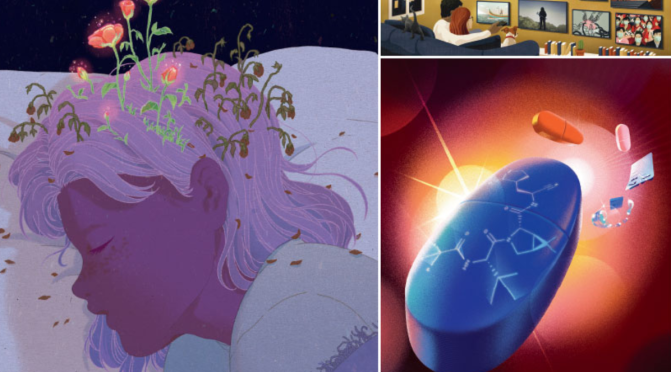
Science Visuals: The Top Illustrations From 2021
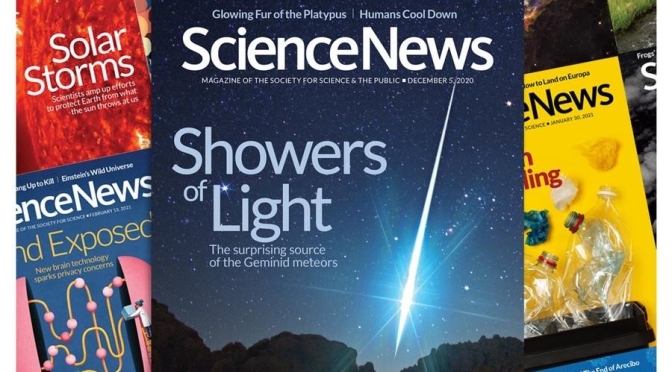
Previews: Science News Magazine – January 29
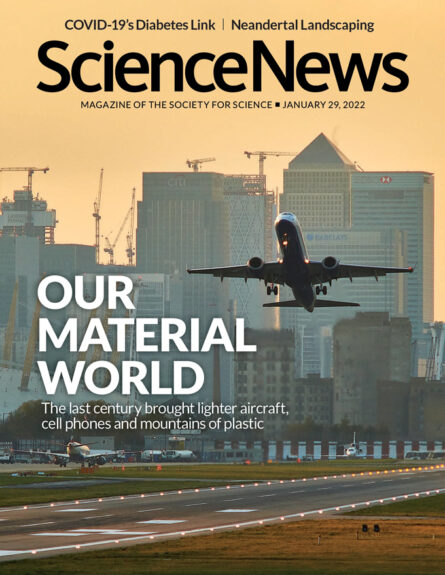
- COVER STORY Materials of the last century shaped modern life, but at a price From our homes and cities to our electronics and clothing, the stuff of daily life is dramatically different from decades ago. By Carolyn Wilke
- NEWS The coronavirus may cause fat cells to miscommunicate, leading to diabetes By Tina Hesman Saey
- NEWS Neandertals were the first hominids to turn forest into grassland 125,000 years ago By Bruce Bower
Science: Fecal Pills That Treat Gut Infections, Squirrel Hibernations
On this week’s show: A pill derived from human feces treats recurrent gut infections, and how a squirrel’s microbiome supplies nitrogen during hibernation.
First up this week, Staff Writer Kelly Servick joins host Sarah Crespi to discuss putting the bacterial benefits of human feces in a pill. The hope is to avoid using fecal transplants to treat recurrent gut infections caused by the bacterium Clostridium difficile.
Also this week, Hannah Carey, a professor in the department of comparative biosciences within the school of veterinary medicine at the University of Wisconsin, Madison, talks with Sarah about how ground squirrels are helped by their gut microbes during hibernation.
 Boomers Daily