Tag Archives: Science Magazines

Research Preview: Nature Magazine – May 11, 2023

Volume 617 Issue 7960

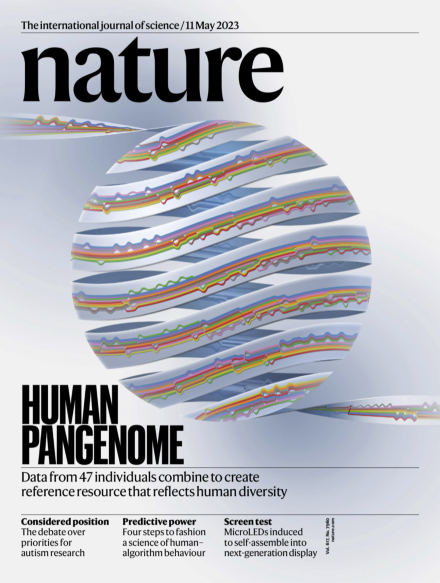
nature Magazine – May 11, 2023 issue: The human reference genome has been the backbone of human genomics since the release of the draft sequence in 2001. But it has its limitations: one genome cannot hope to capture the diversity of the human species. In this week’s issue, the Human Pangenome Reference Consortium presents the first draft human pangenome, which combines genetic material from 47 genetically diverse individuals to provide a more complete picture of the human genome.

They’re a couple: JWST is first to spot pair of mysterious ‘Y dwarfs’

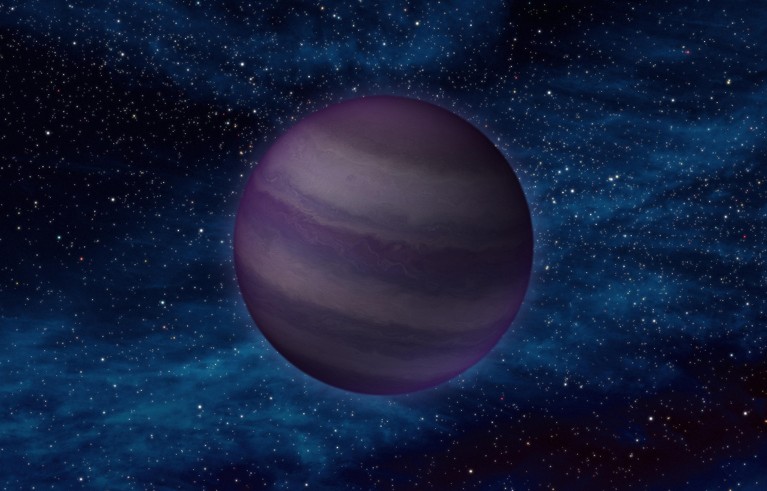
A dark brown sphere with lighter bands seen against a starry sky.

Two extremely cool examples of ‘failed stars’ called brown dwarfs are found orbiting each other.

Research Preview: Nature Magazine – May 4, 2023

Volume 617 Issue 7959

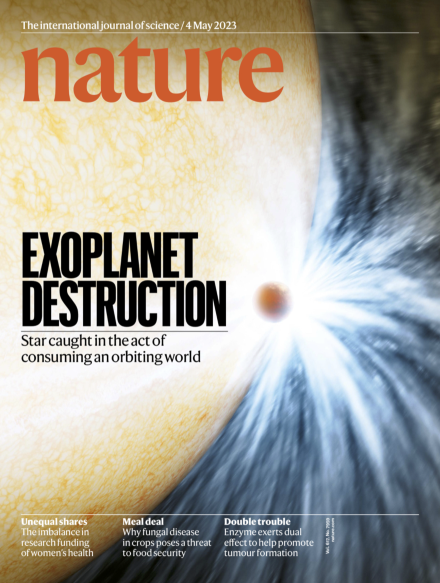
nature Magazine – May 4, 2023 issue: As stars evolve, they expand and so will engulf planets in close orbit around them. This planetary catastrophe is expected to generate powerful luminous ejections of mass from the star, although this has not been observed directly.

Is the world ready for ChatGPT therapists?

The current landscape of mobile mental-health apps is the result of a 70-year search to automate therapy. Now, advanced AIs pose fresh ethical questions.

Cartoon of a mobile phone as a psychotherapist surrounded by several other mobile-phone patients
Illustration by Fabio Buonocore

Since 2015, Koko, a mobile mental-health app, has tried to provide crowdsourced support for people in need. Text the app to say that you’re feeling guilty about a work issue, and an empathetic response will come through in a few minutes — clumsy perhaps, but unmistakably human — to suggest some positive coping strategies.

Fish on dry land hint at why we blink

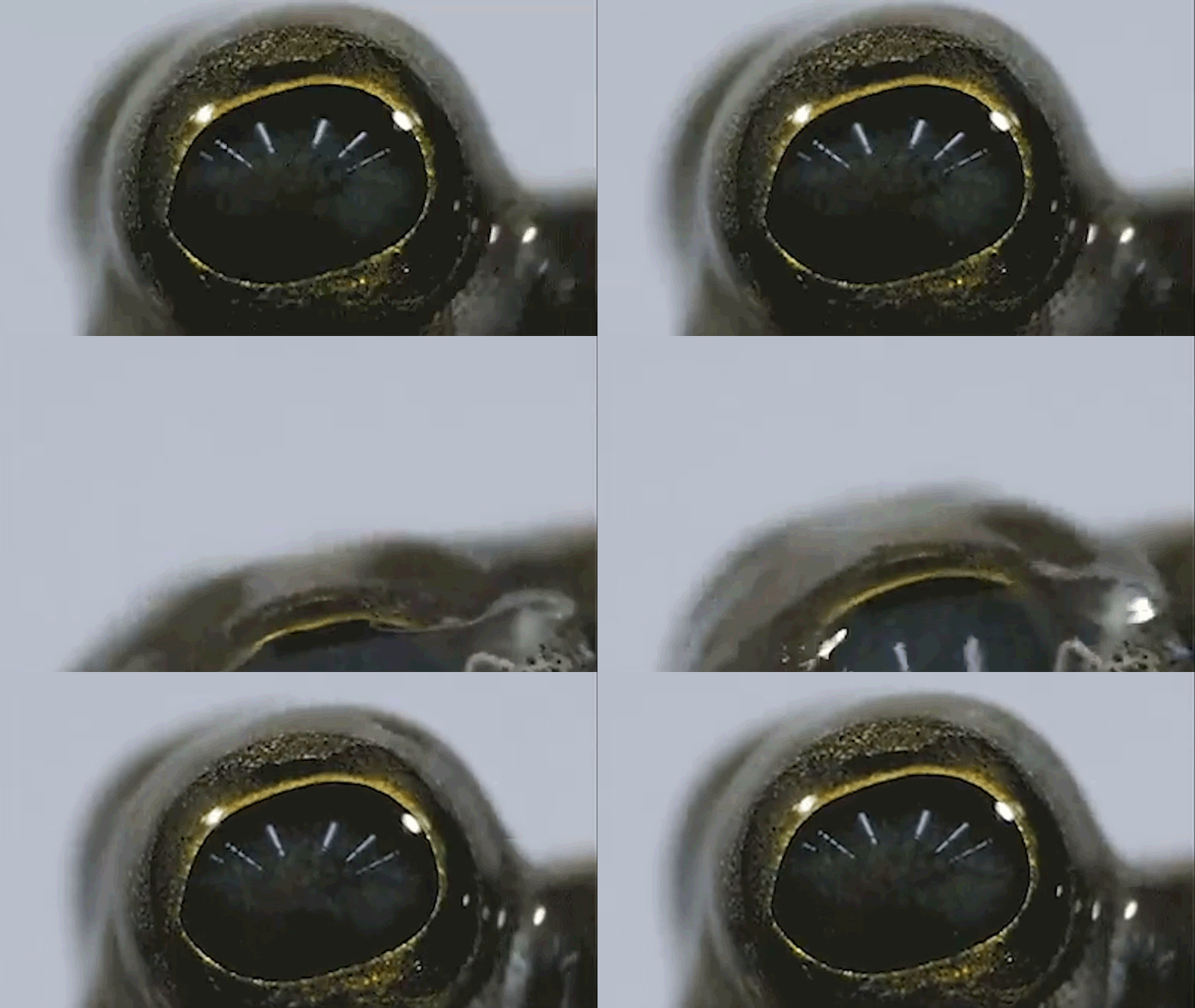
Close up of an Indian mudskipper (Periophthalmodon septemradiatus) blinking on land.
Mudskippers blink by retracting their eyes into the heads, helping them to moisten their corneas. Credit: Brett R. Aiello

Insights from mudskippers suggest that blinking is an adaptation to emerging from the sea.

Research Preview: Nature Magazine – April 27, 2023

Volume 616 Issue 7958

nature Magazine – April 20, 2023 issue:

Massive mosquito factory in Brazil aims to halt dengue

Facility will produce up to five billion bacteria-infected mosquitoes per year

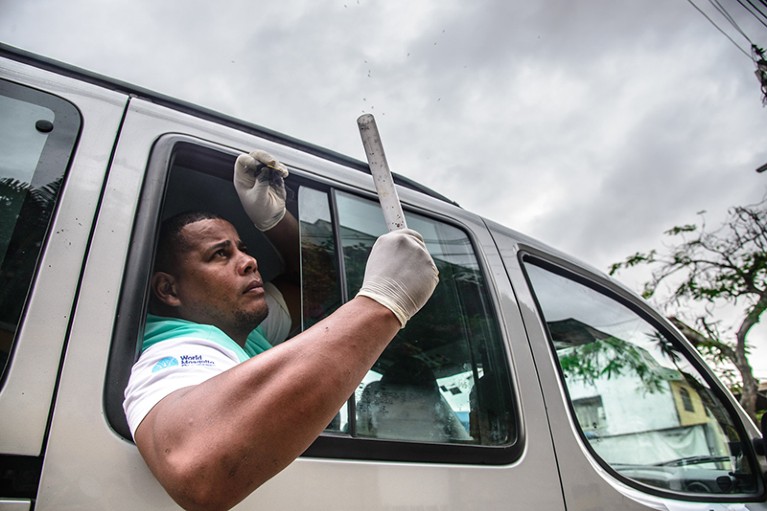
A WMP staff member releases Wolbachia mosquitoes in Niteroi, Rio de Janeiro
A World Mosquito Program (WMP) staff member releases Wolbachia-infected mosquitoes in Niterói, Brazil.Credit: WMP Brasil.

The non-profit World Mosquito Program (WMP) has announced that it will release modified mosquitoes in many of Brazil’s urban areas over the next 10 years, with the aim of protecting up to 70 million people from diseases such as dengue. Researchers have tested the release of this type of mosquito — which carries a Wolbachia bacterium that stops the insect from transmitting viruses — in select cities in countries such as Australia, Brazil, Colombia, Indonesia and Vietnam. But this will be the first time that the technology is dispersed nationwide.

Rewilding the planet

An archipelago constructed of sand and mud is bringing new life to a dead lake but can this bold experiment have a lasting impact

Research Preview: Nature Magazine – April 20, 2023

Volume 616 Issue 7957, 20 April 2023

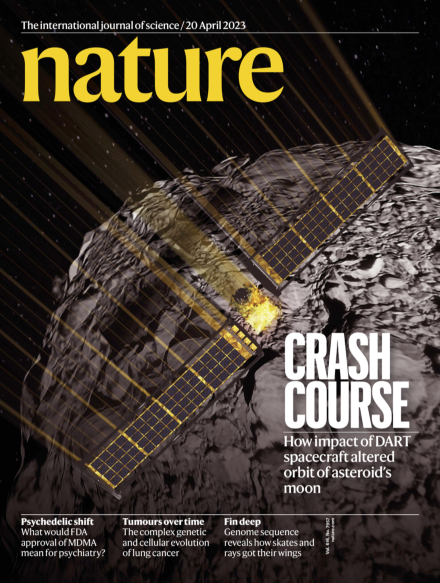
nature Magazine – April 20, 2023 issue: Although currently there is no known threat to Earth from asteroids, strategies to protect the planet from a collision are being explored. On 26 September 2022, NASA and the Johns Hopkins Applied Physics Laboratory successfully tested one such approach: the Double Asteroid Redirection Test (DART) spacecraft was deliberately crashed into Dimorphos, a moon orbiting the small asteroid Didymos, resulting in a change in the moon’s orbit.

Is Africa’s Great Green Wall project withering?

The plan to re-green a 7,000-kilometre swathe south of the Sahara is at risk of losing its pan-African vision and ambition.

A glacier’s catastrophic collapse is linked to global warming

Eleven hikers died after weeks of unusually warm weather led to melting of the Marmolada Glacier in the Alps.

Sunshine is transformed into green hydrogen on an ambitious scale

Prototype facility smashes record for converting solar power to hydrogen for its technology category.

Research Preview: Nature Magazine – April 13, 2023

Volume 616 Issue 7956

nature Magazine – April 13, 2023 issue: Octopuses use chemotactile receptors (CRs) in the suckers on their arms to ‘taste by touch’ as they explore their sea-floor environment. These proteins evolved from neurotransmitter receptors to allow octopuses to detect poorly soluble natural products on contact.

World’s biggest butterfly is low on genetic diversity

Ornithoptera alexandrae, Queen Alexandra's birdwing butterfly.
Rare beauty: the Queen Alexandra’s birdwing can have a wingspan of more than 28 centimetres. Credit: Alamy

An endangered butterfly, found only in Papua New Guinea, has had a small population for a million years.

Three ways to solve the plastics pollution crisis

Man walks through a canal which is blocked by piles of plastic waste and food waste dumped, Bangladesh, Dhaka.
A canal blocked by waste, including discarded plastic, in Dhaka, Bangladesh. Credit: Ahmed Salahuddin/NurPhoto/Shutterstock

Researchers are studying how more-sophisticated policies, smarter recycling and new materials could stem the tide of waste.

Research: New Scientist Magazine – April 15, 2023

New Scientist | Science news, articles, and features

New Scientist Magazine April 15, 2023 issue:

How do we know that therapy works, and which kind is best for you?

How do we know that therapy works, and which kind is best for you?

Psychotherapy has never been more available and yet, with so many options, it can be hard to know where to start. Thankfully, researchers are getting to grips with what really works and why

The Power of Language review: What speaking many languages can do

Physicist David Wolpert on how to study concepts beyond imagination

Research Preview: Nature Magazine – April 6, 2023

Image

nature Magazine – April 6, 2023 issue: In 1947, Isaac Berenblum proposed that the development of cancer was a two-stage process: the first step introduces mutations into healthy cells, the second then promotes tumour growth through tissue inflammation. In this week’s issue, Charles Swanton and his colleagues investigate the role of particulate matter in prompting the development of non-small-cell lung cancers and find that cancer initiation in response to pollution conforms to Berenblum’s model. 

Carbon dioxide removal is not a current climate solution — we need to change the narrative

Drastically reduce emissions first, or carbon dioxide removal will be next to useless.

Bird-flu virus makes itself at home in Canada’s foxes and skunks

The virulent H5N1 strain now sweeping across the world is adapting to its mammalian hosts in northern North America.

Conquering Alzheimer’s: a look at the therapies of the future

Researchers are looking to drug combinations, vaccines and gene therapy as they forge the next generation of treatments for the condition.

Research: New Scientist Magazine – April 8, 2023

Image

New Scientist – April 8, 2023 issue:

Come explore the quantum realm – it isn’t as confusing as it seems

Quantum particles, quantum computer, galaxy-like ; Shutterstock ID 2194720337; purchase_order: -; job: -; client: -; other: -

Quantum theory, and the world of subatomic particles and forces it describes, has a daunting reputation for strangeness. And yet, with the right guidance, anyone can enjoy its many wonders

Cancer tumours in mice shrunk thanks to oxygen-sucking battery

A breast cancer tumour in a mouse
Tomography imaging of a breast cancer tumour in a mouse

By consuming oxygen near to tumours, the battery makes a class of experimental drugs target oxygen-free cancerous cells more effectively

Research Preview: Nature Magazine – March 30, 2023

Volume 615 Issue 7954

nature Magazine – March 30, 2023 issue: Medieval people on the Swahili coast of East Africa were among the first sub-Saharan people to practise Islam. David Reich, Chapurukha Kusimba and colleagues sequenced DNA from 80 individuals buried in six medieval and early modern coastal Swahili stone towns, dating between 1250 and 1800. Their analysis shows that African women and Asian men began mixing along the East African coast before the year 1000, and that the earliest Asian migrants were of largely Persian origin. 

A gem of a material could provide a shield for spacecraft

Material that includes carbon with the same structure as diamond could be used to protect satellites from space radiation.

It’s bad! Awful! Negative headlines draw more readers

People scrolling online news are 1% less likely to click on an article for each positive word in its title.

GPT-4 is here: what scientists think

Researchers are excited about the AI — but many are frustrated that its underlying engineering is cloaked in secrecy.

Research: New Scientist Magazine – April 1, 2023

Image

New Scientist – April 1, 2023 issue:

Cancer mystery as cases rise among younger people around the world

A scanning electron micrograph of cancer cells in the intestine

The number of people under 50 with cancer is increasing in many countries and for many different tumour types. Why this is occurring isn’t entirely clear, but it may be due to some aspects of modern life

Banishing wrinkles could boost healthy ageing – so who pays the bill?

A middle-aged, blue-eyed, Caucasian person's eye looks to the side while smiling with wrinkled skin.

Research suggesting that wrinkles could be a driver of ageing means we need to rethink the beauty industry – and who pays for it