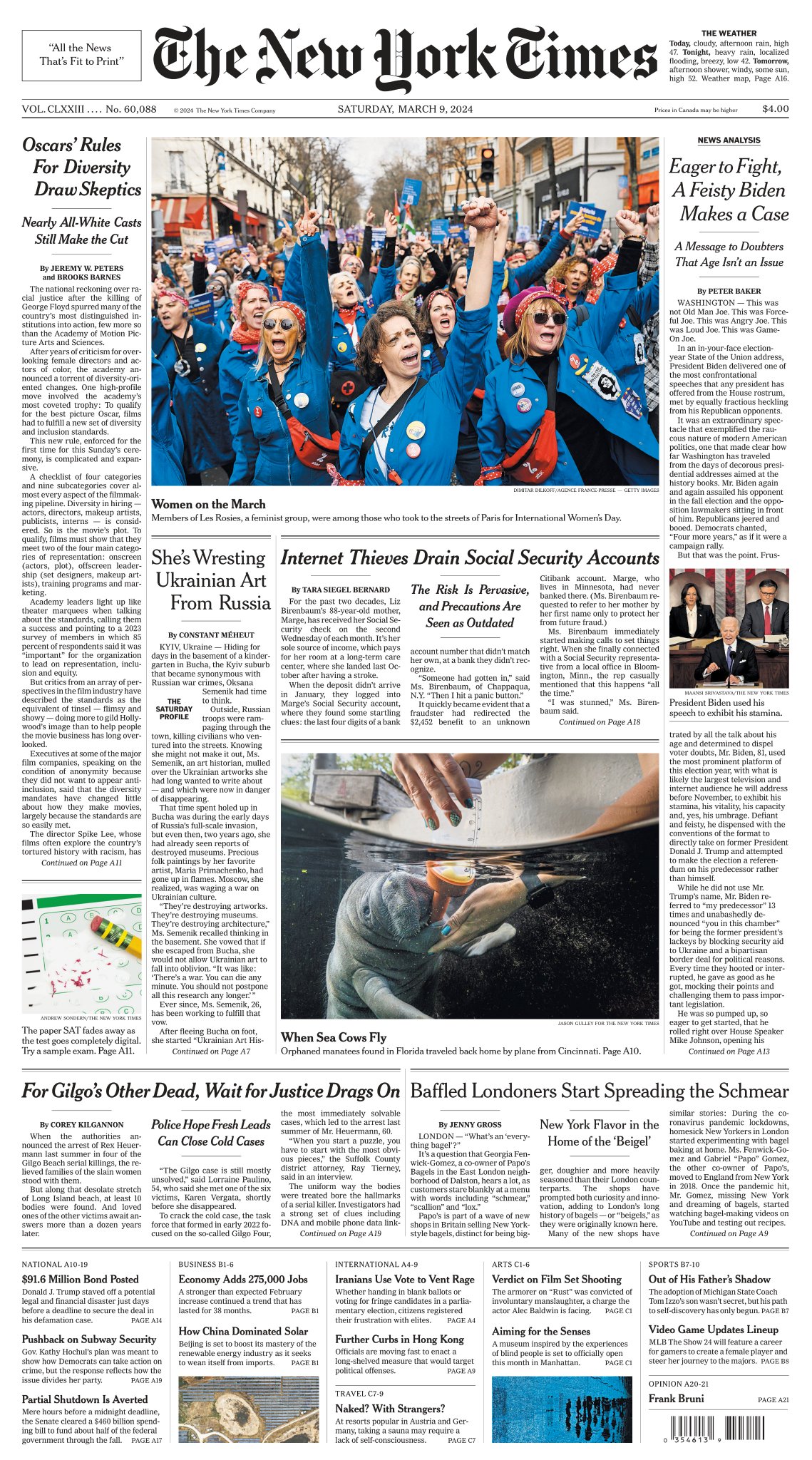
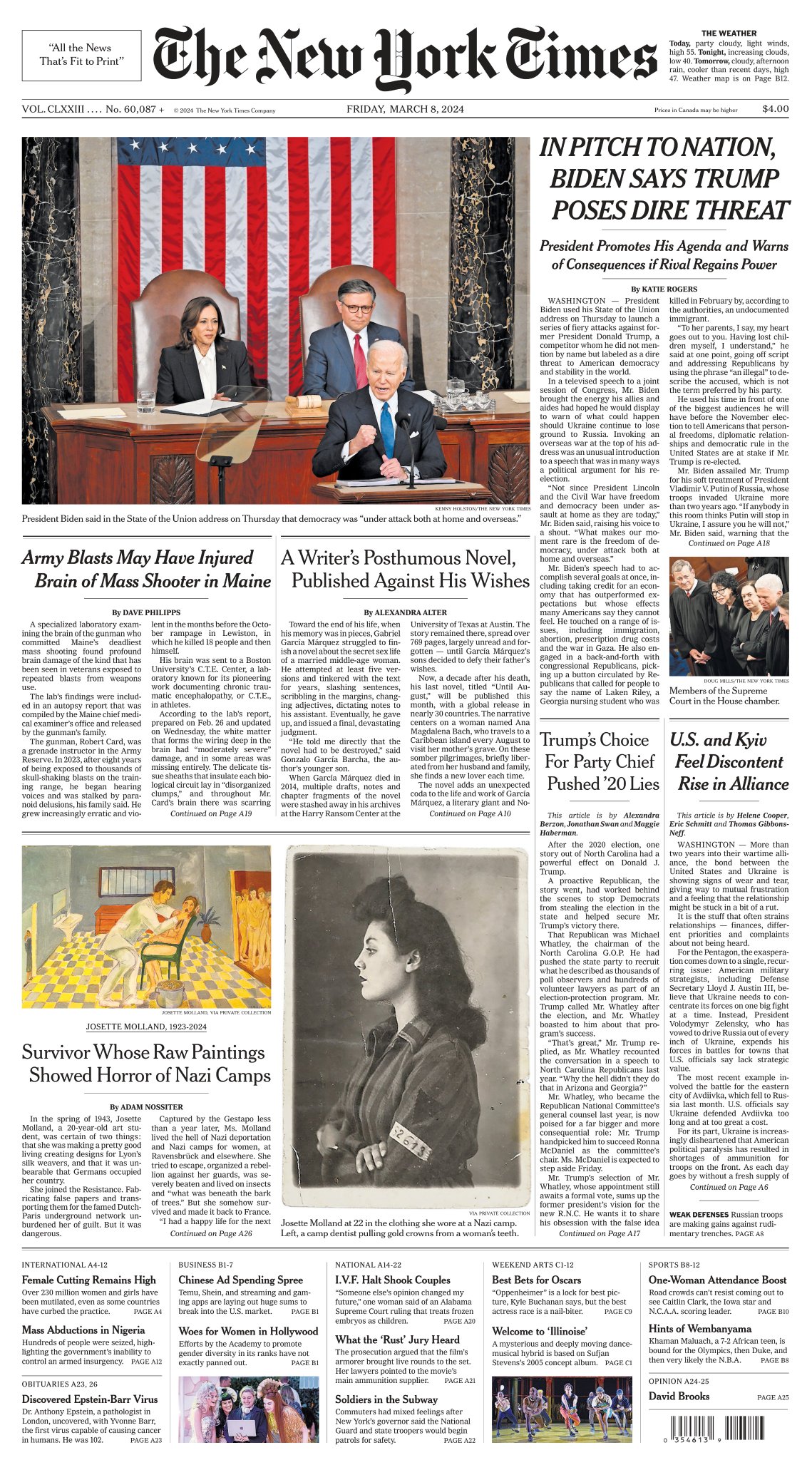
In a raucous State of the Union address, the president’s goal was to reassure Americans that at 81 he is ready for a second term. He made his case, loudly and forcefully.
Thousands of people receiving Social Security benefits have had their money diverted into criminal accounts. Here’s what to know.
‘Decolonizing’ Ukrainian Art, One Name-and-Shame Post at a Time
Oksana Semenik’s social media campaign both educates the curious about overlooked Ukrainian artists — and pressures global museums to relabel art long described as Russian.
The Globalist (March 8, 2024): We review Joe Biden’s final State of the Union address before the US presidential election in November.
Plus: Latvia becomes the first EU country to ban agricultural products from Russia and Belarus, the latest on the ongoing Israel-Hamas ceasefire talks and David Cameron’s trip to Berlin.
A laboratory found a pattern of cell damage that has been seen in veterans exposed to weapons blasts, and said it probably played a role in symptoms the gunman displayed before the shooting.
The publication of “Until August” adds a surprising twist to his legacy, and may stir questions about posthumous releases that contradict a writer’s directives.
Mutual Frustrations Arise in U.S.-Ukraine Alliance
Ukrainian officials are disheartened about stalled aid. The Pentagon wants Kyiv to heed its advice on how to fight.
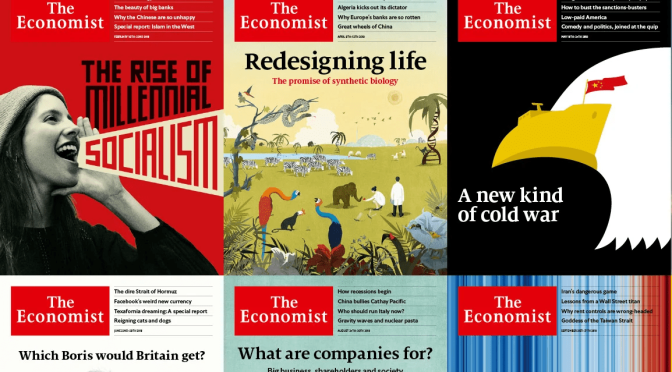
The Economist Magazine (March 7, 2024): The latest issue features Three big risks that might tip America’s presidential election – Third parties, the Trump trials and the candidates’ age introduce a high degree of uncertainty; Xi Jinping’s hunger for power is hurting China’s economy; How to fix the Ivy League – Its supremacy is being undermined by bad leadership…
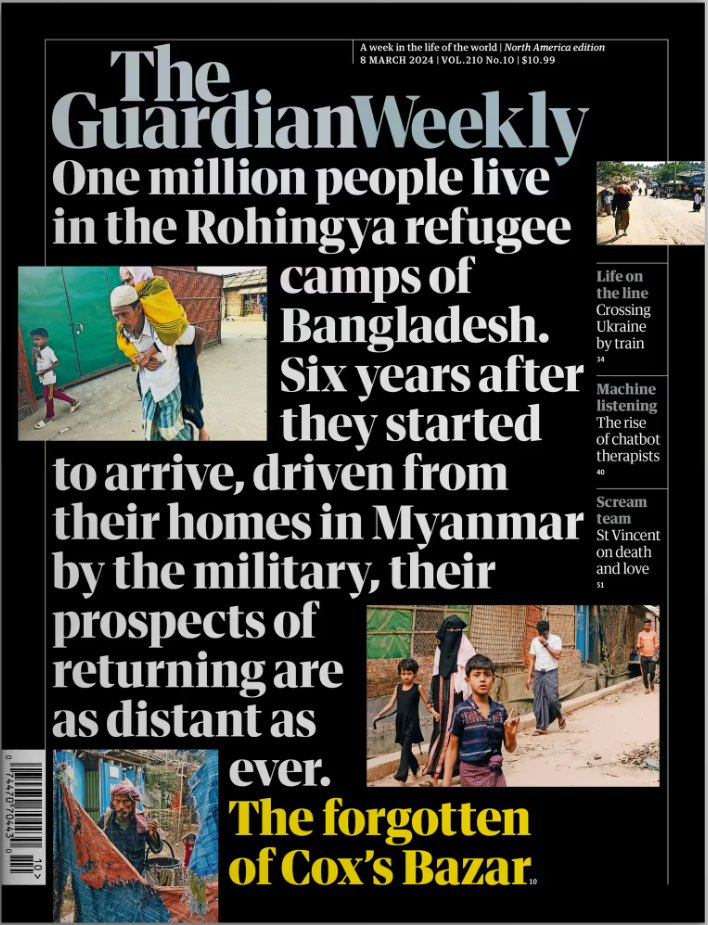
It was August 2017 when the world really started to take note of Myanmar’s Rohingya people. Descendants of Arab Muslims who speak a different language to most other people in Myanmar, the Rohingya had up to that point lived mainly in the northern Rakhine state, coexisting uneasily alongside the majority Buddhist population.
But the Rohingya were reviled by many as illegal immigrants and treated by the then government as stateless people. In 2017, when violence broke out in the north of the state, security forces supported by Buddhist militia launched a “clearance operation”that forced more than 1 million Rohingya people to flee their homes and the country, actions that many onlookers saw as ethnic cleansing. Most Rohingya were driven into vast refugee camps in the Cox’s Bazar region of Bangladesh, where they have remained ever since.
The Guardian global development reporter Kaamil Ahmed has been covering the Rohingya crisis for almost a decade, making multiple trips to the region. For this week’s Big Story, Kaamil returned to Cox’s Bazar where, in two moving reports, he details how disease and illness are widespread in the ramshackle camps, and how the desperation to escape has resulted in rich business for people traffickers.
And, with Myanmar now controlled by a military junta and introducing a deeply unpopular conscription drive (as Rebecca Ratcliffe and Aung Naing Soe report), the prospect of any Rohingya people being able to return home to Rakhine state remains as distant as it did in 2017.
The Globalist (March ,7 2024): The latest developments from the European People’s Party Congress in Bucharest with Nina dos Santos.
Plus: can Venezuela’s opposition navigate the presidential election’s tight deadlines? Adam Hancock reports from Kuala Lumpur ahead of the 10-year anniversary of the disappearance of Malaysia Airlines Flight 370.
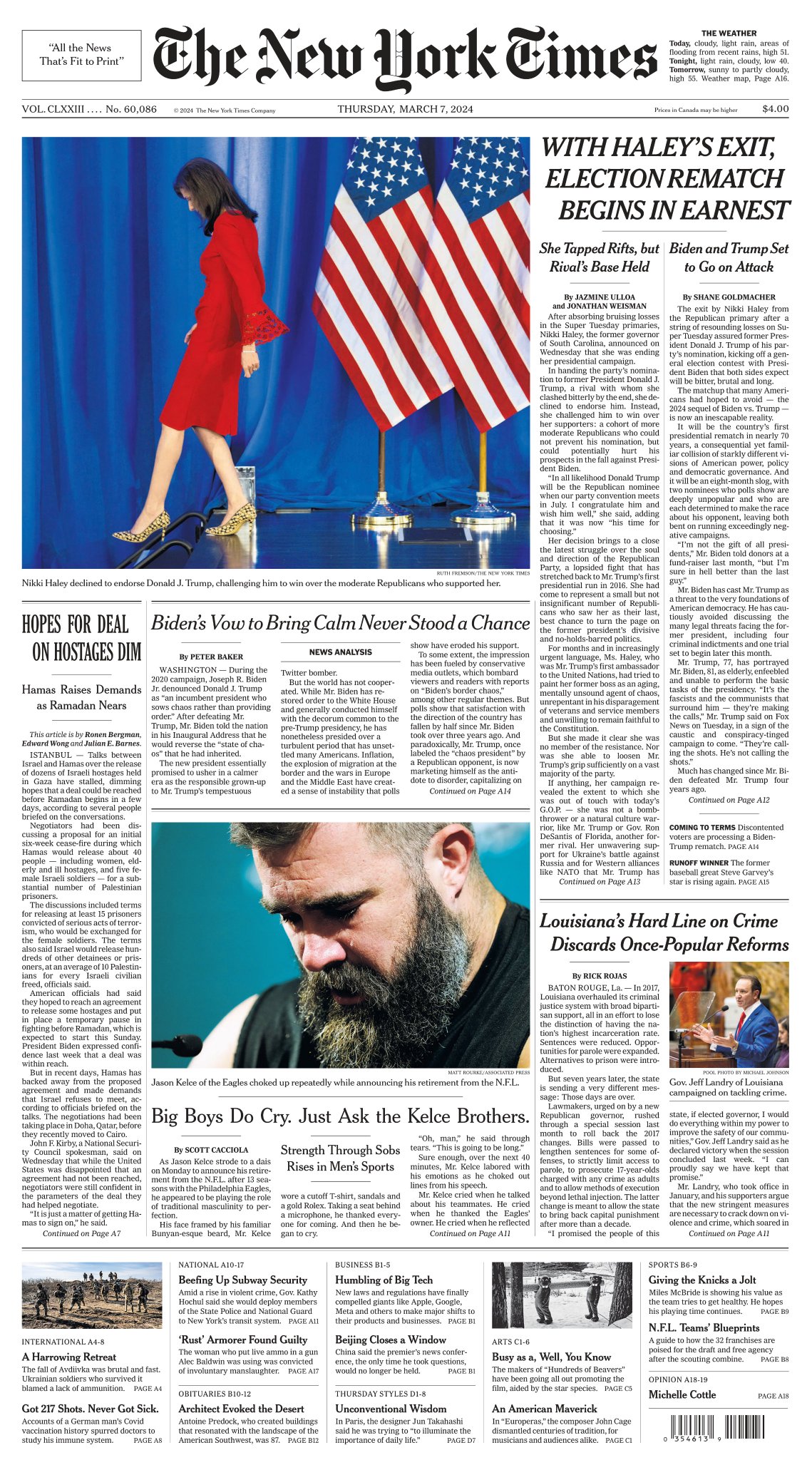
Falling well short in a spirited campaign to dethrone Mr. Trump, Ms. Haley brought to a close the latest struggle over the soul and direction of the Republican Party.
Israel-Hamas Talks Over Hostage Releases and a Cease-Fire Stall
Officials say Hamas has continued to press Israel for a commitment to a permanent cease-fire after a multistage release of all hostages, but Israel has refused.
Biden Promised Calm After Trump Chaos, but the World Has Not Cooperated
Inflation, an explosion of migration at the border and wars in Europe and the Middle East have created a sense of instability that polls show have eroded his support.
The Globalist (March 6, 2024): Following Germany’s embarrassing military leak, we discuss the country’s policy on the war in Ukraine.
Also, we give you the latest on the US’s decision to impose fresh sanctions on Zimbabwe’s president, Emmerson Mnangagwa, and Monocle’s Tom Edwards checks in from the Sustainable Cities in Action Forum in Dubai.
President Biden tries to take on worries about a tough race by turning to TikTok influencers, a late-night talk show and more give-and-take with reporters.
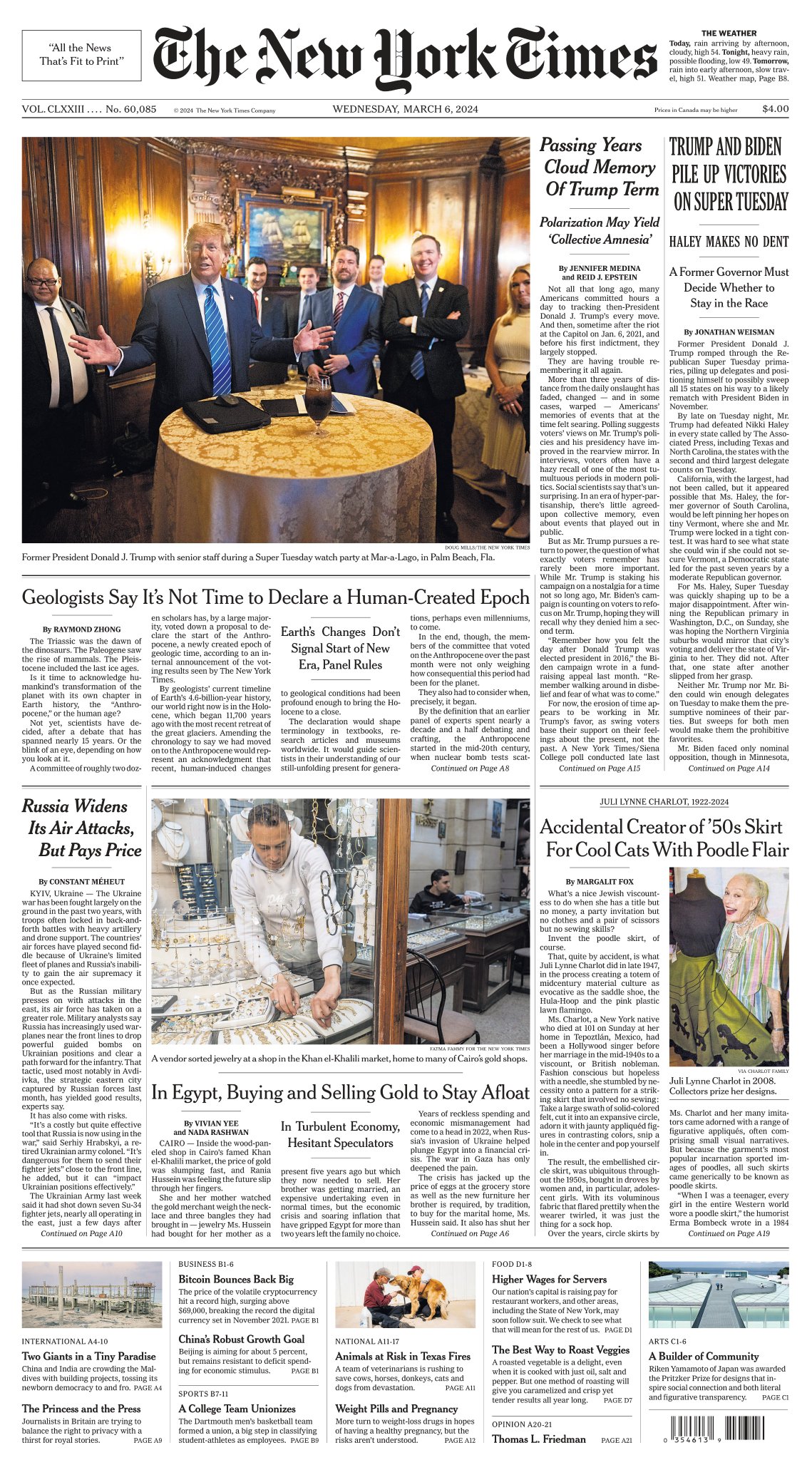
A panel of experts voted down a proposal to officially declare the start of a new interval of geologic time, one defined by humanity’s changes to the planet.
Shift in Russian Tactics Intensifies Air War in Ukraine
Moscow’s recent gains in the east have been aided by more aggressive air support on the front lines. But that also has helped Ukraine shoot down enemy planes in the past two weeks.
The Globalist (March 5, 2024):Monocle’s US editor, Christopher Lord, checks in ahead of the biggest presidential primary election day, as Donald Trump looks set to win the ballot.
Plus, South Korea makes good on its legal threats against striking doctors, China’s premier refuses to speak to the global press, and the second instalment of our week-long M370 series.
News, Views and Reviews For The Intellectually Curious






 Boomers Daily