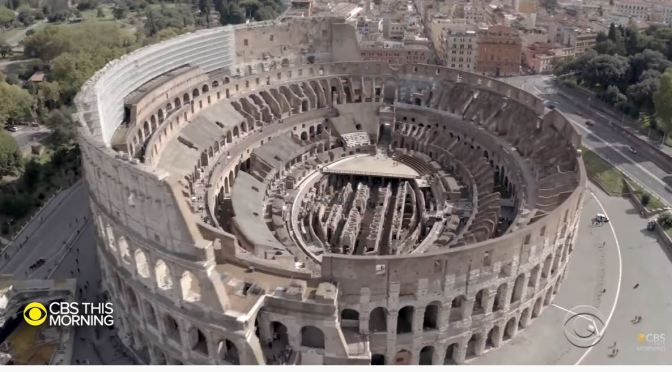
Visitors will be able to walk in the footsteps of Roman Gladiators in the same areas where they prepared to fight to the death. The Colosseum is opening up its deepest depths to the public. Chris Livesay reports.
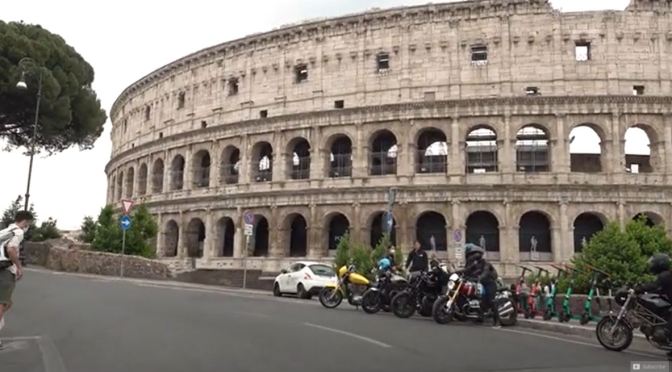
The Colosseum is an oval amphitheatre in the centre of the city of Rome, Italy, just east of the Roman Forum. It is the largest ancient amphitheatre ever built, and is still the largest standing amphitheatre in the world today, despite its age.
Rome is the capital city and a special comune of Italy (named Comune di Roma Capitale), as well as the capital of the Lazio region. The city has been a major human settlement for almost three millennia. With 2,860,009 residents in 1,285 km2 (496.1 sq mi), it is also the country’s most populated comune. It is the third most populous city in the European Union by population within city limits. It is the centre of the Metropolitan City of Rome, which has a population of 4,355,725 residents, thus making it the most populous metropolitan city in Italy. Its metropolitan area is the third-most populous within Italy. Vatican City (the smallest country in the world) is an independent country inside the city boundaries of Rome, the only existing example of a country within a city; for this reason , Rome has sometimes been defined as the capital of two states.
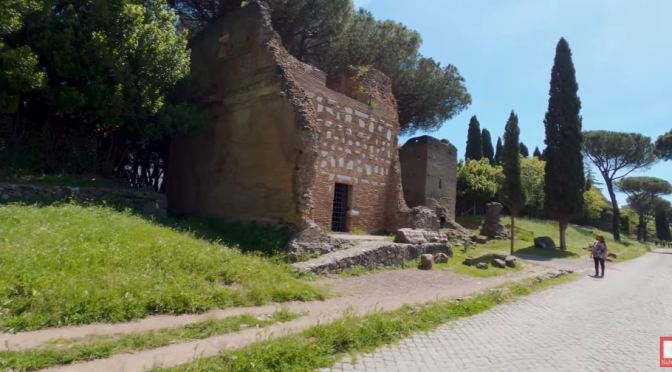
The Appian Way is one of the earliest and strategically most important Roman roads of the ancient republic. It connected Rome to Brindisi, in southeast Italy. Its importance is indicated by its common name, recorded by Statius:
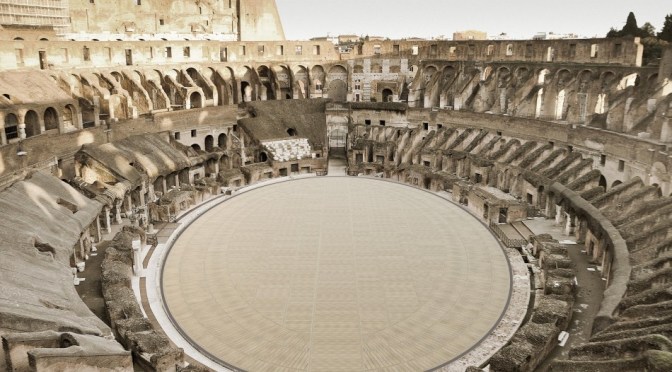
The Italian government has approved plans designed by engineering firm Milan Ingegneria to create a remote-controlled, retractable floor within the Colosseum amphitheatre in Rome.
The design competition for the new Colosseum arena floor, launched at the end of 2020, originated in 2014 with an idea by the archaeologist Daniele Manacorda and was included in the Strategic Plan for Great Cultural Projects in 2015.
The design envisages bringing to life the integral components of the largest amphitheater in the ancient world which is estimated to have held up to 87.000 spectators. The indoor arena measures 86 × 54 m with an area of 3.357 sqm. The new platform is to be placed at the height it had at the time of the Flavians and takes up the layout of the original plan. The beams will rest on the existing walls, with no mechanical anchors or any invasive impact, and will be completely reversible. Having the new floor will allow us to fully understanding its original uses and functions, while the technological solutions will guide visitors in discovering the complex organizational and scenic machine that governed the shows in Roman times.
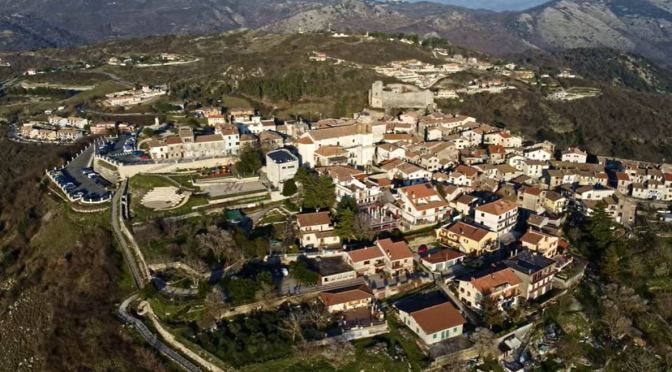
Castel San Pietro Romano is a comune in the Metropolitan City of Rome in the Italian region of Latium, located about 35 kilometres east of Rome. In 2017, it had a population of 883.
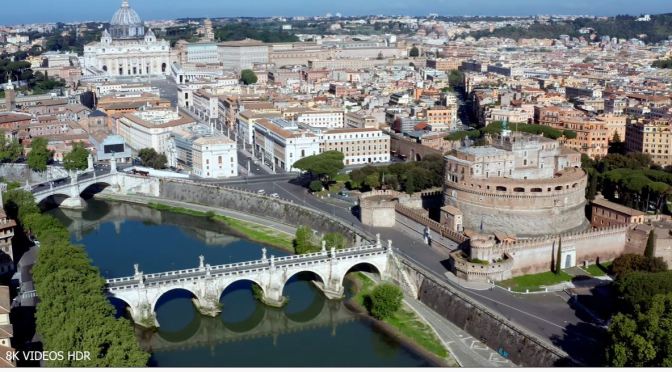
Rome, Italian Roma, historic city and capital of Roma provincia (province), of Lazioregione (region), and of the country of Italy. Rome is located in the central portion of the Italian peninsula, on the Tiber River about 15 miles (24 km) inland from the Tyrrhenian Sea. Once the capital of an ancient republic and empire whose armies and polity defined the Western world in antiquity and left seemingly indelible imprints thereafter, the spiritual and physical seat of the Roman Catholic Church, and the site of major pinnacles of artistic and intellectual achievement, Rome is the Eternal City, remaining today a political capital, a religious centre, and a memorial to the creative imagination of the past. Area city, 496 square miles (1,285 square km); province, 2,066 square miles (5,352 square km). Pop. (2011) city, 2,617,175; province, 3,997,465; (2007 est.) urban agglom., 3,339,000; (2016 est.) city, 2,873,494; province, 4,353,738.
Ancient Park of the Aqueducts (Parco degli Acquedotti) in Rome located just outside the city on the Appian Way. The Roman water system consisted of artificial channels for conveying water and run for some or all of their path through tunnels constructed underground. There are three Roman aqueducts which gave a possibility for Roman inhabitants to receive 1.000 liters of water per each person daily in 52 A.D.
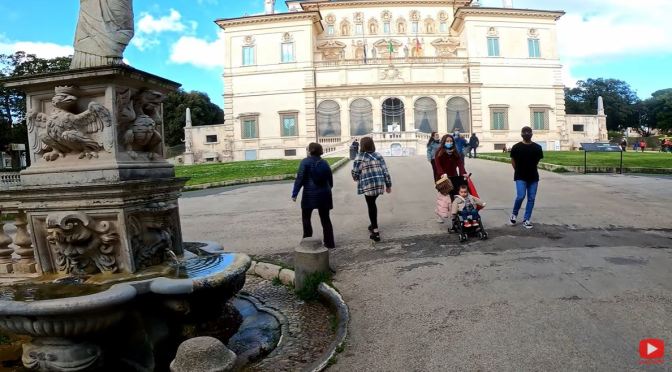
Villa Borghese is a landscape garden in Rome, containing a number of buildings, museums and attractions. It is the third largest public park in Rome after the ones of the Villa Doria Pamphili and Villa Ada.
Villa Borghese is a landscape garden in Rome, containing a number of buildings, museums and attractions. It is the third largest public park in Rome after the ones of the Villa Doria Pamphili and Villa Ada.
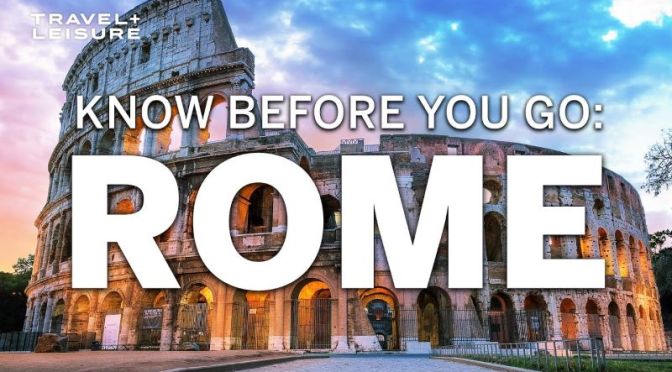
Here’s a quick rundown of essentials you need to know before planning your trip to the spectacular city of Rome in Italy’s Lazio region.
Timeline: 00:00 Introduction 00:05 The Basics 00:15 Airports 00:31 Public Transport 01:15 Key Phrases 01:35 Best Time to Visit 01:51 Five Neighborhoods to Visit 03:18 Landmarks 04:24 Etiquette 04:54 Cuisine
News, Views and Reviews For The Intellectually Curious


 Boomers Daily