
Tag Archives: Roman Ruins

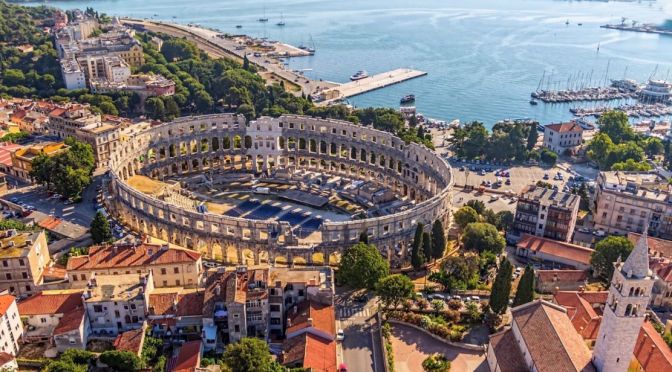
Travel Tour: Pula, On The Istrian Peninsula, Croatia

Massimo Nalli (Uploaded April 18, 2023) – Pula is situated at the southern tip of the Istrian peninsula in Croatia. The city is best known for its many surviving ancient Roman buildings, the most famous of which is its 1st-century amphitheatre, which is among the six largest surviving Roman arenas in the world, and locally known as the Arena.

Video timeline:00:00 – VIEW OF THE PULA FROM ABOVE – 00:13 – TWIN GATE AND CITYT WALLS – 00:55 – TRIUMPHAL ARC OF THE SERGI – 02:04 – FORUM SQUARE – 04:07 – TEMPLE OF AUGUSTUS – 05:03 – ST.FRANCIS CHURCH – 06:55 – CATHEDRAL – 09:55 – ADMIRALTY BUILDING – 11:31 – CASTLE – 13:37 – CHURCH OF ST.MARY FORMOSA – 14:46 – AMPHITHEATER

During the World War II Italian fascist administration, there were attempts to dismantle the arena and move it to mainland Italy, which were quickly abandoned due to the costs involved. Two other notable and well-preserved ancient Roman structures are the 1st-century AD triumphal arch, the Arch of the Sergii and the co-eval Temple of Augustus, built in the 1st century AD built on the forum during the reign of the Roman emperor Augustus.

The Twin Gates (Porta Gemina) is one of the few remaining gates after the city walls were pulled down at the beginning of the 19th century. It dates from the mid-2nd century, replacing an earlier gate. It consists of two arches, columns, a plain architrave, and a decorated frieze. Close by are a few remains of the old city wall.
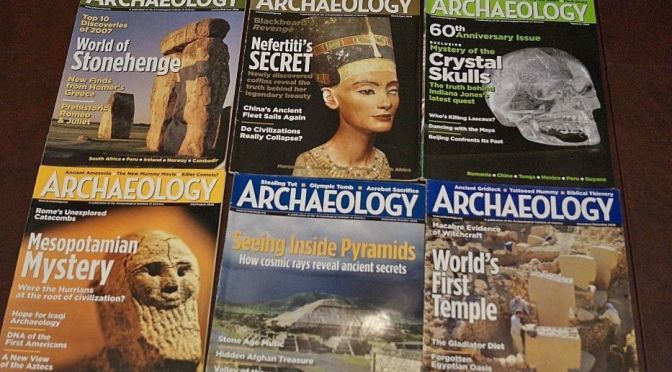
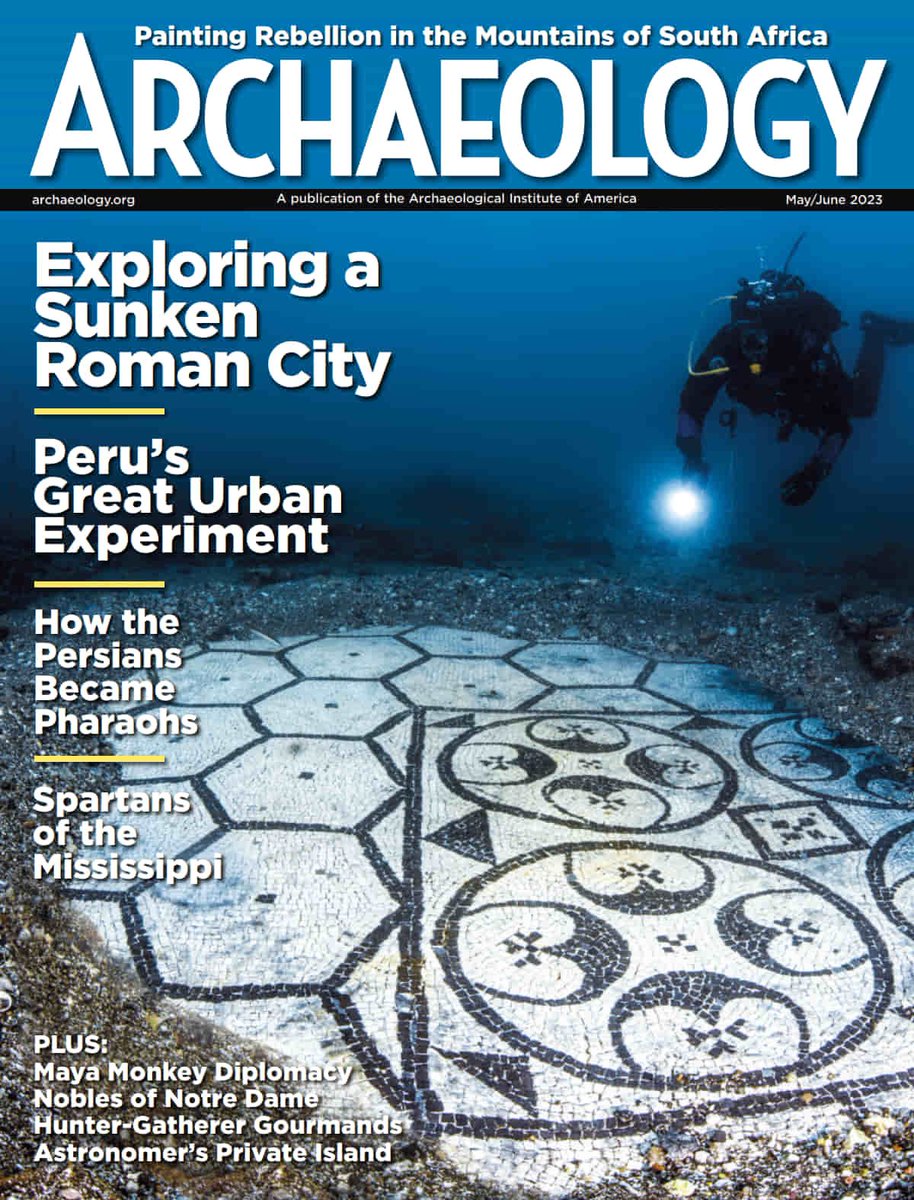
Preview: Archaeology Magazine – May/June 2023

Image

Archaeology Magazine (May/June 2023):

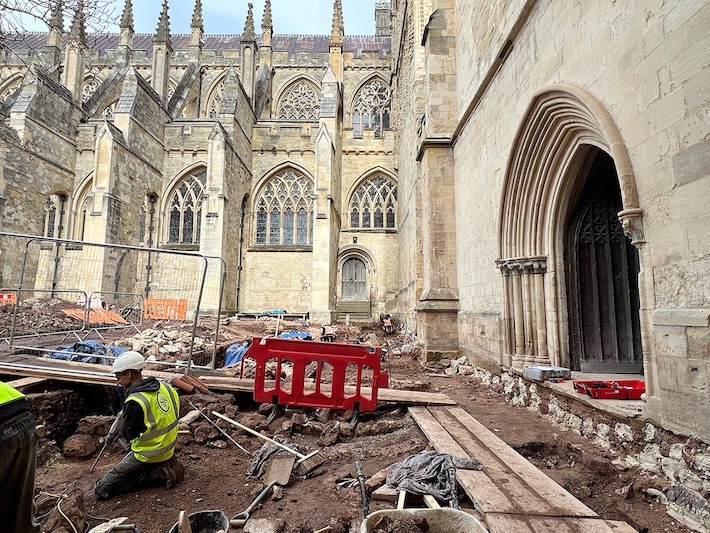
Roman Ruins Uncovered at England’s Exeter Cathedral

(BBC News reports that traces of a Roman street and timber buildings were uncovered in southwest England at the site of the cloister garden at Exeter Cathedral during an investigation ahead of the construction of a new cloister gallery.

England Exeter Cathedral

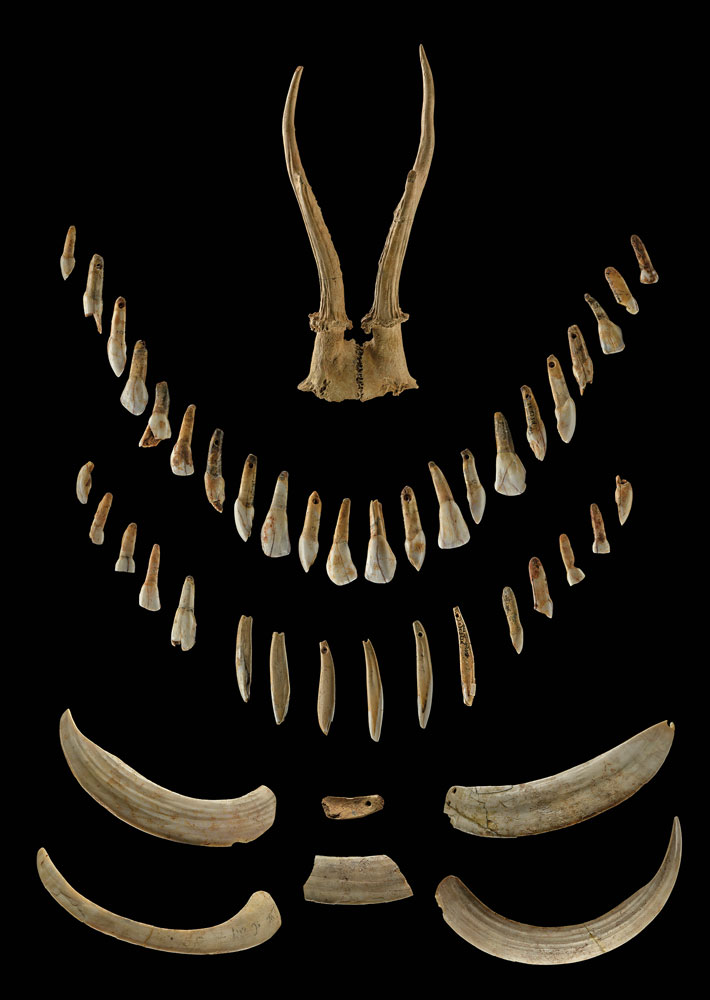
The Shaman’s Secrets

Germany Mesolithic Shaman Bone Headdress

An impressive selection of grave goods including roe deer antlers (top) that could have been worn as a headdress and boars’ teeth (middle) and tusks (above) with holes drilled in them enabling them to be suspended from an animal skin were found in a 9,000-year-old shaman’s burial.

Bad Dürrenberg is a modest spa town in eastern Germany, perched on a bluff overlooking the Saale River. On a Friday afternoon in 1934, workers were laying pipe to supply the spa’s fountain with water when they came across red-tinted earth. 

(Photographs Juraj Lipták)

Walking Tours: Side In Southern Turkey (4K)

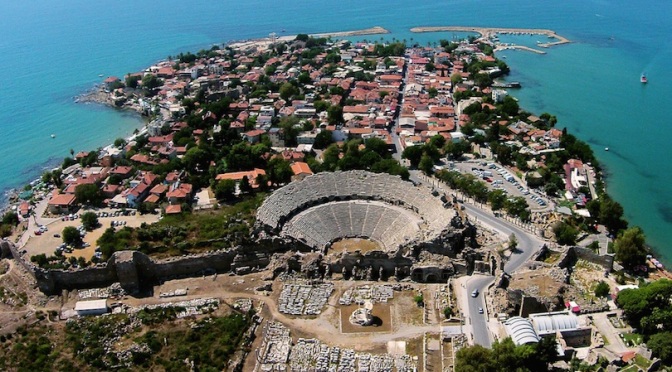
Side is a resort town on Turkey’s southern Mediterranean coast. An ancient port city, it’s known for long beaches and Greco-Roman ruins. In the center are the remains of the 2nd-century Antique Theater, which seated up to 15,000. The white marble columns of the Hellenistic Temple of Athena stand near the harbor. Other sites are sprinkled throughout, with finds housed at the Side Museum, a restored Roman bath complex. 

Archaeological Views: Bosra In Southern Syria

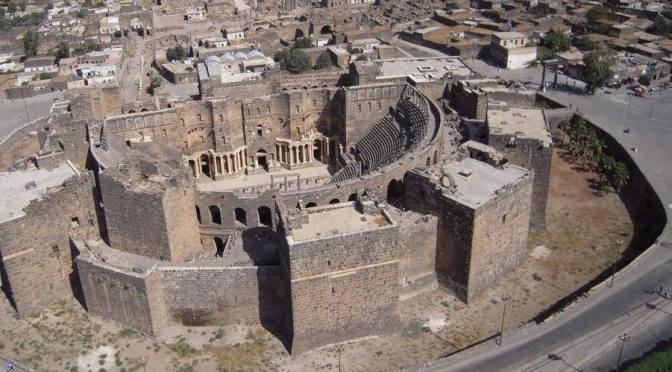
Bosra is a major archaeological site in Syria, with ruins from Roman, Byzantine, and Muslim times. The most impressive of all is the magnificent perfectly preserved Roman amphitheater, built in the second century. Bosra, also spelled Bostra, Busrana, Bozrah, Bozra and officially called Busra al-Sham, is a town in southern Syria.

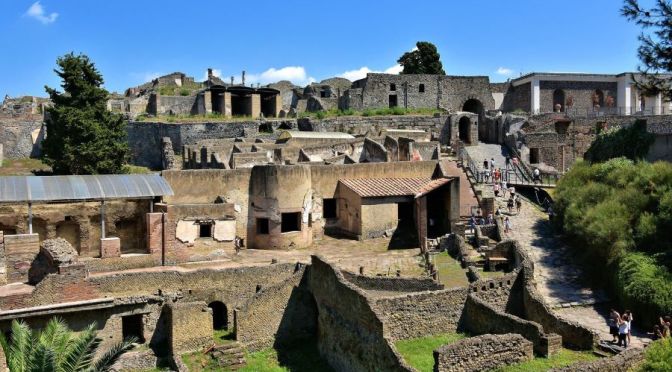
Walking Tour: Roman Ruins At Pompeii, Italy (4K)

The archaeological ruins of Pompeii, Campania, Italy walking tour in 4k. January 2, 2022.

Pompeii is a vast archaeological site in southern Italy’s Campania region, near the coast of the Bay of Naples. Once a thriving and sophisticated Roman city, Pompeii was buried under meters of ash and pumice after the catastrophic eruption of Mount Vesuvius in 79 A.D. The preserved site features excavated ruins of streets and houses that visitors can freely explore

Video timeline: 00:00 Preview 01:27 Piazza Anfiteatro (Entrance) 04:00 Anfiteatro / Amphitheater 11:00 Praedia di Giulia Felice 14:00 Via dell’Abbondanza 16:25 Casa di Octavius Quartio 20:50 Via di Castricio 23:10 Via dell’Abbondanza 24:00 Taverna di Sotericus 25:36 Casa di Trebio Valente 27:25 Casa del Frutteto 29:00 Casa di Giulio Polibio 29:45 Casa e Thermopolium di Vetutius Placidus 33:20 Thermopolium di Asellina 34:30 Casa degli Epidii 39:36 Panoramic view of Pompeii 43:30 Via dell’Abbondanza 45:25 Via Stabiana 46:35 Casa del Citarista 50:00 Porta di Stabia (Gate of Stabia) 52:20 Teatro Piccolo (Small Theater) Odeion 53:03 Quadriportico dei Teatro o Caserma dei Gladiatori (Quadriportico of the Theater or Barracks of the Gladiators) 54:30 Teatro Grande 1:04:05 Terme Stabiane (Stabian Baths) 1:11:50 Forum 1:24:50 Granaries of the Forum (Casts) 1:28:30 The garden of the fugitives (Casts) 1:30:00 Necropoli di P. Nocera

Views: Diocletian’s Palace Ruins, Split, Croatia (4K)

Diocletian’s Palace is an ancient palace built for the Roman emperor  Diocletian at the turn of the fourth century AD, which today forms about half the old town of Split, Croatia. While it is referred to as a “palace” because of its intended use as the retirement residence of Diocletian, the term can be misleading as the structure is massive and more resembles a large fortress: about half of it was for Diocletian’s personal use, and the rest housed the military garrison.

The complex was built on a peninsula six kilometres southwest from Salona, the former capital of Dalmatia, one of the largest cities of the late empire with 60,000 people and the birthplace of Diocletian. The terrain around Salona slopes gently seaward and is typical karst, consisting of low limestone ridges running east to west with marl in the clefts between them. Today the remains of the palace are part of the historic core of Split, which in 1979 was listed by UNESCO as a World Heritage Site.

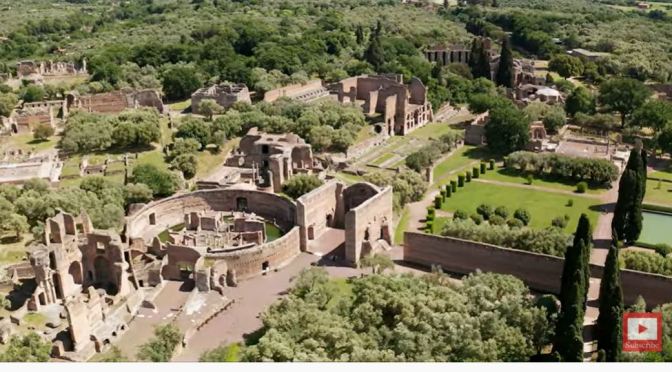
Roman Ruins: Hadrian’s Villa, Tivoli, Italy (4K)

Hadrian’s Villa is a UNESCO World Heritage Site comprising the ruins and archaeological remains of a large villa complex built c. AD 120 by Roman Emperor Hadrian at Tivoli outside Rome. The site is owned by the Republic of Italy and has been managed since 2014 by the Polo Museale del Lazio. 

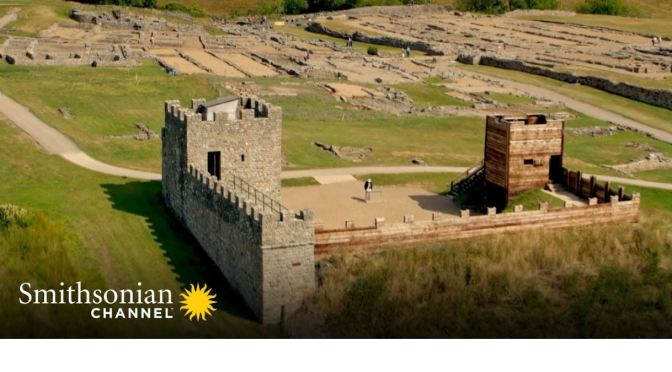
English History: Roman Ruins In Northumberland

Northumberland is one of Britain’s most historic regions, an archaeological treasure trove of impressive buildings that date back to the Roman conquest: From Hadrian’s Wall to the Vindolanda Fort.

From Aerial Britain: https://bit.ly/38DQJao