

The first event in our Lab Notes online series features two researchers from our South Coast Network Centre talking about early brain changes in Alzheimer’s. Dr Karen Marshall shares her work studying how waste disposal and recycling systems in nerve cells cause damage in Alzheimer’s disease, and whether there could be ways to rescue cells from this. Dr Mariana Vargas-Caballero speaks about her research into brain cell connections and how they are affected in Alzheimer’s. The event is chaired by Dr Katy Stubbs from Alzheimer’s Research UK, and also features a Q&A session.
The pandemic’s unequal toll on the research community, and a newly discovered mitochondria-like symbiosis.
In this episode:
00:48 The pandemic’s unequal toll on researchers
Although 2020 saw a huge uptick in the numbers of research papers submitted, these increases were not evenly distributed among male and female scientists. We look at how this could widen existing disparities in science, and damage future career prospects.
Editorial: COVID is amplifying the inadequacy of research-evaluation processes
09:18 Research Highlights
How a parasite can make viral infections more deadly, and the first known space hurricane.
Research Highlight: Intestinal worms throw open the door to dangerous viruses
Research Highlight: The first known space hurricane pours electron ‘rain’
11:36 Energy without oxygen
Millions of years ago, a microscopic protist swallowed a bacterium and gained the ability to breathe nitrate. This relationship partially replaced the cell’s mitochondria and allowed it to produce abundant energy without oxygen. This week, researchers describe how this newly discovered symbiosis works.
Research Article: Graf et al.
News and Views: A microbial marriage reminiscent of mitochondrial evolution
19:22 Briefing Chat
We discuss some highlights from the Nature Briefing. This time, the weakening of the Gulf Stream, and a new satellite to monitor deforestation in the Amazon.
The Guardian: Atlantic Ocean circulation at weakest in a millennium, say scientists
Science: Brazil’s first homemade satellite will put an extra eye on dwindling Amazon forests

This week we’re dedicating the whole show to the 20th anniversary of the publication of the human genome. Today, about 30 million people have had their genomes sequenced. This remarkable progress has brought with it issues of data sharing, privacy, and inequality.
Host Sarah Crespi spoke with a number of researchers about the state of genome science, starting with Yaniv Erlich, from the Efi Arazi School of Computer Science and CEO of Eleven Biotherapeutics, who talks about privacy in the age of easily obtainable genomes. Next up Charles Rotimi, director of the Center for Research on Genomics and Global Health at the National Human Genome Research Institute, discusses diversity—or lack thereof—in the field and what it means for the kinds of research that happens. Finally, Dorothy Roberts, professor in the departments of Africana studies and sociology and the law school at the University of Pennsylvania, talks about the seemingly never-ending project of disentangling race and genomes.

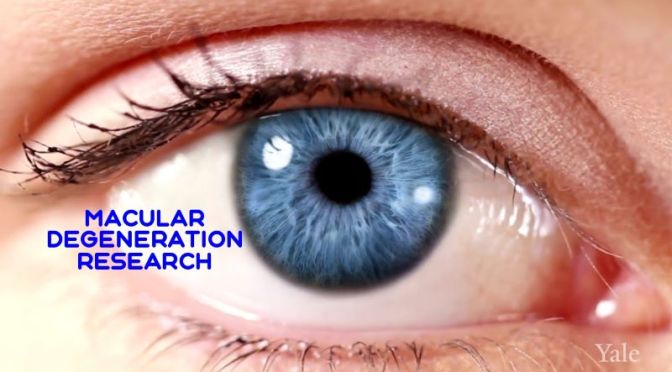
Macular degeneration is a leading cause of visual impairment in people over 65 and can lead to blindness. One in three people will eventually suffer some degree of macular degeneration, which is caused by abnormal blood vessels under the retina, the light-sensitive part of the eye. We treat both the more common “dry” as well as the more dangerous “wet” forms of macular degeneration. While there is currently no cure for this disease, we offer the latest treatments to reduce the risk of vision loss and blindness. These include anti-VEGF drugs—which attack proteins that create the abnormal blood vessels that cause macular degeneration—and photodynamic therapy, in which patients ingest medication that is then activated with a laser.
Online News Editor David Grimm joins host Sarah Crespi to discuss a controversial new paper that estimates how many rodents are used in research in the United States each year.
Though there is no official number, the paper suggests there might be more than 100 million rats and mice housed in research facilities in the country—doubling or even tripling some earlier estimates.
Next, Staff Writer Jennifer Couzin-Frankel talks with Sarah about a new theory behind the cause of irritable bowel syndrome—that it might be a localized allergic reaction in the gut. Sarah also chats with Taline Kazandjian, a postdoctoral research associate at the Centre for Snakebite Research & Interventions in Liverpool, U.K., about how the venom from spitting cobras has evolved to cause maximum pain and why these snakes might have developed the same defense mechanism three different times.









 Boomers Daily