Monocle on Saturday (June 8, 2024): Writer and social commentator Lijia Zhang joins Georgina Godwin to talk about the 35th anniversary of the Tiananmen Square crackdown, organising her own protest, China’s relationship with Russia and Ukraine and the K-pop balloons sent to North Korea.
Plus: Kate Mosse, author and founder director of the Women’s Prize, joins to discuss the organisation’s live event and Bookbanks founder Emily Rhodes on her initiative bringing books to foodbanks.
Monocle on Saturday (June 1, 2024): Will the conviction of former President Donald Trump affect his chance of winning the US election in November?
And why does Iceland’s election today have more candidates running than ever before? Join Emma Nelson and communications consultant and journalist Simon Brooke as they look through the week’s news and culture. Plus: we look at art and tourism, including co-founder and director of London Gallery Weekend Jeremy Epstein, who joins the show to talk about this weekend’s highlights.
Monocle on Saturday (May 25, 2024): Georgina Godwin is joined by Daniella Peled, managing editor at the Institute for War and Peace Reporting, for a look back at the week’s news and culture.
Plus: author Rupert Thompson joins to discuss his new book ‘How to Make a Bomb: A Novel’ and Monocle’s Helsinki correspondent, Petri Burtsoff, visits the independent publishing imprint Cozy.
As birth rates plunge, many politicians want to pour money into policies that might lead women to have more babies. Donald Trump has vowed to dish out bonuses if he returns to the White House. In France, where the state already spends 3.5-4% of gdp on family policies each year, Emmanuel Macron wants to “demographically rearm” his country. South Korea is contemplating handouts worth a staggering $70,000 for each baby. Yet all these attempts are likely to fail, because they are built on a misapprehension.
Governments’ concern is understandable. Fertility rates are falling nearly everywhere and the rich world faces a severe shortage of babies. At prevailing birth rates, the average woman in a high-income country today will have just 1.6 children over her lifetime. Every rich country except Israel has a fertility rate beneath the replacement level of 2.1, at which a population is stable without immigration. The decline over the past decade has been faster than demographers expected.
Monocle on Saturday (May 11, 2024): The Eurovision final is nearly here. Latika Bourke, Sîan Pattenden and Georgina Godwin discuss the latest news from Malmö as well as Sîan’s eleventh consecutive charity live draw.
Monocle’s resident Eurovision expert, Fernando Augusto Pacheco, speaks to the show’s production designer, Florian Wieder, and the lighting and screen-content designer, Fredrik Stormby, from the competition’s main stage. Plus: David Lammy in the US and the tourist crackdown in the Balearic Islands.
At first glance, the world economy looks reassuringly resilient. America has boomed even as its trade war with China has escalated. Germany has withstood the loss of Russian gas supplies without suffering an economic disaster. War in the Middle East has brought no oil shock. Missile-firing Houthi rebels have barely touched the global flow of goods. As a share of global gdp, trade has bounced back from the pandemic and is forecast to grow healthily this year.
Elections for the European parliament are less than a month away and far-right parties are predicted to make significant gains in many of the bloc’s 27 member states. The dire shortage of housing, leading to rising rents and property prices, is becoming a unifying focus for voters’ discontent with their current political leaders.
The issue has sparked protests from Amsterdam to Prague and Milan, as the Guardian’s Europe correspondent, Jon Henley, reports. The data is undeniably worrying as young Europeans spend up to 10 times an average salary on rent and mortgage payments, and big cities from the Baltic states to the Iberian peninsula have registered average property price rises of close to 50%. As a result more EU residents live with their parents for longer and put off life-decisions later into adulthood.
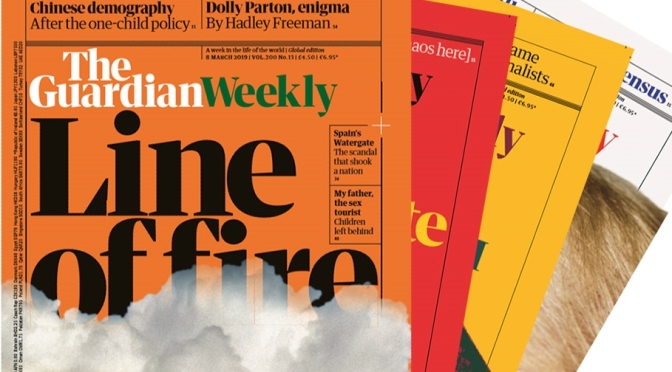
While housing does not fall within MEPs’ remit, it is a visible locus for the sense of social unease that has beset the whole bloc and has become a pivot for the far right to turn on racialised minorities. But as European community affairs correspondent Ashifa Kassam discovers, it is those communities that are doubly penalised through discrimination from landlords who, research has shown, turn away potential renters with “foreign” surnames. The political and social ramifications of the housing crisis in Europe is mirrored elsewhere across the globe and is a subject we will return to in the Guardian Weekly in this year of elections.
Monocle on Saturday (May 4, 2024): As the UK local election results come in, who will win the race for London mayor? On the other side of the pond, Trump’s hush-money trial continues ahead of the US election in November; Charles Hecker and Georgina Godwin discuss the latest developments.
Plus: co-founder of independent publisher Galley Beggar Press, Sam Jordison, joins to discuss how much it really costs to make a book and the effect that it can have on smaller presses.
News, Views and Reviews For The Intellectually Curious









 Boomers Daily