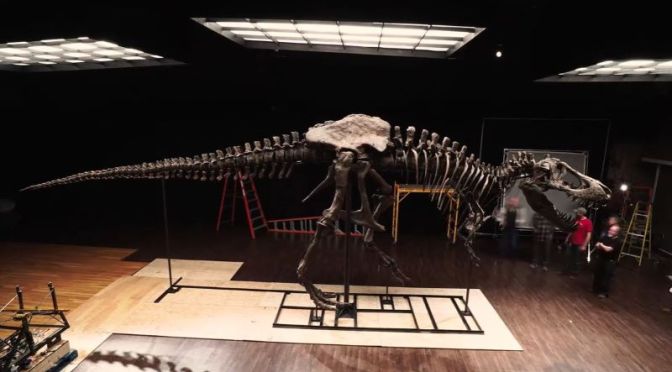
Watch how we installed STAN — one of the most complete T. rex skeletons ever found.
Unearthed in 1987, less than a century after the existence of Tyrannosaurus rex had first become known, STAN — named after his discoverer Stan Sacrison — represents one of the most complete fossil skeletons of the most famous dinosaur species ever to have lived.
Each individual fossil from STAN’s skeleton had to be prised carefully from the rock, then stored and recorded. Following more than 30,000 hours of labour, STAN was erected on a custom mount to reflect his former glory. He was given a public unveiling on Hill City’s Main Street in South Dakota, followed by his global ‘debut’ as the centrepiece of Japan’s T. rex World Exposition in 1995.
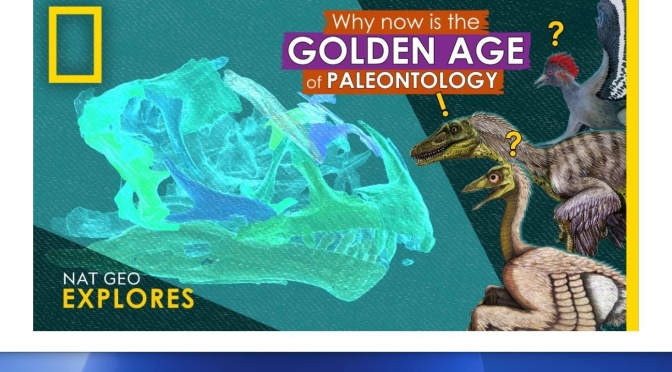
With advancements in technology and access to areas once considered unreachable, the field of paleontology is experiencing a golden age of discovery. Roughly 50 new dinosaur species are found each year, giving us a closer look at their prehistoric world like never before. Our previous understandings of how dinosaurs looked and evolved are being revolutionized, especially in regards to evidence that modern birds descended from dinosaurs. But while it’s exciting to see how incredibly far paleontology has come from the previous generations, it’s equally as thrilling to imagine what new discoveries lie just ahead.
August 26, 2020: Protecting delicate quantum bits from radiation, convalescent plasma for serious Covid-19 patients and a competition to replicate findings from ancient computer code.
In this episode:
01:04 Quantum computers vs ionizing radiation
The quantum bits, or ‘qubits’, central to the operation of quantum computers are notoriously sensitive. Now, researchers have assessed the damaging effects that ionizing radiation can have on these qubits and what can be done about it. Research Article: Vepsäläinen et al.
08:15 Coronapod
We discuss the US Food and Drug Administration’s decision to authorize convalescent plasma for emergency use in COVID-19 patients. As accusations of political interference fly, what might this mean for the future of the US coronavirus response?
Many scientists have published papers based on code. Recently though, a gauntlet was thrown down for researchers to try to replicate their code, 10 years or more after they wrote it. Tech Feature: Challenge to scientists: does your ten-year-old code still run?
Should anyone be able to dig up and sell dinosaur fossils? It’s a question that’s increasingly being asked as the commercial fossil market booms. WSJ met with fossil hunters and scientists to learn more about this niche market and the big bucks at stake.
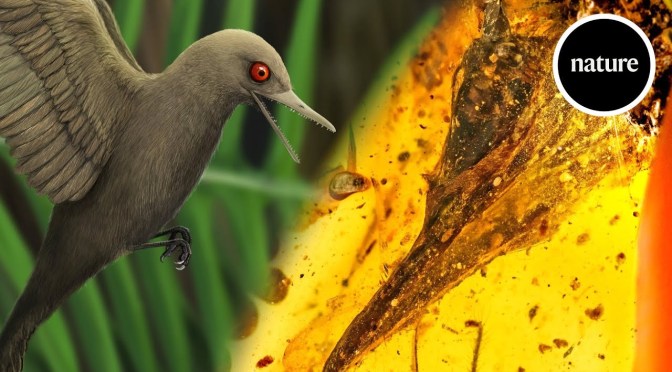
A tiny new species of bird-like dinosaur has been discovered, preserved in a lump of 99-million-year-old amber. The tooth-filled skull is only 7.1mm long, suggesting that this ancient creature would have been the size of a hummingbird – far smaller than other dinosaurs known from that time. Unusual features include large, side-facing eyes and a large number of sharp teeth suggesting a predatory lifestyle. The species has been named Oculudentavis khaungraae and is evidence of previously unimagined biodiversity in the Mesozoic era.






 Boomers Daily