

From a BBC Travel online article:
 I think of myself in the Mexican way, not as an old man but as most Mexicans regard a senior, an hombre de juicio, a man of judgment; not ruco, worn out, beneath notice, someone to be patronised, but owed the respect traditionally accorded to an elder, someone (in the Mexican euphemism) of La Tercera Edad, the Third Age, who might be called Don Pablo or tío (uncle) in deference. Mexican youths are required by custom to surrender their seat to anyone older. They know the saying: Más sabe el diablo por viejo, que por diablo – The devil is wise because he’s old, not because he’s the devil.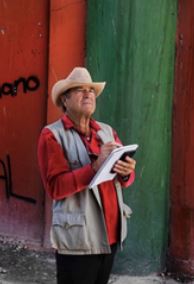
But “Stand aside, old man, and make way for the young” is the American way.
I was that old gringo. I was driving south in my own car in Mexican sunshine along the straight sloping road through the thinly populated valleys of the Sierra Madre Oriental – the whole craggy spine of Mexico is mountainous. Valleys, spacious and austere, were forested with thousands of single yucca trees, the so-called dragon yucca (Yucca filifera) that Mexicans call palma china. I pulled off the road to look closely at them and wrote in my notebook: I cannot explain why, on the empty miles of these roads, I feel young.
To read more: http://www.bbc.com/travel/story/20191203-is-travel-the-secret-to-a-long-life
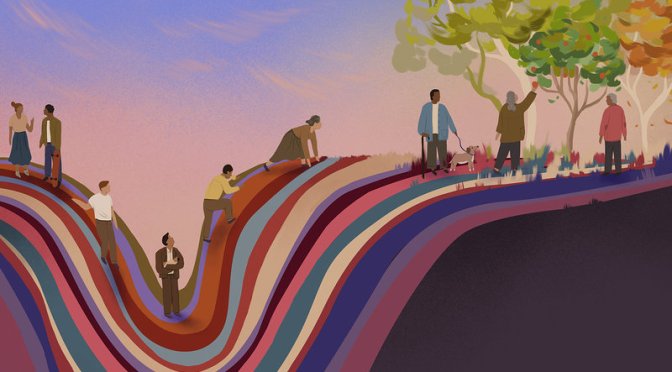
 Contrary to popular opinion, when it comes to well-being, our lives do not represent an inevitable decline from the sunny uplands of youth to the valley of death. Instead, the opposite is true — we can confidently look forward to old age as the happiest time of our lives.
 So why do people grow happier as they age? Is it an absence of stress, or are they able to focus more on what brings them joy?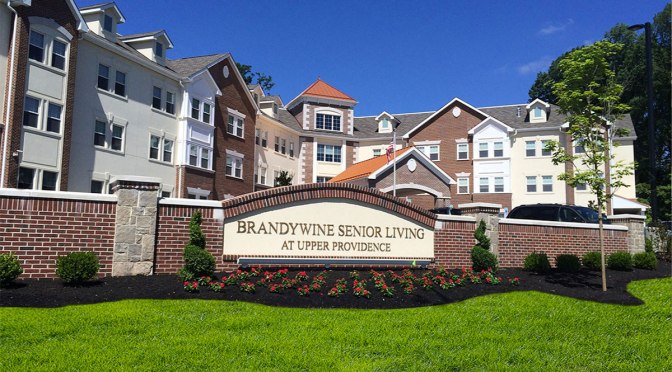
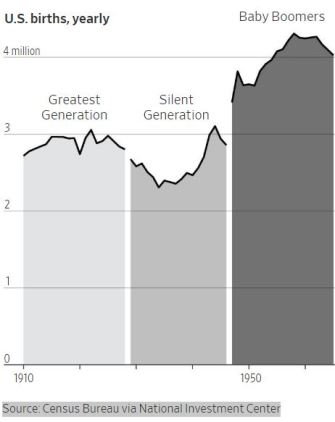 The rise of technologies that help the elderly stay in their homes threatens to upend one of commercial real estate’s biggest bets: Aging baby boomers will leave their residences in droves for senior housing.
 Being with people at the end of life is very intense work. You are regularly seeing a part of life that a lot of people don’t see, or see very rarely. How do you feel that affects your relationships generally and your friendship specifically?
 At Dr. Soong’s hospital, withholding the results of urine cultures, unless doctors actually called the microbiology lab to request them,
 Age change should be allowed when the following three conditions are met. First, the person is at risk of being discriminated against because of age. Second, the person’s body and mind are in better shape than would be expected based on the person’s chronological age (that is, the person is biologically younger than he is chronologically). Third, the person does not feel that his legal age is befitting.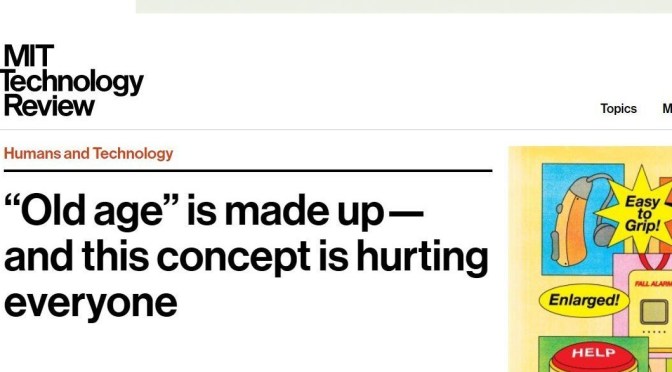
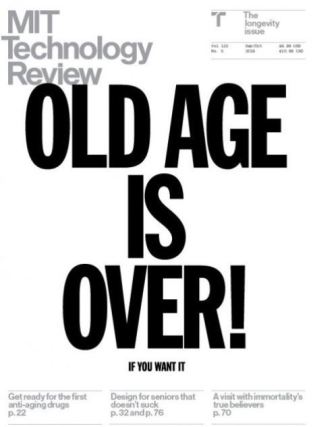 Technologists, particularly those who make consumer products, will have a strong influence over how we’ll live tomorrow. By treating older adults not as an ancillary market but as a core constituency, the tech sector can do much of the work required to redefine old age. But tech workplaces also skew infamously young. Asking young designers to merely step into the shoes of older consumers (and we at the MIT AgeLab have literally developed a physiological aging simulation suit for that purpose) is a good start, but it is not enough to give them true insight into the desires of older consumers. Luckily there’s a simpler route: hire older workers.
 Boomers Daily