
Tag Archives: Northern France

Travel: The Top Places To Stay In Normandy, France

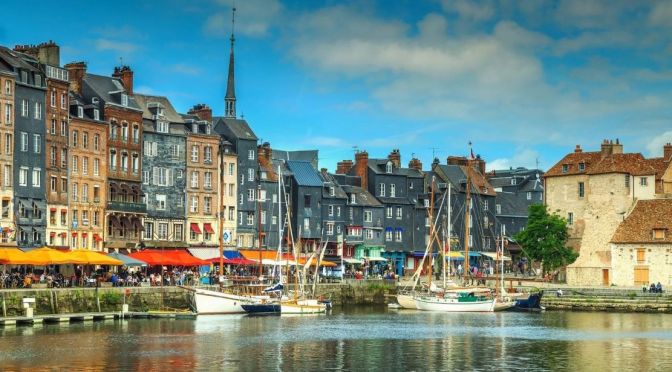
Honfleur
Honfleur

The Times and The Sunday Times (June 15, 2023) – The most popular way to access all this from the UK is via the ports of Dieppe (ferries from Newhaven; dfds.com), Le Havre, Caen and Cherbourg (from Portsmouth and Poole; brittany-ferries.co.uk).

Le Tribunal, Mortagne-au-Perche

Le Tribunal, Mortagne-au-Perche

Hotel in the Perche region’s main hub
Southern Normandy’s Perche region is a succession of gentle hills clad in beech and oak. Much of it is designated a natural park. There is great diversity here, in landscape and architecture, which come in a palette of colours thanks to different building materials. Its main hub is Mortagne-au-Perche, a market town of cobbled streets, antique shops, magnificent mansions and its famed black pudding.

Pays d’Auge

Domaine de la Cour au Grip, Repentigny

Rustic retreat in cider country
The Pays d’Auge, to the east of Caen, is an unhurried, painterly landscape, mixing oak and hazel woodland with cattle-filled orchards where morning mists lie low in the valleys and the autumn colours are magnificent. This is cider country, and there are still 20-odd cider makers on the 25-mile Cider Route. The former farm of Domaine de la Cour au Grip is on that route in the village of Repentigny, not far from Beuvron-en-Auge, one of the prettiest villages in France.

Le Landemer, Urville-Nacqueville

Le Landemer, Urville-Nacqueville

Restaurant with rooms west of Cherbourg
Not every ferry traveller wants to hurry home. Le Landemer, barely ten miles along the coast from the ferry port of Cherbourg, is for those who like to linger. This designer conversion of a coastal house is as much an eating as a sleeping place, with five traditional rooms in the main house, and four yacht-style rooms — more modern with big picture windows — smuggled away in an adjacent building.

READ MORE

Heritage: WWII Concrete Bunkers, Western France

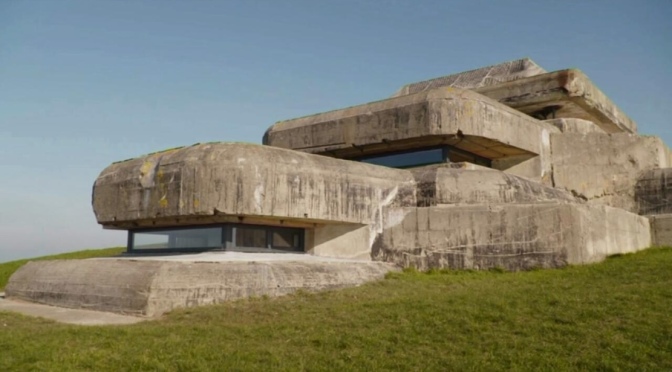
FRANCE 24 English (April 3, 2023) – Eight decades after World War II, the Atlantic Wall is still breaking up. Along the coast of Brittany, in western France, lie more than 1,000 bunkers. Most of these vestiges of German occupation are abandoned, but some have been given a new lease of life.

The submarine base of Lorient has become an ideal location for manufacturing carbon masts for yachts. Further west, on the tip of Finistère, a bunker has been transformed into a museum on the war.

Finally, on the Crozon peninsula, a young entrepreneur has decided to transform a network of tunnels built by the Allies into a brewery.

Travel: A Walking Tour Of Rouen, Northern France

Filmed on March 11 2023: Rouen, capital of the northern French region of Normandy, is a port city on the river Seine. Important in the Roman era and Middle Ages, it has Gothic churches, such as Saint-Maclou and Saint-Ouen, and a cobblestoned pedestrian center with medieval half-timbered houses. The skyline is dominated by the spires of Cathédrale Notre-Dame, much-painted by Impressionist Claude Monet. 

The old city, on the right bank of the Seine River and surrounded by a natural amphitheatre of hills, has so many historical buildings that it has been called a ville-musée (museum-town). Indeed, much of this area was designated a preservation zone. Despite its variety of architectural styles (from early Gothic to late Flamboyant) and its lack of symmetry, Rouen cathedral is considered one of the finest Gothic churches in France. Damaged during World War II, it has been admirably restored. The immense facade, covered with lacelike stonework, stands between two dissimilar towers, the left dating mostly from the 12th century, and the right from the 15th century. Its Tour de Beurre has a carillon of 55 bells. The central lantern tower (13th–16th century), with a late 19th-century spire, is the highest church tower in France (495 feet [151 metres]). 

Filmed and edited by:

UHD Walking Adventures

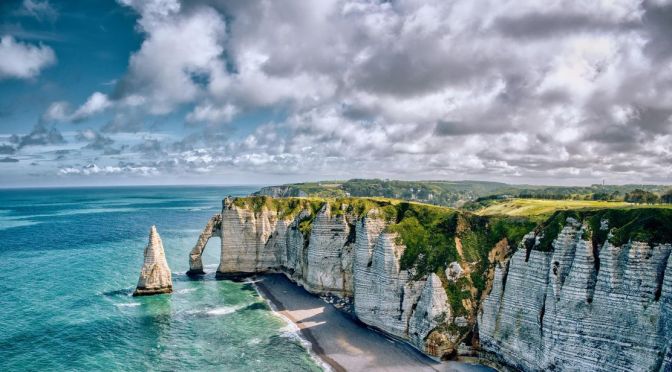
Aerial Views: Étretat, The North Coast Of France

Étretat is a town on the north coast of France. It’s known for the striking rock formations carved out of its white cliffs, including the Porte d’Aval arch and L’Aiguille (the Needle), a pillar rising up from the sea. To the north, the cliffside Chapelle Notre-Dame de la Garde has dramatic views. Le Vieux Marché is a market hall in town. Nearby, Le Clos Lupin villa was once home to French author Maurice Leblanc. 

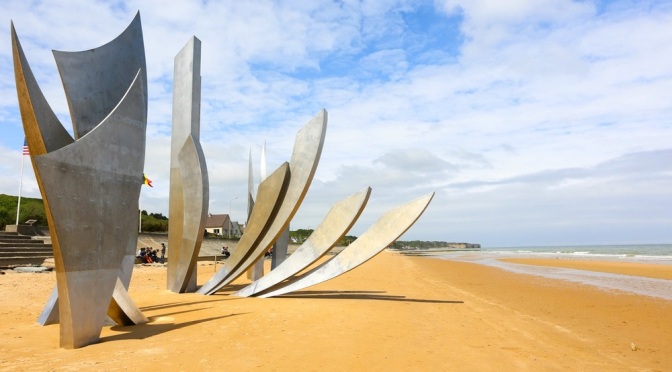
Walks: Omaha Beach In Normandy, France (4K)

Omaha Beach is a landing area in Normandy, northern France, used by Allied forces in the WWII D-Day invasion. Today, the beach is dotted with the remains of German bunkers. On the shore, the stainless-steel sculpture Les Braves commemorates American soldiers. Behind the beach is the Musée Mémorial d’Omaha Beach, also documenting the invasion. Nearby, the Overlord Museum displays WWII tanks, artillery and dioramas.

Recording Date: August 2022

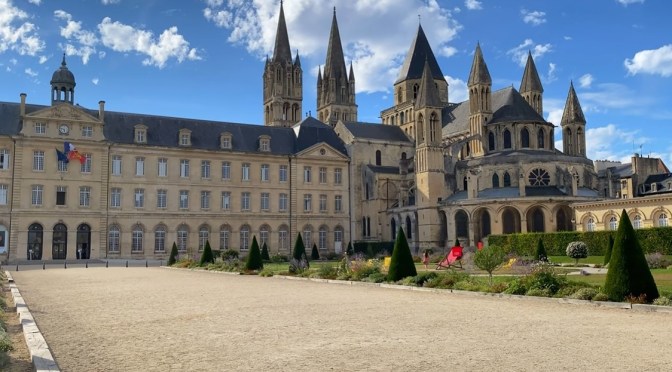
Walking Tour: Caen In Normandy, France (4K)

Caen is a port city and capital of Calvados department in northern France’s Normandy region. Its center features the Château de Caen, a circa-1060 castle built by William the Conqueror. It stands on a hill flanked by the Romanesque abbeys of Saint-Étienne and Sainte-Trinité, which both date from the same period. The multimedia Mémorial museum is devoted to World War II, the 1944 Battle of Normandy and the Cold War.

Historic French Views: Château de Maintenon

This French Renaissance-style castle would probably have remained largely unknown if it hadn’t become home to the secret wife of Louis XIV, Madame de Maintenon. Françoise d’Aubigné – her real name – was a woman of humble origins who is often compared to Cinderella.

After Louis secretly married her, the Château de Maintenon underwent numerous transformations as she put her own stamp on it. Meanwhile, the French-style garden was designed by renowned landscape architect André Le Nôtre but was only laid out in 2013.   

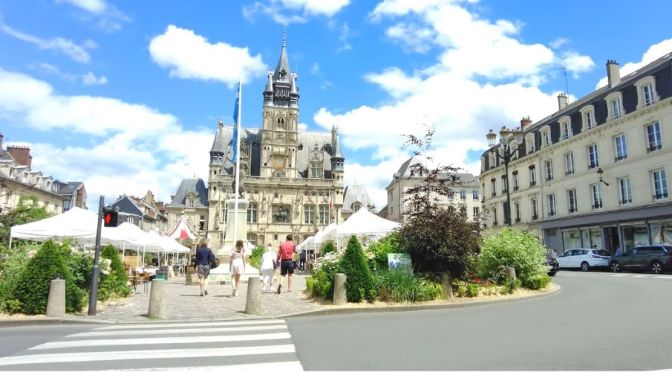
Walking Tour: Compiègne In Northern France (4K)

Compiègne, town, Oise départementHauts-de-France région, northern France. It lies along the Oise River, at the northwest edge of the forest of Compiègne.

Of Roman origin, it was referred to in 557 as Compendium, a name derived from a word meaning “short cut” (between Beauvais and Soissons). The town flourished in the Middle Ages and was the site of assemblies and councils under the Merovingian kings. In 833 Louis the Pious was deposed there. Charles II the Bald enlarged the town and founded the Abbey of Saint-Corneille, now the home of the municipal library. Compiègne became a commune in 1153, and a monument to Joan of Arc commemorates her capture there by the Burgundians in 1430.

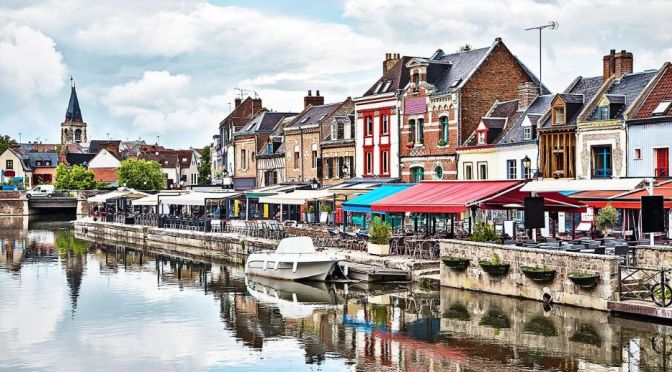
Walking Tours: Amiens In Northern France (4K)

Amiens is a city in northern France, divided by the Somme river. It’s known for the Gothic Amiens Cathedral and nearby medieval belfry. Shops and cafes line the Quartier St.-Leu’s narrow streets. Floating market gardens (“hortillonnages”) dot the city’s canals. The Musée de Picardie shows art and antiquities spanning centuries. Nearby, the Maison de Jules Verne is a museum where the science fiction author once lived. 

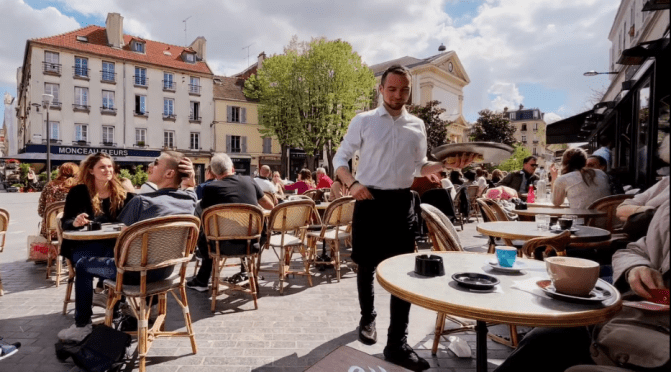
Café Views: Vincennes Near Paris, France (4K)

Vincennes, town, eastern residential suburb of Paris, Val-de-Marne départementÎle-de-France région, north-central France, immediately outside the Paris city limits.

The château of Vincennes, which succeeded an earlier fortified hunting lodge on the site, consists of four principal buildings—the keep, the chapel, and two pavilions—enclosed by an enceinte with nine towers. The magnificent and well-preserved keep, the finest surviving in France, 170 feet (52 metres) in height, was begun under Philip VI, completed under Charles V (reigned 1364–80), and used thereafter as a royal residence until Versailles was built. The chapel, not completed until 1552 but in Gothic style, has a Flamboyant facade and a great rose window. The two pavilions—the Pavillon du Roi and the Pavillon de la Reine—were built by Louis Le Vau, under the direction of Jules Cardinal Mazarin, during the third quarter of the 17th century.