After initially balking at a package of changes to House rules that enshrine concessions the speaker made to ultraconservative members, Republicans united to push them through.
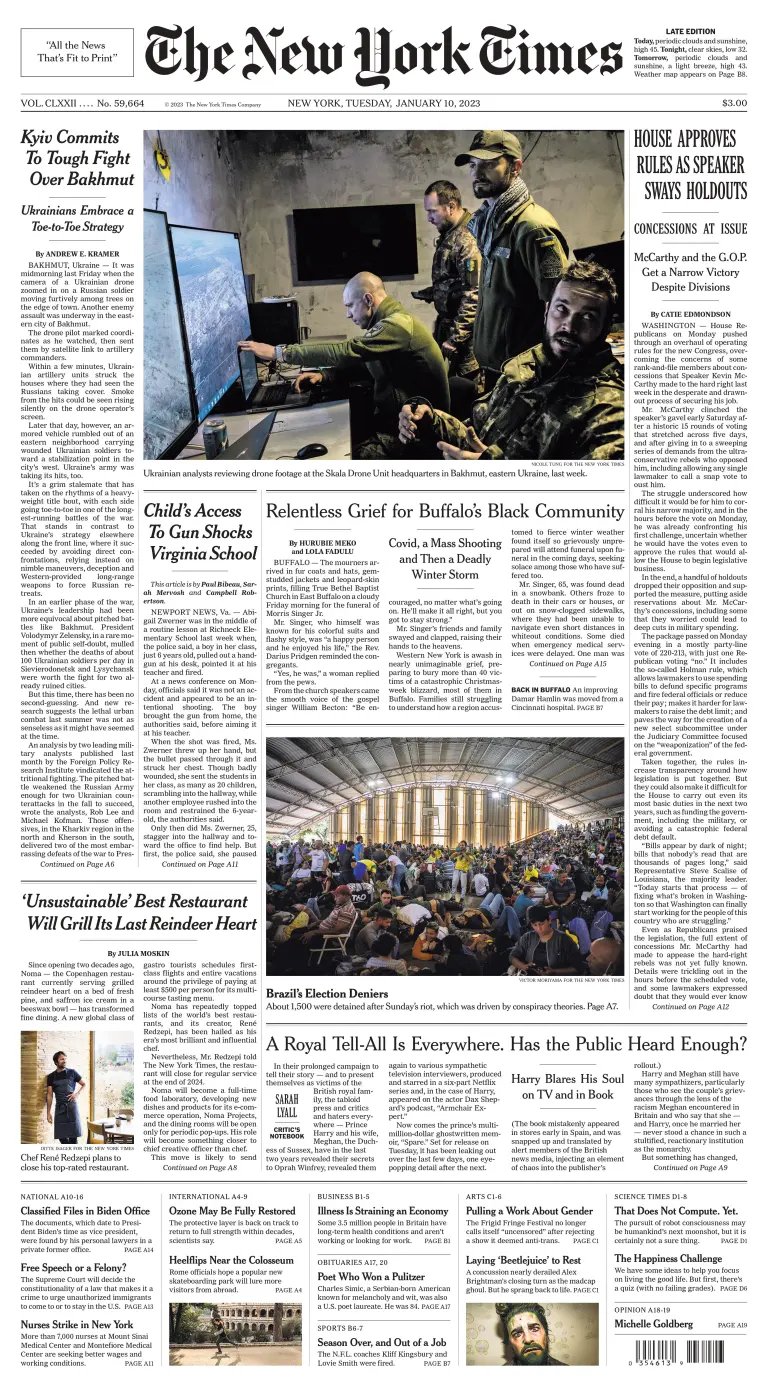
Earlier in the war, Ukraine’s leadership was more equivocal about pitched battles with high casualties. There’s no second-guessing this time. Some analysts say it makes sense strategically.
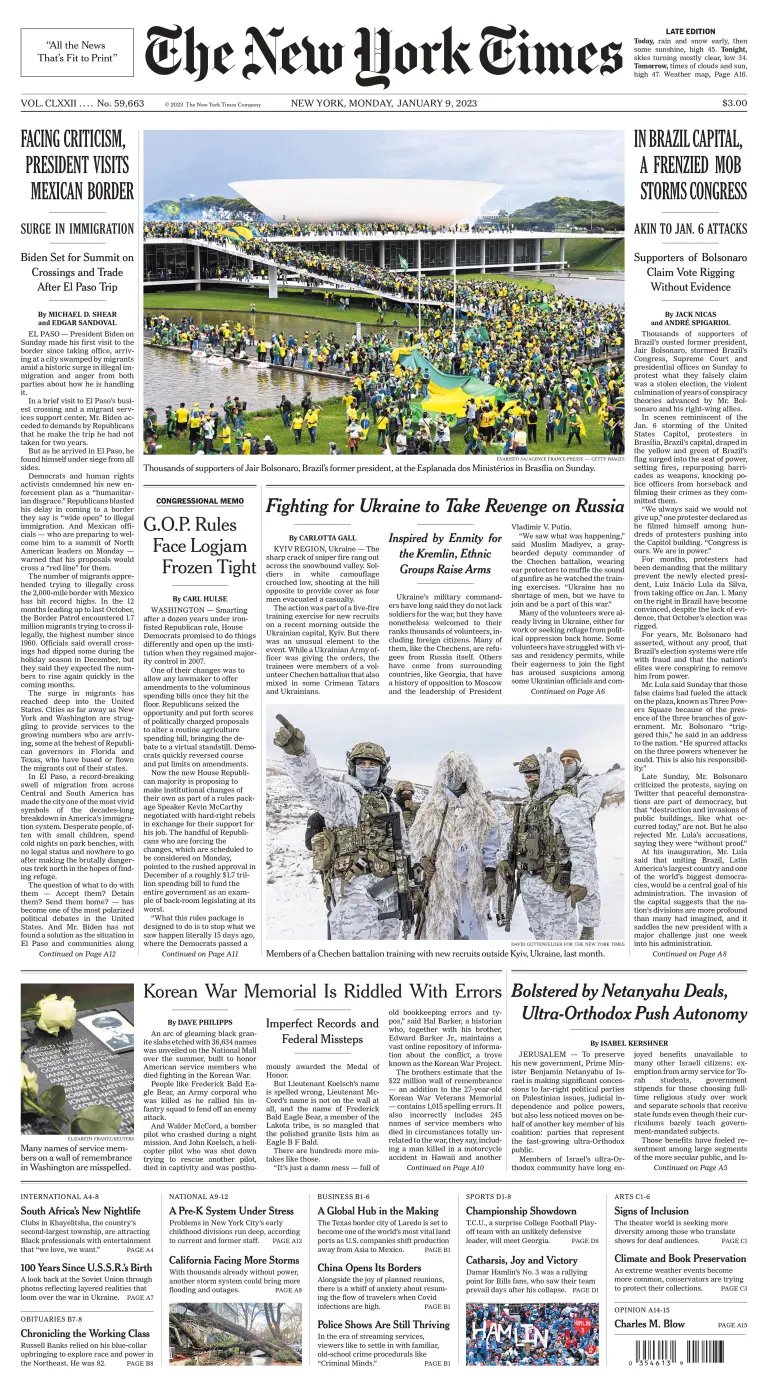
Backers of former President Jair Bolsonaro ransacked government offices, denouncing what they falsely claim was a rigged election. Hundreds were arrested.
History suggests that the procedural plans of the new House Republican majority are likely to lead to more gridlock and legislative instability, not less.
Chechens, Crimean Tatars and people from the former Soviet republics, all with deep historical grievances against Moscow, are eagerly taking up arms for Kyiv.
An emboldened conservative flank and concessions made to win votes could lead to a protracted standoff on critical fiscal issues, risking economic pain.
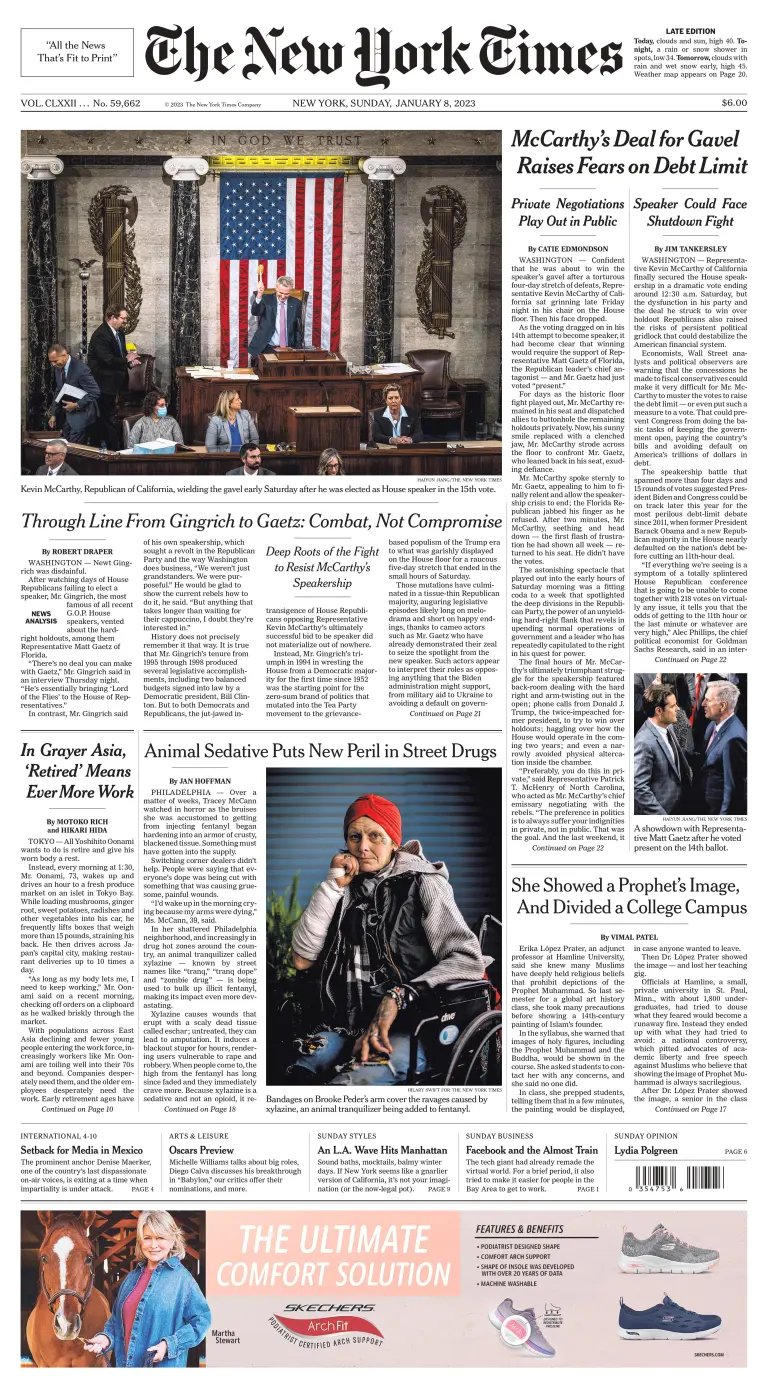
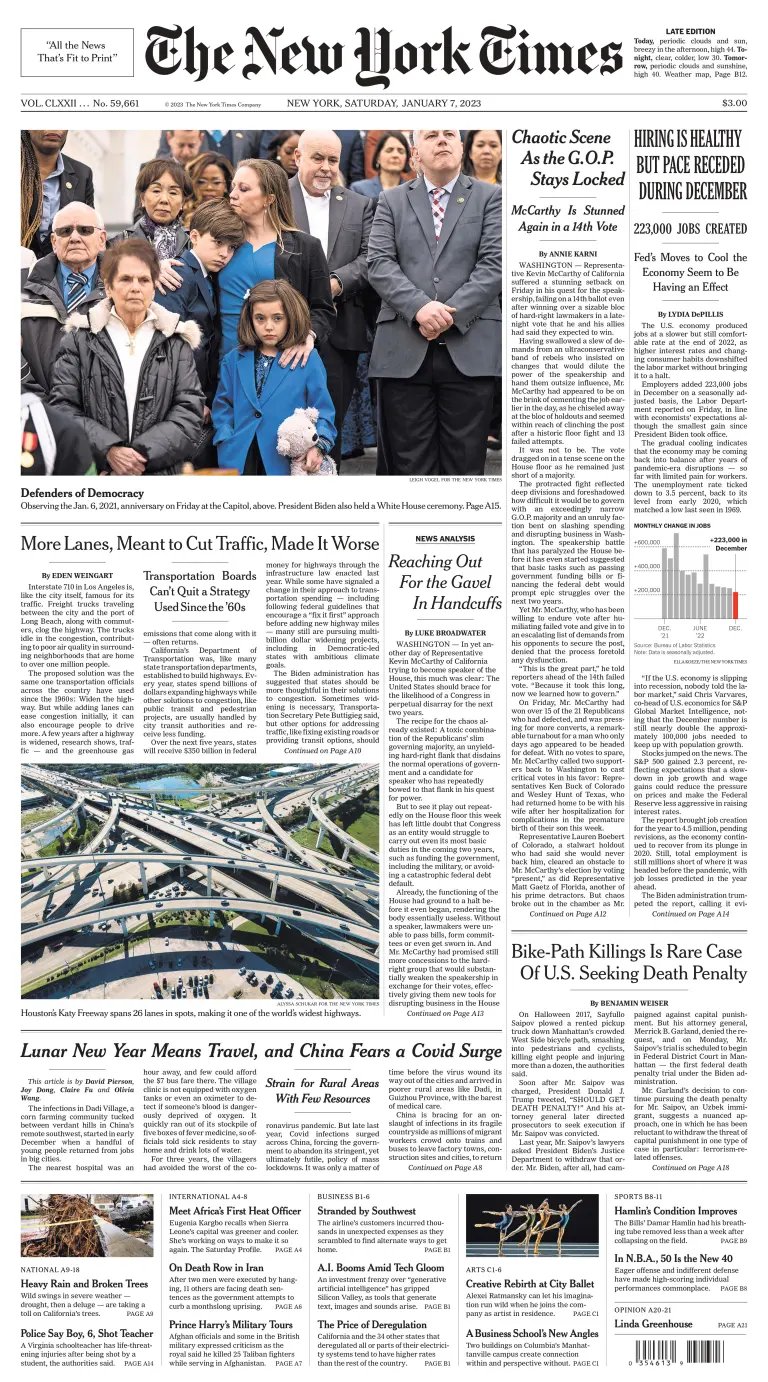
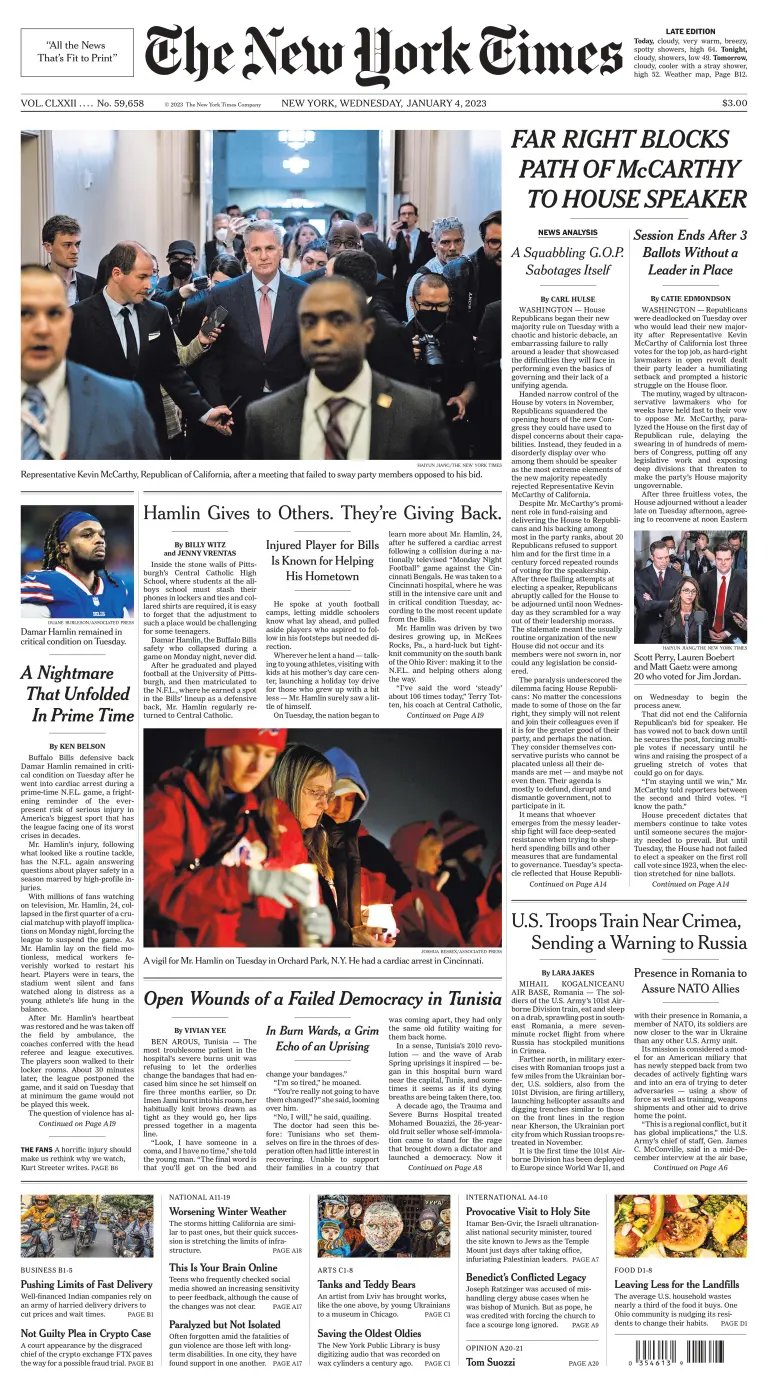
Speaker Kevin McCarthy’s slog to his post ended with a remarkably public show of intraparty strife that played out in a history-making overnight session.
Mr. Gingrich began the zero-sum politics that mutated into the brand of the Tea Party and Trump M.A.G.A. Republicans and that presaged the raucous speaker battle in the House.
After an outcry over the art history class by Muslim students, Hamline University officials said the incident was Islamophobic. But many scholars say the work is a masterpiece.
Jefferson Cowie’s powerful and sobering new history, “Freedom’s Dominion,” traces the close association between the rhetoric of liberty in an Alabama county and the politics of white supremacy.
“American Caliph,” by Shahan Mufti, recounts the complex story of a largely forgotten episode from 1977, when an armed Muslim group held dozens of people hostage.
An agreement with ultraconservative Republicans delivered a breakthrough for the California Republican, but he still had to claw his way to the post during a dramatic post-midnight session.
With billions of dollars available to improve transportation infrastructure, states have a chance to try new strategies for addressing congestion. But some habits are hard to break.
As the Republican leader has made concessions to the far right, he has effectively agreed to give them carte blanche to disrupt the workings of the House — and to hold him hostage to their demands.
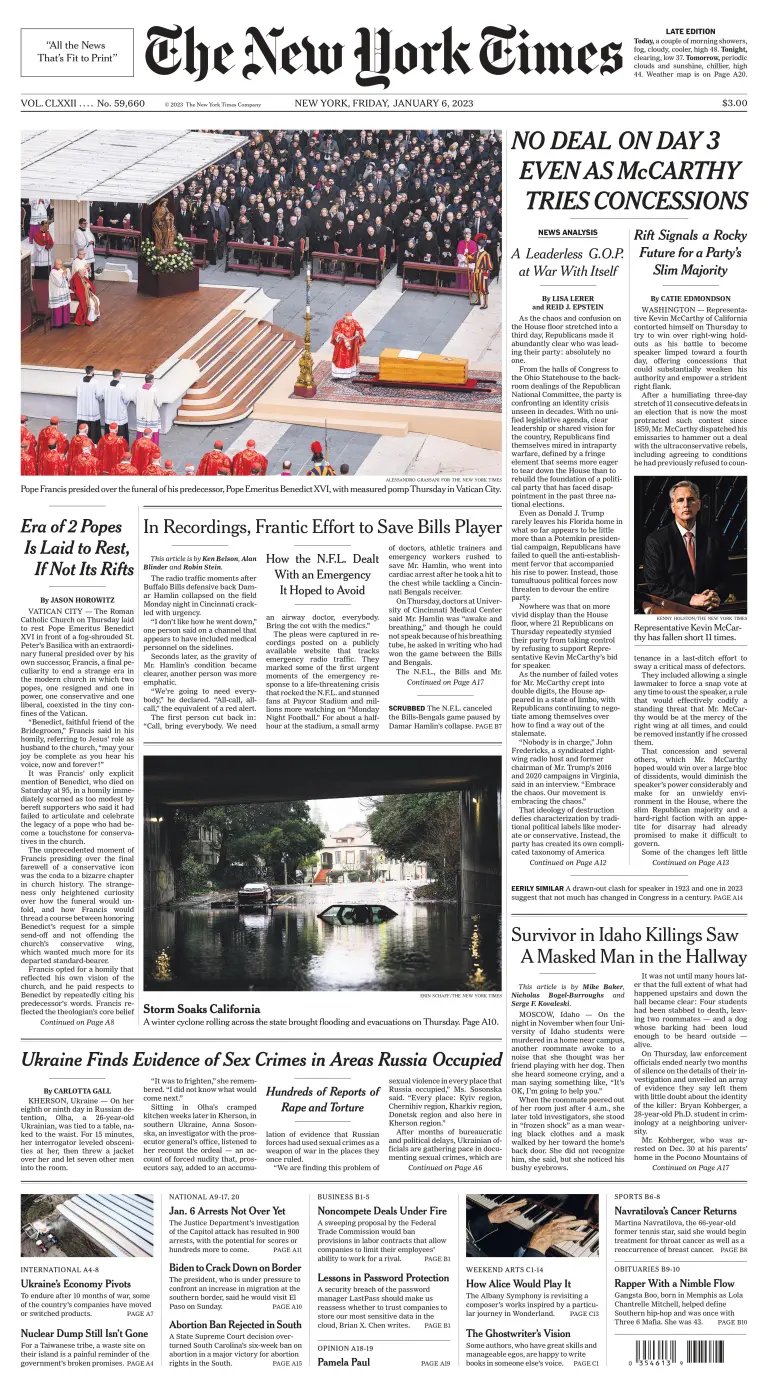
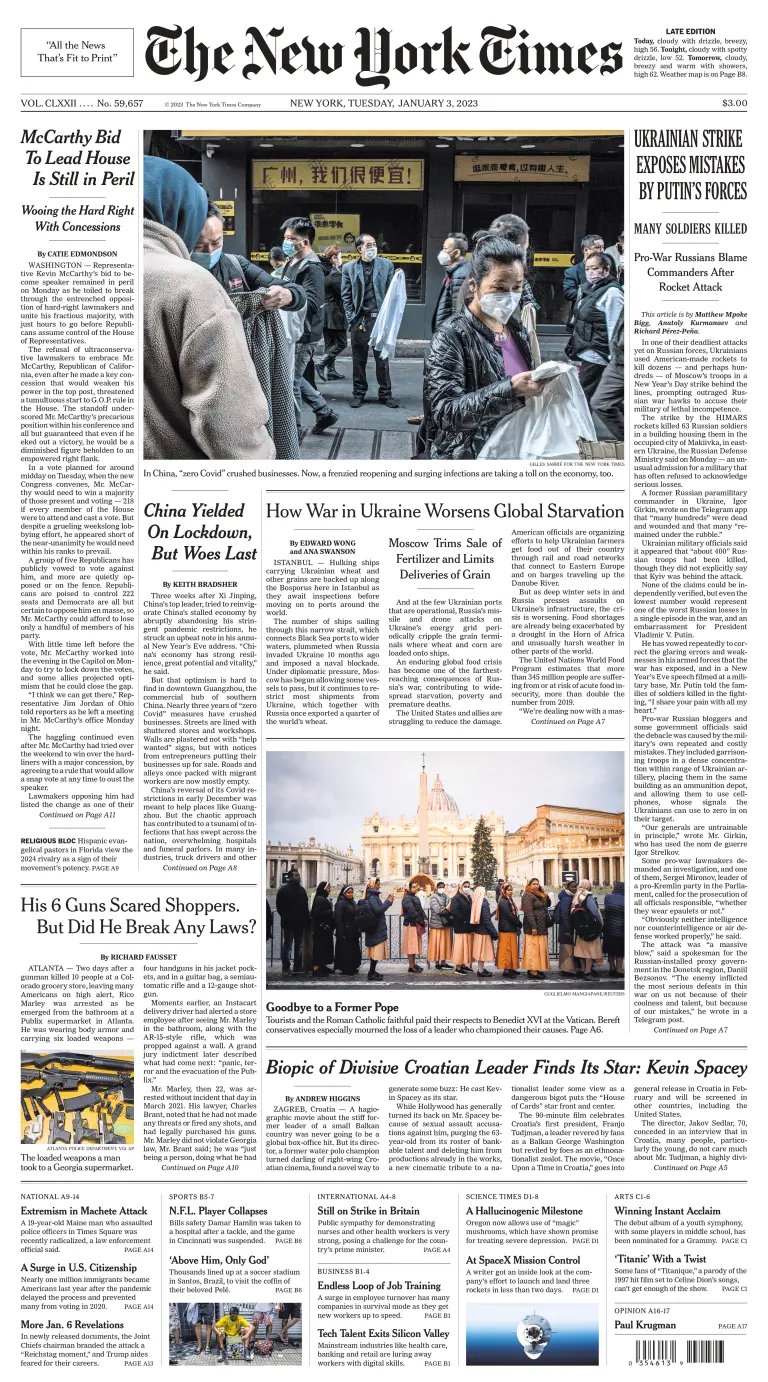
The California Republican signaled he would give in to more demands from hard-right rebels in a frenzied effort to win enough support for the speakership but continued to lose ground on vote after vote.
With no unified agenda or clear leadership, Republicans face the prospect that the anti-establishment fervor that has powered the party in recent years could now devour it.
An extraordinary period for the modern church ended with Francis presiding over the funeral of his retired predecessor. Some conservatives found the ceremony too modest for their standard-bearer.
When Damar Hamlin’s heart stopped during a game on Monday night, medical personnel can be heard responding to the kind of emergency the league hoped it would never face.
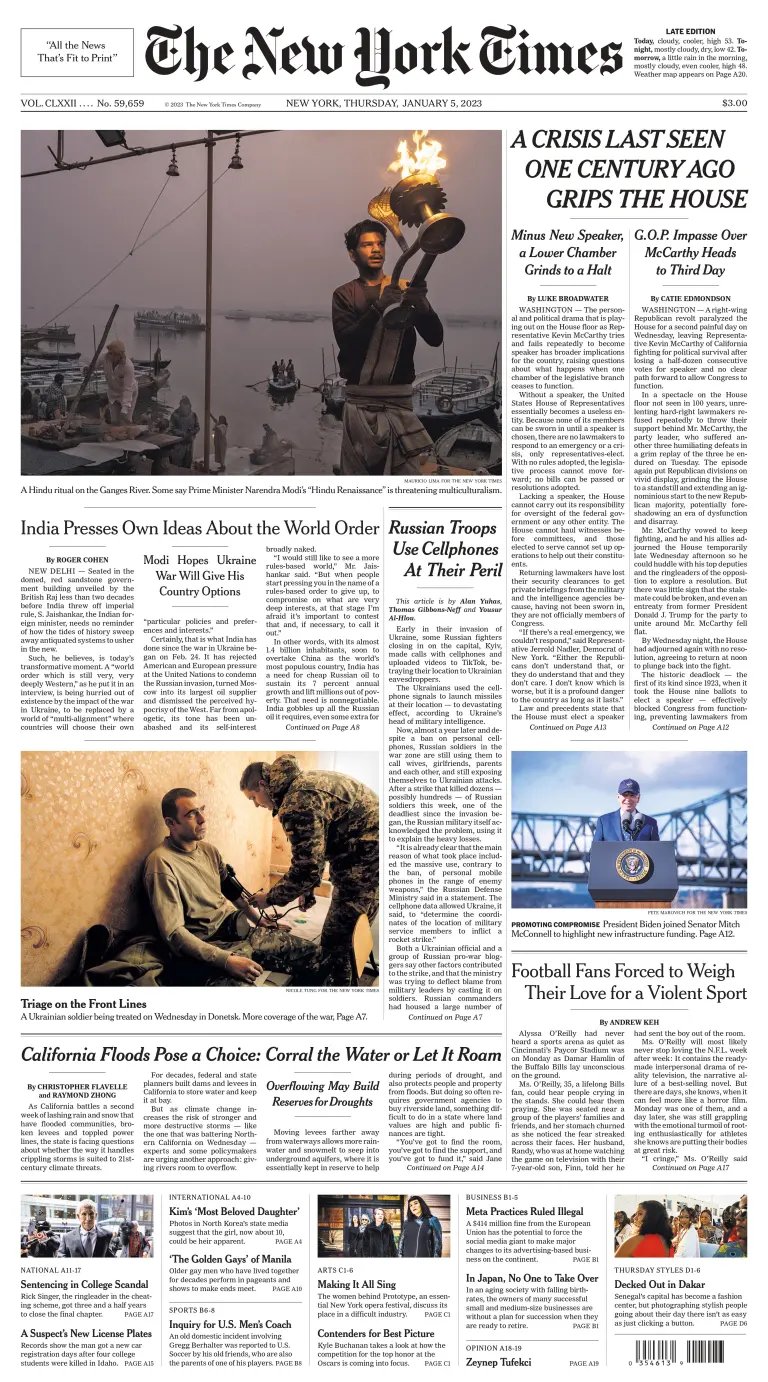
The House continued a historic floor showdown — the first in a century — prompted by the Republican leader’s failure to secure a majority to become speaker.
Lawmakers in the House have yet to be sworn in. They can’t help constituents or get classified briefings, much less hold hearings or pass laws. And at some point, they may have trouble getting paid.
The invasion of Ukraine, compounding the effects of the pandemic, has contributed to the ascent of a giant that defies easy alignment. It could be the decisive force in a changing global system.
Ukrainian artillery targets Russian soldiers by pinpointing their phone signals. Despite the deadly results, Russian troops keep defying a ban on cellphone use near the front.
On the first day of the new Congress, Representative Kevin McCarthy fell short repeatedly in his bid to become speaker as a right-wing rebellion prompted a historic floor fight.
An uncle of Damar Hamlin, a Bills safety who went into cardiac arrest during Monday’s game, said Tuesday night that doctors were working to get his nephew breathing on his own without a ventilator.
Hamlin, a Buffalo Bills safety who went into cardiac arrest during a game Monday night, asserted himself as a leader in high school — and kept going back to help others after he graduated.
A Ukrainian attack with U.S.-made rockets may have left hundreds of casualties, and pro-war Russians accused their military commanders of repeating fatal errors.
Representative Kevin McCarthy, Republican of California, is struggling to break through a wall of entrenched opposition from hard-right lawmakers even after agreeing to weaken his leadership power.
Moscow blocks most shipments from Ukraine, one of the world’s largest wheat producers, and its attacks on the country’s energy grid also disrupt the flow of food.
Years of lockdowns took a brutal toll on businesses. Now, the rapid spread of Covid after a chaotic reopening has deprived them of workers and customers.
Amid a tech cold war with China, U.S. companies have pledged nearly $200 billion for chip manufacturing projects since early 2020. But the investments are not a silver bullet.
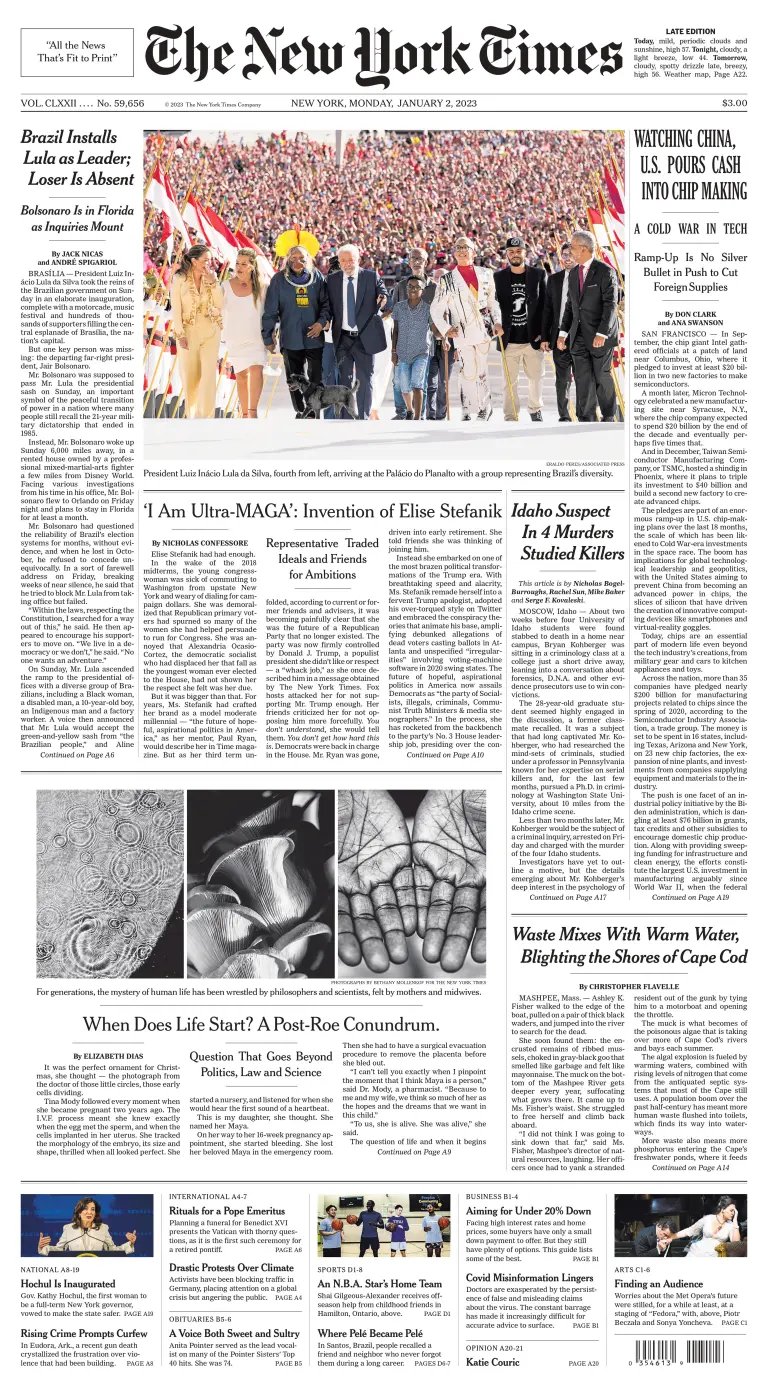
Brazil inaugurates its new president, Luiz Inácio Lula da Silva, on Sunday. Facing investigations, former President Jair Bolsonaro has taken refuge in Orlando.
The arrest of a graduate student in the murder of four University of Idaho students eased fears but raised a troubling new question: What was the motive?







 Boomers Daily