Tag Archives: Nature

Top Science Podcasts: The Vikings Migration Mapped, Covid-19 Trial Is Halted, Tiniest Ultrasound Device

Nature podcast discusses: Mapping the migration of the Vikings, a leading Covid-19 vaccine trial was abruptly halted and the world’s smallest ultrasound device.

In this episode:

00:45 Following the Viking footprint across Europe

To better understand who the Vikings were, and where they went, researchers have mapped genomes from hundreds of archaeological artifacts. Research Article: Margaryan et al.

08:00 Coronapod

Phase III trials of a leading coronavirus vaccine were abruptly paused last week – we discuss how news of the event leaked out, and the arguments for transparency in clinical trials. News: A leading coronavirus vaccine trial is on hold: scientists reactNews: Scientists relieved as coronavirus vaccine trial restarts — but question lack of transparencyIf you are involved in a clinical trial for a coronavirus vaccine or treatment, please fill in our survey.

21:05 Research Highlights

A burnt grain silo gives insight into ancient tax collection, and how hummingbirds survive the cold Andean nights. Research Highlight: Ancient tax collectors amassed a fortune — until it went up in smokeResearch Highlight: Why some of the world’s zippiest birds go stiff and cold every night

23:40 Ultra-tiny ultrasound

Scientists have developed an ultrasound detector which is smaller than the wavelength of sound it detects, providing highly detailed imaging at a cellular level; Research Article: Research Article: Shnaiderman et al.

29:53 Briefing Chat

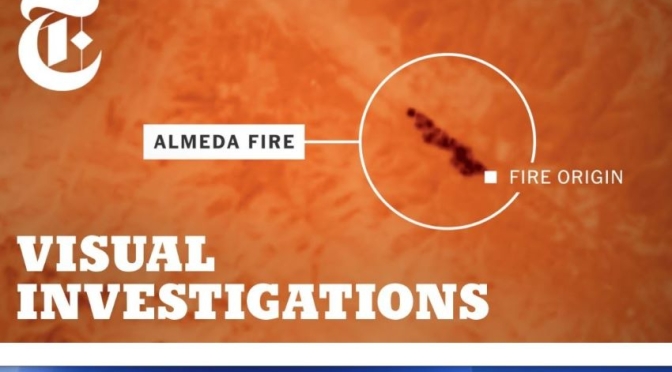
We discuss some of the latest stories highlighted in the Nature Briefing. This week we talk about why California has an orange hue, and the strangeness at the edge of the Solar System. Forbes: The Science Behind Mysterious Orange Skies In CaliforniaBBC Future: The weird space that lies outside our Solar System

Top New Science Podcasts: Cooling Computer Chips, Covid-19 & Avalanches

Nature looks at: Keeping electronics from overheating, Covid-19 changes, and how to include minority populations in genetic analyses.

In this episode:

00:46 Cool computers

Keeping components cool is a major hurdle when it comes to increasing electronic power. This week, we find out about a new way to integrate tiny microfluidic channels directly into circuits, to help keep them cool. Research Article: van Erp et al.

06:57 Coronapod

By comparing coronavirus genomes taken from people around the world, researchers are getting an idea of how SARS-CoV-2 is changing as it spreads. We discuss a particular genetic mutation that rapidly became dominant early in the pandemic, and the effect it may have had on the outbreak. News: The coronavirus is mutating — does it matter?

21:41 Research Highlights

How rock avalanches can cause destructive air blasts, and melting glaciers cause lakes to grow. Research Highlight: The violent blasts that can add to an avalanche’s devastationResearch Article: Shugar et al.

23:59 The people left out of genetic studies

Minority populations are often underrepresented in genetic study recruitment. However, even when data about them is collected it may go unused. We find out why, and what can be done about it. Comment: Don’t ignore genetic data from minority populations

30:51 Briefing Chat

We discuss some of the latest stories highlighted in the Nature Briefing. This week we discuss how bacterially-infected mosquitoes could curb dengue fever, and some surprisingly large black holes. Nature News: The mosquito strategy that could eliminate dengueNature News: ‘It’s mindboggling!’: astronomers detect most powerful black-hole collision yet

Top New Science Podcasts: Yeasts Making Medicine, Covid-19 & Anaesthesia

Nature reviews: Engineering yeast to produce medicines, immunity to Covid-19, and the mechanism of anaesthetic action.

In this episode:

00:44 Making medicine with yeast

The tropane alkaloids are an important class of medicine, but they are produced agriculturally leaving them vulnerable to extreme weather and world events. Now, researchers have engineered yeast to produce these important molecules. Research Article: Srinivasan and Smolke

06:36 Coronapod

We discuss the complex story of immunity to COVID-19, and how this may affect vaccine development. News Feature: What the immune response to the coronavirus says about the prospects for a vaccine

16:33 Research Highlights

The neurological reason for overindulgence, and the bacteria that harness copper electrodes. Research Highlight: The brain circuit that encourages eating for pleasureResearch Highlight: Microbes with mettle build their own electrical ‘wires’

19:07 The molecular mechanisms of general anaesthetics

Despite over a century of use, there’s a lot we don’t know about how anaesthetics function. This week, researchers have identified how some of them they bind to a specific neuronal receptor. Research Article: Kim et al.

26:34 Briefing Chat

Whilst the Nature Briefing is on its summer holidays, we take a look at some other science from around the web. This time we discuss Elon Musk’s latest showcase of a brain-chip, and the physics behind how boats can float upside down on levitating liquid. New Scientist: Elon Musk demonstrated a Neuralink brain implant in a live pigBusiness Insider: Elon Musk’s AI brain chip company Neuralink is doing its first live tech demo on Friday. Here’s what we know so far about the wild science behind it.Research Article: Apffel et al.Video: The weird physics of upside down buoyancy

Top New Science Podcasts: Damaged Quantum Bits, Convalescent Plasma & Ancient Ichthyosaurs

August 26, 2020: Protecting delicate quantum bits from radiation, convalescent plasma for serious Covid-19 patients and a competition to replicate findings from ancient computer code.

In this episode:

01:04 Quantum computers vs ionizing radiation

The quantum bits, or ‘qubits’, central to the operation of quantum computers are notoriously sensitive. Now, researchers have assessed the damaging effects that ionizing radiation can have on these qubits and what can be done about it. Research Article: Vepsäläinen et al.

08:15 Coronapod

We discuss the US Food and Drug Administration’s decision to authorize convalescent plasma for emergency use in COVID-19 patients. As accusations of political interference fly, what might this mean for the future of the US coronavirus response?

20:39 Research Highlights

Finding new populations of a long-lost elephant shrew, and the hunting method of ancient ichthyosaurs. Research Highlight: An elephant-nosed creature ‘lost to science’ was living just next door; Research Highlight: An extinct reptile’s last meal shows it was a grip-and-tear killer

22:34 The reproducibility of computer code

Many scientists have published papers based on code. Recently though, a gauntlet was thrown down for researchers to try to replicate their code, 10 years or more after they wrote it. Tech Feature: Challenge to scientists: does your ten-year-old code still run?

28:06 Briefing Chat

We take a look at some highlights from the Nature Briefing. This time we discuss a cancer diagnosis in a dinosaur, and how to brew yourself a career outside of academia. Science: Doctors diagnose advanced cancer—in a dinosaur; Nature Careers Feature: The brews and bakes that forged career paths outside academia

Top New Science Podcasts: 3D Printed Aerogels, Covid-19 Data & Sulfur

In this Nature podcast: a new way to produce aerogels opens up their use, the countries that collect Covid-19 data effectively, and understanding how sulfur can change state between two liquids.

In this episode:

01:05 Printing aerogels

Aerogels are materials with impressive insulating properties, but they’re difficult to handle, due to their innate fragility. Now, researchers have shown a new way to 3D print the most common form of aerogel, opening up a range of potential new applications. Research Article: Zhao et al.

07:00 Coronapod

To provide targeted public health interventions during the pandemic, it’s vital that data are collected and shared effectively. We discuss the countries doing this well, and find out how fragmented systems are preventing epidemiologists from giving up-to-date information on outbreaks.

21:11 Research Highlights

Fats in the blood as a possible marker of autism, and the selfish component to solar panel adoption. Research Highlight: Fats in the blood linked to autismResearch Highlight: Self-interest powers decision to go solar

23:24 Liquid-liquid transitions

It’s been thought that some liquids may be able to exist in two distinct states, but evidence has been scarce. Now, researchers show that sulfur can exist in two liquid states, and have discovered some insights into how this might occur. Research Article: Henry et al.Video: 24 hours in a synchrotron

30:09 Briefing Chat

We take a look at some highlights from the Nature Briefing. This time we discuss the English language’s dominance in science, and how to make squid transparent. Symmetry: Physics in a second languageOneZero: The First Gene-Edited Squid in History Is a Biological Breakthrough

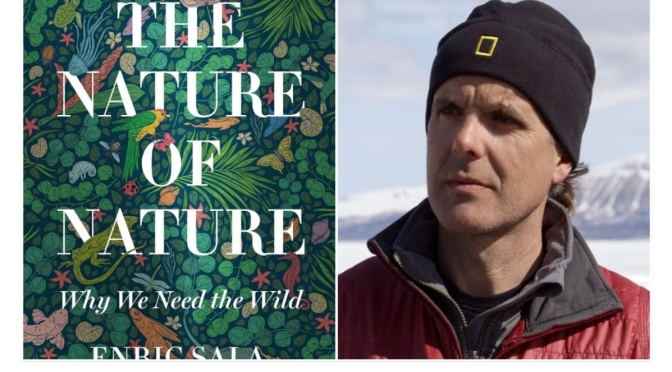
Nature Books: “The Nature Of Nature” By Enric Sala (National Geographic)

In this inspiring manifesto, an internationally renowned ecologist makes a clear case for why protecting nature is our best health insurance, and why it makes economic sense.

Enric Sala wants to change the world–and in this compelling book, he shows us how. Once we appreciate how nature works, he asserts, we will understand why conservation is economically wise and essential to our survival.

Here Sala, director of National Geographic’s Pristine Seas project (which has succeeded in protecting more than 5 million sq km of ocean), tells the story of his scientific awakening and his transition from academia to activism–as he puts it, he was tired of writing the obituary of the ocean. His revelations are surprising, sometimes counterintuitive: More sharks signal a healthier ocean; crop diversity, not intensive monoculture farming, is the key to feeding the planet.

Using fascinating examples from his expeditions and those of other scientists, Sala shows the economic wisdom of making room for nature, even as the population becomes more urbanized. In a sober epilogue, he shows how saving nature can save us all, by reversing conditions that led to the coronavirus pandemic and preventing other global catastrophes. With a foreword from Prince Charles and an introduction from E. O. Wilson, this powerful book will change the way you think about our world–and our future.

Read more or purchase

Top New Science Podcasts: Locust Swarm Triggers & Covid-19 Antibodies

Nature PodcastThis week’s Nature Podcast looks at: Triggering swarming behaviour in locusts, antibody therapies as a bridge to Covid-19 vaccine, and new insights into how humans synchronize.

In this episode:

01:56 Understanding swarming behaviour

Swarms of migratory locusts regularly devastate crops across the world, but why these swarms form has been a mystery. Now, a team of researchers have identified a compound that causes solitary locusts to come together in their billions – a finding that could have practical applications for preventing this behaviour. Research article: Guo et al.; News & Views: Catching plague locusts with their own scent

08:48 Coronapod

We discuss the role that monoclonal antibodies may have as therapeutics to treat COVID-19. Although promising, there are numerous hurdles to overcome before these drugs can be used. News: Antibody therapies could be a bridge to a coronavirus vaccine — but will the world benefit?

15:30 Research Highlights

A satellite’s fecal find reveals that Antarctica’s emperor penguin population is much larger than previously thought, and changing how genes are named to avoid Excel’s autocorrect. Research Highlight: Satellites find penguins by following the pooResearch article: Bruford et al.

17:49 An out-of-sync arts project

A collaborative art-science project featuring a network of connected violinists has given new insights into how humans synchronize. Research article: Shahal et al.

23:51 Briefing Chat

We take a look at some highlights from the Nature Briefing. This time we find out about the odd immune system of the anglerfish, and the beetle that can pass through a frog’s digestive system without coming to harm. Wired: The Anglerfish Deleted Its Immune System to Fuse With Its MateResearch paper: Sugiura

Nature & Forests Videos: The Yew Of Ireland As “Yggdrasil – Tree Of Life”

For the ancient Greeks the tree of witchcraft and death, for the Celts the tree of immortality and transcendence of time, for Nordic people the world tree Yggdrasil: – immense, evergreen, connecting their 9 worlds of existence. God Odin hung himself from a Yew tree for 9 nights in search of wisdom. During this time he traveled through the 9 worlds to learn the secrets of life and death… Interestingly, the Yew emits a vapour which can potentially cause hallucinations if inhaled for a long time. Needles, seeds, bark and wood are highly poisonous, the red flesh of its fruits is the only non-toxic part of the tree, it is edible, nutritious and sweet.

Yggdrasil is an immense mythical tree that plays a central role in Norse cosmology, where it connects the Nine Worlds. Yggdrasil is attested in the Poetic Edda, compiled in the 13th century from earlier traditional sources, and the Prose Edda, written in the 13th century by Snorri Sturluson.