
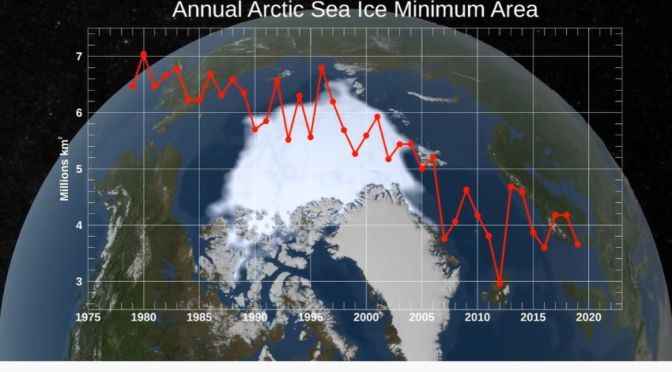
On Sept. 15, 2020, Arctic sea ice reached its annual minimum extent — the second-lowest on record. This summer, temperatures soared in the Siberian Arctic, and intense fires burned through peatland. The Arctic region is warming three times faster than the rest of the planet.
Tag Archives: NASA
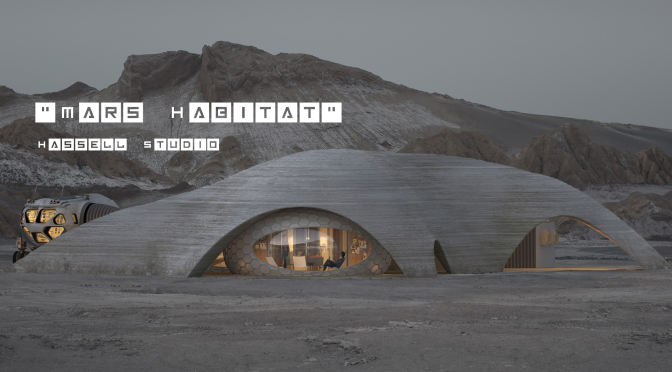
Future Housing: “Mars Habitat” By Hassell Studio
“We set out to design the perfect habitat for space explorers on the red planet as part of NASA’s international 3D Printed Habitat Challenge.“


Our team, in collaboration with structural engineers Eckersley O’Callaghan (EOC), was shortlisted to design the world’s first human home on Mars. In our design, an external shell made from local Martian regolith would be built in advance by autonomous robots before exploration teams arrived to construct the interior – a series of inflatable ‘pods’ containing everything for work and life on Mars.
Our aim was to bring a more human element to space design, typically all about maximum efficiency and performance. Our habitat goes far beyond just ticking the boxes for safety and survival. It’s a home away from home where astronauts can carry out the most important work in the history of space exploration.
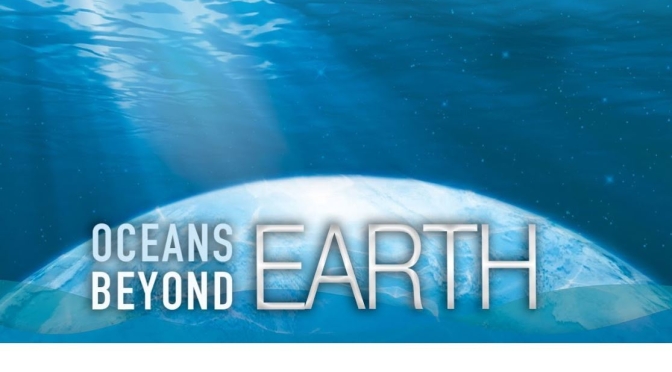
Space Exploration Video: “Oceans Beyond Earth”
Our planet is a beautiful water-filled world, teeming with life. But did you know that Earth is not the only world in our solar system with an ocean? Here’s what you need to know about Ocean Worlds.

Earth & Atmosphere Video: NASA Spacecraft Uncover Mystery Of “Aurora Beads”
A special type of aurora, draped east-west across the night sky like a glowing pearl necklace, is helping scientists better understand the science of auroras and their powerful drivers out in space. Known as auroral beads, these lights often show up just before large auroral displays, which are caused by electrical storms in space called substorms.
Until now, scientists weren’t sure if auroral beads are somehow connected to other auroral displays as a phenomenon in space that precedes substorms, or if they are caused by disturbances closer to Earth’s atmosphere. But powerful new computer models, combined with observations from NASA’s Time History of Events and Macroscale Interactions during Substorms – THEMIS – mission, have provided the first direct evidence of the events in space that lead to the appearance of these beads and demonstrated the important role they play in our local space environment.
Read more: https://www.nasa.gov/feature/aurora-m…
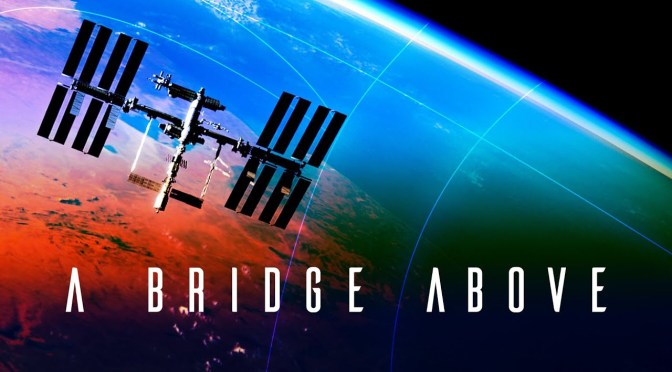
Technology: “A Bridge Above – 20 Years Of The International Space Station” (NASA Video)
“What if we built a bridge, between and above all nations, to jointly discover the galaxy’s great unknowns?” Join us this fall as we prepare to celebrate the 20th anniversary of the the International Space Station. As a global endeavor, 240 people from 19 countries have visited the unique microgravity laboratory, which has hosted more than 2,800 research investigations from scientists in over 100 nations.
The International Space Station is a modular space station in low Earth orbit. The ISS program is a multi-national collaborative project between five participating space agencies: NASA, Roscosmos, JAXA, ESA, and CSA. It is an international collaborative effort between multiple countries.
Top New Science Podcasts: Pluto’s Dark Side Yields Dwarf Planet’s Secrets
 In 2015, after a nine-and-a-half-year journey, NASA’s New Horizons spacecraft raced past Pluto, beaming images of the dwarf planet back to Earth.
Five years after the mission, researchers are poring over images of Pluto’s far-side, which was shrouded in shadow during New Horizon’s flypast. They hope that these images will help give a better understanding of how Pluto was born and even whether a hidden ocean resides beneath the world’s icy crust.
This is an audio version of our feature: Pluto’s dark side spills its secrets — including hints of a hidden ocean
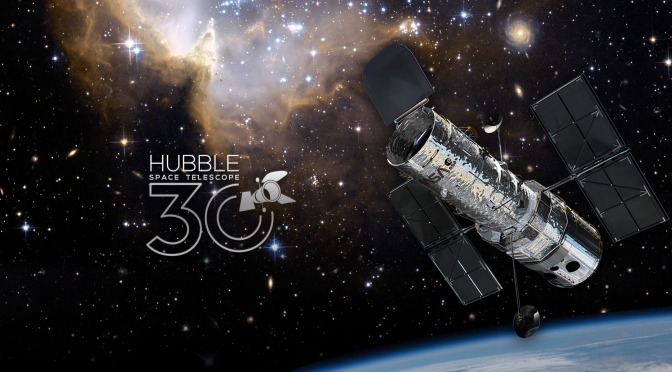
Astronomy: Hubble Space Telescope Celebrates 30th Anniversary April 24
On April 24, 2020, the Hubble Space Telescope celebrates its 30th year in orbit by premiering a never-before-seen view of two beautiful nebulas named NGC 2020 and NGC 2014.
Hubble’s senior project scientist, Dr. Jennifer Wiseman, takes us on a tour of this stunning new image, describes the telescope’s current health, and summarizes some of Hubble’s contributions to astronomy during its 30-year career.
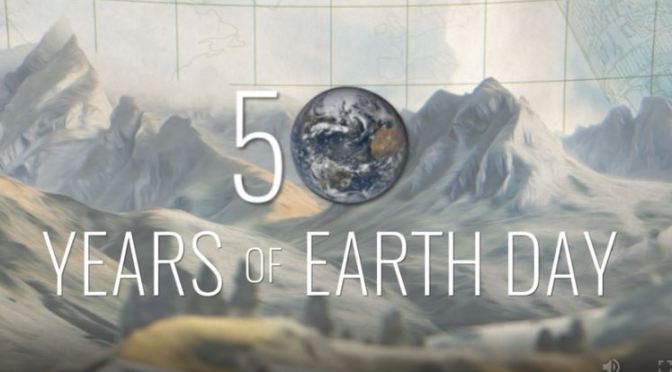
Environment: “NASA Looks Back At 50 Years Of Earth Day” – April 22, 2020 (Video)
It’s been five decades since Apollo 8 astronaut William Anders photographed Earth peaking over the Moon’s horizon. The iconic image, dubbed Earthrise, inspired a new appreciation of the fragility of our place in the universe. Two years later, Earth Day was born to honor our home planet. As the world prepares to commemorate the 50th anniversary of Earth Day, NASA reflects on how the continued growth of its fleet of Earth-observing satellites has sharpened our view of the planet’s climate, atmosphere, land, polar regions and oceans.

Weather Science: NASA Launches “IMPACTS” Campaign To Study East Coast Winter Storms
This winter, NASA is sending a team of scientists, a host of ground instruments, and two research aircraft to study the inner workings of snow storms. The Investigation of Microphysics Precipitation for Atlantic Coast-Threatening Snowstorms, or IMPACTS, field campaign will be the first comprehensive study of East Coast snowstorms in 30 years.
Music credit: “Snowfall” by Andy Blythe [PRS], Marten Joustra [PRS], “Snow Blanket” by Benjamin James Parsons [PRS] from Universal Production Music
Credit: NASA’s Goddard Space Flight Center/Scientific Visualization Studio
Katie Jepson (USRA): Lead Producer, Narrator
Ellen T. Gray (ADNET): Lead Writer
Jacquelyn DeMink (USRA): Lead Animator
Kathryn Mersmann (USRA): Project Support
LK Ward (USRA):Project Support
Aaron E. Lepsch (ADNET): Technical Support
This video is public domain and along with other supporting visualizations can be downloaded from NASA Goddard’s Scientific Visualization Studio at: https://svs.gsfc.nasa.gov/13519
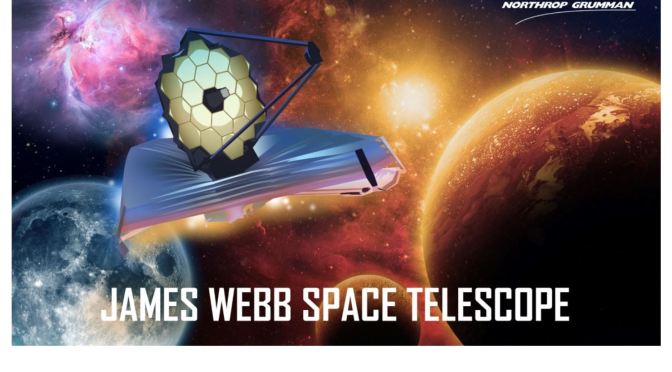
NASA: “James Webb Space Telescope” Mission (Video)
A look at the James Webb Space Telescope, it’s mission and the incredible technological challenge this mission presents.
Music credit: Universal Production
Music tracks: Future Generation Alternative Version by Dury; Moment of Anticipation Instrumental by Connolly; Dark Matter Instrumental by Beits
Credit: NASA’s Goddard Space Flight Center
Michael McClare (KBRwyle): Lead Producer
Michael McClare (KBRwyle): Lead Writer
Adriana Manrique Gutierrez (USRA): Animator
Jonathan North (USRA): Animator
Walt Feimer (KBRwyle): Animator
Michael Lentz (USRA): Animator
Bailee DesRocher (USRA): Animator
Michael McClare (KBRwyle): Lead Editor
Michael McClare (KBRwyle): Lead Videographer
This video is public domain and along with other supporting visualizations can be downloaded from the Scientific Visualization Studio
 Boomers Daily