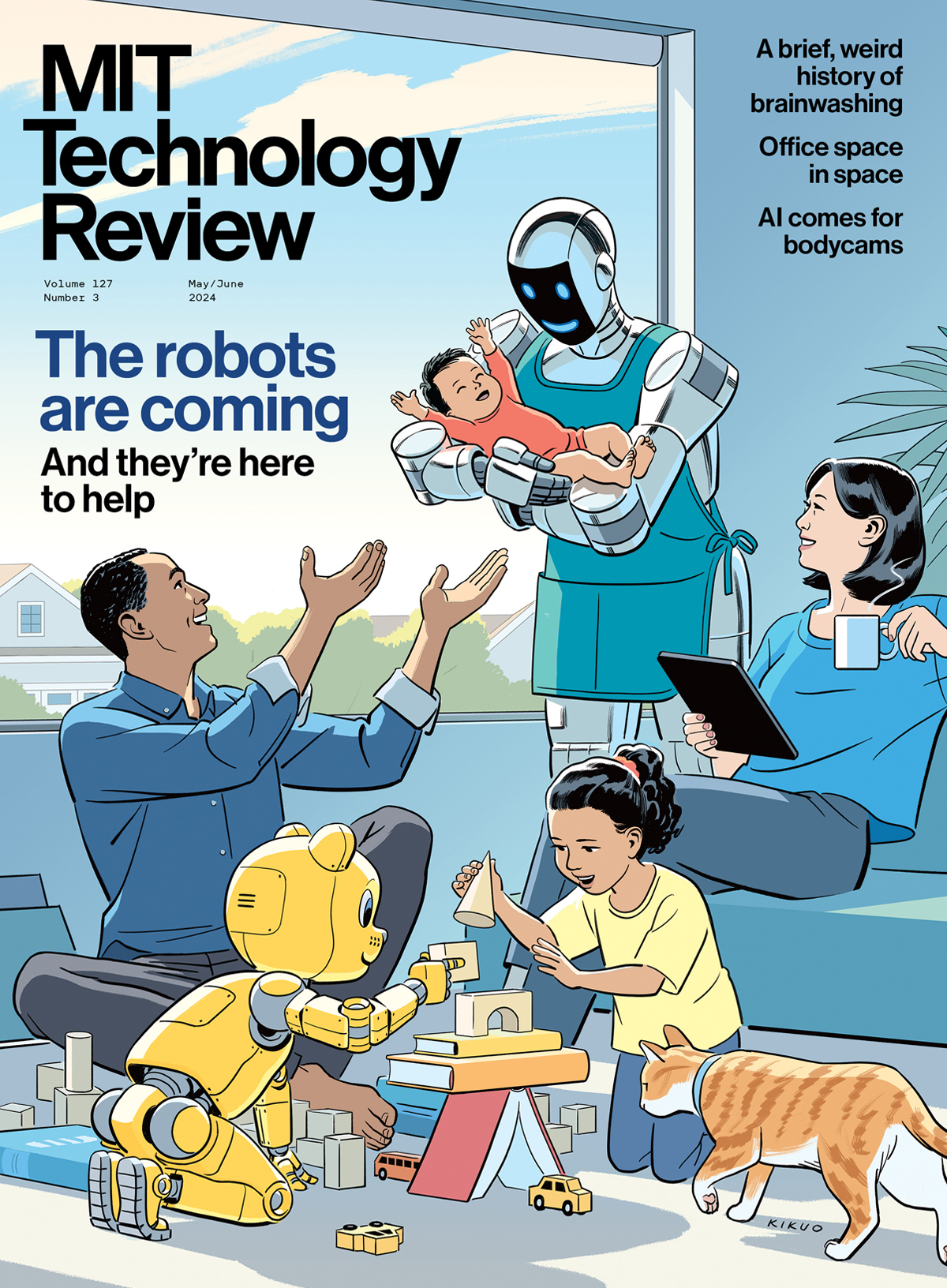
MIT Technology Review (April 29, 2024): The new issue features ‘The Robots Are Coming’ – And they’re here to help; A brief, weird history of brainwashing; Office space in space; AI comes for bodycams…
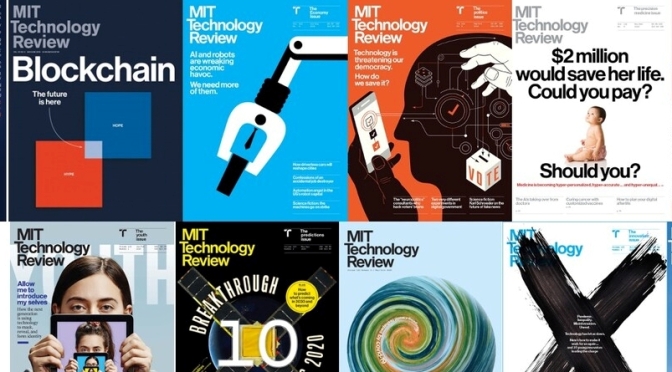
The Build issue
Who says we can’t still build things? In this issue: a look at the robots we’ve always wanted; a new model for space exploration; and efforts to flood-proof Louisiana’s coastline. Plus a wild, weird history of brainwashing; designing cheese with AI; and glow-in-the dark petunias.
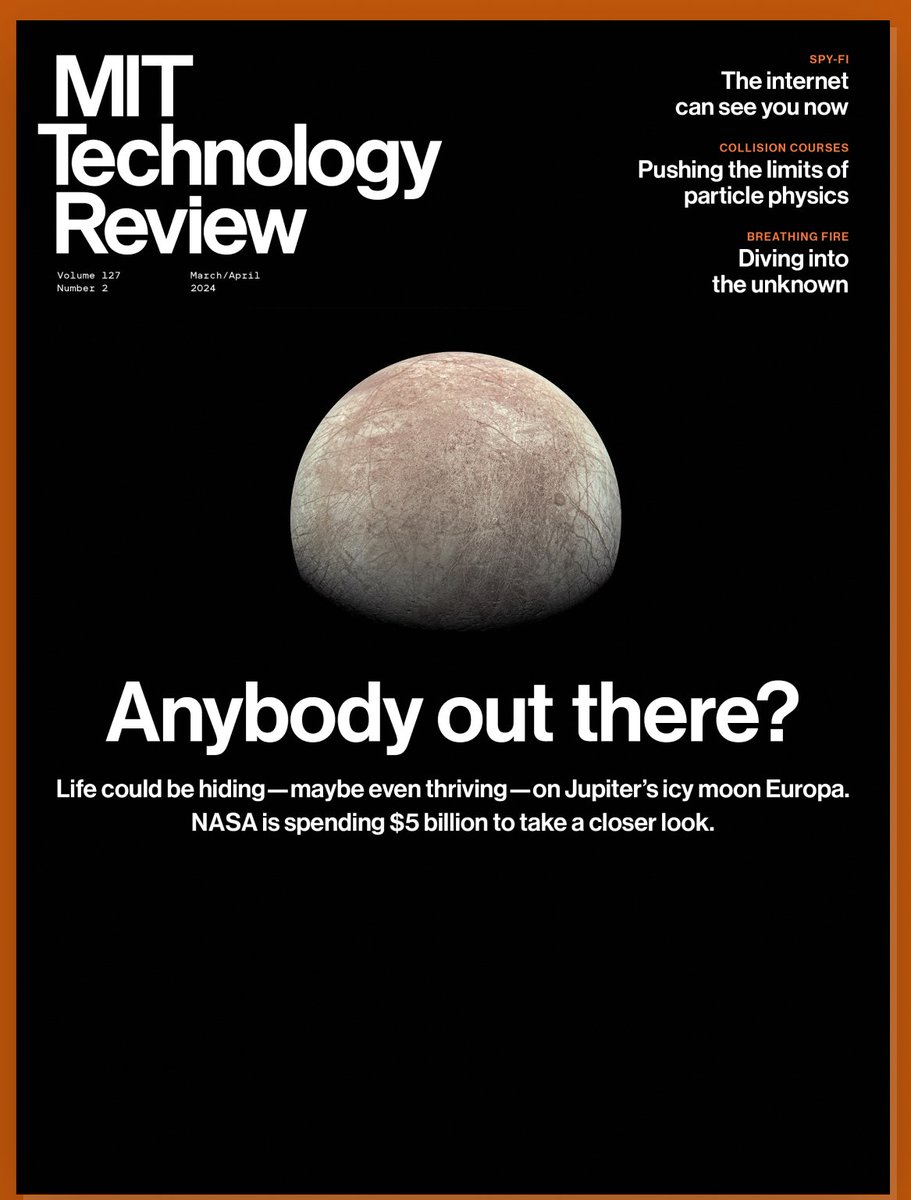
MIT Technology Review (February 29, 2024): The new issue features ‘The Hidden Worlds Issue’ – Is Anybody Out There? Using technology to explore and expose hidden worlds, from enabling deeper dives into ocean depths to journeying to one of Jupiter’s orbiting bodies to pushing the boundaries of particle physics. Plus: wearables for wildlife, Wi-Fi sensing, and a reconsideration of Luddites.
The Large Hadron Collider hasn’t seen any new particles since the discovery of the Higgs boson in 2012. Here’s what researchers are trying to do about it.
Figuring out how the human body can withstand underwater pressure has been a problem for over a century, but a ragtag band of divers is experimenting with hydrogen to find out.
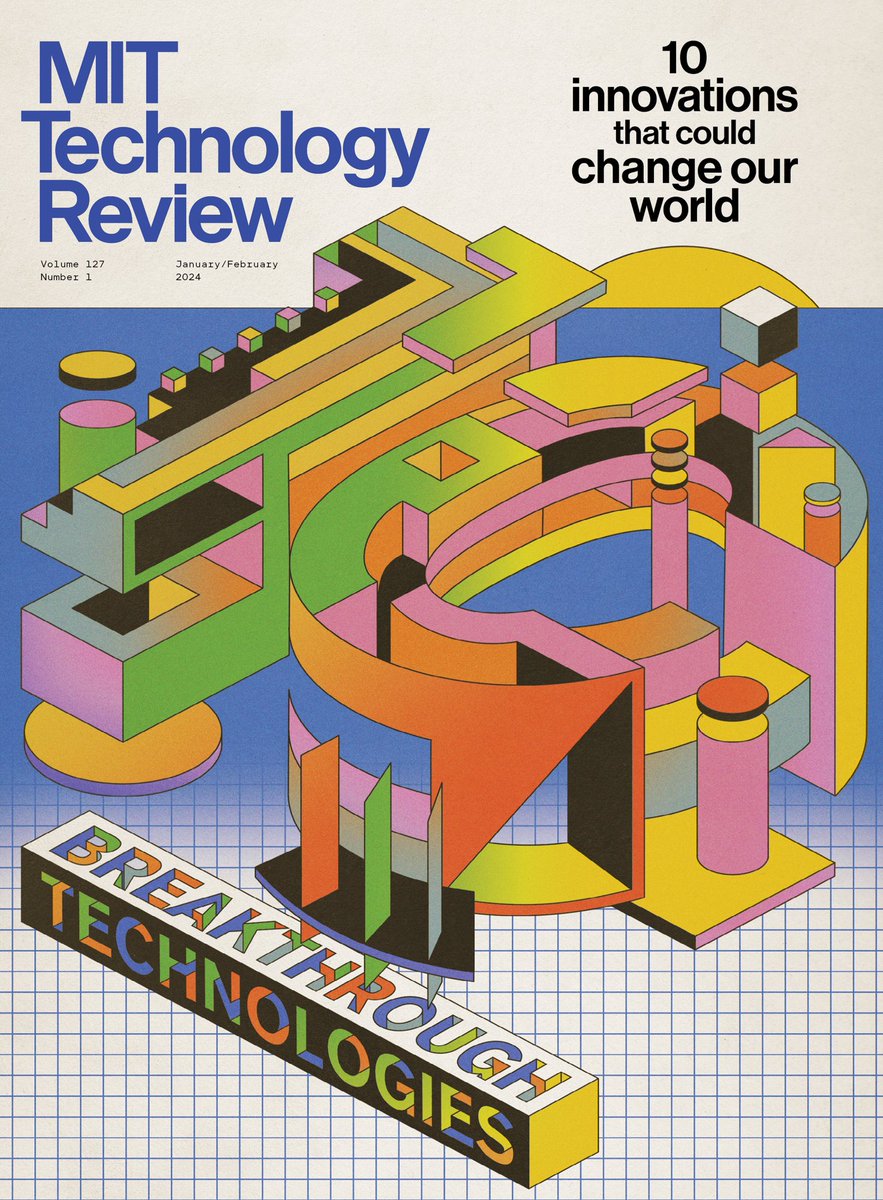
Every year, we look for promising technologies poised to have a real impact on the world. Here are the advances that we think matter most right now.
AI for everything
We now live in the age of AI. Hundreds of millions of people have interacted directly with generative tools like ChatGPT that produce text, images, videos, and more from prompts. Their popularity has reshaped the tech industry, making OpenAI a household name and compelling Google, Meta, and Microsoft to invest heavily in the technology.
Super-efficient solar cells
Solar power is being rapidly deployed around the world, and it’s key to global efforts to reduce carbon emissions. But most of the sunlight that hits today’s panels isn’t being converted into electricity. Adding a layer of tiny crystals could make solar panels more efficient. WHY IT MATTERS
Apple Vision Pro
Apple will start shipping its first mixed-reality headset, the Vision Pro, this year. Its killer feature is the highest-resolution display ever made for such a device. Will there be a killer app? It’s early, but the world’s most valuable company has made a bold bet that the answer is yes. WHY IT MATTERS
Weight-loss drugs
The global rise in obesity has been called an epidemic by the World Health Organization. Medications like Mounjaro and Wegovy are now among the most powerful tools that patients and physicians have to treat it. Evidence suggests they can even protect against heart attacks and strokes. WHY IT MATTERS
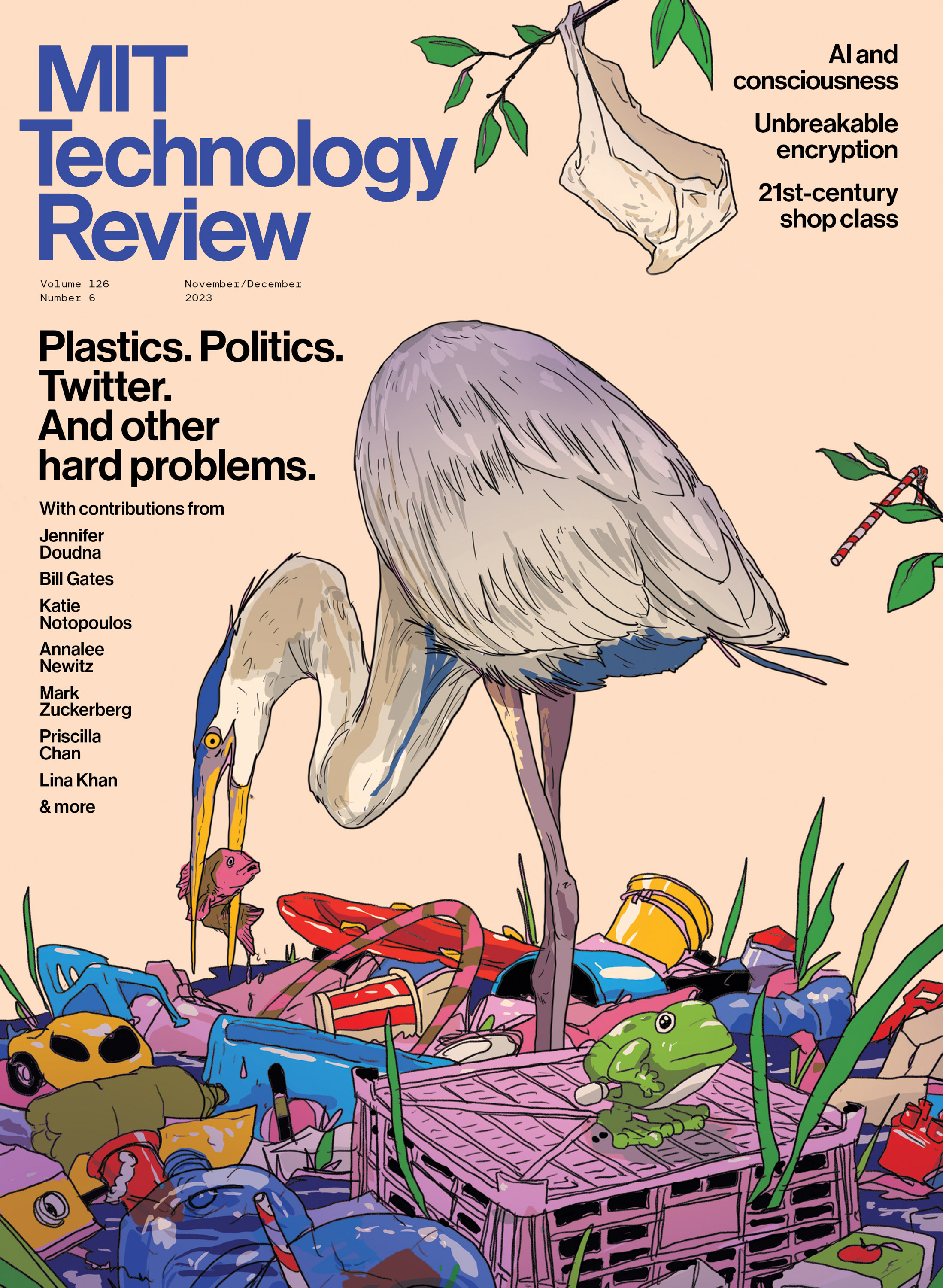
MIT Technology Review – November/December 2023: The Hard Problems issue features the Intractable problem of plastics; Fixing the internet; Exploring what it would it take for AI to become conscious. Also, there are so many urgent issues facing the world—where do we begin? Bill Gates, Mark Zuckerberg, Jennifer Doudna, and others offer their ideas.
Plastic is cheap to make and shockingly profitable. It’s everywhere. And we’re all paying the price.
Plastic, and the profusion of waste it creates, can hide in plain sight, a ubiquitous part of our lives we rarely question. But a closer examination of the situation can be shocking.
Indeed, the scale of the problem is hard to internalize. To date, humans have created around 11 billion metric tons of plastic. This amount surpasses the biomass of all animals, both terrestrial and marine, according to a 2020 study published in Nature.
Currently, about 430 million tons of plastic is produced yearly, according to the United Nations Environment Programme (UNEP)—significantly more than the weight of all human beings combined. One-third of this total takes the form of single-use plastics, which humans interact with for seconds or minutes before discarding.
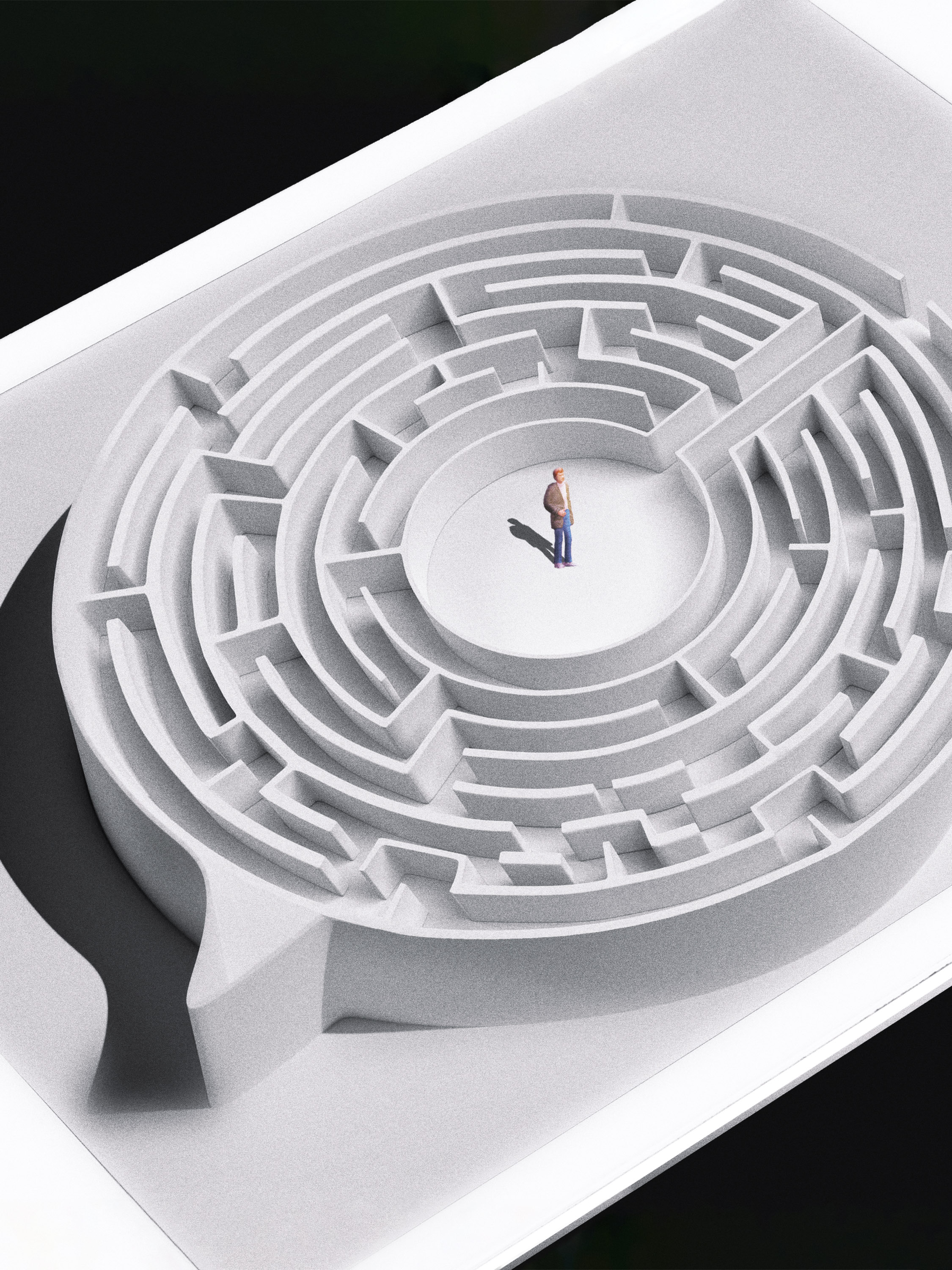
Philosophers, cognitive scientists, and engineers are grappling with what it would take for AI to become conscious.
David Chalmers was not expecting the invitation he received in September of last year. As a leading authority on consciousness, Chalmers regularly circles the world delivering talks at universities and academic meetings to rapt audiences of philosophers—the sort of people who might spend hours debating whether the world outside their own heads is real and then go blithely about the rest of their day. This latest request, though, came from a surprising source: the organizers of the Conference on Neural Information Processing Systems (NeurIPS), a yearly gathering of the brightest minds in artificial intelligence.
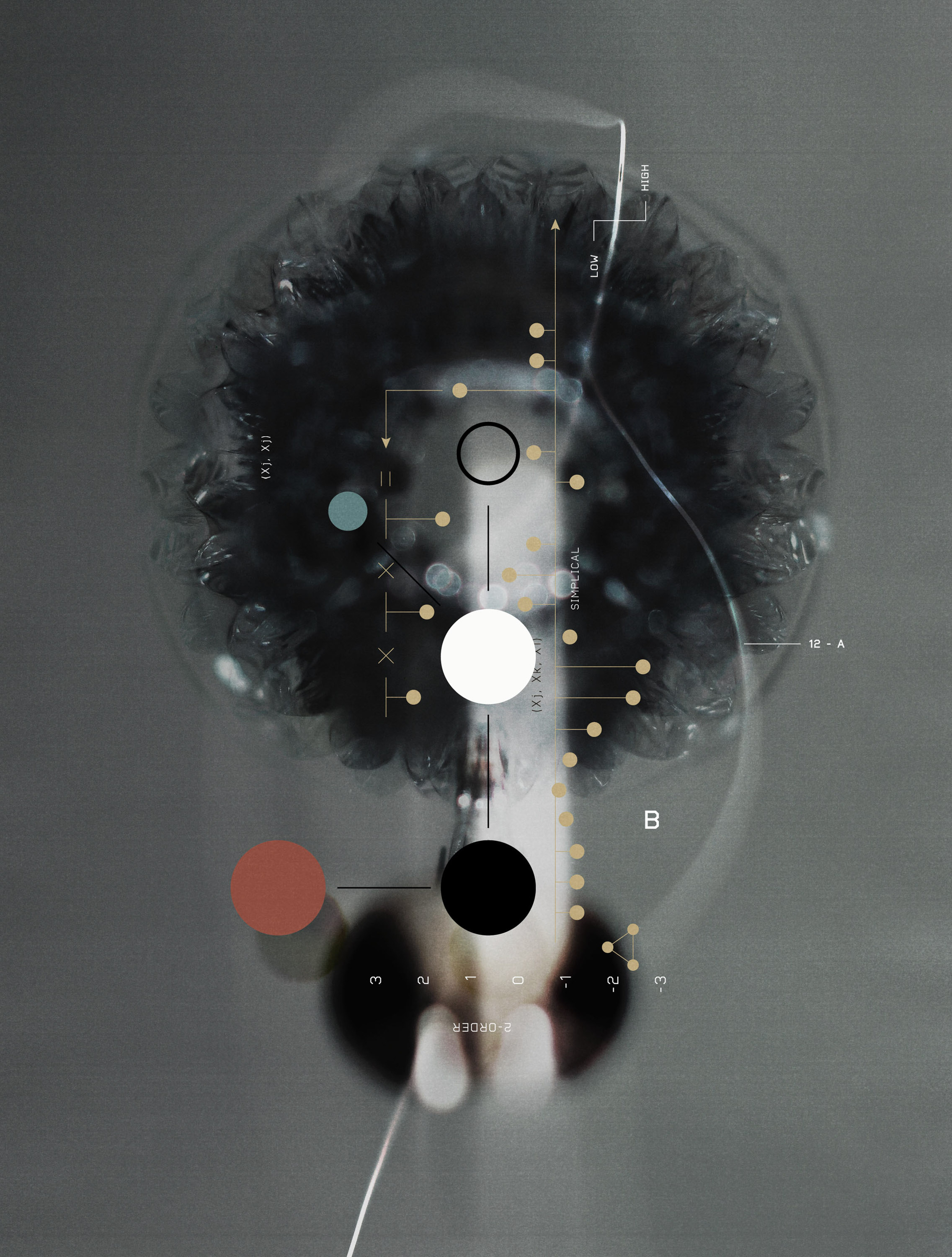
MIT Technology Review – September/October 2023: ‘The Ethics issue’ features Experimental Drugs – Who should get them?; Eric Schmidt on transforming science; When AI goes to war, and more…
Bloomberg Originals (August 17, 2023) – On this episode of The Circuit, Emily Chang sits down with Microsoft CEO Satya Nadella to hear how AI is shaking up the competition for search. Nadella argues that this new wave of technology is as big as the web browser or the iPhone.
Chang also speaks with OpenAI CEO Sam Altman to discuss his company (which has some help from Microsoft), its ambitions and the latest on ChatGPT.
MIT Technology Review – July/August 2023: ‘The Accessibility issue’ features Connecting climate change and the digital divide. A blind educator working to make images accessible to everyone. How the app meant to streamline immigration at the border may be making things worse. Plus regulating robotaxis, Metaverse attorneys, and the forgotten history of highway photologs.
We need to take steps toward a more inclusive future—one that we all can inhabit.
“Technology,” wrote the late historian of technology Melvin Kranzberg Jr., “is neither good nor bad, nor is it neutral.” It’s an observation that often doesn’t stick with people as they think about technologies related to accessibility.
For people who can’t speak, there has been depressingly little innovation in technology that helps them communicate.
A piece of hardware, however impressively designed and engineered, is only as valuable as what a person can do with it. After the iPad’s release, the flood of new, easy-to-use AAC apps that LoStracco, Shevchenko, and their clients wanted never came.
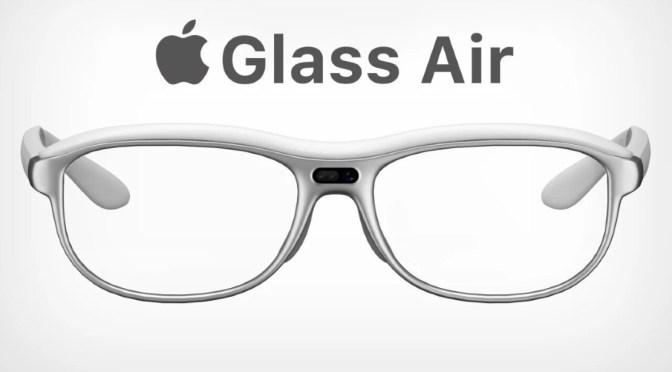
Yanko Design (June 2, 2023) – Augmented Reality has always been Tim Cook’s favorite buzzword, and he’s consistently pushed for Apple to have a presence in this space. It’s expected that all this will culminate in what analysts and leakers call “Reality”, Apple’s first XR headset. This cutting-edge device, expected to be unveiled at Apple’s Worldwide Developers Conference, aims to pioneer the relatively uncharted realm of mixed-reality technology.
With a price tag of approximately $3,000, the ‘Reality’ headset has been seven years in the making, and has been apparently filled with controversy too, with a large chunk of Apple’s own employees expressing doubt and disdain. However, here’s everything we know about the Reality headset (or could it be a pair of glasses?) that’s set to launch this Monday.
The headset’s design journey has oscillated between being thick and obtrusive, like your average VR headset, to being as slim as a pair of spectacles, or realistically, a pair of chunky ski goggles. At its heart, however, lies the innovative xrOS, designed to provide an interface that echoes the familiar iOS experience. The new operating system (which is pretty much confirmed thanks to a trademark filed by Apple in New Zealand) is set to revolutionize how users interact with their devices, presenting a traditional Home Screen in an entirely new dimension filled with apps and customizable widgets.
One of the most exciting features of ‘Reality’ is its ability to merge digital elements with the real world. The xrOS software could potentially project AR app interface elements onto actual objects, creating a seamless mixed-reality overlay effect. This represents a significant leap forward in AR technology, blurring the boundaries between the physical and digital worlds. According to MacRumors, the ‘Reality’ device will achieve this using “dual high-resolution 4K micro OLED displays with up to 3,000 pixels per inch for a rich, realistic, and immersive viewing experience.” To operate the device, the user’s hands and eyes will be monitored by over a dozen optical cameras. The user can select an on-screen item by simply looking at it and activate it by making a hand gesture, such as a pinch.
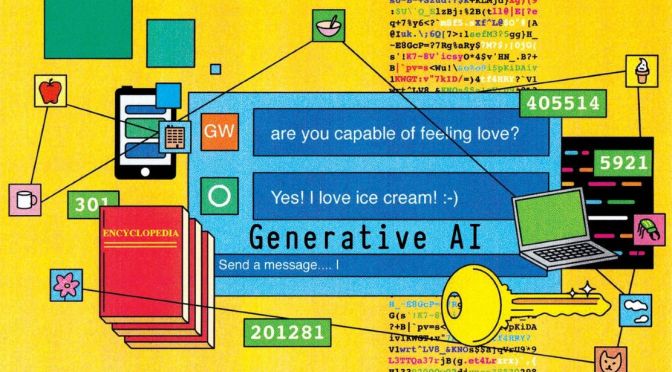
The Economist (May 18, 2023) – Generative AI is the technology behind the wave of new online tools used by millions around the world. As the technology is ever more widely deployed, what are its current strengths and its weaknesses?
Video timeline:00:00 – What is generative AI? 00:46 – Breakthroughs and take-up of the technology 02:03 – Strengths 03:32 – Weaknesses
Kirsten Dirksen Films (May 28, 2023) – Caspar Schols built his first shapeshifting house in his mother’s backyard as her writing cabin that, by sliding a room-on-rails, could convert into a place to sleep under the stars.
He has since perfected his expandable home with 10 prototypes: his most recent model is robust enough to serve as a primary residence and has a bathtub and guest bed hidden in the floor. The house can be opened up – on sunny days, for nature-watching or just to sleep directly under the stars – with just a push.
The entire walls and ceiling of the house move, but anyone can propel this 3,000 kilograms (over 6000 pounds) room-on-rails because Schols created a system that is “super low friction”. To create a well-insulated home that has walls that move, Schols and his team designed the rails with wind labyrinths to trap the air and added brushes to any moving surface to prevent airflow.







 Bloomberg Originals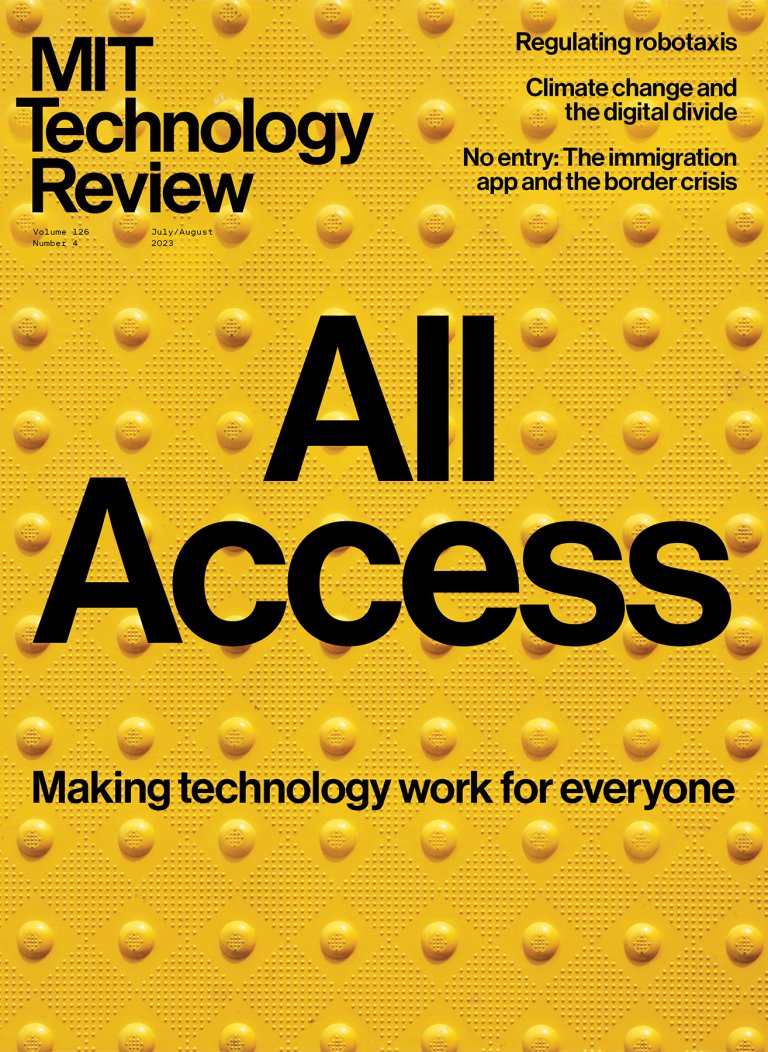


 Yanko Design (June 2, 2023) – Augmented Reality has always been Tim Cook’s favorite buzzword, and he’s consistently pushed for Apple to have a presence in this space. It’s expected that all this will culminate in what analysts and leakers call “Reality”, Apple’s first XR headset. This cutting-edge device, expected to be unveiled at Apple’s Worldwide Developers Conference, aims to pioneer the relatively uncharted realm of mixed-reality technology.
 The Economist
 Kirsten Dirksen
 Boomers Daily