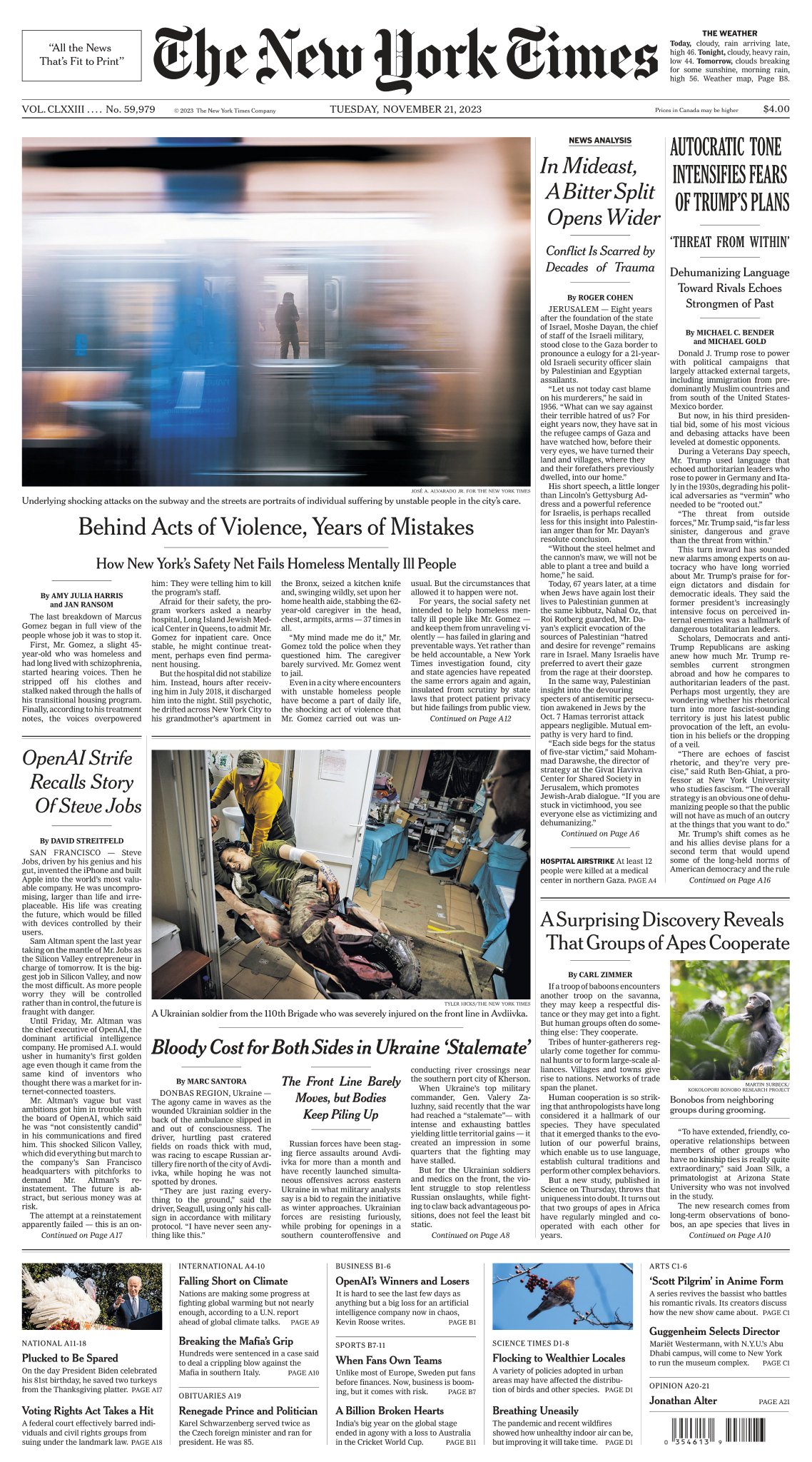
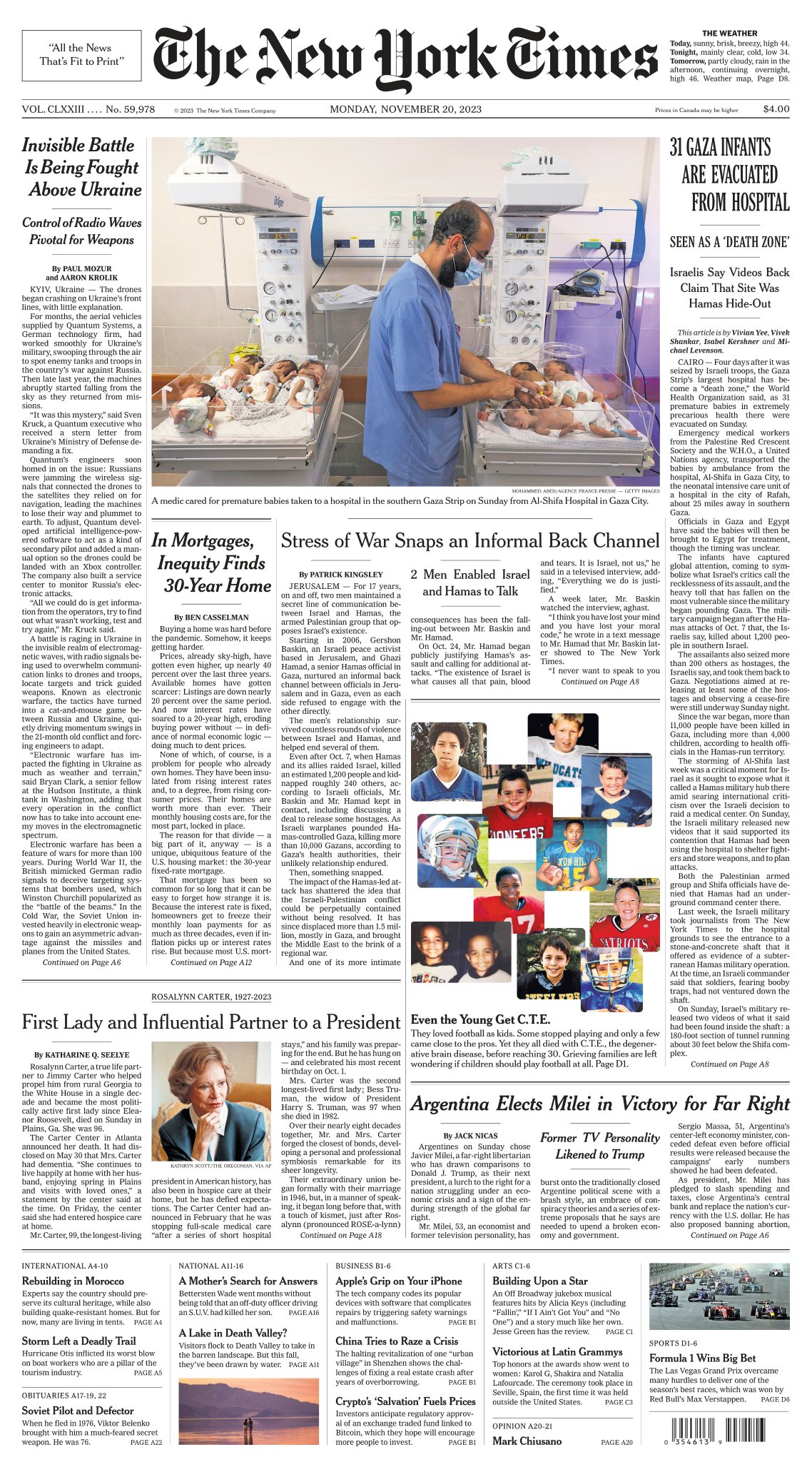
Using electromagnetic waves to flummox and follow smarter weapons has become a critical part of the cat-and-mouse game between Ukraine and Russia. The United States, China and others have taken note.
A 30-Year Trap: The Problem With America’s Weird Mortgages
One big reason the U.S. housing market is broken: Owners don’t want to give up their cushy old loans.
For Years, Two Men Shuttled Messages Between Israel and Hamas. No Longer.
Since 2006, Gershon Baskin, an Israeli peace activist, and Ghazi Hamad, a Hamas official, maintained a secret back channel between Gaza and Israel. Then Oct. 7 happened.
Monocle on Sunday, November 19, 2023– Monocle’s editorial director, Tyler Brûlé, unpacks the weekend’s hottest topics with Juliet Linley and Christof Münger. We speak to Monocle’s Asia editor, James Chambers, and Christoph Amend, editorial director of ‘Zeit Magazin’.
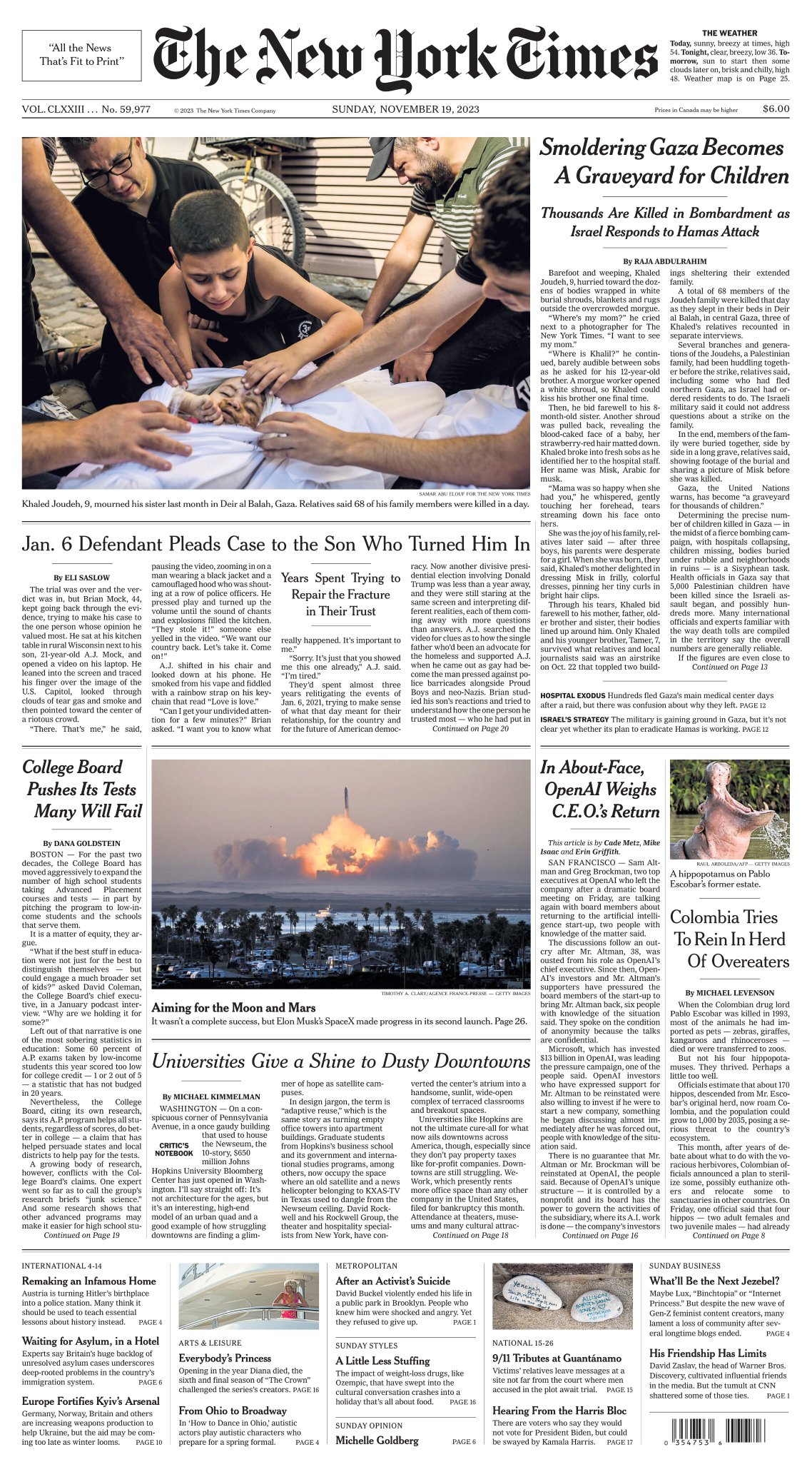
Thousands of children have been killed in the enclave since the Israeli assault began, officials in Gaza say. The Israeli military says it takes “all feasible precautions” to avoid civilian deaths.
Monocle on Saturday, November 18, 2023:Sian Bayley, news editor at ‘The Bookseller’, joins Georgina Godwin to look at the week’s global news and culture.
Plus, the two discuss the winner of this year’s Baillie Gifford Prize for Non-Fiction. John Vaillant’s winning book, ‘Fire Weather: A True Story From a Hotter World’, delves into the devastating wildfires that struck Fort McMurray, Alberta – the hub of Canada’s oil industry – in May 2016. It examines the conflicting priorities of the oil industry and climate science, the immense destruction caused by modern wildfires, and the lasting impacts of these disasters on the lives of those affected.
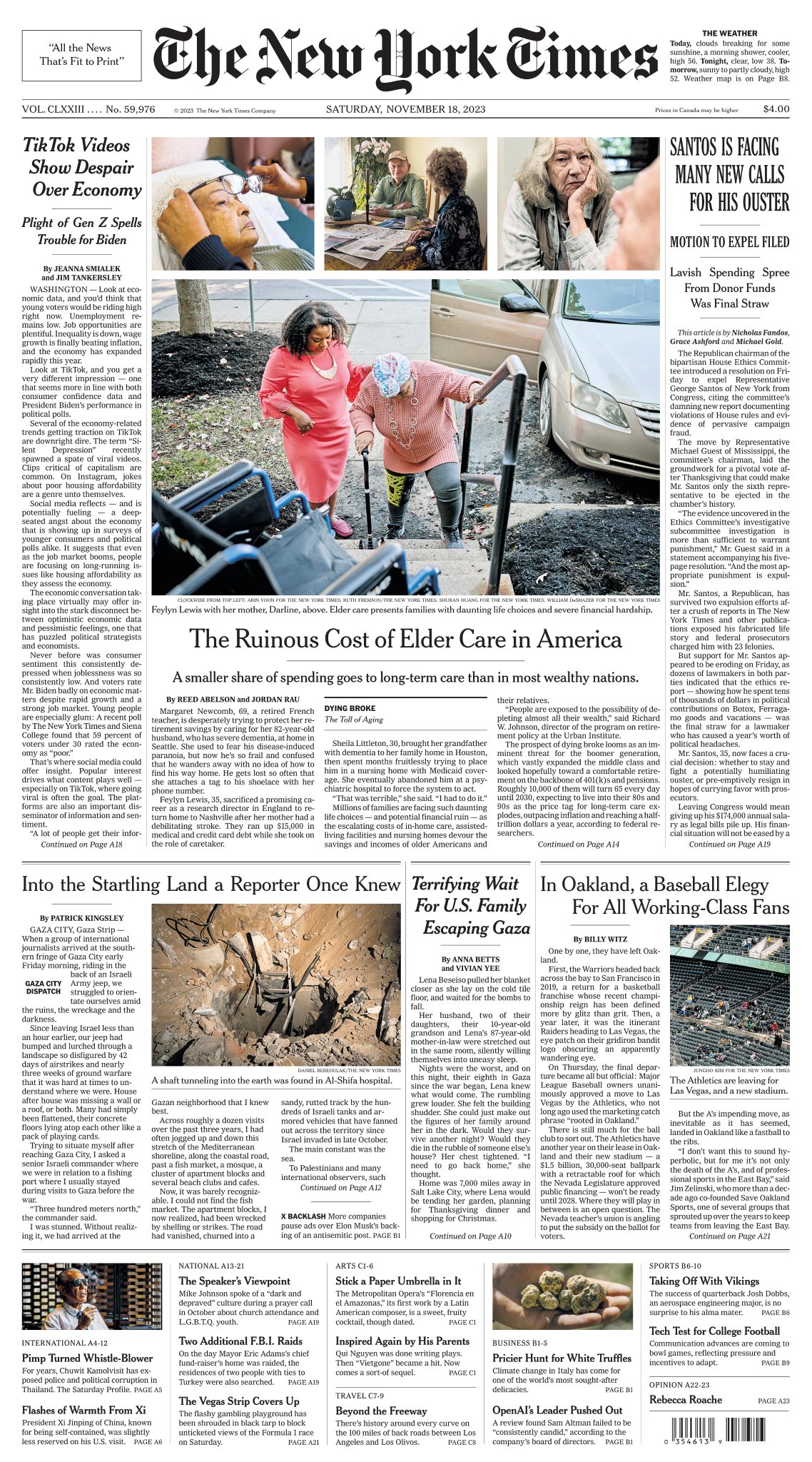
Economic despair dominates social media as young people fret about the cost of living. It offers a snapshot of the challenges facing Democrats ahead of the 2024 election.
The resolution from Representative Michael Guest, a Republican, sets the stage for a vote shortly after Thanksgiving.
Facing Financial Ruin as Costs Soar for Elder Care
The United States has no coherent system for providing long-term care, leading many who are aging to struggle to stay independent or to rely on a patchwork of solutions.
A Journey Into Northern Gaza: Ruins, Wreckage and Darkness
New York Times journalists traveled with an Israeli military convoy to catch a rare glimpse of conditions inside wartime Gaza. They saw houses flattened like playing cards, and a city utterly disfigured.
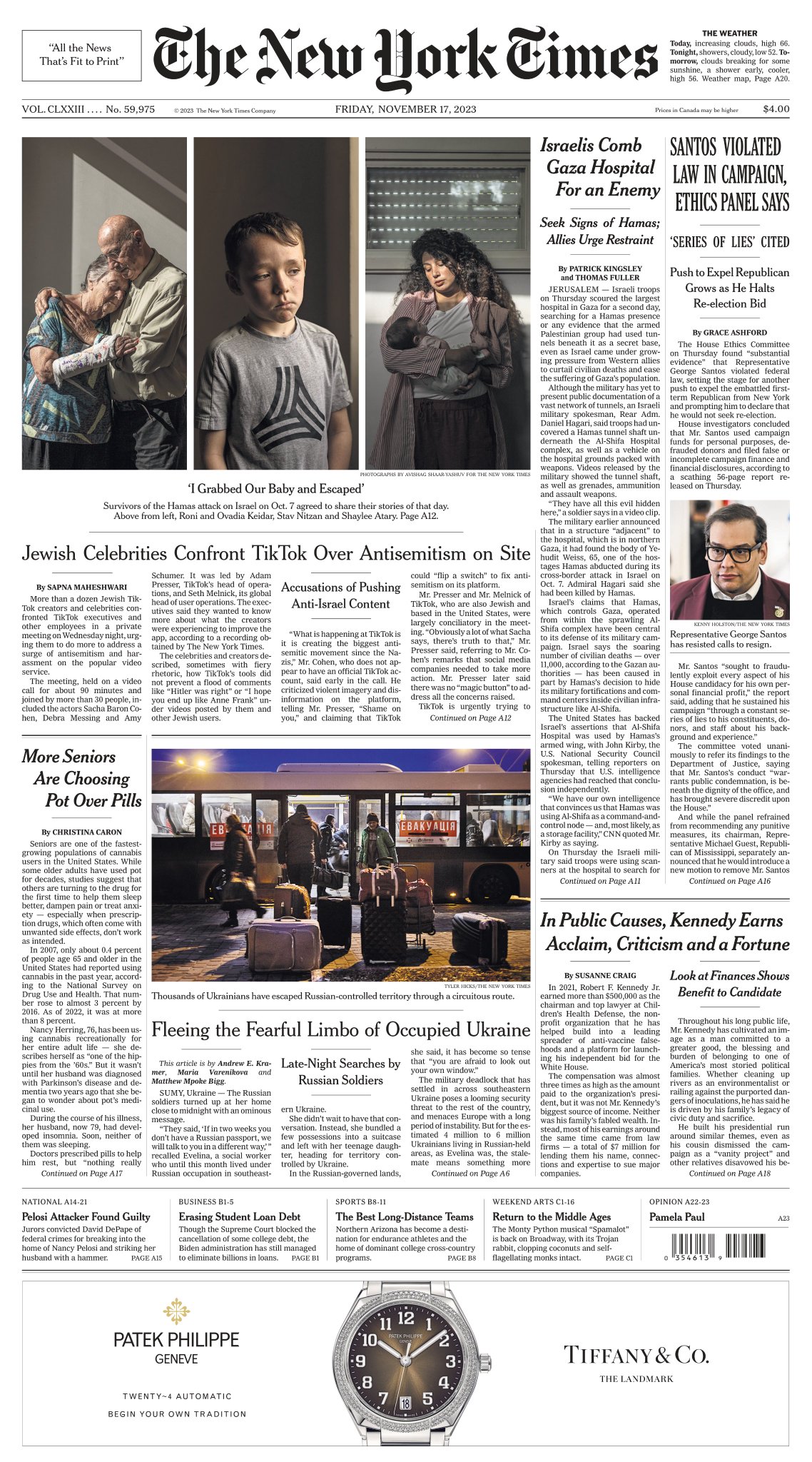
The Israeli military said troops had uncovered a Hamas tunnel shaft underneath the Al-Shifa Hospital complex, as well as a vehicle on the hospital grounds packed with weapons.
Jewish Celebrities and Influencers Confront TikTok Executives in Private Call
TikTok faces escalating accusations that it promotes pro-Palestinian, anti-Israel content. “Shame on you,” Sacha Baron Cohen said on the call.
How R.F.K. Jr. Has Turned His Public Crusades Into a Private Windfall
The causes Robert F. Kennedy Jr. has championed have brought him admiration, criticism — and tens of millions of dollars.
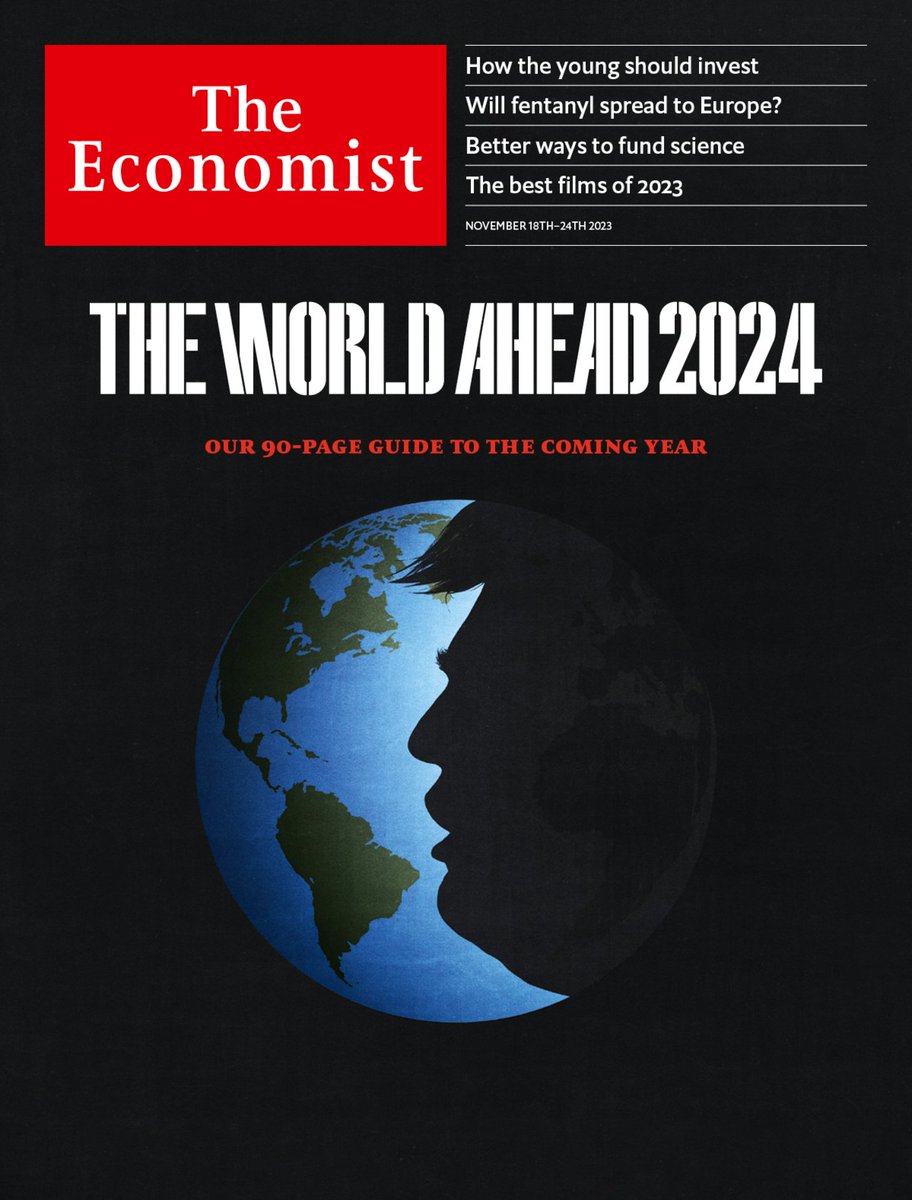
The Economist Magazine (November 18, 2023): The latest issue features The World Ahead 2024 – 90-page guide to the coming year; How the young should invest – Markets have dealt them a bad hand. They could be playing it better; Better ways to fund science – Too much of researchers’ time is spent filling in forms; The best films of 2023 – They featured cattle barons, chefs, composers, physicists and whistleblowers…
Ashadow looms over the world. In this week’s edition we publish The World Ahead 2024, our 38th annual predictive guide to the coming year, and in all that time no single person has ever eclipsed our analysis as much as Donald Trump eclipses 2024. That a Trump victory next November is a coin-toss probability is beginning to sink in.
Rising prices and animal spirits give it a long-awaited opportunity
Global investors are giddy about Japan again. Warren Buffett made his first visit to Tokyo in more than a decade this spring; he has built up big holdings in five trading houses that offer exposure to a cross-section of Japan Inc. Last month Larry Fink, ceo of BlackRock, the world’s biggest asset manager, joined the pilgrimage to Japan’s capital. “History is repeating itself,” he told Kishida Fumio, the prime minister. He likened the moment to Japan’s “economic miracle” of the 1980s. Even disappointing gdp figures released on November 15th will not dent investors’ optimism.
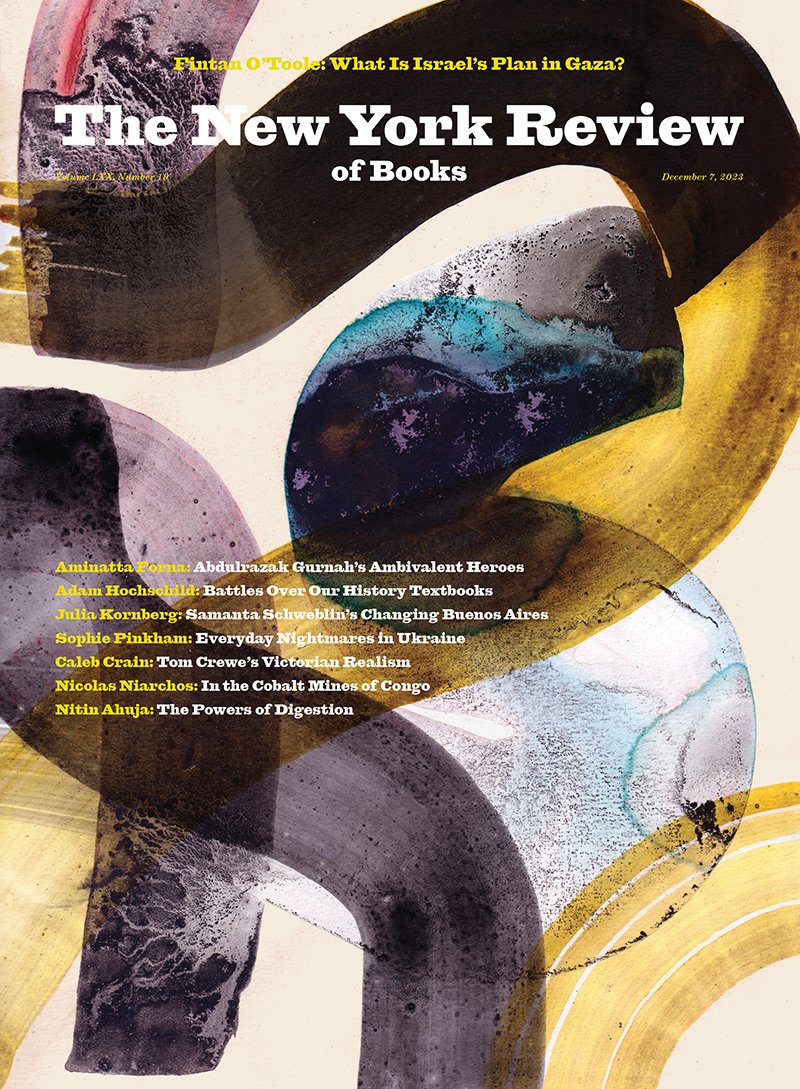
The New York Review of Books (December 7, 2023 Issue) – The latest featuresA Fallen Artist in Mao’s China – Ha Jin’s The Woman Back from Moscow; Gut Instincts – Recent books about the importance of the microbiome have driven many patients to fixate on the idea of “gut health.” Are they right to do so?; Prelude to Empire – Abdulrazak Gurnah’s novels, whether set in German East Africa or the United Kingdom, never cease to demonstrate how the minutiae of people’s lives have been affected by European colonialism…
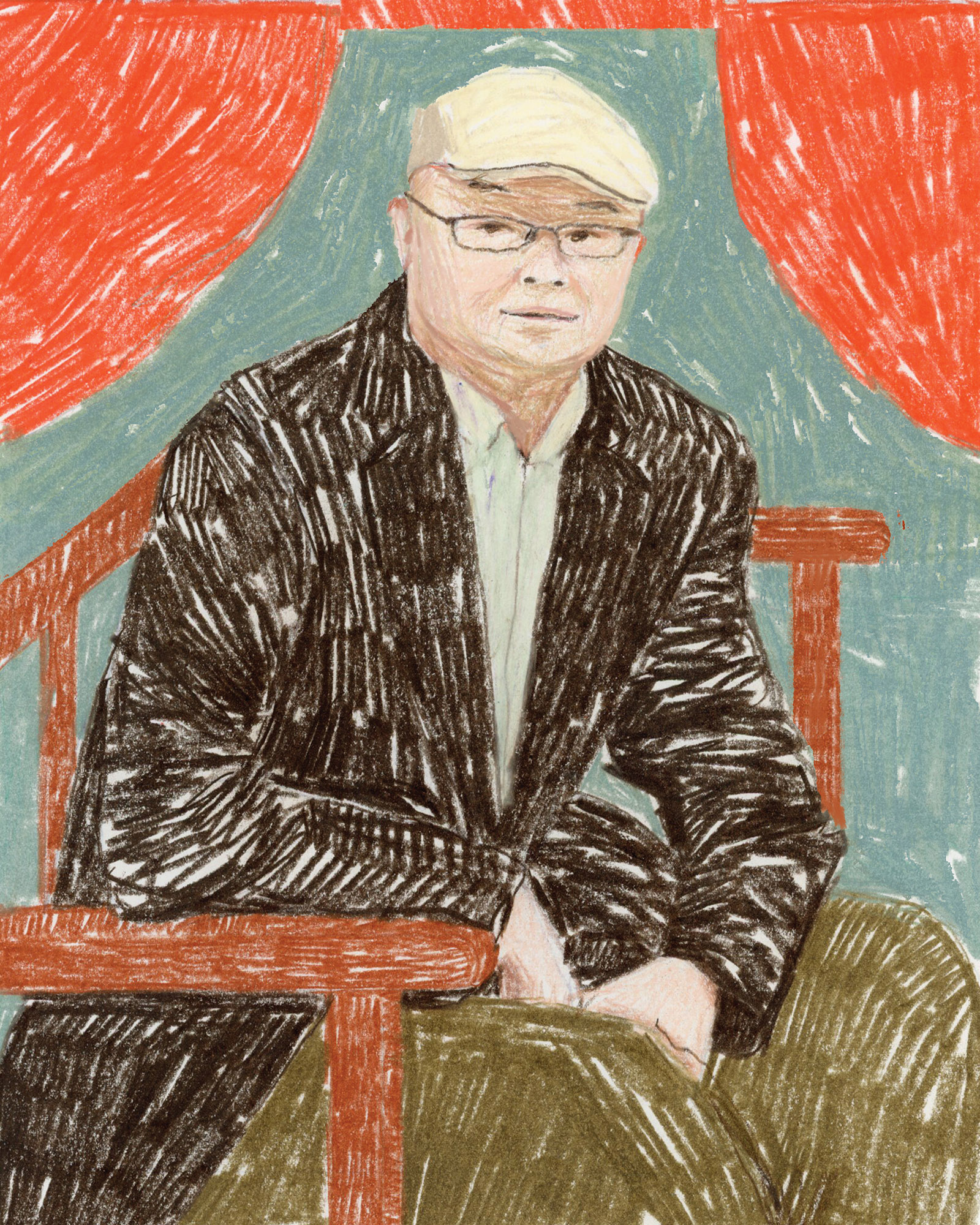
Ha Jin’s The Woman Back from Moscow, a fictionalized account of the life of the actress Sun Weishi, depicts the hypocrisy of the Communist elites and the fate of those who embraced new ideals after the revolution.
The Woman Back from Moscow: In Pursuit of Beauty by Ha Jin
This book will be denounced in Beijing. Ha Jin’s The Woman Back from Moscow is a novel based on the life of Sun Weishi, an adopted daughter of Chinese premier Zhou Enlai, whose brilliant mind and intensive study in Moscow of the Stanislavski acting method brought her to the pinnacle of China’s theatrical world during the Mao years. Her beauty and effervescent personality attracted powerful men—not only Zhou, who doted on her, but also Lin Biao, the Chinese Communist Party’s leading general, who divorced his wife in order to propose marriage to her (unsuccessfully), and Mao, who apparently raped her during a long rail trip. She had several other suitors and eventually married the film star Jin Shan.
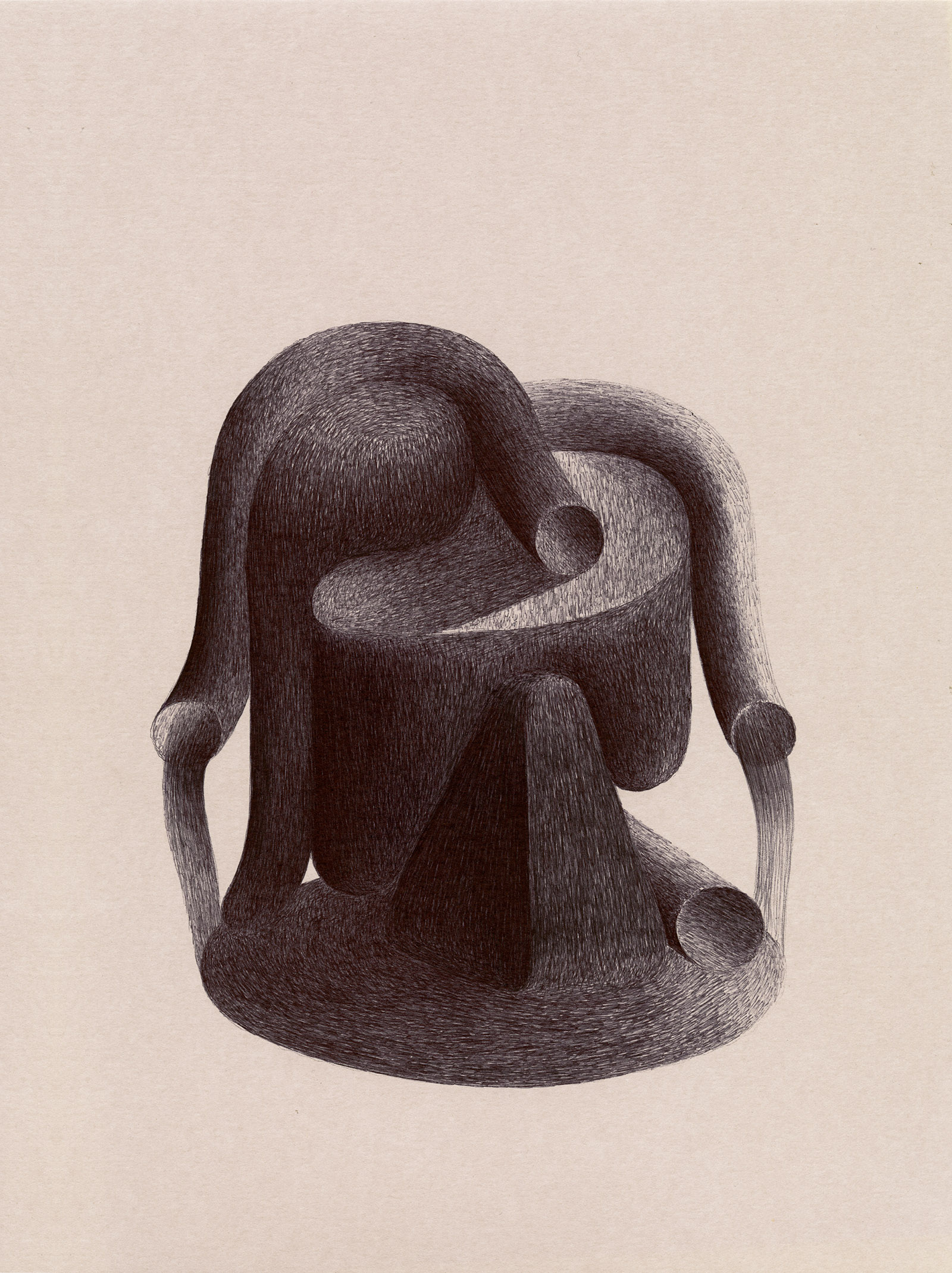
Right before their colonoscopies, with the stress of a bowel prep still rumbling in their bellies and a mental image of the procedure beginning to sharpen, some patients will ask me why I chose a career in gastroenterology: “What made you interested in this?” The reason I usually give is that you could go all your life without a heart problem, or a lung problem, or a kidney problem, but not without a bit of nausea, constipation, or abdominal pain. The work of digestion is part of the rhythm of our daily lives, I tell them, which helps my work feel similarly immediate.



















 Boomers Daily