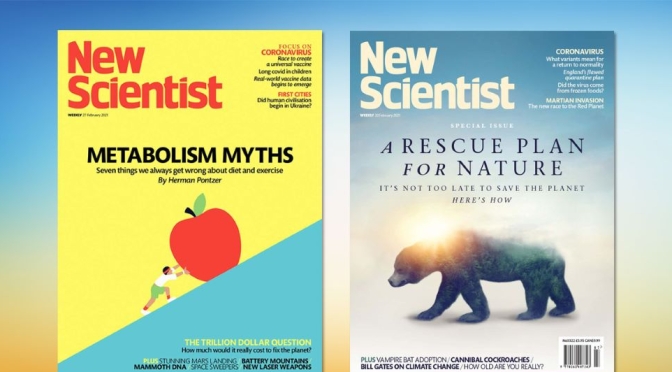
Which inventions should we prioritize to safeguard the environment and human health and happiness? From better batteries and photovoltaic paint to a universal vaccine precursor
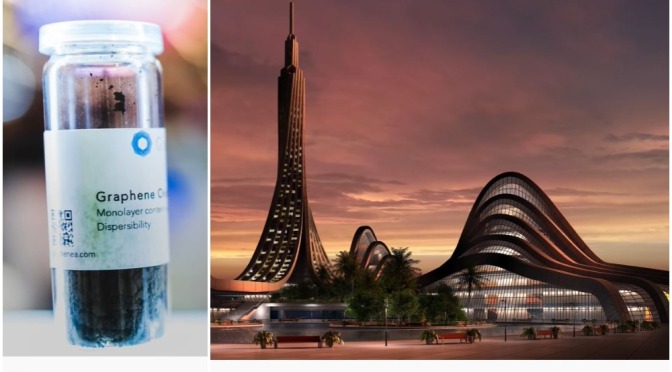
Takashi Taniguchi and Kenji Watanabe create high-quality crystals that offer the perfect substrate on which to tailor-make two-dimensional materials with amazing electronic properties. They tell New Scientist how they grow their world-renowned crystals
Stone Age people in Europe appear to have recorded the reproductive habits of animals with markings on cave paintings, hinting at the early origins of writing
From super-strength concrete to fortified infrastructure, this is what the ‘wonder material for the 21st century’ is now bringing to construction. For more by Tomorrow’s Build subscribe now – https://bit.ly/3vOOJ98 Executive Producer and Narrator – Fred Mills Producer – Adam Savage Video Editing and Graphics – Thomas Canton
Why heat waves disproportionately impact minorities in US cities, and the researcher that critiqued his whole career on Twitter.
In this episode:
00:45 How heat waves kill unequally
Researchers are beginning to unpick how historic discrimination in city planning is making the recent heat waves in North America more deadly for some than others.
When researcher Nick Holmes decided to criticise his past papers, in 57 tweets, he found the reflection enlightening. Now he’s encouraging other researchers to self-criticise, to help speed scientific progress.
We discuss some highlights from the Nature Briefing. This time, Richard Branson’s commercial space flight, and the Maori perspective on Antarctic conservation.
How current and future ice loss in Greenland compares to the past, Long-Covid, and using graphene to make ultra-sensitive radiation detectors.
In this episode:
00:45 Greenland’s historic ice loss
Climate change is accelerating the loss of ice and glaciers around the world leading to unprecedented levels of disappearance. Researchers have drilled samples from deep in the Greenland ice sheet, to model how current, and future, losses compare to those seen in the last 12,000 years. Research Article: Briner et al.; News and Views: The worst is yet to come for the Greenland ice sheet; Editorial: Arctic science cannot afford a new cold war
09:23 Coronapod
Despite recovering from an initial COVID-19 infection, many patients are experiencing severe symptoms months later. We find out about the impact of ‘Long Covid’ and the research that’s being done to try and understand it. News Feature: The lasting misery of coronavirus long-haulers
Radiation-detectors known as bolometers are vital instruments in many fields of science. This week, two groups of researchers have harnessed graphene to make super sensitive bolometers that could be used to improve quantum computers, or detect subtle traces of molecules on other planets. Research Article: Lee et al.; Research Article: Kokkoniemi et al.
27:49 Briefing Chat
We discuss some of the latest stories highlighted in the Nature Briefing. This week we chat about the lack of diversity in academia, and an animal ally that can protect wildlife during forest fires. Nature Careers: Diversity in science: next steps for research group leaders; National Geographic:
Probing the superconducting properties of graphene and a bacteria that can use manganese to grow. If you sandwich two sheets of graphene together and twist one in just the right way, it can gain some superconducting properties. Now, physicists have added another material to this sandwich which stabilises that superconductivity, a result that may complicate physicists’ understanding of magic angles.
For decades it’s been thought that microbes that use manganese as an energy source must exist. Now, for the first time, researchers have found evidence that they do. Research Article: Yu and Leadbetter





 Probing the superconducting properties of graphene and a bacteria that can use manganese to grow. If you sandwich two sheets of graphene together and twist one in just the right way, it can gain some superconducting properties. Now, physicists have added another material to this sandwich which stabilises that superconductivity, a result that may complicate physicists’ understanding of magic angles.
  Boomers Daily