No bloc of countries has, for the past 75 years, been as umbilically tied to the United States as Europe. First, its western half and, since the end of the Cold War, much of its eastern half have prospered under the world’s most extensive bonds in trade, finance, and investment. Europe could also depend on the U.S. military’s iron commitment—enshrined in the 75-year-old NATO alliance—to come to its defense. Together with a few other nations, the United States and Europe defined many of the institutions that comprise what we call the Western-led order. The U.S.-European alliance has arguably been the bedrock of the global system as we know it today.
Without Washington’s embrace, the continent could revert to an anarchic and illiberal past. By HAL BRANDS
Which is the real Europe? The mostly peaceful, democratic, and united continent of the past few decades? Or the fragmented, volatile, and conflict-ridden Europe that existed for centuries before that? If Donald Trump wins the U.S. presidential election in November, we may soon find out.
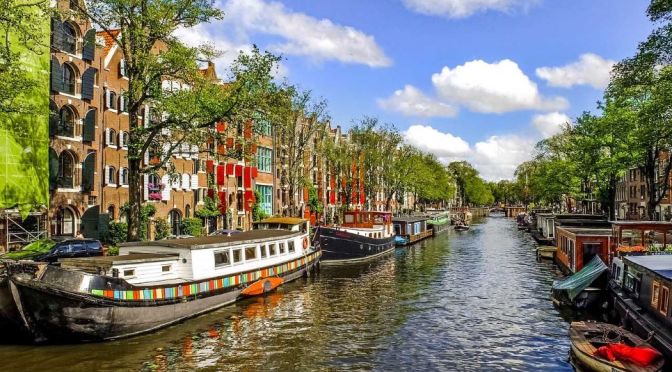
DW Euromaxx (May 25, 2024): Beyond Amsterdam’s famed canals, bikes, coffee shops, and the Red-Light District lies a deeper narrative of what it’s like to grow up and be young in the Dutch capital.
CHAPTERS 00:00 Intro 00:30 Living arrangements 01:56 Education 03:11 Heritage 04:24 Social life & hobbies 05:39 Legal milestones 06:55 Red-Light District 07:25 The pros and cons of living in Amsterdam
Meet Cosmo, a 19-year-old student and native Amsterdammer, as he shares his perspective on life in the city: how he spends his free time, gets around, and how Amsterdam has shaped him. #Amsterdam#Netherlands#YoungEuropeans
As birth rates plunge, many politicians want to pour money into policies that might lead women to have more babies. Donald Trump has vowed to dish out bonuses if he returns to the White House. In France, where the state already spends 3.5-4% of gdp on family policies each year, Emmanuel Macron wants to “demographically rearm” his country. South Korea is contemplating handouts worth a staggering $70,000 for each baby. Yet all these attempts are likely to fail, because they are built on a misapprehension.
Governments’ concern is understandable. Fertility rates are falling nearly everywhere and the rich world faces a severe shortage of babies. At prevailing birth rates, the average woman in a high-income country today will have just 1.6 children over her lifetime. Every rich country except Israel has a fertility rate beneath the replacement level of 2.1, at which a population is stable without immigration. The decline over the past decade has been faster than demographers expected.
At first glance, the world economy looks reassuringly resilient. America has boomed even as its trade war with China has escalated. Germany has withstood the loss of Russian gas supplies without suffering an economic disaster. War in the Middle East has brought no oil shock. Missile-firing Houthi rebels have barely touched the global flow of goods. As a share of global gdp, trade has bounced back from the pandemic and is forecast to grow healthily this year.









 DW Euromaxx


 Boomers Daily