LONDON REVIEW OF BOOKS – APRIL 2, 2026 PREVIEW


HARPER’S MAGAZINE: The latest issue features ‘Lessons From An Occupation’….
The story of an occupation by Daniel Brook
Has Russia won the war? by Olivier Kempf
What are conservative environmentalists fighting for? by Gaby Del Valle
On the fiction of siblings by Christine Smallwood
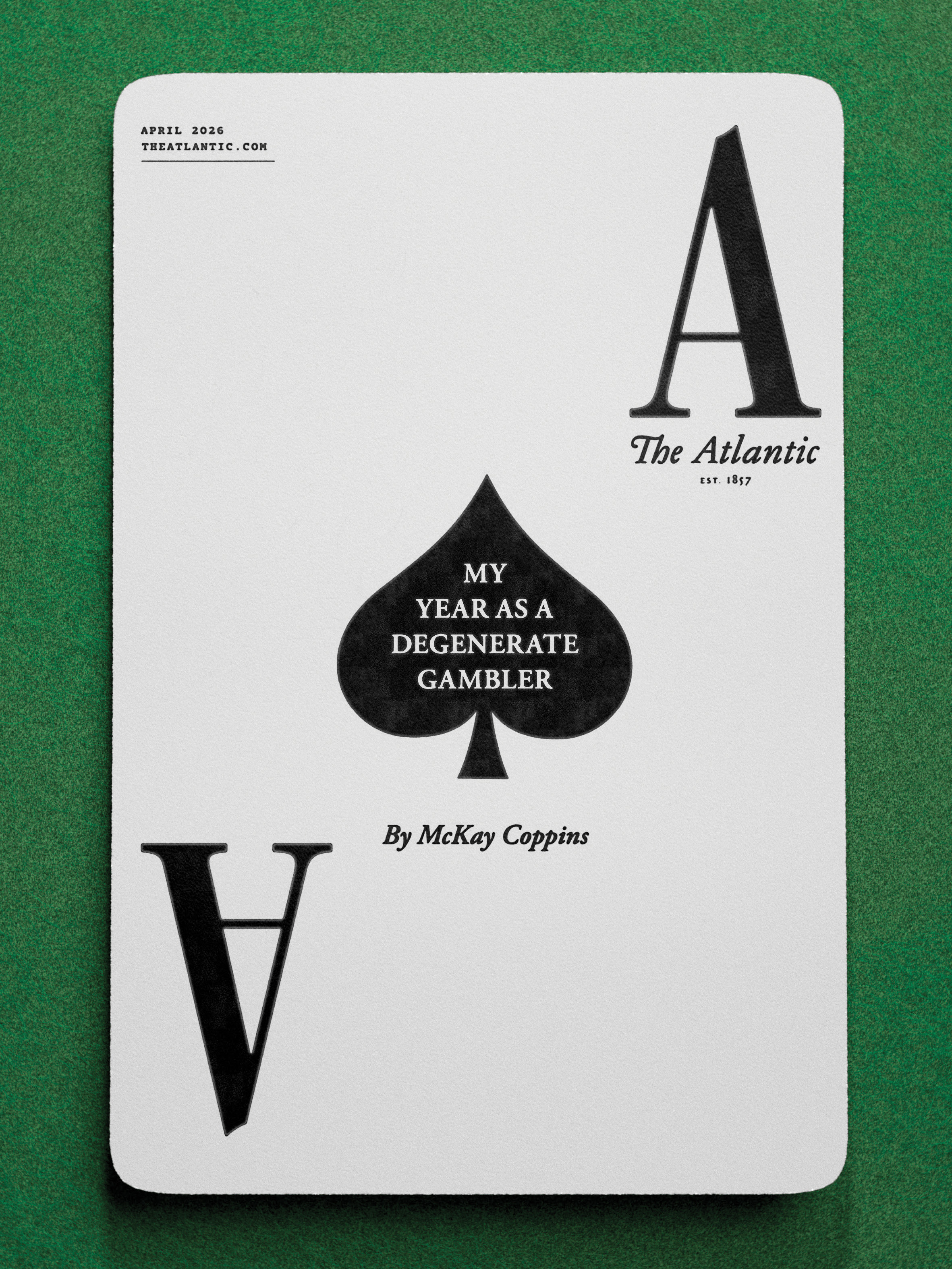
THE ATLANTIC MAGAZINE: The latest issue features ‘My Year as a Degenerate Gambler”…
My year as a degenerate gambler
On a Thursday evening in September, I excused myself from the family dinner table and slipped into my bedroom. I didn’t want my kids to see what I was about to do.
With the door locked behind me, I pulled out my phone and downloaded the DraftKings betting app. I felt a certain thrill as I typed in my debit-card information and deposited $500. The first game of the NFL season was a few minutes away. Anything seemed possible. …By McKay Coppins
The odds of being struck by lightning in America in a given year are one in 1.2 million. How does the experience reorient a person’s sense of chance, of fate? By Jacob Stern
Nearly a year after a national-security scandal erupted on my iPhone, no one in the Trump administration has faced consequences. By Jeffrey Goldberg
The WASPs risked their lives flying for the Army. But for decades, the U.S. government refused to recognize their military service. By Ellen Cushing
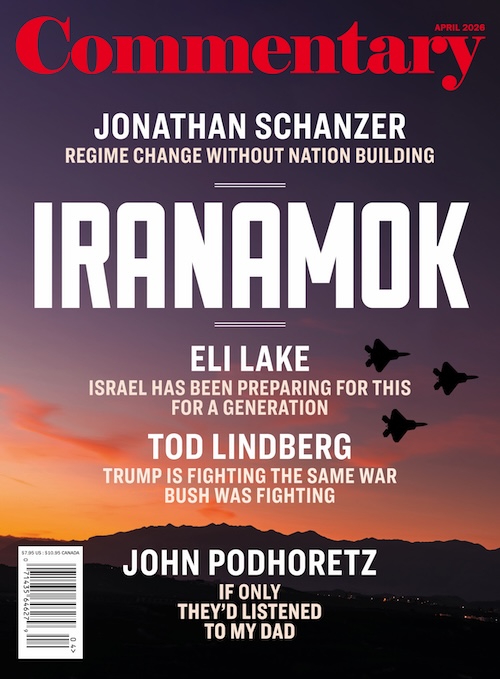
COMMENTARY MAGAZINE: The latest issue features ‘IRANAMOK’ – ISRAEL HAS BEEN PREPARING FOR THIS FOR A GENERATION.
America and Israel are at war with Iran, a fact that should be neither shocking nor surprising. Both countries have been targeted by the Islamic Republic since its inception in 1979. Both countries have engaged in painful battles with the regime’s proxies. Both nations battled Iran for 12 days last year; Israel targeted nuclear assets and other key military targets, paving the way for a crescendo of American strikes that hammered Iran’s nuclear capabilities.
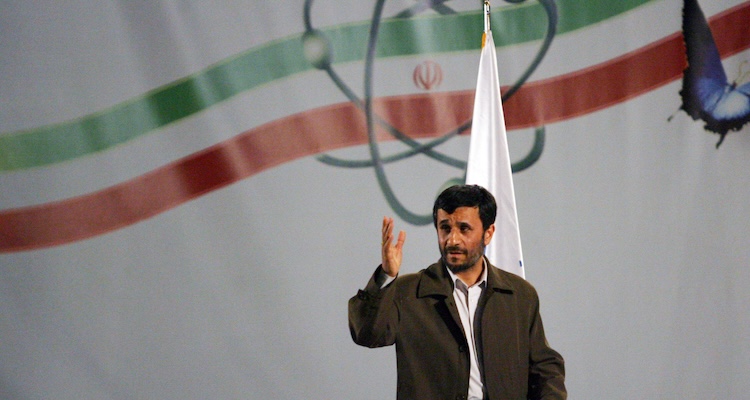
Editor’s Commentary

by Eli Lake
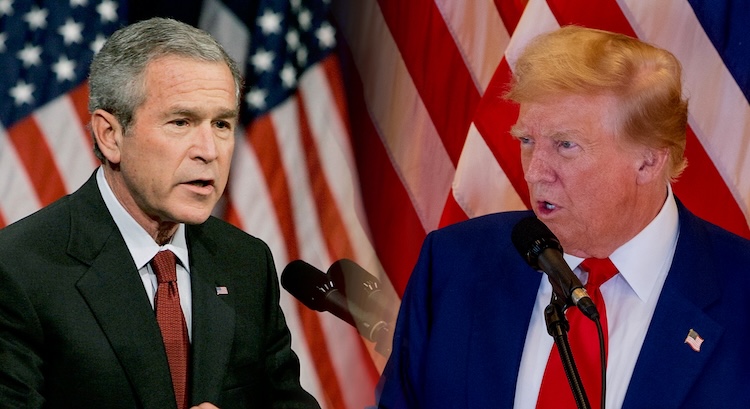
by Tod Lindberg

Washington Commentary
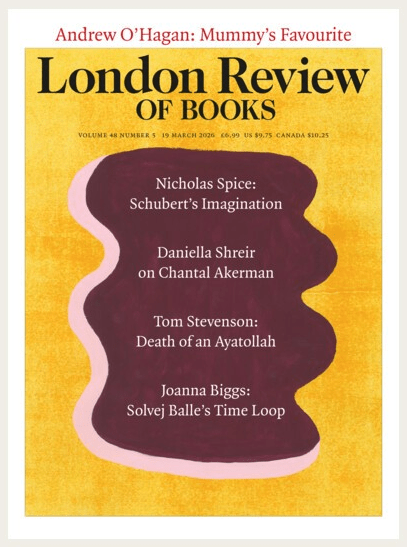
The attack launched on Iran by the US and Israel on 28 February was a textbook case of international aggression, justified in only the most cursory fashion by fictional Iranian threats and undertaken with no clear aims and no clear demands or terms. In announcing the war Donald Trump described it as a wholesale attack on both government and state. The US and Israel would ‘raze their missile industry to the ground’ and ‘annihilate their navy’. Benjamin Netanyahu called on Iranians to ‘come out to the streets and finish the job’. By Tom Stevenson
The late queen can be held responsible for much, but nobody could accuse her of seeming to enjoy her role. For the Yorks, however, enjoyment was everything, and the notion of royal sacrifice, arguably a red herring in the House of Saxe-Coburg and Gotha, was finally obliterated by their actions. By Andrew O’Hagan
As Stephen Greenblatt’s Dark Renaissance shows despite itself, it is not Marlowe’s life story that we still need, but his plays and poems: we might well want to avert our eyes from the bathetically dismal life of the man who wrote them. By Michael Dobson
Entitled: The Rise and Fall of the House of York by Andrew Lownie
Nobody’s Girl: A Memoir of Surviving Abuse and Fighting for Justice by Virginia Roberts Giuffre
Andrew O’Hagan
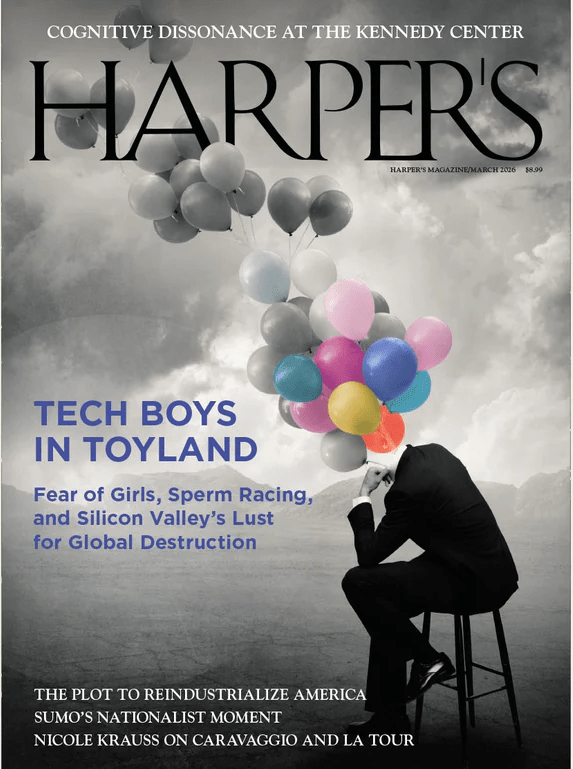
HARPER’S MAGAZINE: The latest issue features ‘Tech Boys In Toyland’- Fear of Girls, Sperm Racing, and Silicon Valley’s Lust for Global Destruction…
Tech’s new generation and the end of thinking by Sam Kriss
Inside the movement to reindustrialize—and rearm—the country by Maddy Crowell
Caravaggio, La Tour, and the art of attention by Nicole Krauss

COMMENTARY MAGAZINE: The latest issue features ‘We Jews Have The Honor Of Being Hated’…
Jews must cease hoping to solve anti-Semitism and make their own way forward by Bret Stephens
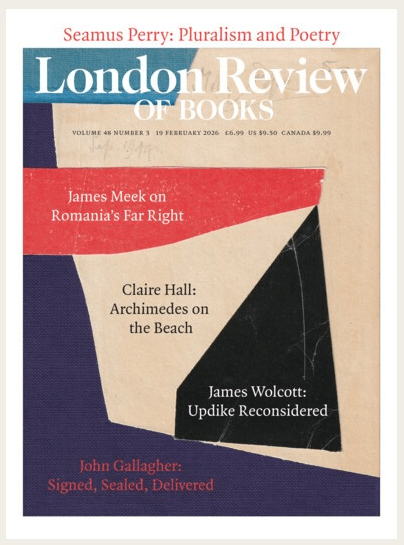
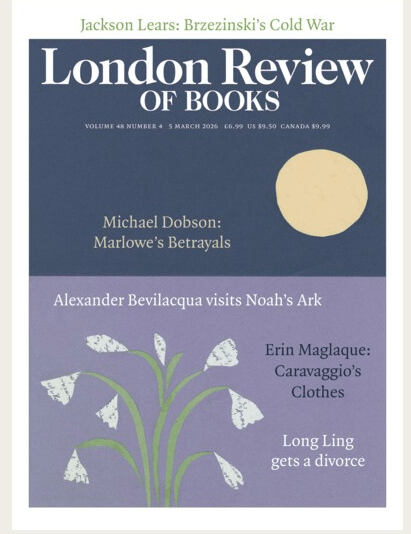
LONDON REVIEW OF BOOKS: The latest issue features Seamus Perry: Pluralism and Poetry; James Wolcott: Updike Reconsidered; James Meek on Romania’s Far Right;
‘Art arises,’ Auden writes, ‘out of our desire for both beauty and truth and our knowledge that they are not identical.’ We want things two ways, which analysis says we cannot have; but for a moment a poem lets us, in a way that discursive prose, for instance, cannot.
Alexandre Kojève described his book on Hegel as ‘very bad’, and he had a point. His take on The Phenomenology of Spirit is not only misleading but slapdash, dogmatic, frivolous and flamboyant. The characters he filled it with, from the Master and Slave to the Sensualist and the Sage, sound rather like Mr Worldly Wiseman, Madam Bubble and Mr Sagacity in Pilgrim’s Progress.

 Boomers Daily