Tag Archives: Earth

Ocean Views: The Hidden World Of Islands (4K)

Oceanic Islands make up a sixth of all land on Earth. In the Pacific alone, more than 25,000 islands are scattered amidst the endless blue. From Hawaii’s rocky mountains, to coral atolls of the Maldives, each hosting unique communities of life and species found nowhere else on Earth. Ecosystems that would not exist if not for the powerful forces that pulled these mighty rocks from the abyss. Volcanism, and tectonics.

Chapters:
00:00
– An Introduction to Oceanic Islands 01:39 – Chapter 1: Life and Death of an Island – The Abundance of Islands 02:34 – Chapter 1: Life and Death of an Island – How Islands Form 03:26 – Chapter 1: Life and Death of an Island – How Coral Atolls Form 05:04 – Chapter 2: A Land of Opportunity – The Arrival of Life at Islands 07:48 – Chapter 2: A Land of Opportunity – Adaptive Radiation 08:52 – Chapter 2: A Land of Opportunity – The Story of Darwin’s Finches 09:33 – Chapter 2: A Land of Opportunity – A Scale Model of Evolution 11:37 – Chapter 2: A Land of Opportunity – The Lemurs of Madagascar 12:57 – Chapter 3: Life Beneath the Waves – The Island Mass Effect 14:02 – Chapter 3: Life Beneath the Waves – The Galapagos Humboldt Current 15:02 – Chapter 3: Life Beneath the Waves – The Importance of Mangroves 16:14 – Conclusion: The Importance of Islands 17:19 – Message from our Sponsor

Earth Day – April 22, 2021: ‘Our Planet, Our Home’

NASA Earth science studies our planet all day, every day. By tracking the movement of our natural systems – and the effect of human activity on them – we can understand the patterns, causes and results of climate change on the elemental activities that sustain us.

On Earth Day, April 22, we take time to celebrate this wondrous planet with special discussions, events (virtual) and activities. Like our satellites, however, NASA’s Earth science goes on year-round, and we continuously create videos, activities, news and more to tell the story of what’s happening on and with our planet – and all always offered free and open to the public.

For the 50th Anniversary of Earth Day in 2020, NASA created a special package of materials designed to mark Earth Day at Home. This included activities, videos, special programs and other materials in English and Spanish. You can find them all archived here.

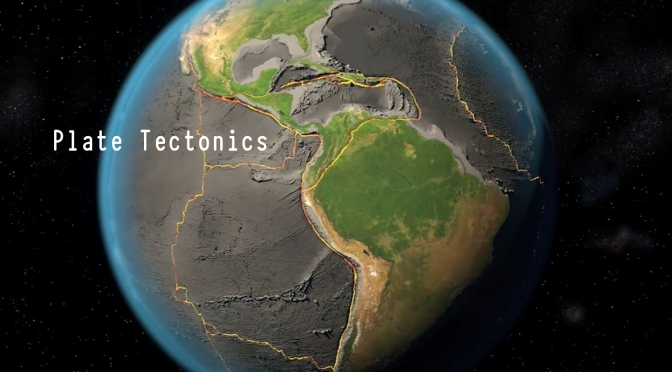
Views: ‘Plate Tectonics – Keys To Geologic History’

Plate tectonics is the narrative arc that ties every episode in Earth’s geologic history together. Thanks to the magnetic compasses hidden in volcanic rocks, scientists know where each tectonic jigsaw piece has been over eons of time. They can replicate the plates’ odysseys in beautiful and precise simulations that reveal the destruction and creation of Earth’s many faces. Lucía Pérez-Díaz, a geologist at Oxford, studies our planet’s stunning ability to constantly change its face.

Science Podcast: Radar Satellites Measuring The Earth, Random Numbers

First up, science journalist Julia Rosen talks with host Sarah Crespi about a growing fleet of radar satellites that will soon be able to detect minute rises and drops of Earth’s surface—from a gently deflating volcano to a water-swollen field—on a daily basis.

Sarah also talks with Hui Cao, a professor of applied physics at Yale University, about a new way to generate enormous streams of random numbers faster than ever before, using a tiny laser that can fit on a computer chip.

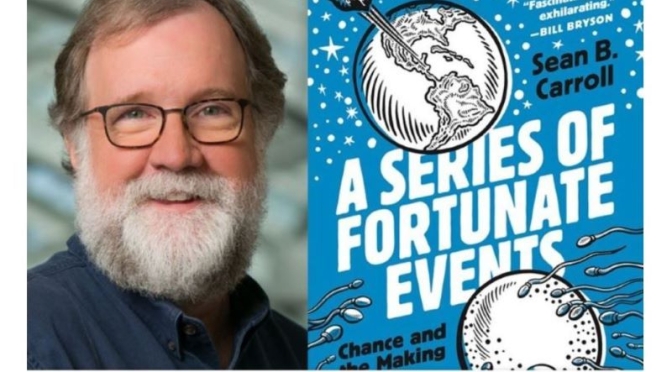
Top Lectures: ‘A Series Of Fortunate Events’ By Biologist Sean B. Carroll

Is simple chance the source of all the beauty and diversity we see in the world? Sean B. Carroll tells the story of the awesome power of chance. Sean’s book “A Series of Fortunate Events” is available now: https://geni.us/mPPrdQH

Watch the Q&A: https://youtu.be/adrqThhSgYg

Why is the world the way it is? How did we get here? Does everything happen for a reason or are some things left to chance? Philosophers and theologians have pondered these questions for millennia, but startling scientific discoveries over the past half century are revealing that we live in a world driven by chance.

Sean B. Carroll is an award-winning scientist, writer, educator, and film producer. He is Vice President for Science Education at the Howard Hughes Medical Institute and the Balo-Simon Chair of Biology at the University of Maryland. His books include The Serengeti Rules (Princeton), Brave Genius, and Remarkable Creatures, which was a finalist for the National Book Award. He lives in Chevy Chase, Maryland. This talk and Q&A was recorded by the Royal Institution on 6 October 2020.

Science Podcast: Shallow Pool Origins For Life On Earth, ‘Covidization’

How water chemistry is shifting researchers’ thoughts on where life might have arisen, and a new model to tackle climate change equitably and economically.

In this episode:

00:46 A shallow start to life on Earth?

It’s long been thought that life on Earth first appeared in the oceans. However, the chemical complexities involved in creating biopolymers in water has led some scientists to speculate that shallow pools on land were actually the most likely location for early life.

News Feature: How the first life on Earth survived its biggest threat — water

07:44 Coronapod

The COVID-19 pandemic has massively shifted the scientific landscape, changing research and funding priorities across the world. While this shift was necessary for the development of things like vaccines, there are concerns that the ‘covidization’ of research could have long-term impacts on other areas of research.

News: Scientists fear that ‘covidization’ is distorting research

20:45 Research Highlights

The Hayabusa2 mission successfully delivers a tiny cargo of asteroid material back to Earth, and a team in China claims to have made the first definitive demonstration of computational ‘quantum advantage’.

Nature News: Physicists in China challenge Google’s ‘quantum advantage’

22:38 Calculating carbon

Limiting carbon emissions is essential to tackling climate change. However, working out how to do this in a way that is fair to nations worldwide is notoriously difficult. Now, researchers have developed a model that gives some surprising insights in how to equitably limit carbon.

Research Article: Bauer et al.

News and Views: Trade-offs for equitable climate policy assessed

29:08 Briefing Chat

We discuss some highlights from the Nature Briefing. This time, bioluminescent Australian animals, and the collapse of the Arecibo telescope.

Video Trailer: ‘A Perfect Planet – BBC Earth’ With David Attenborough

A Perfect Planet is an awe-inspiring exploration of Earth’s power and fragility.

PERFECT PLANET

Planet Earth is perfect. It orbits at the perfect distance from the sun; it tilts at just the right angle and has a decent sized moon to hold it in place. On top of that, the day-to-day workings of the planet naturally serve to nurture animals and plants.

This five part series will show how the forces of nature – weather, ocean currents, solar energy and volcanoes – drive, shape and support Earth’s great diversity of life. In doing so, it will reveal how animals are perfectly adapted to whatever the environment throws at them.

Earth & Atmosphere Video: NASA Spacecraft Uncover Mystery Of “Aurora Beads”

A special type of aurora, draped east-west across the night sky like a glowing pearl necklace, is helping scientists better understand the science of auroras and their powerful drivers out in space. Known as auroral beads, these lights often show up just before large auroral displays, which are caused by electrical storms in space called substorms.

Until now, scientists weren’t sure if auroral beads are somehow connected to other auroral displays as a phenomenon in space that precedes substorms, or if they are caused by disturbances closer to Earth’s atmosphere. But powerful new computer models, combined with observations from NASA’s Time History of Events and Macroscale Interactions during Substorms – THEMIS – mission, have provided the first direct evidence of the events in space that lead to the appearance of these beads and demonstrated the important role they play in our local space environment.

Read more: https://www.nasa.gov/feature/aurora-m…

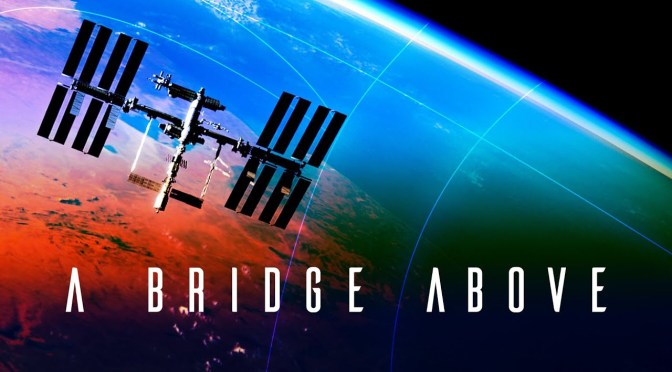
Technology: “A Bridge Above – 20 Years Of The International Space Station” (NASA Video)

“What if we built a bridge, between and above all nations, to jointly discover the galaxy’s great unknowns?” Join us this fall as we prepare to celebrate the 20th anniversary of the the International Space Station. As a global endeavor, 240 people from 19 countries have visited the unique microgravity laboratory, which has hosted more than 2,800 research investigations from scientists in over 100 nations.

The International Space Station is a modular space station in low Earth orbit. The ISS program is a multi-national collaborative project between five participating space agencies: NASA, Roscosmos, JAXA, ESA, and CSA. It is an international collaborative effort between multiple countries.