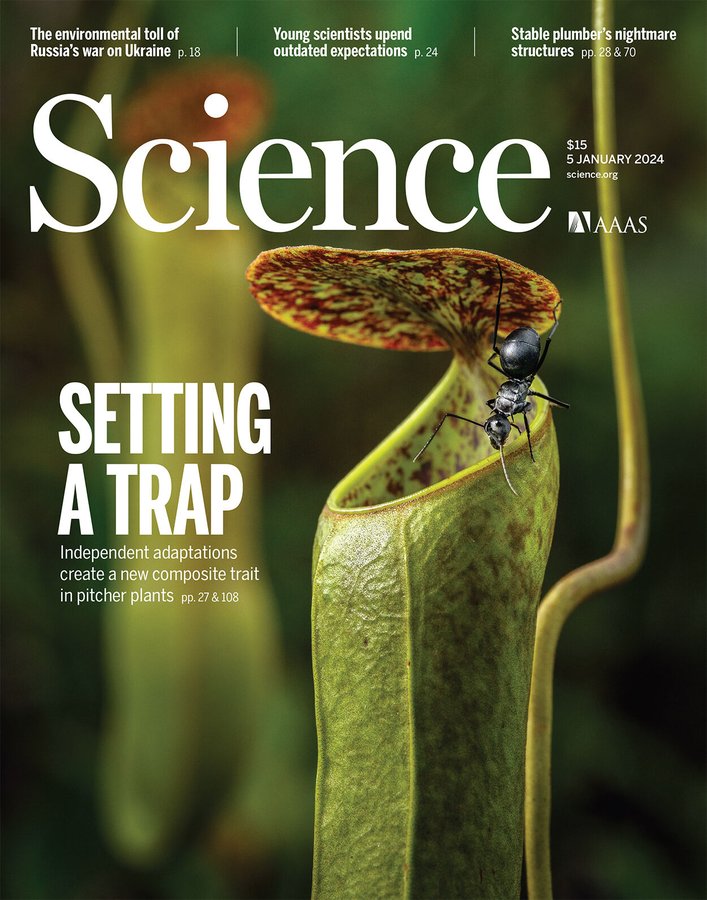
Science Magazine – December 21, 2023: The new issue featuresa carnivorous Nepenthes gracilis pitcher plant luring an ant into a precarious position under the roof-like trap lid.
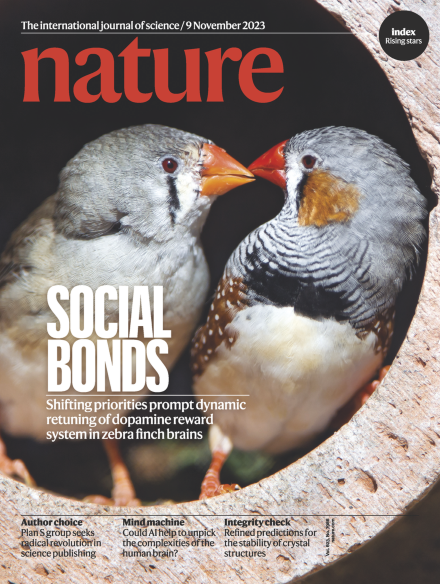
nature Magazine – November 9, 2023:The latest issue cover features the changes in dopamine signals in male zebra finches (depicted on the cover), as they engage in activities such as drinking, song evaluation and courting. The researchers found that dopamine responses are dynamically adjusted based on the birds’ current priorities.
Podcast Producer Meagan Cantwell talks with Pamela Soltis, a professor and curator with the Florida Museum of Natural History at the University of Florida and the director of the University of Florida Biodiversity Institute, about how natural collections at museums can be a valuable resource for understanding future disease outbreaks.
Read the National Academies of Sciences, Engineering, and Medicine report Biological Collections: Ensuring Critical Research and Education for the 21st Century. This segment is part of our coverage of the 2021 AAAS Annual Meeting.
Also on this week’s show, Katharina Schmack, a research associate at Cold Spring Harbor Laboratory, joins producer Joel Goldberg to talk about giving mice a quiz that makes them hallucinate. Observing the mice in this state helps researchers make connections between dopamine, hallucinations, and mental illness.
“On a high-sugar diet, we find that the fruit flies’ dopaminergic neurons are less active, because the high sugar intake decreases the intensity of the sweetness signal that comes from the mouth,” Dus said. “Animals use this feedback from dopamine to make predictions about how rewarding or filling a food will be. In the high-sugar diet flies, this process is broken—they get less dopamine neuron activation and so end up eating more than they need, which over time makes them gain weight.”
It is well known that consuming food and drink high in sugar is not great for us, but scientists are continuing to unravel the intricacies of how the sweet stuff drives negative health outcomes. The latest finding comes from researchers at the University of Michigan, who through studies in fruit flies have found that excess amounts of sugar can shut down crucial neural circuits linked to regulating satiety, possibly leading to overeating in humans.
From a NeuroscienceNews.com online release article (01/02/20):
During the years 1976 through 1980, 15% of U.S. adults were obese. Today, about 40%of adults are obese. Another 33% are overweight.
“But, of course, food is now abundant, and our next meal is as close as the kitchen, or the nearest fast-food drive-through, or right here on our desk. Often, these foods are high in fats, sugars, and therefore calories, and that’s why they taste good. It’s easy to overconsume, and, over time, this takes a toll on our health.”
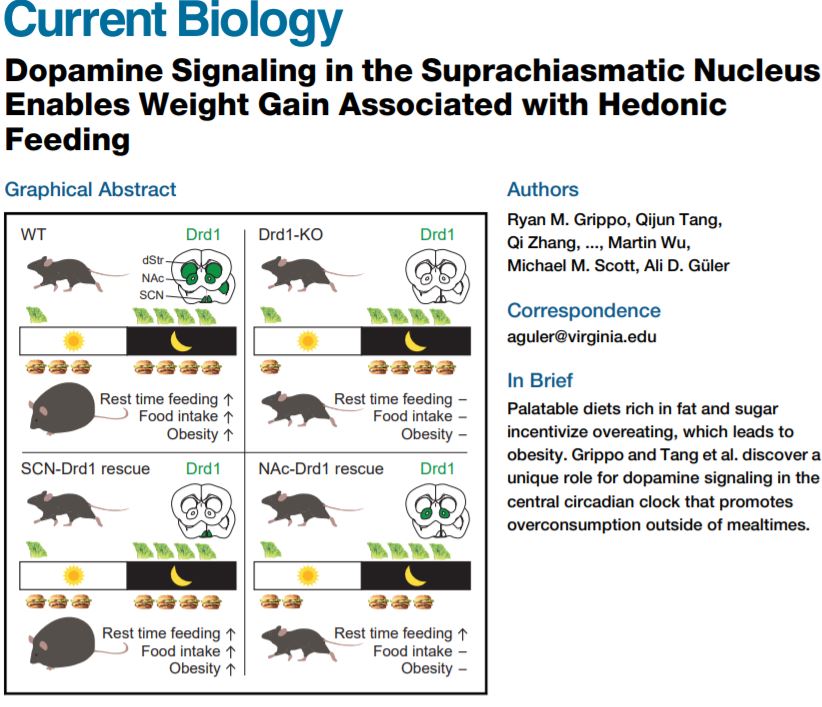
Dopamine Signaling in the Suprachiasmatic Nucleus Enables Weight Gain Associated with Hedonic Feeding – Current Biology January 2, 2020
In a study published Thursday in the journal Current Biology, Güler and his colleagues demonstrate that the pleasure center of the brain that produces the chemical dopamine, and the brain’s separate biological clock that regulates daily physiological rhythms, are linked, and that high-calorie foods – which bring pleasure – disrupt normal feeding schedules, resulting in overconsumption. Using mice as study models, the researchers mimicked the 24/7 availability of a high-fat diet, and showed that anytime snacking eventually results in obesity and related health problems.






 “On a high-sugar diet, we find that the fruit flies’ dopaminergic neurons are less active, because the high sugar intake decreases the intensity of the sweetness signal that comes from the mouth,” Dus said. “Animals use this feedback from dopamine to make predictions about how rewarding or filling a food will be. In the high-sugar diet flies, this process is broken—they get less dopamine neuron activation and so end up eating more than they need, which over time makes them gain weight.”
 Boomers Daily