Tag Archives: Culture

Politics: The Guardian Weekly – December 22, 2023

Image

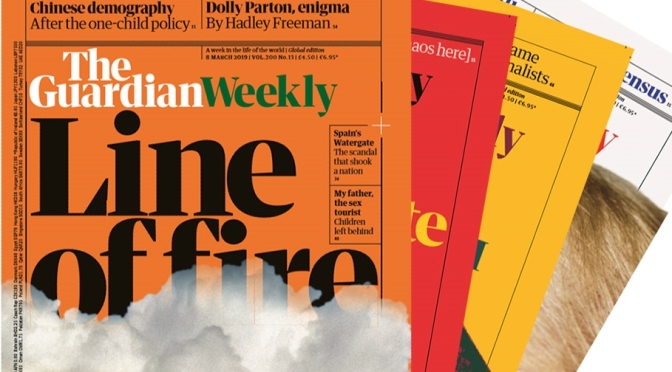
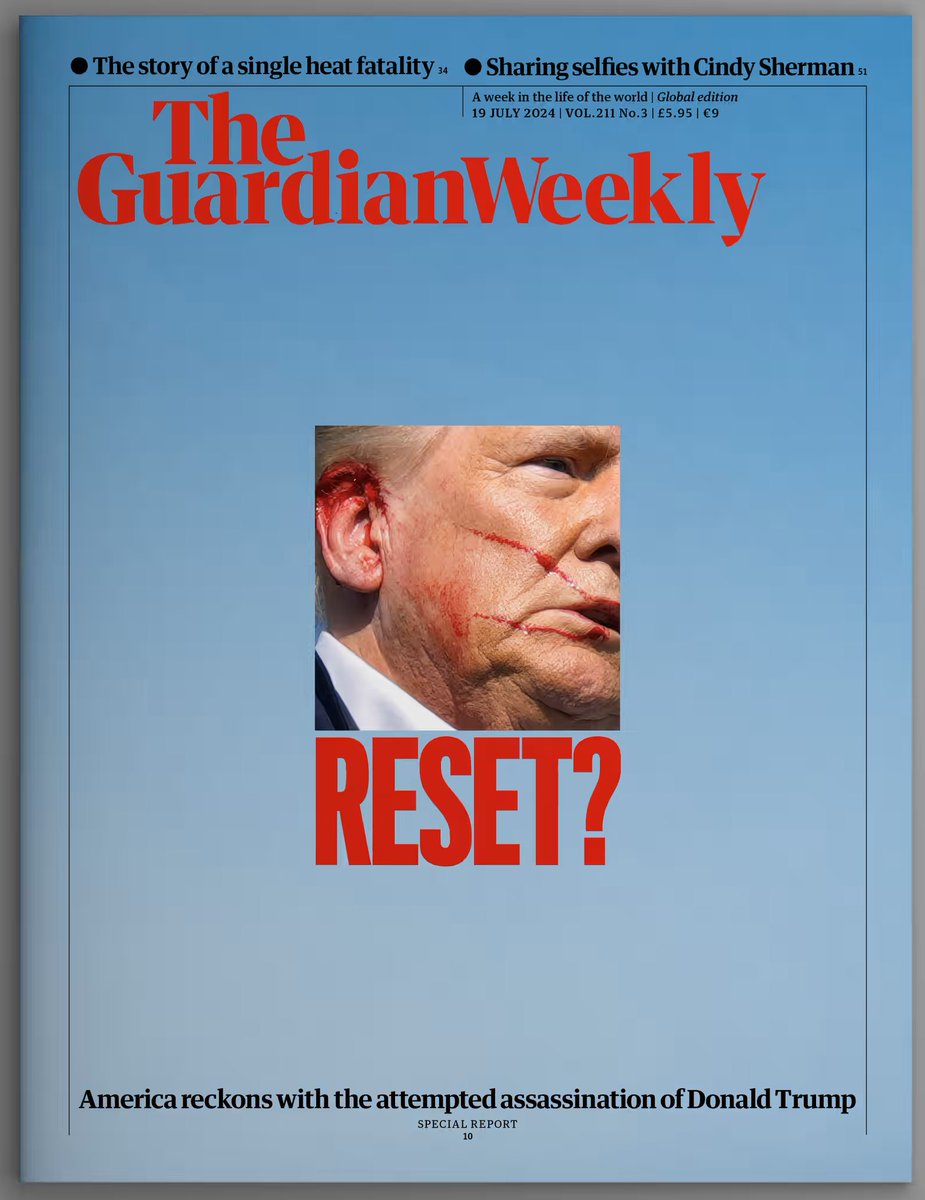
The Guardian Weekly (December 20, 2023) – The new issue features Two wars and a growing divide between the global west and south. Plus: Best culture of 2023.

World risks new age of empires where might makes right, warns Estonian foreign minister

Margus Tsahkna

International institutions seem powerless in face of Russia’s invasion of Ukraine, writes Margus Tsahkna, arguing they ‘cannot survive unchanged’

The international rules-based system needs urgent and fundamental change if it is not to collapse, the Estonian foreign minister has said, calling for “a new global conversation” to begin on how to reform the UN and the international criminal court.

Writing in the Guardian on Wednesday, Margus Tsahkna says Russia’s invasion of Ukraine has highlighted flaws in the system that risk fatally undermining people’s faith in it.

_______________________________

Elsewhere, we shouldn’t forget there are plenty of reasons for hope. Having been expected to deliver little, the Cop28 climate summit turned out to be full of surprises – but was the final deal on fossil fuels just a ruse, asks environment editor Fiona Harvey.

Writers from the Guardian’s global development team reflect on the inspirational figures they met in 2023, from leaders to dancers to dads, who proved that humanity still has much to give. And leading conservationists and scientists tell us about the mysteries of the planet they wish they better understood.

The review of 2023 continues with the Observer’s selection of those we lost, recalled with affection by their friends. There’s also a dazzling range of images courtesy of the Guardian agency photographers of the year.

Last but not least, the Guardian critics’ top 10 rundowns of the best film and music of 2023, topped off with the Guardian Weekly team’s now-legendary television selections of the year.

Previews: The New Yorker Magazine – Dec 25, 2023

A colorless New York City street exists above a psychedelic alternate reality.

The New Yorker – December25, 2023 issue: The new issue‘s cover features “The Flip Side” – The annual Cartoons & Puzzles Issue, inhabitants of a colorless New York coexist with their doppelgängers in a topsy-turvy reality.

Can Crosswords Be More Inclusive?

Drawing of a man with a crossword head.

The puzzles spread from the United States across the globe, but the American crossword today doesn’t always reflect the linguistic changes that immigration brings.

By Natan Last

Root around in the alphanumeric soup of the U.S. visa system for long enough and you’ll discover the EB-1A, sometimes known as the Einstein visa. Among the hardest permanent-resident visas to obtain, it is reserved for noncitizens with“extraordinary ability.” John Lennon got a forerunner of it, in 1976, after a deportation scare that could have sent him back to Britain. (His case, which spotlighted prosecutorial discretion in immigration law, forms the legal basis for the Deferred Action for Childhood Arrivals program, or daca.) Modern-day recipients include the tennis star Monica Seles and—in a tasteless bit of irony—the Slovenian model Melania Knauss, in 2001, four years before she became Melania Trump. 

The World’s Fastest Road Cars—and the People Who Drive Them

A Bugatti Chiron Super Sport near the companys factory in Molsheim France.

“Hypercars” can approach or even exceed 300 m.p.h. Often costing millions of dollars, they’re ostentatious trophies—and sublime engines of innovation.

By Ed Caesar

A Bugatti Chiron Super Sport, near the company’s factory, in Molsheim, France. The car, which has lusciously curved side panels, has been produced in a limited run of five hundred. Although its engine is as big as a Shetland pony, the interior is eerily quiet.

Return to New York City

Return to New York City

Revisiting old haunts leads to revelations about “real life.”

By Julia Wertz

Travel & Culture Books: “Mexico City” (Assouline)

Assouline Publishing (December 2023) – With a history dating back to the fourteenth century, Mexico City blends indigenous pre-Hispanic roots with colonial architecture and Spanish-baroque influences.

Mexico City

This unique fusion, crafted from local materials like cantera and tezontle, inspires artists and architects alike. Iconic structures like Diego Rivera’s Anahuacalli Museum and Juan O’Gorman’s Cave House proudly embody the city’s rich history.

Today, Mexico City serves as a vibrant backdrop for renowned filmmakers such as Alejandro González Iñárritu, Alfonso Cuarón, and Michel Franco. Discover a city of wonders, where history and creativity come to life.

ABOUT THE AUTHOR

Born in Mexico City, Aleph Molinari is an editor, writer, art director and photographer. He is the co–editor in chief of Purple magazine, as well as a contributor to Materia Press, Art Observed and other publications. His work focuses on materializing culture through publications, exhibitions and campaigns. Among his projects, he co-curated the Purple Festival at the Palais Galliera in Paris, created a botanical sculpture for Soundwalk Collective and Patti Smith’s exhibition Evidence at the Centre Pompidou, and worked on the programming for Soundwalk Collective’s project The Third Eye at Karl Lagerfeld’s 7L Library. He lives in Paris.

Anfisa Vrubel is an editor, writer and researcher whose work focuses on the intersection of art, culture and politics. Vrubel is an editor-at-large at Art Observed and Purple magazine, where she contributes original features and interviews with artists and top thinkers in the fields of politics, ecology, art and culture. After studying government at Harvard, she pursued an editorial career, working for publications such as The Brooklyn Rail and its offshoot publication, The River Rail, which is devoted to environmental art and criticism. Vrubel grew up in New York City and lives between there and Mexico City.See all books by Aleph Molinari, Anfisa Vrubel.

READ MORE

Artisans: Metalwork In Ladakh, Northern India

NOWNESS Films (December 11, 2023) – Travelling to India’s northernmost point, at the western tip of the Himalayas, the Ladakh region stands in a remote corner of the planet, flanked by towering peaks.

Deeply entwined with its cultural heritage, the mountainous territory carries a historic tradition of craft metalwork – as a center for the production of hand-crafted ornaments, teapots and spiritual artefacts, destined for temples, and held in high regard by India’s king dynasties.

But the craft has entered a point of decline, continued by just a handful of artisanal metalworkers who fight for its preservation.…

Previews: The New Yorker Magazine – Dec 18, 2023

Olimpia Zagnolis “Let There Be Lights”

The New Yorker – December18, 2023 issue: The new issue‘s cover features Olimpia Zagnoli’s “Let There Be Lights” – The artist discusses strands of brilliance amid dark days.

All the Carcinogens We Cannot See

A grid of cells multiplying.

We routinely test for chemicals that cause mutations. What about the dark matter of carcinogens—substances that don’t create cancer cells but rouse them from their slumber?

By Siddhartha Mukherjee

In the nineteen-seventies, Bruce Ames, a biochemist at Berkeley, devised a way to test whether a chemical might cause cancer. Various tenets of cancer biology were already well established. Cancer resulted from genetic mutations—changes in a cell’s DNA sequence that typically cause the cell to divide uncontrollably. These mutations could be inherited, induced by viruses, or generated by random copying errors in dividing cells. They could also be produced by physical or chemical agents: radiation, ultraviolet light, benzene. One day, Ames had found himself reading the list of ingredients on a package of potato chips, and wondering how safe the chemicals used as preservatives really were.

The Troubled History of the Espionage Act

SECRET stamped atop the United States emblem.

The law, passed in a frenzy after the First World War, is a disaster. Why is it still on the books?

By Amy Davidson Sorkin

In March, 1940, Edmund Carl Heine, a forty-nine-year-old American automobile executive, reached an understanding with a company then known as Volkswagenwerk GmbH. Heine, who immigrated to the United States from Germany as a young man, had spent years at Ford, first in Michigan and then in its international operations in South America and Europe, landing finally in Germany. In 1935, two years after the Nazi regime came to power, Ford fired him, for reasons that are unclear. Heine next signed on with Chrysler, in Spain, but the Spanish Civil War was tough on the car business. And so he was out of a job again.

Travel & Culture In Spain: Salvador Dali’s Figueres

The Dalí Theatre-Museum in Figueres

The Times and The Sunday Times (December 10, 2023) Inside Salvador Dalí’s childhood home — and his old haunts. Our writer visits an immersive new museum at the artist’s striking childhood home in Figueres and takes a tour of his favourite spots in northeastern Spain

This northeasterly nook of Catalonia’s Costa Brava, between the Pyrenees to the north and the Mediterranean to the south, was the landscape that Dalí called his “ongoing inspiration” and is a recurring motif throughout his work.

While the Casa Natal Dalí took me on a tour of Dalí’s life, its near neighbour, the gigantic Dalí Theatre-Museum (£15; salvador-dali.org), just five minutes’ walk away, was designed by the maestro himself. It opened in 1974 and showcases his style at its most eccentric, not to say egocentric.

With its pink façade and giant white eggs on its roof, like decorations on a cake, this is where you’ll find not only the Mae West “lips” sofa, but also numerous grandiose paintings and drawings, trompe l’oeils and painted ceilings — as well as Dalí’s tomb in the crypt.

READ MORE

Arts/Politics: The Atlantic Magazine – January 2024

Image

The Atlantic Magazine – December 7, 2023: The latest January/February 2024 issue features ‘IF TRUMP WINS’ – A second Trump presidency won’t just mirror the first. It will be much worse. In The Atlantic’s January/February issue, two dozen writers warn what could happen if Donald Trump is reelected, from destroying the rule of law to abandoning NATO and reshaping the international order.

TRUMP ISN’T BLUFFING

A black-and-white photo of the lower half of Trump's face while he's speaking

We’ve become inured to his rhetoric, but his message has grown darker.

By David A. Graham

“We pledge to you that we will root out the Communists, Marxists, fascists, and the radical-left thugs that live like vermin within the confines of our country, that lie and steal and cheat on elections,” Donald Trump said this past November, in a campaign speech that was ostensibly honoring Veterans Day. “The real threat is not from the radical right; the real threat is from the radical left … The threat from outside forces is far less sinister, dangerous, and grave than the threat from within. Our threat is from within.”

CIVIL RIGHTS UNDONE

black-and-white photo of Bill Barr and Ben Carson conferring with each other with audience in background
Bill Barr and Ben Carson: not fans of disparate-impact theory

How Trump could unwind generations of progress

By Vann R. Newkirk II

In late 2020, even as the instigators of insurrection were marshaling their followers to travel to Washington, D.C., another kind of coup—a quieter one—was in the works. On December 21, in one of his departing acts as attorney general, Bill Barr submitted a proposed rule change to the White House. The change would eliminate the venerable standard used by the Justice Department to handle discrimination cases, known as “disparate impact.” The memo was quickly overshadowed by the events of January 6, and, in the chaotic final days of Donald Trump’s presidency, it was never implemented. But Barr’s proposal represented perhaps the most aggressive step the administration took in its effort to dismantle existing civil-rights law. Should Trump return to power, he would surely attempt to see the effort through.

Trump’s Plan to Police Gender

His campaign is promising a more repressive and dangerous America.

A War on Blue America

In a second term, Trump would punish the cities and states that don’t support him.

Previews: The New Yorker Magazine – Dec 11, 2023

A delivery man pushes packages across a roof toward a chimney.

The New Yorker – December11, 2023 issue: The new issue‘s cover features Barry Blitt’s “Special Delivery” – The artist discusses holiday shopping and his prized Popeye punching bag.

What Happened When the U.S. Failed to Prosecute an Insurrectionist Ex-President

Trump looking at a statue of Jefferson Davis.

After the Civil War, Jefferson Davis, the President of the Confederacy, was to be tried for treason. Does the debacle hold lessons for the trials awaiting Donald Trump?

By Jill Lepore

Jefferson Davis, the half-blind ex-President of the Confederate States of America, leaned on a cane as he hobbled into a federal courthouse in Richmond, Virginia. Only days before, a Chicago Tribune reporter, who’d met Davis on the boat ride to Richmond, had written that “his step is light and elastic.” But in court, facing trial for treason, Davis, fifty-eight, gave every appearance of being bent and broken. A reporter from Kentucky described him as “a gaunt and feeble-looking man,” wearing a soft black hat and a sober black suit, as if he were a corpse. He’d spent two years in a military prison. He wanted to be released. A good many Americans wanted him dead. “We’ll hang Jeff Davis from a sour-apple tree,” they sang to the tune of “John Brown’s Body.”

The Inside Story of Microsoft’s Partnership with OpenAI

A robot made out a computer keyboard.

The companies had honed a protocol for releasing artificial intelligence ambitiously but safely. Then OpenAI’s board exploded all their carefully laid plans.

By Charles Duhigg

At around 11:30 a.m. on the Friday before Thanksgiving, Microsoft’s chief executive, Satya Nadella, was having his weekly meeting with senior leaders when a panicked colleague told him to pick up the phone. An executive from OpenAI, an artificial-intelligence startup into which Microsoft had invested a reported thirteen billion dollars, was calling to explain that within the next twenty minutes the company’s board would announce that it had fired Sam Altman, OpenAI’s C.E.O. and co-founder. It was the start of a five-day crisis that some people at Microsoft began calling the Turkey-Shoot Clusterfuck.

CULTURE: FRANCE-AMÉRIQUE MAGAZINE – DECEMBER 2023

Image
Opens profile photo

France-Amérique Magazine – December 1, 2023 –  The new issue features the foundations that are keeping the French-American friendship alive, from New Orleans to Washington D.C. to Paris, and pay a visit to the newly renovated Cartier Mansion – the Fifth Avenue palace where Pierre Cartier mingled with celebrities, titans of industry, and U.S. presidents. Also in this issue, read about the success of Rémy Martin in America as the iconic Cognac house is turning 300, and discover why, since the pandemic, so many Americans are putting up the “For Sale” sign and hopping on a plane to Paris, Lyon, or Marseille!

AU REVOIR, AMERICA

Is the Grass Greener on the Other Side of the Atlantic?

For ideological, financial, or health care reasons, more and more Americans are moving to France (12,200 first-time residence granted in 2022, up 9,214 on 2021). But la vie is not always en rose.

By Anthony Bulger

RÉMY MARTIN

A French-American Heritage

Three hundred years after it was founded, the Cognac house renowned for its flagship Louis XIII sells half its bottles in America while continuing to uphold its tradition of excellence.

By Benoît Georges

THE FOUNDATIONS – of French-American Friendship

From Washington D.C. to New York City and from New Orleans to Paris, many philanthropic organizations continue to nurture the bonds connecting France and the United States through history, politics, economics, language, and culture.

By Roland Flamini

PIERRE CARTIER – The Man Who Made Jewelry for American Presidents

In the early 20th century, the three grandsons of the founder of Cartier were busy building their family name. Louis was in Paris, Jacques in London, and Pierre in New York City. To sell his jewelry in the United States, the latter sibling mingled with celebrities, titans of industry, and presidents, and created a network of alliances.

By Diane de Vignemont

Politics: The Guardian Weekly – December 1, 2023

Image

The Guardian Weekly (November 29, 2023) – The new issue features the ceasefire between Israel and Hamas may have been weeks in the making – as detailed this week by Julian Borger and Ruth Michaelson – and led to the release of dozens of hostages on either side, but behind the scenes there was little expectation that it would lead to a longer-term pause in hostilities.

In a special report, almost two months after the deadliest attack on Israel in its 75-year history and as the world focuses on its retaliatory bombardment of Gaza that has seen around 14,000 people killed, Jonathan Freedland finds a country still convulsed with rage and sorrow, unable to see the pain of its Palestinian neighbours as it faces an uncertain future. As one senior Israeli military figure remarked: “It’s not yet post-traumatic stress disorder. We’re still in it.”

The far-right politician Geert Wilders stunned onlookers by finishing well ahead of the field in the Dutch election last week. But race riots in Ireland, a country previously thought immune to such extremism, were equally shocking. Rory CarrollLisa O’Carroll and Jon Henley report on contrasting manifestations of the rise of the far right across Europe.