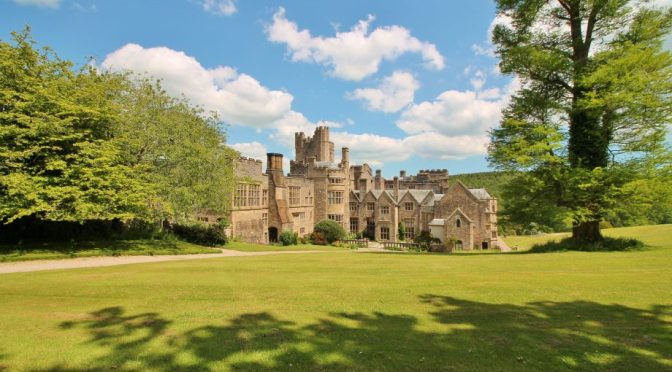
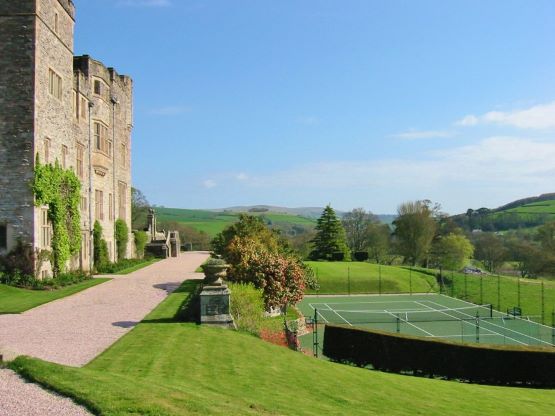
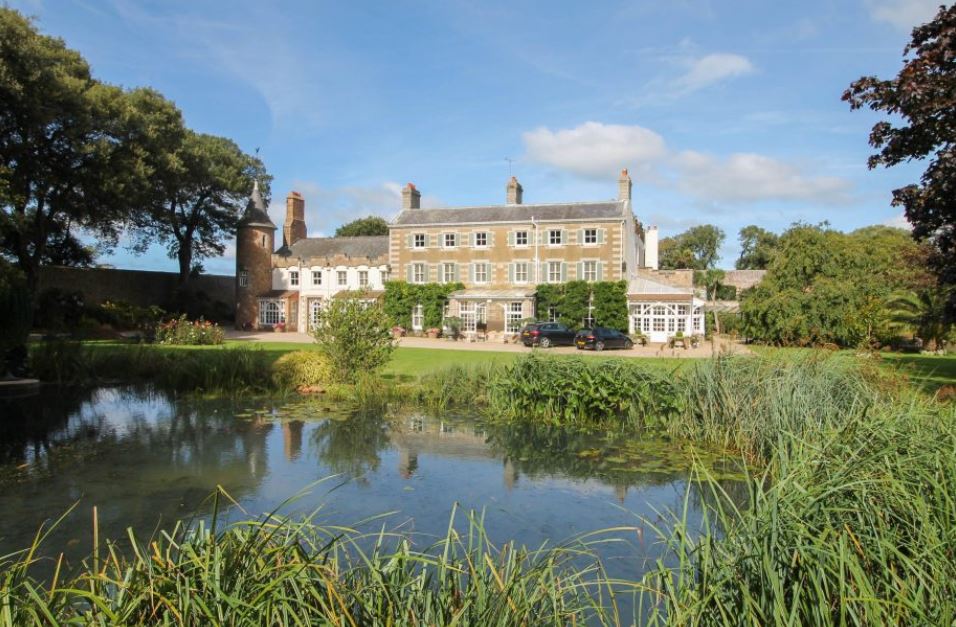
Twelve glorious acres of manicured grounds surround partly Elizabethan Flete House, former seat of the Mildmay family, which overlooks Ermington and Dartmoor, enjoying ‘probably the finest situation in Devonshire’ according to Cornish poet and historian Richard Polwhele (1797).
At Holbeton in the South Hams, not far from Georgian Modbury, it was used as a maternity hospital in the Second World War and has now been converted into 29 apartments, retaining the principal rooms (library, dining, drawing and billiard rooms and others) for communal use, exclusively for over 55s.
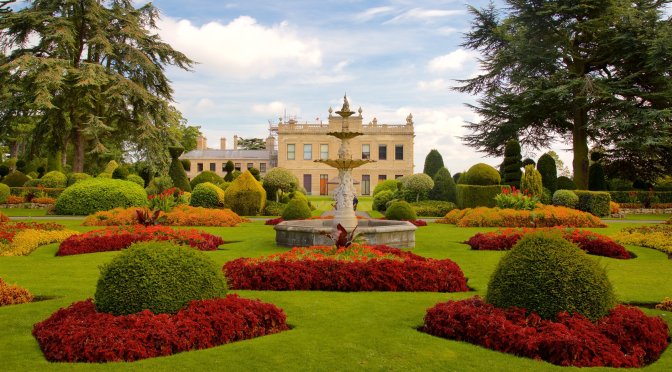
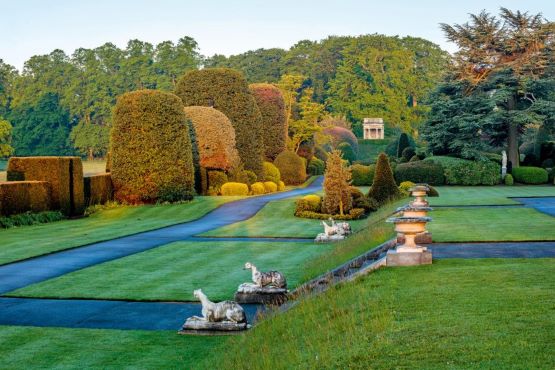
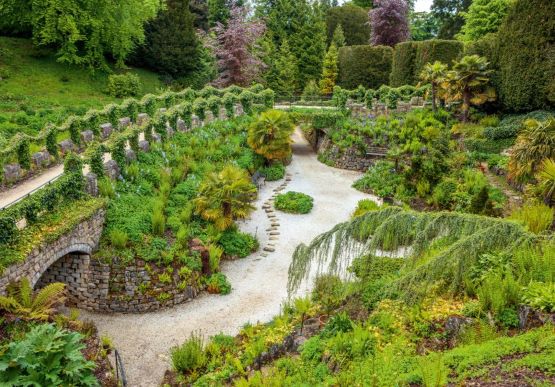
The mid-19th-century Gardens of Brodsworth Hall in South Yorkshire are striking. House and grounds are a perfect complement of Italianate green architecture and are linked by formal terraces with three staircases decorated by marble urns and recumbent — probably Italian — greyhounds acquired by the Italian sculptor Chevalier G. M. Casentini.
If this all feels rather unlikely in Yorkshire, that is because it reflects the taste of one man, Charles Sabine Augustus Thellusson, who came into an extraordinary inheritance in 1858 and devoted much of it to creating the hall and its gardens in his own personal style.
‘Today, he would be an oligarch,’ says Michael Klemperer, senior gardens advisor for the North and Midlands regions at English Heritage (EH), which now looks after house and gardens. ‘The money he received from the will was £700,000, which, with interest, equates to £140 million today.’ With the cash came the estate that had belonged to his great-grandfather Peter Thellusson, a Swiss financier, who had moved to London in 1760 and built up a fortune as a merchant and banker.
Charles Thellusson was an avid traveller, sailor and photographer. ‘He was a big, robust Victorian gentleman, a patrician walrus,’ notes Dr Klemperer, who sees Brodsworth as representing a transition between Continental styles and the Victorian era. ‘It is a garden that is interesting on a number of levels,’ he adds, citing influences as varied as Caspar David Friedrich (1774–1840) and Blackpool pier.
SPA TOWNS: A mineral-laced spring could lead to a profitable resort for Georgian landowners. Clive Aslet dips into spa towns.
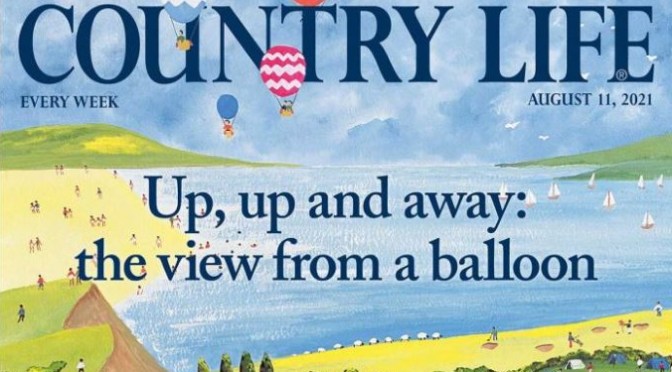
HOT AIR BALLOONS: Levi jeans, Van Gogh’s head and a dinosaur — they’ve all taken flight through Cameron Balloons in Somerset.
WALTER SCOTT: Despite inventing the historical novel, Walter Scott’s books are often left on the shelf. Why is that, asks Jack Watkins, on the writer’s 250th anniversary.
CARLA CARLISLE: Carla on dogs raging at the dying of the light.
GREEK ARCHITECTURE: Marking the 200th anniversary of the completion of St Pancras Church, Harry Mount considers the 19th-century enthusiasm for Greek architecture.
INTERIORS: Romantic sash windows have their fans and detractors.
LUXURY: Hetty Lintell is by the pool.
CHILLI: Tom Parker Bowles was drawn into the chilli’s fiery embrace from a young age.
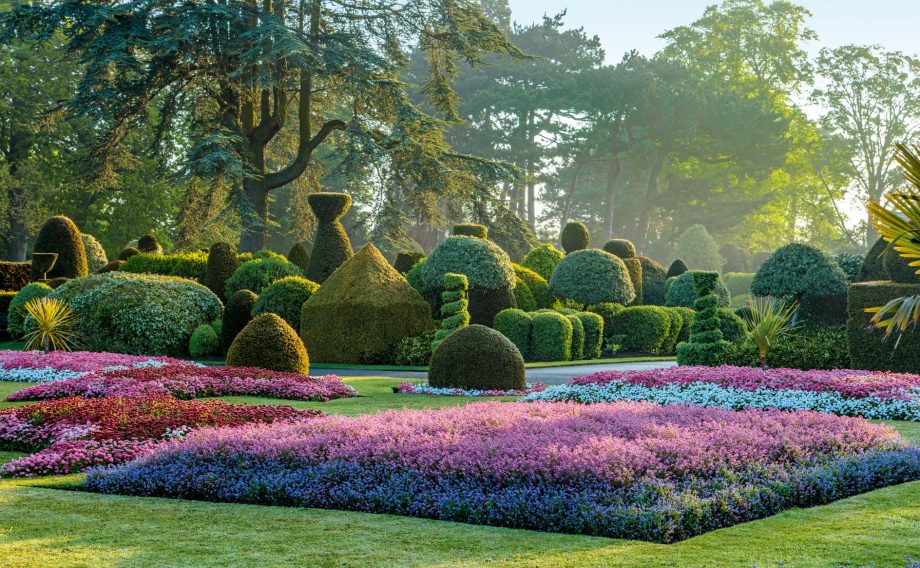
ELTON HALL: Tilly Ware visits the transformed historic gardens of Elton Hall in Huntingdonshire, where much of the past is a mystery.
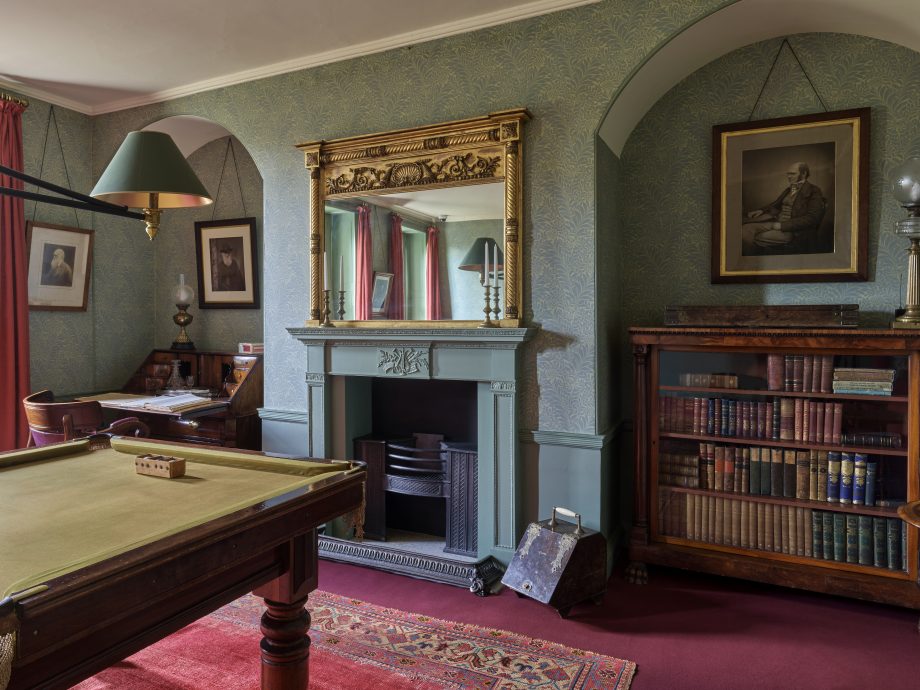
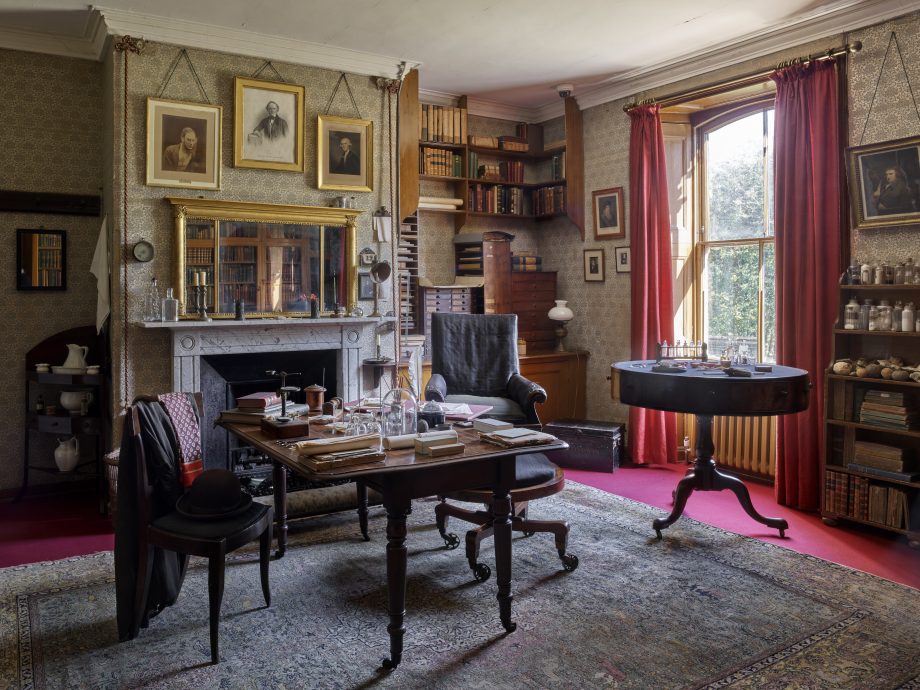
Down House (confusingly, next to Downe village) was Darwin’s family home for nearly 40 years. In its rooms, gardens and grounds, he researched and refined the ideas for which he became famous.
In origin, Down House was a plain Georgian property, a brick box with a main front five window bays wide built in about 1730. It was internally reconfigured and extended with a kitchen block by a wealthy businessman and landowner, George Butler, after he purchased the house in 1778.
At the same time, the main entrance was moved from the front to the side of the building. The house was then leased and sold again before coming into the possession of the Revd J. Drummond, vicar of Downe, in 1837. He employed the London-based architect Edward Cresy to make various improvements and also to render the house in conformity with the taste of the moment.
It was this house, with its 18 acres of land, that the Darwins occupied on September 24, 1842. Charles quickly settled into his new home, establishing a regular routine that distinguished his domestic arrangements. ‘My life goes on as clockwork,’ he wrote in 1843, ‘I am fixed in the place where I shall end it.’
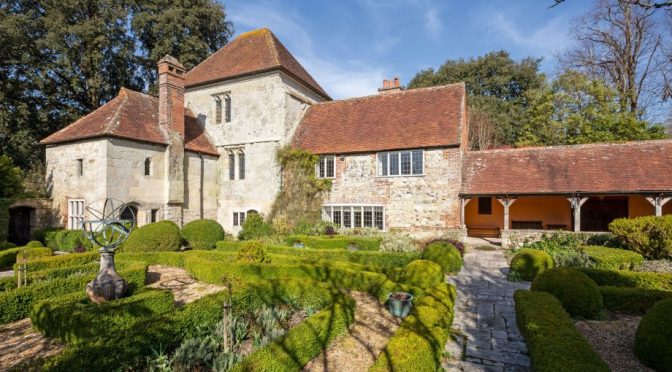
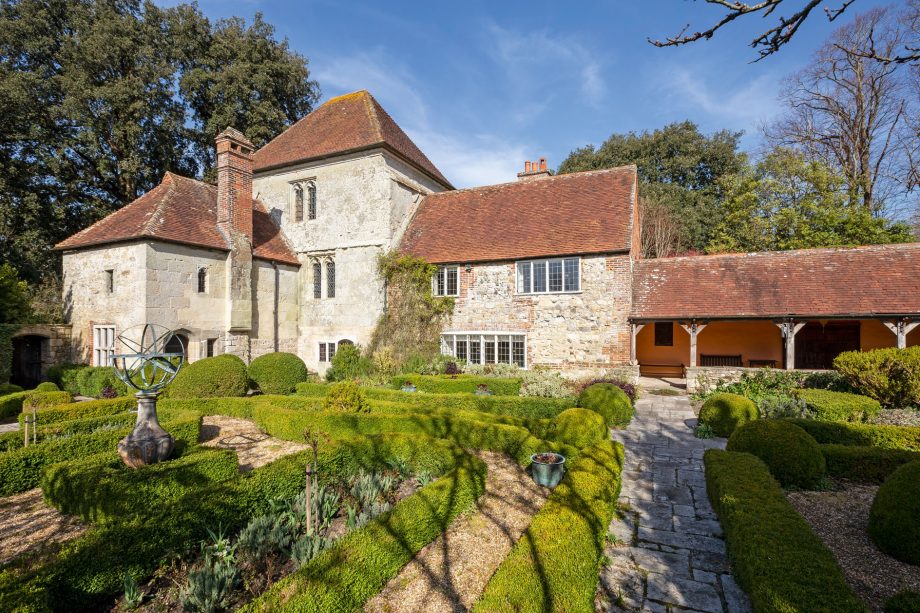
Rymans Manor House in Appledram, West Sussex, a picturesque coastal area three miles south-west of Chichester, is bounded to the west by the main channel of Chichester Harbour, to the north by the River Lavant and to the south by a stream that runs into the harbour below Birdham Mill.
It is described by Pevsner as ‘a delightful small 15th-century manor house’, which takes its name from William Ryman, a prominent merchant and lawyer who was knighted in 1420 and appointed Sheriff of Sussex in 1434. He built the house of stone from the Bembridge and Ventnor quarries in about 1410.
This oldest part of the T-shaped house, which remains largely unaltered, comprises a three-storey stone tower with trefoil windows and a south wing of two storeys under a tiled roof.
Here’s a small selection of what you’ll find inside.
FLYING VISIT: Charles Harris takes glorious flight over the Lake District
ROCKPOOLS: Life in the rockpool can be cut-throat, says Adam Nicolson
INSECT APOCALYPSE: Dave Goulson on averting the impending insect apocalypse
MY FAVOURITE PAINTING: Sally Clarke, restauranteur, chooses a simple, restful study by Dürer
ELGAR: Jack Watkins examines Elgar’s ‘best of me’ oratorio
TURVEY HOUSE: Jeremy Musson details the refurbishment of neo-Classical Turvey House in Bedfordshire, by the seventh generation of the family that built it
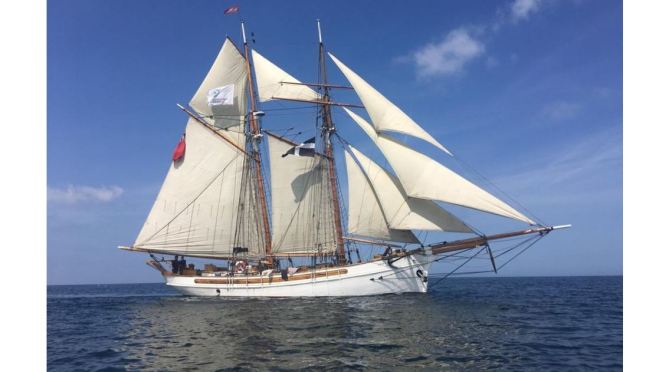
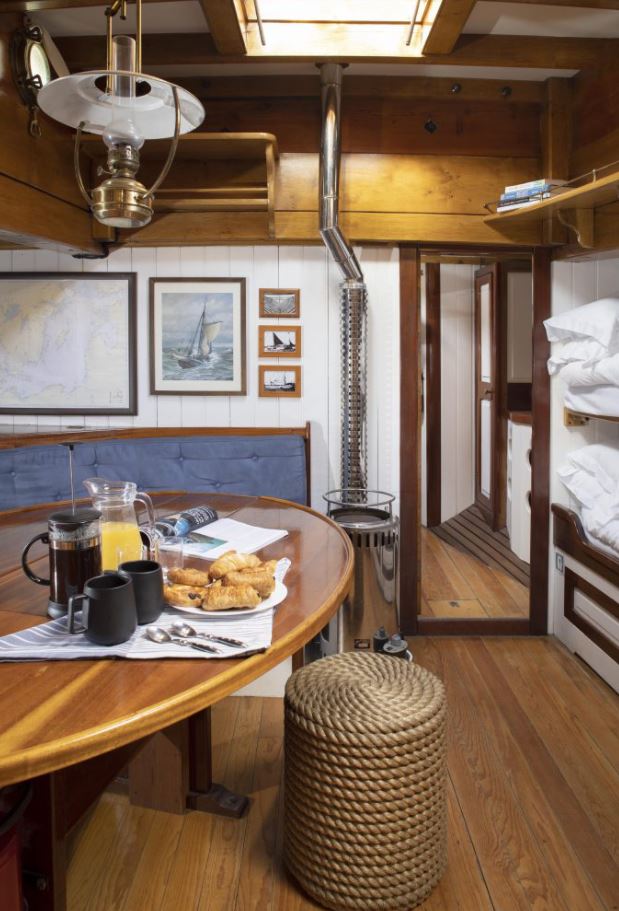
Clinging on tight to the rigging just below the main yard, I looked down at the rollers of clear green water sweeping along the white sides of the ship, beneath her polished wood and neatly slaked lines.
Above me, perched nonchalantly on the yard, was bosun David, moving to the motion of the swaying mast as the hull lifted and fell on the waves. A few fathoms away lay Charlestown, with its grey stone harbour, white-painted cottages and sheltering cliffs.
I was aboard Anny, a topsail schooner available for day and overnight charters from the south Cornish village, well known to viewers of Poldark, The Three Musketeers and The Onedin Line. So little has Charlestown changed in 200 years that it is a favourite with location scouts and its unpolished charm makes it a delight to visitors, too. With Anny and her consort Irene, a 1907 West Country trading ketch, moored off shore and not an ugly modern steamer in sight, it is easy to imagine oneself back in time.
‘No other spot brings me sweeter memories,’ remarked the poet W. H. Auden about the Lord Crewe Arms. 90 years later, the beauty of this historic bolthole, on the Northumberland/Co Durham border, hasn’t changed.
In the village of Blanchland, the 12th-century building was originally a guest house for Blanchland Abbey. Today, the Calcot Collection runs the show and the company’s clever touches — as seen in Barnsley House — shine through.
The superb food is modern British with big flavours, made using local produce. After cocktails in the barrel-vaulted Crypt Bar, we feasted in the elegant dining room: my favourite dish was the super succulent roasted guinea hen with a garden herb sauce.
The interiors are full of charming features, including original panelling, moulded ceilings, stained glass and working fireplaces. The main residence has a striking reception hall with minstrel gallery, five elegant reception reception rooms, five main bedrooms and four secondary ones.
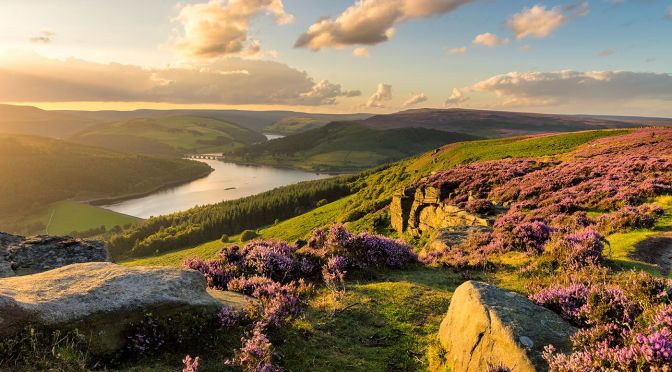
The air in the Peak District feels different. It’s softer; thicker even — one friend compared it to ‘butter’ (a good thing, I think) — and certainly cleaner than any air in London. Maybe it was the feeling of freedom: it was the farthest any of us had travelled in months, following months of respective lockdowns in the capital and in Devon (where the air is lighter, and salty).
We had few expectations. Several people had said that the Peaks couldn’t compare to the Lake District (spoiler alert, they are wrong and have likely never been), several more couldn’t even point them out on a map. But change is afoot and the Peaks look set to become one of the UK’s most popular destinations with the arrival of several new, exciting hotels. Buxton Crescent Hotel (Buxton of bottled water fame) opened last year; The Tawny — a collection of rooms, tree- and boathouses — and Wildhive Callow Hall join it this summer.























 Boomers Daily