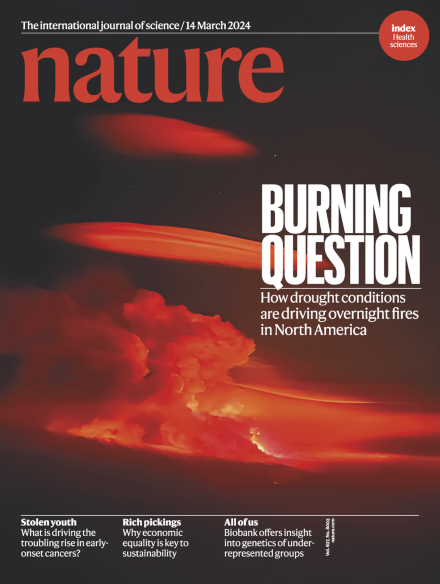
Nature Magazine – March 13, 2024: The latest issue cover features ‘Burning Question’ – How drought conditions are driving overnight fires in North America…
The de-extinction company Colossal is the first to convert elephant cells to an embryonic state, but using them to make mammoths won’t be easy, say researchers.
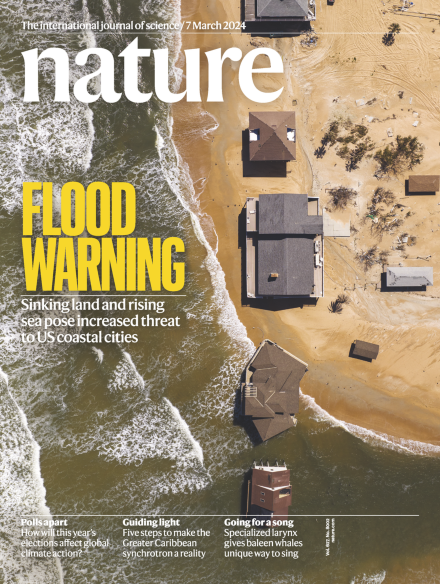
Nature Magazine – March 6, 2024: The latest issue cover features ‘Flood Warning’ – Sinking land and rising sea pose increased threat to US coastal cities.…
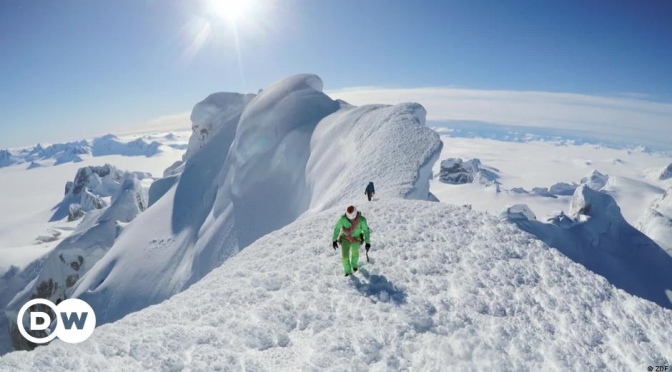
DW Documentary (March 4, 2024): Patagonia’s icefields are very difficult to access. As a result, they remain largely unexplored by climate researchers. Now, a scientist and two extreme mountaineers are venturing into this hard-to-reach area, in search of new data for climate research.
Even after 15 years of research in Chile, scientist Tobias Sauter says that for him, many questions remain unanswered. To clarify them, he decides to venture into areas that are difficult to access. The mountaineers Robert Jasper and Jörn Heller agree to help – and put themselves in great danger in the process. The two icefields in the Patagonian Andes, which stretch across the borders of Chile and Argentina, represent the largest ice mass outside the polar ice caps.
However, as a result of climate change, the ice here is losing mass. In some areas, the icefields are losing up to 20 meters in height per year. Little is known about these dramatic developments and their specific causes. The ice field to the north in particular has so far mainly been studied using satellite-based data. The area’s extreme weather conditions and great remoteness make field research on site a challenge. Tobias Sauter from Humboldt University in Berlin is one of the few researchers to take on this challenge.
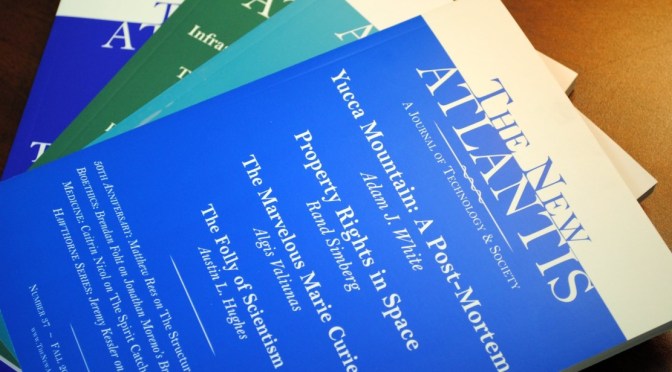
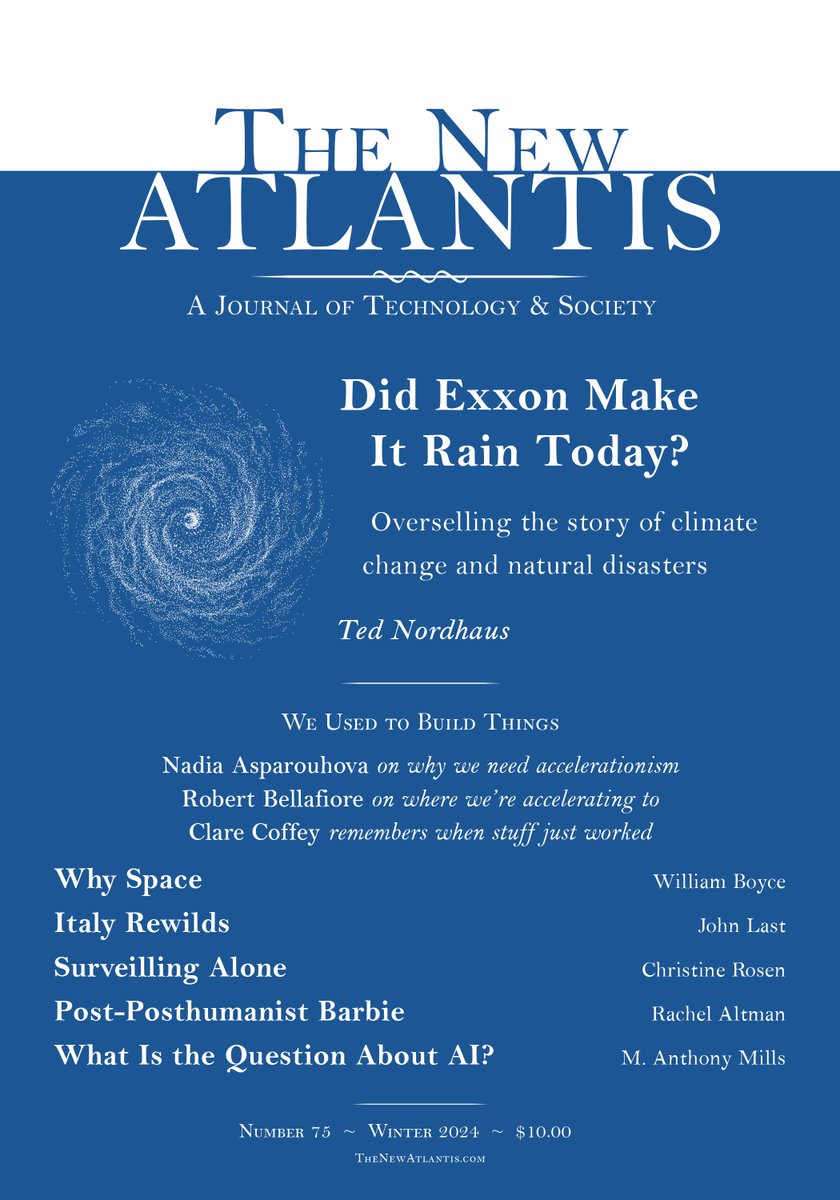
The New Atlantis Magazine (February 8, 2024) : The latest issue features ‘Did Exxon Make It Rain Today? – Overselling the story of climate change and natural disasters; Bears in the Villa – On whether Italians are ready for the return of wilderness; What Is Space For? – On Why gaze and why we should go…
Why headlines blaming extreme weather on climate change don’t hold up, the peril of catastrophism, and the case that we’re actually safer than ever before
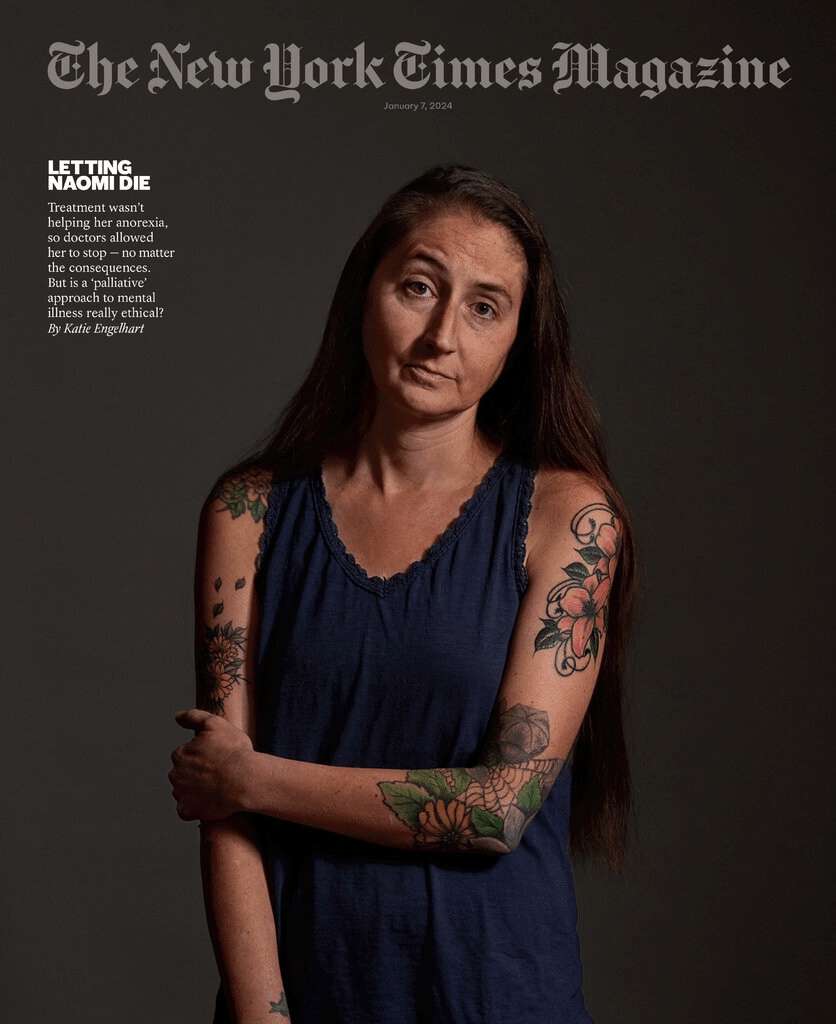
THE NEW YORK TIMES MAGAZINE (January 5, 2024): The new issue features “Letting Naomi Die” – Treatment wasn’t helping her anorexia, so doctors allowed her to stop, no matter the consequences. But is a ‘palliative’ approach to mental illness really ethical?
Treatment wasn’t helping her anorexia, so doctors allowed her to stop — no matter the consequences. But is a “palliative” approach to mental illness really ethical?
By Katie Engelhart
The doctors told Naomi that she could not leave the hospital. She was lying in a narrow bed at Denver Health Medical Center. Someone said something about a judge and a court order. Someone used the phrase “gravely disabled.” Naomi did not think she was gravely disabled. Still, she decided not to fight it. She could deny that she was mentally incompetent — but this would probably just be taken as proof of her mental incompetence. Of her lack of insight. She would, instead, “succumb to it.”
What If People Don’t Need to Care About Climate Change to Fix It?
By David Marchese
“It seems like we’ve been battling climate change for decades and made no progress,” Dr. Hannah Ritchie says. “I want to push back on that.” Ritchie, a senior researcher in the Program on Global Development at the University of Oxford and deputy editor at the online publication Our World in Data, is the author of the upcoming book, “Not the End of the World.” In it, she argues that the flood of doom-laden stats and stories about climate change is obscuring our ability to imagine solutions to the crisis and envision a sustainable, livable future.
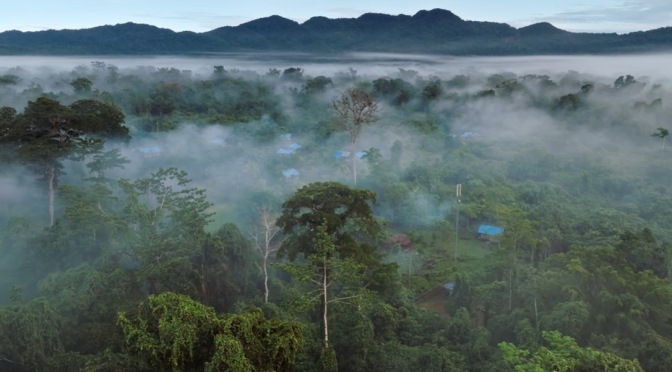
Cornell Lab of Ornithology (December 3, 2023) – Papua, Indonesia’s easternmost province, encompasses the western half of New Guinea and several other islands. An area of cultural and biological diversity, its rainforests and mountains are inhabited by indigenous Melanesian tribes and diverse wildlife including tree kangaroos and birds of paradise. Whale sharks swim amid the hard coral gardens of Cenderawasih Bay National Park, a dive site off the north coast.
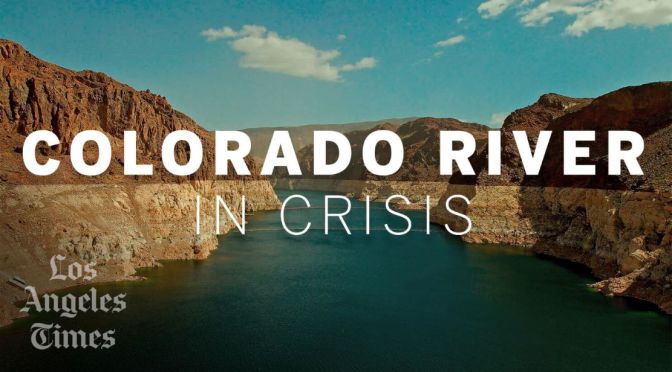
Los Angeles Times (November 15, 2023) –A team of Los Angeles Times journalists travels along the Colorado River to examine how the Southwest is grappling with the water crisis. The Colorado River can no longer withstand the thirst of the arid West.
Water drawn from the river flows to millions of people in cities from Denver to Los Angeles and irrigates vast farmlands. For decades, sections of the river have been entirely used up, leaving dusty expanses of desert where water once flowed to the sea in Mexico. Now, chronic overuse and the effects of climate change are pushing the river system toward potential collapse, with depleted reservoirs near the lowest levels since they were filled.
A water reckoning is about to transform the landscape of the Southwest. Colorado River in Crisis follows Los Angeles Times journalists traveling throughout the river’s watershed, from the headwaters in the Rocky Mountains to the river’s dry delta. These stories reveal the stark toll of the river’s decline, responses that have yet to match the scale of the crisis, and voices that are urging a fundamental rethinking of how water is managed and used to adapt to the reality of an overtapped and dwindling river.
This documentary was filmed and produced by Albert Brave Tiger Lee, with reporting by Ian James and other L.A. Times journalists. Consulting producers included Maggie Beidelman, Robert Meeks and Erik Himmelsbach-Weinstein. (46 minutes)








 Cornell Lab of Ornithology



 Los Angeles Times
 Boomers Daily