
Autism affects an estimated 1 in 54 children in the United States. You’ve probably heard a lot of thoughts and ideas about autism. What better way to honor World Autism Day than by raising our own awareness about people with autistic spectrum disorders. 𝐃𝐮𝐤𝐞 𝐂𝐞𝐧𝐭𝐞𝐫 𝐟𝐨𝐫 𝐀𝐮𝐭𝐢𝐬𝐦 𝐚𝐧𝐝 𝐁𝐫𝐚𝐢𝐧 𝐃𝐞𝐯𝐞𝐥𝐨𝐩𝐦𝐞𝐧𝐭 The Duke Center for Autism and Brain Development delivers state-of-the-art interdisciplinary clinical care, conducts cutting-edge research, trains the next generation of scientists, and advocates for public policies to help ensure people with autism reach their full potential.
Tag Archives: Children
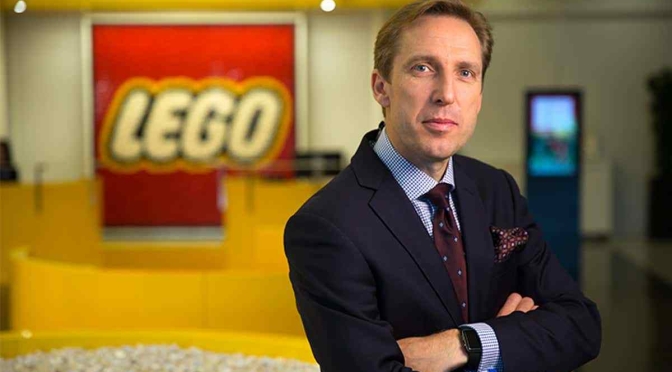
Podcast Interviews: Lego Foundation CEO John Goodwin – “Reimagining”

Monocle’s editor in chief, Tyler Brûlé, is joined by John Goodwin, the CEO of the Lego Foundation, from its home city of Billund in Denmark. We learn why the global crisis in education might be an opportunity to reimagine learning and to rediscover the value of play.
Morning News Podcast: Families Form ‘Schooling Pods’, Coronavirus Safety And Washington Redskins
 Many school districts are still debating whether to go with a virtual, in classroom or hybrid education model for the year, but some families are taking their children’s education into their own hands. Neighbors are banding together to form schooling “pods” with private instructors as a way to secure child care and make sure their kids don’t fall behind in school.
But this trend could deepen the educational divide along racial and class lines.
- President Trump changes tact on Coronavirus safety
- Re-branding the Washington Redskins
Guests: Axios’ Caitlin Owens, Margaret Talev, and Kendall Baker.
Top New Science Podcasts: Covid-19 Inflammatory Response, Glacier Retreat
 First up this week, Staff Writer Jennifer Couzin-Frankel talks with host Sarah Crespi about a rare inflammatory response in children that has appeared in a number of COVID-19 hot spots.
Next, Julian Dowdeswell, director of the Scott Polar Research Institute and professor of physical geography at the University of Cambridge, talks with producer Meagan Cantwell about tracing the retreat of Antarctica’s glaciers by examining the ocean floor. Finally, Kiki Sanford interviews author Danny Dorling about his new book, Slowdown: The End of the Great Acceleration―and Why It’s Good for the Planet, the Economy, and Our Lives.
Top New Science Podcasts: Splitting Water With Light, Missing Matter And Working Memory (Nature)
 This week, perfecting catalysts that split water using light, the mystery of missing matter in the Universe and how working memory ‘works’ in children.
In this episode:
00:44 Water splitting
After decades of research scientists have managed to achieve near perfect efficiency using a light-activated catalyst to separate hydrogen from water for fuel. Research Article: Takata et al.; News and Views: An almost perfectly efficient light-activated catalyst for producing hydrogen from water
05:37 Research Highlights
The hidden water inside the earth’s core, and how working memory ‘works’ in children. Research Highlight: Our planet’s heart is watery; Research Highlight: A child’s memory prowess is revealed by brain patterns
07:53 Measuring matter
Estimations of baryonic matter in the Universe have conflicted with observations, but now researchers have reconciled these differences. Research Article: Macquart et al.
13:42 Pick of the Briefing
We pick our highlights from the Nature Briefing, including the possibility of a black hole in our solar system, and the biting bees that force plants to bloom. Physics World: If ‘Planet Nine’ is a primordial black hole, could we detect it with a fleet of tiny spacecraft?; Scientific American: Bumblebees Bite Plants to Force Them to Flower (Seriously)
Neuroscience Podcast: “Consciousness Theories” And “Biased Childhood Memories” (ScienceMag)
We don’t know where consciousness comes from. And we don’t know whether animals have it, or whether we can detect it in patients in comas. Do neuroscientists even know where to look? A new competition aims to narrow down the bewildering number of theories of consciousness and get closer to finding its biological signs by pitting different theories against each other in experimental settings. Freelance journalist Sara Reardon talks with host Sarah Crespi about how the competition will work.
 In our second segment, we talk about how we think about children. For thousands of years, adults have complained about their lack of respect, intelligence, and tendency to distraction, compared with previous generations. A new study out this week in Science Advances suggests our own biased childhood memories might be at fault. Sarah Crespi talks with John Protzko of the University of California, Santa Barbara, about how terrible people thought kids were in 3800 B.C.E. and whether understanding those biases might change how people view Generation Z today.
To read more: https://www.sciencemag.org/podcast/trying-find-mind-brain-and-why-adults-are-always-criticizing-kids-these-days
 Boomers Daily