

The towering trees in Gabon’s mangrove swamps have helped to make the Central African country one of the world’s few net absorbers of carbon. However, many are under threat from urbanization, with former swamps being illegally cleared for construction.
Tag Archives: Carbon
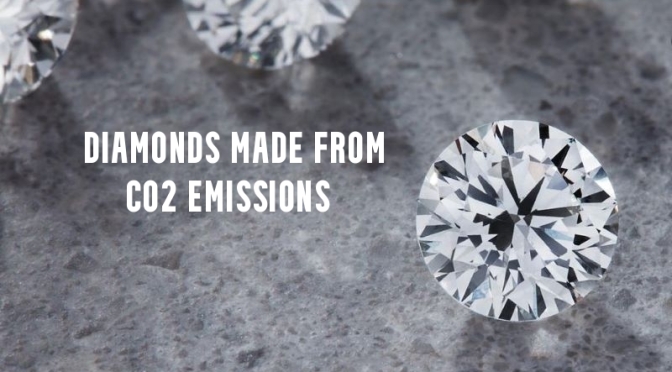
Innovation: Diamonds Made From CO2 Emissions
A UK company named Skydiamond hopes to revolutionize the traditional diamond mining industry by using carbon capture technology to do just that. The company calls it a ‘zero-impact diamond’ because the process pulls carbon dioxide right out of the air.
Although, a diamond traps only a modest amount of carbon — one carat contains just 200 milligrams. Pure carbon can take many forms — it all depends on how the atoms are arranged. Graphite is arranged into multiple layers, graphene in a single layer, and if it’s rolled-up, it forms carbon nanotubes. But when each carbon forms 4 strong bonds in a tetrahedral structure, it becomes a diamond.
Most natural diamonds were formed over a billion years ago, more than 120 kilometers beneath the Earth’s surface. This is where intense temperature and pressure cause carbon atoms to strongly bond together and arrange into crystal structures. Volcanic eruptions bring these crystals embedded in magma to the surface. When the magma cools, it hardens in long vertical shafts called kimberlite pipes. And these pipes are what’s sought after in the mining industry.

Science Podcast: Social Costs Of Carbon & The Chirps Of Mole-Rats
On its first day, the new Biden administration announced plans to recalculate the social cost of carbon—a way of estimating the economic toll of greenhouse gases. Staff Writer Paul Voosen and host Sarah Crespi discuss why this value is so important and how it will be determined.
Next up, Alison Barker, a postdoctoral researcher at the Max Delbrück Center for Molecular Medicine, talks with Sarah about the sounds of naked mole-rats. You may already know naked mole-rats are pain and cancer resistant—but did you know these eusocial mammals make little chirps to identify themselves as colony members? Can these learned local dialects make naked mole-rats a new research model for language learning?
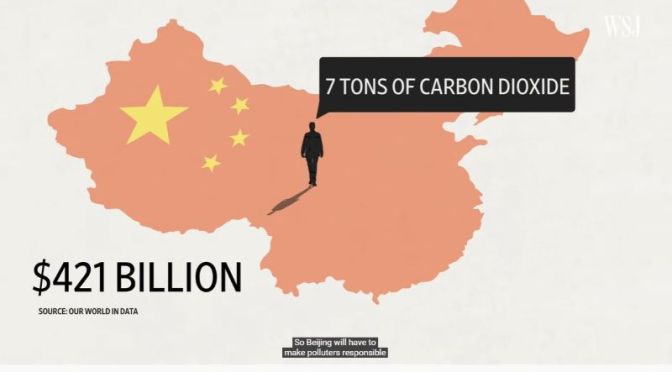
Energy Economics: How China Plans To Go Carbon Neutral By 2060 (Video)
In the biggest climate commitment made by any nation, China pledged to go carbon neutral by 2060. While it will be challenging for Beijing to achieve its goal, China’s plan to become a green superpower will have ripple effects around the world.
Illustration: Crystal Tai
 Boomers Daily